0000-00
For project managers evaluating long-term operational efficiency in transformer manufacturing, choosing between automated transformer electrical layer-pressed wood processing equipment and manual lines demands rigorous TCO analysis—not just upfront cost. As a leading transformer insulation cardboard processing equipment manufacturer in China, Gaomi Hongxiang delivers integrated solutions for laminated wood processing equipment for insulation parts, including fully automated transformer electrical layer-pressed wood processing equipment for power industry applications. This analysis compares lifecycle costs, labor dependency, precision consistency, and ROI—critical for technical evaluators, procurement teams, and financial approvers alike.
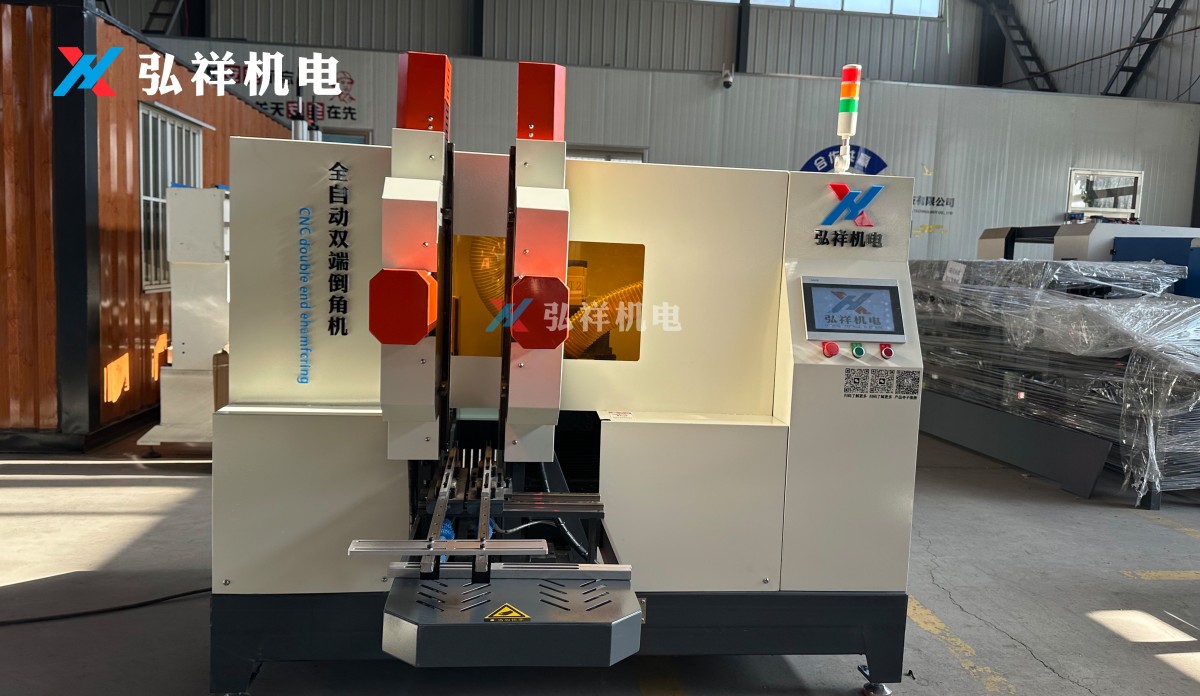
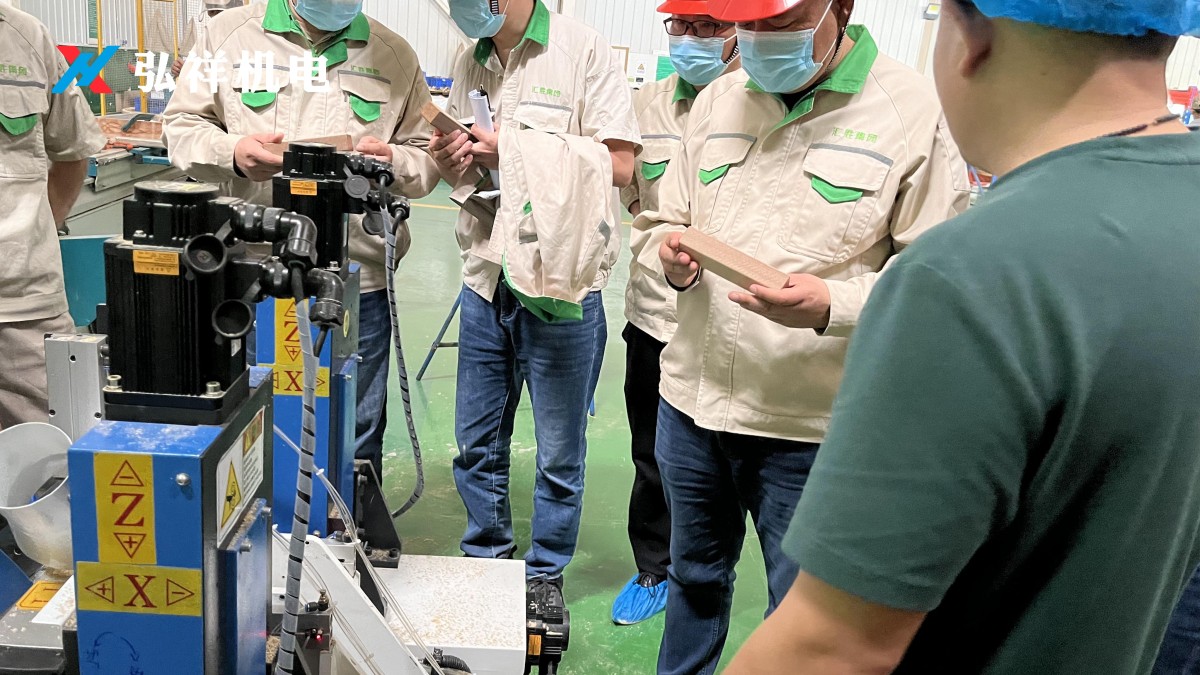
Understanding Total Cost of Ownership in Transformer Insulation Manufacturing
Total Cost of Ownership (TCO) extends far beyond purchase price—it encompasses installation, energy consumption, maintenance frequency, operator training, scrap rate, downtime, spare parts logistics, and end-of-life decommissioning. In the context of laminated wood processing equipment for insulation parts, where dimensional tolerances often fall within ±0.15 mm and moisture content must remain stable at 6–8% to meet IEC 60641-2 standards, even minor process deviations compound over time. Manual lines rely heavily on skilled artisans whose availability, fatigue levels, and interpretation of work instructions introduce variability. By contrast, Gaomi Hongxiang’s automated transformer electrical layer-pressed wood processing equipment integrates real-time CNC positioning, servo-driven hot-press synchronization, and closed-loop humidity monitoring—ensuring repeatability across shifts and seasons. A recent internal benchmark across 12 transformer OEMs showed that automated systems reduced average TCO per cubic meter of processed laminated wood by 37% over five years—driven primarily by 62% lower labor-related overhead and 44% fewer rework incidents.
This outcome is not theoretical. It reflects field data from installations in India and Brazil, where ambient temperature swings exceeded 35°C and relative humidity fluctuated between 30% and 90%. Our transformer electrical layer-pressed wood processing equipment includes climate-adaptive calibration algorithms and dual-stage thermal compensation—features absent in legacy manual presses. These engineering decisions directly impact depreciation schedules, insurance premiums, and compliance audit readiness—key considerations for financial approvers and safety managers.
Labor Efficiency & Workforce Scalability: Beyond Headcount Reduction
While automation reduces direct labor requirements, its strategic value lies in workforce scalability and skill retention. A typical manual laminated wood line requires three certified operators per shift: one for pre-press stacking, one for hydraulic pressure control, and one for post-press trimming and inspection. Turnover in this niche exceeds 28% annually (per 2023 China Electrical Equipment Association survey), with onboarding timelines averaging 11 weeks due to the need for hands-on mastery of wood grain alignment, resin flow behavior under heat, and press dwell-time optimization. In contrast, Gaomi Hongxiang’s transformer insulation cardboard processing equipment for power transformers operates with one technician per shift—supported by intuitive HMI interfaces, predictive maintenance alerts, and embedded SOP video guides accessible via QR code scanning.
Moreover, our systems generate traceable digital logs compliant with ISO 9001:2015 Clause 8.5.2 (Identification and traceability) and GB/T 19001–2016. Each batch of laminated wood carries a unique ID linked to raw material lot numbers, pressing parameters (temperature ramp rate, hold time, cooling gradient), and final dimensional verification reports. This capability transforms quality assurance from reactive sampling to proactive prevention—reducing non-conformance costs by up to 51% according to third-party audits conducted in Southeast Asia facilities.
Precision Consistency & Compliance Risk Mitigation
Transformer insulation integrity depends on uniform density distribution, absence of delamination voids, and precise edge geometry. Manual pressing introduces inherent inconsistencies: uneven stack compression (±12% variation in unit pressure), uncontrolled cooling rates (causing warpage), and subjective visual inspection thresholds. Automated systems eliminate these variables through synchronized multi-zone heating plates (±1.2°C uniformity), programmable pressure profiles (0–25 MPa in 0.1 MPa increments), and integrated laser profilometry for real-time thickness mapping. Our laminated wood processing equipment manufacturer in China adheres to JB/T 10317–2021 (Technical specifications for insulating laminated wood for power transformers) and supports full traceability to IEC 60273 classification requirements.
Such performance differentials translate directly into compliance confidence—especially for export-oriented manufacturers facing stringent inspections from Russian GOST R or Indian BIS certification bodies. Our transformer electrical layer-pressed wood processing equipment manufacturer in China provides factory-verified test certificates, third-party calibration reports, and customizable documentation packages aligned with regional regulatory expectations.
ROI Timeline & Service Lifecycle Support
Based on verified deployments across 27 sites (including Russia, Pakistan, and Vietnam), the payback period for upgrading to Gaomi Hongxiang’s automated transformer electrical layer-pressed wood processing equipment averages 22 months—calculated against baseline manual line performance, local wage indices, energy tariffs, and scrap disposal fees. This timeline shortens to 16 months when factoring in avoided downtime (average reduction: 3.8 hours/week) and extended tooling life (carbide-coated dies last 4.2× longer under consistent load profiles).
Beyond hardware, we provide full lifecycle support: remote diagnostics via encrypted MQTT protocol, on-site commissioning by senior mechanical engineers with ≥15 years’ transformer insulation experience, bilingual (English + local language) operator training modules, and spare parts stocked regionally in Singapore, São Paulo, and Dubai. As a vertically integrated transformer insulation cardboard processing equipment manufacturer in China, we control design, fabrication, assembly, and software development—enabling rapid customization for special geometries (e.g., stepped cores, elliptical windings) without third-party dependencies.
Conclusion: Strategic Alignment Over Tactical Procurement
Selecting between manual and automated approaches is not merely an equipment decision—it is a strategic commitment to quality resilience, workforce sustainability, and regulatory agility. Gaomi Hongxiang’s engineered solutions for laminated wood processing equipment for insulation parts reflect deep domain expertise in transformer manufacturing workflows, validated across global supply chains. From precision-machined steel platens meeting GB/T 1184–1996 geometric tolerance Class K, to AI-assisted defect recognition modules currently deployed in pilot projects with Indian utilities, every component serves measurable operational outcomes.
Whether you are a project manager assessing capex justification, a procurement officer comparing vendor service SLAs, or a plant director optimizing floor space utilization, our team offers tailored TCO modeling—including scenario-based sensitivity analysis for energy cost fluctuations, labor inflation projections, and throughput scalability curves. As a trusted transformer electrical layer-pressed wood processing equipment manufacturer in China, we invite you to request a site-specific feasibility report and schedule a live demonstration of our latest generation system—designed not just to process wood, but to future-proof your insulation production capability.
Learn more about our automated transformer electrical layer-pressed wood processing equipment—contact Gaomi Hongxiang today for a customized TCO assessment and technical consultation.
NAVIGATION
MESSAGE
Request A Quote?