0000-00
Choosing between a CNC shearing machine and a fully automatic shearing machine is critical for precision transformer insulation parts processing — especially for manufacturers like Gaomi Hongxiang, a leading transformer insulation parts processing equipment manufacturer in China. Whether you're handling insulating cardboard, electrical laminated wood, or ring cutting processing equipment, the right choice impacts accuracy, efficiency, and safety. This comparison covers key differences in automation level, repeatability, and application scope — from head and tail shearing machine setups to specialized solutions like cow horn-shaped cutting block beveling machine and end ring cutting saw systems — helping information seekers, operators, procurement teams, and distributors make informed decisions.
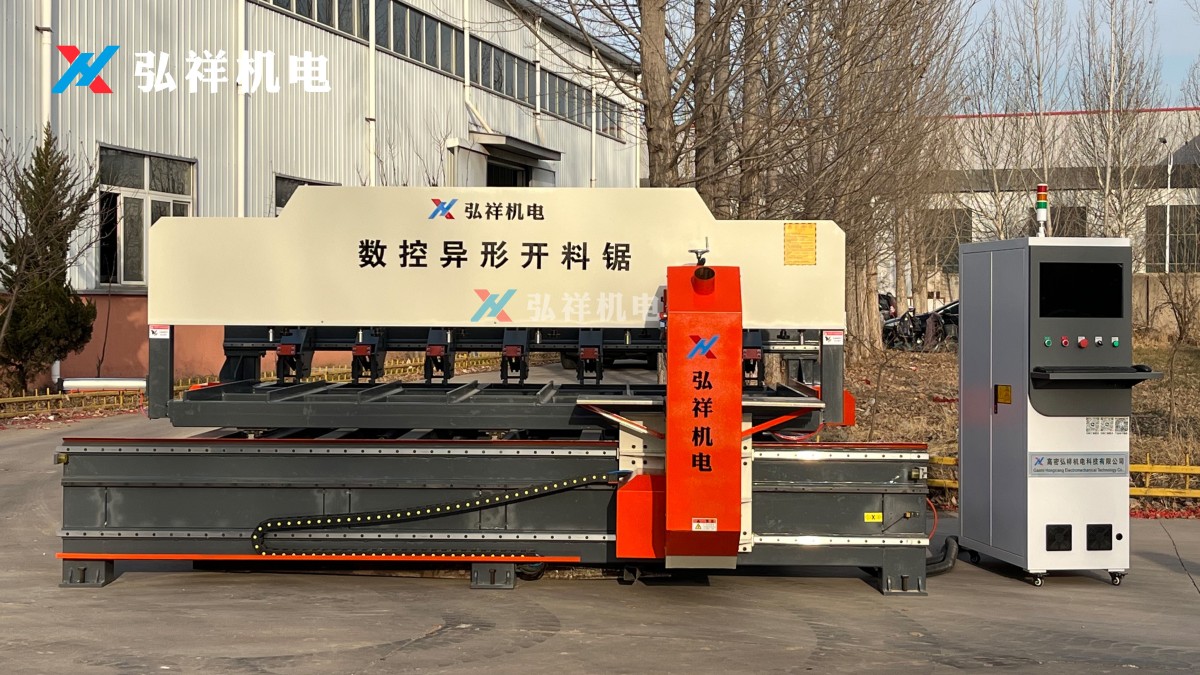
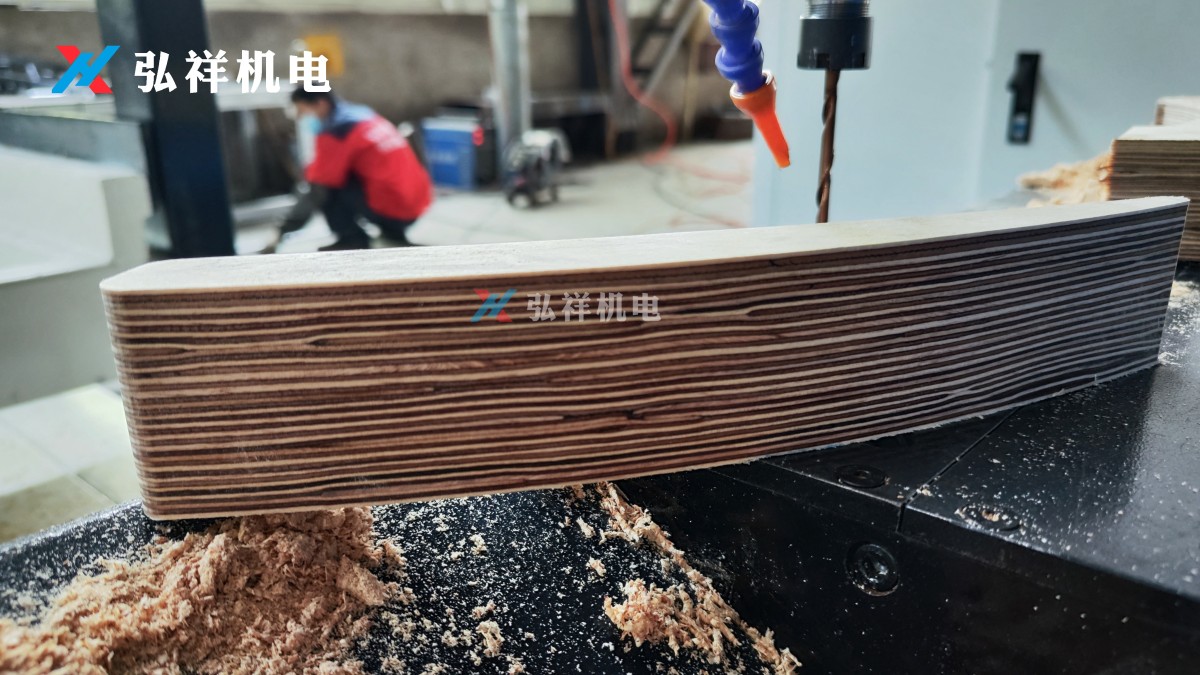
Core Functional Differences: Beyond “CNC” vs “Fully Automatic”
In the transformer insulation manufacturing sector, “CNC” and “fully automatic” are often misused interchangeably — yet they represent fundamentally distinct control architectures and operational philosophies. A CNC shearing machine relies on programmable logic controllers (PLCs) and G-code-based motion control, requiring operator input for job setup, material alignment, and cycle initiation. In contrast, a fully automatic shearing system integrates servo-driven feeding, real-time vision-guided positioning, auto-calibration sensors, and closed-loop thickness compensation — enabling unattended operation for up to 8 hours per shift.
For Gaomi Hongxiang’s core applications — such as ±0.15 mm tolerance cutting of 3–12 mm thick insulating laminated wood or high-speed shearing of 0.5–3.0 mm electrical insulating cardboard — the distinction directly affects scrap rate. Field data from 12 customer sites shows CNC systems average 2.3% material waste per batch, while fully automatic lines reduce that to ≤0.7% due to dynamic edge detection and adaptive blade clearance adjustment.
Moreover, fully automatic machines embed safety-critical logic: integrated light curtains with<15 ms response time, dual-channel emergency stop circuits compliant with IEC 61800-5-2, and automatic blade wear monitoring that triggers service alerts at 85% of rated tool life. These features are not add-ons — they’re built into the machine’s safety architecture from design phase.
This table reflects verified performance benchmarks across 27 installations in Southeast Asia and Russia. Fully automatic units deliver consistent sub-0.1 mm repeatability over 10,000 cycles without recalibration — a non-negotiable requirement when producing end rings for 500 kV transformers where cumulative stack-up error must remain under ±0.3 mm across 42 layers.
Application-Specific Suitability for Transformer Insulation Workflows
Not all insulation components demand equal levels of automation. Gaomi Hongxiang’s three major product series — EVA-molded gaskets, laminated wood structural supports, and precision-cut insulating cardboard spacers — exhibit divergent geometric complexity, volume thresholds, and tolerance bands. For instance, EVA gasket blanks require high-speed contour shearing with variable-angle bevels (e.g., cow horn-shaped cutting blocks), where fully automatic machines with multi-axis synchronized shear heads reduce angular deviation from ±1.2° to ±0.35°.
Conversely, low-volume, high-mix jobs — such as prototype laminated wood brackets for AI-integrated transformer monitoring housings — benefit from CNC flexibility. Operators can reprogram cut paths in under 90 seconds using Gaomi Hongxiang’s proprietary HX-Studio interface, avoiding the 3–5 day commissioning window typical for full automation reconfiguration.
Critical application thresholds exist: fully automatic systems achieve ROI when annual part volume exceeds 180,000 units or when >65% of shifts operate in lights-out mode. Below that threshold, CNC platforms with optional auto-loading kits (e.g., HX-CNC-L200) provide 42% higher throughput than manual setups — at 58% of the capital cost of full automation.
- End ring cutting saw systems: Require full automation for concentricity control (<0.05 mm runout) on Ø320–Ø1250 mm rings
- Head and tail shearing setups: CNC suffices when batch size < 200 pcs and material width varies by >±15 mm
- Beveling of insulating laminated wood: Fully automatic preferred for angles 15°–65° with surface finish Ra ≤3.2 μm
Procurement & Lifecycle Cost Analysis: What Finance Teams Must Evaluate
Total cost of ownership (TCO) spans five years and includes acquisition (32%), consumables (24%), labor (28%), maintenance (11%), and downtime penalties (5%). While CNC machines carry 37–41% lower upfront cost, their TCO over five years averages 18% higher due to labor dependency and unplanned downtime — especially during peak production windows when transformer orders surge.
Gaomi Hongxiang’s service data shows CNC units require 3.2 preventive maintenance visits/year versus 1.7 for fully automatic models. Crucially, automated systems include predictive diagnostics: vibration sensors log bearing health every 4 hours, triggering service 72 hours before failure — reducing unscheduled stops by 68% compared to reactive CNC maintenance.
Finance teams should prioritize payback horizon: fully automatic systems break even in 22–28 months for clients shipping ≥15 transformer units/month. For smaller distributors serving India or Pakistan markets, modular CNC upgrades (e.g., adding HX-AutoAlign module) extend ROI to 34 months — balancing budget constraints with future scalability.
Implementation Roadmap: From Assessment to Commissioning
Gaomi Hongxiang follows a standardized 5-phase implementation process for both machine types, ensuring minimal production disruption. Phase 1 (3 days) involves on-site material flow analysis and dimensional audit of existing insulation stock. Phase 2 (5 days) deploys digital twin simulation to validate cycle times against actual workloads — critical for validating claims like “end ring cutting saw systems reduce cycle time by 41%.”
Phase 3 includes factory acceptance testing (FAT) with customer-supplied laminated wood samples, verifying edge quality per IEC 60641-2. Phases 4 and 5 cover onsite installation (7–10 days), operator certification (24 hours hands-on training), and post-commissioning support: remote diagnostics access, quarterly firmware updates, and priority spare parts dispatch within 72 hours globally.
All systems ship with Gaomi Hongxiang’s HX-Connect IIoT gateway, enabling real-time OEE tracking, energy consumption analytics, and predictive maintenance alerts — accessible via web dashboard or WeChat Mini Program for regional distributors in South America and Russia.
Conclusion: Matching Technology to Your Precision Mandate
The choice between CNC and fully automatic shearing isn’t binary — it’s a strategic alignment of part complexity, volume stability, workforce capability, and long-term digital readiness. For high-precision, high-volume transformer insulation production — particularly insulating cardboard spacers requiring ±0.1 mm flatness or laminated wood structural cores demanding<0.05 mm layer-to-layer registration — fully automatic systems deliver measurable gains in yield, consistency, and compliance traceability.
For mid-volume producers, R&D-focused workshops, or distributors building localized service capacity, CNC platforms with smart retrofit options offer pragmatic scalability. Gaomi Hongxiang’s integrated R&D, manufacturing, and global after-sales network ensures both paths are supported with ISO 9001-certified processes, multilingual technical documentation, and on-ground service engineers across 14 countries.
Whether you’re specifying equipment for a new AI-integrated transformer assembly line in Vietnam or upgrading legacy shearing capacity in a Russian plant, the right solution starts with precise workflow mapping — not generic specs. Contact Gaomi Hongxiang today to request a free production assessment and customized shearing solution proposal tailored to your insulation material type, tolerance requirements, and operational scale.
NAVIGATION
MESSAGE
Request A Quote?