0000-00
For manufacturers dealing with frequent profile changes, the short answer is yes: one CNC cutting saw can handle changing shapes efficiently, but only if it is designed for fast program switching, reliable positioning, stable material handling, and repeatable cutting quality. In transformer insulation parts production, where electrical insulating cardboard, laminated wood, and custom-shaped components often vary from batch to batch, the real issue is not just whether the machine can cut different shapes, but whether it can do so without excessive setup time, quality drift, or operator burden. That is where a purpose-built CNC Special-shaped Cutting Saw becomes valuable. As a Transformer insulation parts processing equipment manufacturer in China, Gaomi Hongxiang provides solutions that help users process electrical cardboard, electrical laminated wood, and transformer insulation components with better flexibility, consistency, and production control.
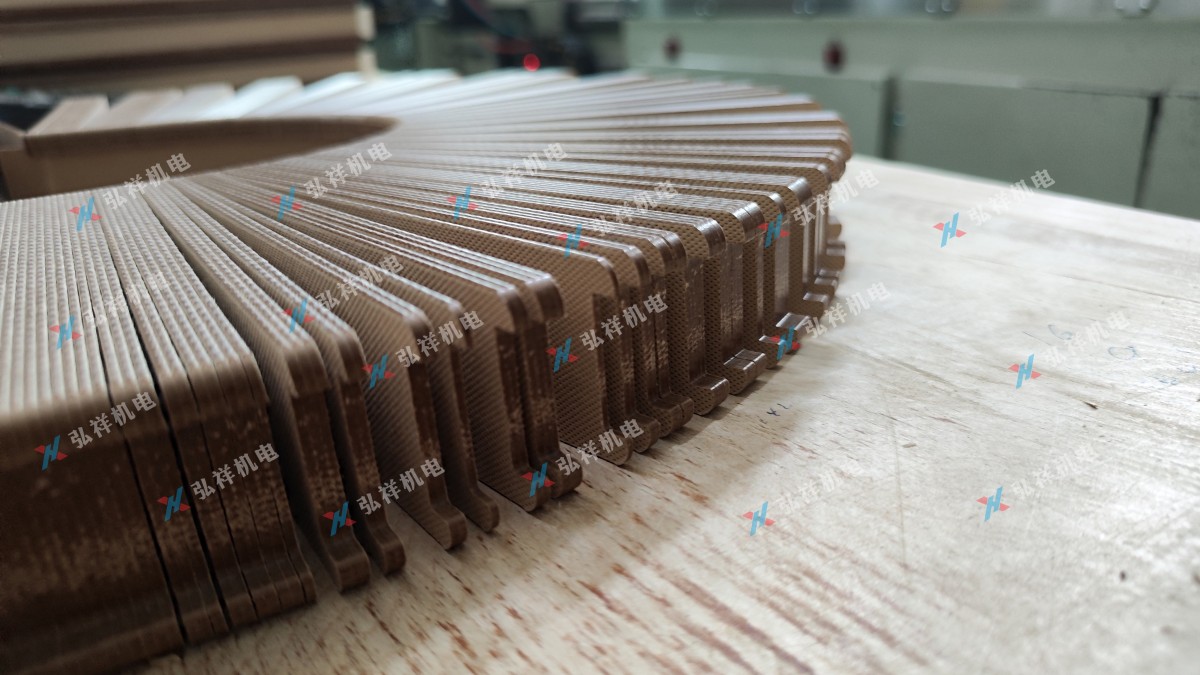
Can one CNC cutting saw really manage frequent shape changes without hurting productivity?
In many factories, frequent shape changes are a major source of hidden cost. Production slows down not because cutting itself is difficult, but because each new profile may require reprogramming, fixture adjustment, manual measurement, test cutting, and quality confirmation. If this cycle happens many times a day, the loss in throughput can be significant.
A capable CNC Special-shaped Cutting Saw can reduce this problem substantially. Instead of treating every new shape as a disruptive changeover, it allows the operator to switch between stored programs, adjust parameters quickly, and maintain cutting precision across different geometries. This is especially important in transformer insulation parts production, where component dimensions, edge quality, slot positions, and fit-up accuracy directly affect downstream assembly.
So the practical answer is: one machine can efficiently handle frequent shape changes if it has the right combination of software, mechanical stability, tooling compatibility, and operator-friendly controls. Without those features, “one machine for many shapes” becomes a theoretical advantage rather than a real production benefit.
What determines whether shape changes are efficient or disruptive?
Buyers and technical evaluators should focus less on the general claim that a machine is “flexible” and more on the specific factors that make flexibility usable in daily production.
The first factor is program switching speed. If operators can call up saved cutting programs for different transformer insulation parts in seconds, the machine becomes practical for mixed production. If each new profile requires lengthy manual editing, efficiency drops quickly.
The second factor is positioning repeatability. Frequent shape changes only work when the machine returns to the correct position every time. In insulation materials such as laminated wood and insulating cardboard, dimensional consistency matters because inaccurate cutting can create fitting problems in later assembly or rework at the shop floor.
The third factor is fixture and clamping adaptability. Different profiles often mean different workpiece sizes and shapes. A CNC cutting saw should support stable material holding without complicated, time-consuming fixture changes.
The fourth factor is material adaptability. Transformer insulation production may involve electrical insulating cardboard, electrical laminated wood, and different insulating parts. These materials do not behave exactly the same during cutting. Efficient shape switching requires a machine and process that can maintain edge quality and dimensional stability across materials, not just across drawings.
The fifth factor is operator workflow. If the machine interface is clear, programs are easy to organize, and setup logic is standardized, even frequent profile changes can remain manageable. If the system is overly dependent on one highly experienced operator, production continuity becomes risky.
Why is this especially important in transformer insulation parts manufacturing?
Transformer insulation components are not generic wood or board parts. They often serve specific structural and electrical insulation functions, so processing quality is tied to performance, fit, and consistency. In this context, frequent shape changes are common because different transformer models, part specifications, and customer requirements can lead to a wide mix of geometries.
For this reason, a CNC Special-shaped Cutting Saw used in this field must do more than cut contours. It should support stable production of transformer insulation parts while helping the factory control scrap, reduce manual dependence, and maintain predictable cycle times.
For example, when processing electrical laminated wood, users often care about shape accuracy, edge neatness, and batch-to-batch repeatability. When processing electrical insulating cardboard, they may also pay attention to whether the cutting process protects material integrity and reduces waste. A machine suited to these applications helps manufacturers respond to order variation more confidently.
Gaomi Hongxiang focuses on assembly and manufacturing services for power transformers and on processing equipment for electrical insulating cardboard, insulating laminated wood, and insulating parts. In such an application environment, the value of a CNC cutting saw is not abstract flexibility, but practical support for real production conditions where part shapes can change often.
What benefits should management and procurement teams expect from one versatile CNC cutting saw?
For management, procurement, and financial approvers, the key question is not only whether the machine can process different shapes, but whether it improves the economics of production.
A well-matched machine can create value in several ways:
- Lower setup time: Faster changeovers mean more productive machine hours.
- Reduced labor dependence: Standardized CNC processing lowers reliance on manual marking and cutting experience.
- Better quality consistency: Repeatable cutting reduces variation between batches and operators.
- Less scrap and rework: Accurate cutting improves material utilization and reduces correction work.
- Greater order flexibility: The factory can respond more easily to small-batch and multi-specification jobs.
- Improved planning: Stable program-based production supports clearer scheduling and delivery control.
These benefits matter particularly in businesses that face mixed orders, customized insulation parts, or frequent engineering changes. Instead of adding multiple dedicated machines for every profile type, a capable CNC Special-shaped Cutting Saw may help consolidate work into a more manageable and scalable process.
What should operators and technical teams check before deciding a machine is suitable?
For operators, engineers, quality personnel, and project managers, a purchase decision should be based on day-to-day usability, not just technical brochures.
Important evaluation points include:
- How long does a real shape change take? Ask for a demonstration that includes program switching, material loading, positioning, and first-piece confirmation.
- How are programs created and stored? A good system should support efficient drawing conversion, parameter management, and repeat order retrieval.
- How stable is the cutting quality across different shapes? Check dimensional consistency, edge finish, and repeatability over multiple cycles.
- How easy is operator training? Practical equipment should not require excessive learning time for standard production tasks.
- How well does it match your material range? Verify compatibility with electrical insulating cardboard, electrical laminated wood, and the insulation parts you actually produce.
- What maintenance support is available? Frequent shape change production depends on uptime. Service response, spare parts support, and training are therefore important.
This kind of evaluation helps separate machines that look flexible on paper from those that can truly support production in a transformer insulation parts workshop.
When is one machine enough, and when is it not?
One CNC cutting saw is often enough when the factory’s main challenge is shape variation within a compatible material and thickness range, and when production volume does not require parallel lines for capacity reasons. In these cases, one versatile machine can centralize processing, simplify operations, and support both standard and special-shaped components efficiently.
However, one machine may not be enough if:
- the plant has very high output requirements and cannot tolerate queueing at one station,
- the materials differ so greatly that they need different cutting technologies or machine structures,
- there are strict bottleneck constraints in delivery scheduling,
- or the business model involves simultaneous mass production and high-mix custom production that should be separated.
In other words, the question is not only “Can one CNC cutting saw handle frequent shape changes efficiently?” but also “Under what production conditions does one machine provide the best balance of flexibility, capacity, and risk?”
How can buyers make a sound decision?
The best approach is to evaluate the machine against your actual production mix. Prepare several representative part drawings, including common transformer insulation parts and more complex special-shaped components. Then assess how the machine performs in terms of changeover time, first-pass yield, dimensional repeatability, operator convenience, and throughput stability.
It is also wise to examine the supplier’s industry understanding. In transformer insulation parts processing, equipment value depends heavily on whether the supplier understands the characteristics of insulation materials, the precision needs of transformer-related components, and the practical workflow of the workshop. A manufacturer with relevant application experience can usually provide more useful machine configuration advice, process recommendations, training, and after-sales support.
Gaomi Hongxiang, as a private enterprise integrating R&D and design, production, sales, installation, training, and after-sales service, serves customers in domestic and international markets. For buyers looking at transformer insulation parts processing equipment for laminated wood and related materials, supplier capability in both equipment and application support is an important part of the decision.
Conclusion: Is a CNC Special-shaped Cutting Saw a good solution for frequent profile changes?
Yes, in most transformer insulation parts production environments, one well-designed CNC Special-shaped Cutting Saw can handle frequent shape changes efficiently and deliver meaningful production benefits. The key is not the label of “CNC” alone, but whether the machine supports fast program switching, repeatable positioning, adaptable clamping, material compatibility, stable quality, and practical operator use.
For manufacturers processing electrical insulating cardboard, electrical laminated wood, and custom transformer insulation parts, the right equipment can reduce setup loss, improve consistency, and make mixed production more manageable. The smartest buying decision is to judge the machine by real workflow performance, not general claims. If the equipment matches your part mix and production goals, one versatile CNC cutting saw can become a strong asset for flexibility, quality control, and long-term manufacturing efficiency.
NAVIGATION
MESSAGE
Request A Quote?