0000-00
Selecting the right Transformer electrical layer-pressed wood processing equipment for electrical insulation is critical for project managers seeking stable quality, efficient production, and long-term cost control. From material precision and processing consistency to equipment reliability and service support, every detail affects transformer insulation performance and project delivery. This guide outlines the key factors to help engineering decision-makers choose equipment that meets technical standards and production goals.
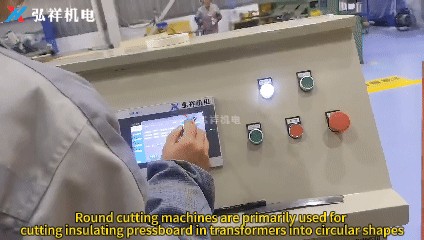
Why scenario differences matter when selecting insulation wood processing equipment
For project managers in transformer manufacturing, the same piece of equipment does not fit every production task. Transformer electrical layer-pressed wood processing equipment for electrical insulation may be used for mass production of standardized parts, for custom processing of large transformer insulation structures, or for mixed-order workshops that handle many dimensions and material grades in parallel. Each scenario changes what “best equipment” actually means.
Electrical layer-pressed wood is not a decorative material. It is a functional insulating component that must maintain dimensional accuracy, mechanical strength, dielectric stability, and repeatable machining quality. In transformer applications, minor deviations can affect assembly tolerance, oil channel alignment, insulation spacing, and final reliability. That is why equipment selection should be based not only on machine price, but also on processing range, stability, automation level, tool adaptability, dust control, and after-sales responsiveness.
In practice, buyers often focus on spindle power or table size first. However, the more important question is whether the machine matches the real production scenario: prototype development, export-oriented component production, transformer repair parts, laminated wood structural parts, or integrated insulation board and wood processing. When project leaders define the scenario clearly, equipment evaluation becomes more accurate and procurement risk drops significantly.
Typical application scenarios for Transformer electrical layer-pressed wood processing equipment for electrical insulation
The demand for Transformer electrical layer-pressed wood processing equipment for electrical insulation usually appears in several common business situations. Understanding these scenarios helps engineering and procurement teams identify the right technical priorities from the start.
1. Standardized production for medium and large transformer factories
In this scenario, factories produce recurring insulation parts in large batches. The focus is on throughput, repeatability, fixture consistency, and low defect rates. Project managers should prioritize automated feeding options, CNC accuracy, stable tool paths, and minimal setup change time. Equipment must support long operating hours while maintaining tight dimensional tolerance.
2. Custom processing for high-voltage or special transformer projects
Special transformer projects often involve non-standard dimensions, complex grooves, stepped structures, and strict design-specific insulation layouts. In such cases, flexibility matters more than pure output speed. The equipment should handle variable workpiece sizes, complex programming, and precise multi-process machining without compromising material integrity.
3. Mixed production of insulating cardboard, laminated wood, and insulation parts
Some manufacturers process multiple insulation materials in one workshop. Here, compatibility becomes essential. The ideal Transformer electrical layer-pressed wood processing equipment for electrical insulation should integrate with broader workshop workflows, support material-specific tooling, and reduce switching losses between product types.
4. Export-oriented manufacturing with strict delivery commitments
Companies serving overseas markets such as Southeast Asia, South America, India, Pakistan, and Russia often face tighter documentation, more varied standards, and demanding lead times. In this context, machine reliability, spare parts availability, and training support are as important as cutting precision. Downtime becomes a strategic risk, not just a maintenance issue.
5. Capacity expansion or workshop modernization projects
When an existing transformer plant upgrades old machinery, managers need to compare integration cost, training complexity, and production ramp-up time. The right equipment should improve yield and labor efficiency without causing prolonged implementation delays. In these projects, installation, commissioning, and operator training directly affect return on investment.
Scenario comparison: what project managers should prioritize
The table below shows how selection priorities change across common application environments for Transformer electrical layer-pressed wood processing equipment for electrical insulation.
Key technical differences by scenario
Although the core keyword is Transformer electrical layer-pressed wood processing equipment for electrical insulation, project success depends on looking beyond the name and into technical fit. Different scenarios highlight different performance criteria.
Dimensional precision versus production speed
If the project involves precision-fit structural insulation parts, tolerance control matters more than maximum output. Equipment with stable motion control, vibration resistance, and repeatable clamping is usually the better choice. For larger batch environments, however, efficient cycle time and low manual intervention may create greater value than ultra-high complexity.
Material handling capability
Electrical layer-pressed wood may vary in thickness, density, and processing behavior depending on end use. Machines should accommodate these variations without causing edge chipping, overheating, or instability. If your workshop also processes insulating cardboard and laminated wood, ask whether the same system can support multiple tools, feeds, and process recipes efficiently.
Process integration
Some projects require only cutting and slotting. Others need drilling, shaping, trimming, beveling, or finishing in one workflow. A project manager should confirm whether a single machine can consolidate operations and reduce handling errors. The more complex the part family, the more valuable integrated processing becomes.
Equipment uptime and maintainability
For plants with strict delivery schedules, machine downtime can be more expensive than a higher initial purchase price. Transformer electrical layer-pressed wood processing equipment for electrical insulation should be evaluated for maintenance access, component durability, software stability, and supplier response time. Good equipment is not only accurate on day one, but dependable during long production cycles.
How different project roles should judge equipment suitability
In transformer manufacturing projects, multiple stakeholders influence equipment decisions. The best selection process aligns their priorities instead of treating procurement as a single-department task.
Common misjudgments in real application scenarios
One common mistake is choosing equipment based only on current part size. Transformer programs often evolve, and future product diversification may require larger processing range or more flexible programming. Buying too narrowly can create expansion problems within a short time.
Another error is overvaluing headline parameters while ignoring process consistency. A machine may appear powerful on paper, but if clamping stability, dust extraction, control accuracy, or operator training are weak, actual insulation part quality may fluctuate. In electrical insulation production, consistency is often more valuable than peak specification.
Some workshops also underestimate supplier capability. For Transformer electrical layer-pressed wood processing equipment for electrical insulation, the equipment provider should understand transformer insulation materials and production logic, not just machine assembly. Suppliers with R&D, design, manufacturing, installation, training, and after-sales integration can usually reduce communication gaps and accelerate project execution.
Practical selection checklist for project-driven procurement
Before placing an order, project managers should verify these scenario-based questions:
First, what is the real product mix over the next 12 to 24 months? Second, which dimensions and tolerances are critical to insulation safety and assembly? Third, how many operators will use the machine, and what training level do they have? Fourth, what downtime risk is acceptable in your delivery model? Fifth, does the supplier offer installation, commissioning, process support, and long-term service in your target market?
If your operation includes insulating cardboard, laminated wood, and finished insulation parts, it is wise to ask for an integrated processing solution rather than evaluating each machine in isolation. This approach often improves workflow balance, reduces transfer loss, and lowers overall production cost.
Choosing a supplier that fits complex transformer manufacturing scenarios
For project leaders, equipment performance and supplier capability should be assessed together. A manufacturer with experience in transformer assembly and insulation material processing can often provide better recommendations on machine configuration, process matching, and workshop layout. This is particularly relevant when projects involve overseas delivery, special machine customization, or multi-stage production upgrades.
Gaomi Hongxiang Electromechanical Technology Co., Ltd. serves global transformer industry customers with assembly and manufacturing services, while also supporting the processing of electrical insulating cardboard, insulating laminated wood, and insulation parts. Its integrated capabilities in R&D, design, production, sales, installation, training, and after-sales service are especially relevant for companies that need more than a standalone machine purchase. For buyers evaluating Transformer electrical layer-pressed wood processing equipment for electrical insulation, this type of full-process supplier can offer stronger alignment between machinery, material handling, and real production needs.
Final decision guidance for scenario-based equipment selection
The best Transformer electrical layer-pressed wood processing equipment for electrical insulation is not simply the most advanced model or the lowest-price option. It is the one that fits your production scenario, material characteristics, quality standards, staffing conditions, and delivery commitments. For project managers, the most reliable path is to define the application scenario first, compare technical requirements second, and confirm supplier support capability third.
If your team is planning a new transformer insulation production line, a capacity upgrade, or a custom part processing project, begin by mapping your part categories, tolerance priorities, and service expectations. Then request a targeted equipment proposal built around those conditions. A scenario-based evaluation will help you reduce procurement risk, improve insulation part consistency, and build a more efficient manufacturing system for long-term transformer production success.
NAVIGATION
MESSAGE
Request A Quote?