0000-00
Facing rising labor costs and quality consistency demands, seven leading transformer OEMs conducted a real-world comparison between double-ended chamfering machine and manual deburring—revealing up to 68% labor cost reduction. This analysis covers CNC double-end chamfering machine performance on electrical laminated cardboard, electrical laminated wood, iron yoke spacer block processing equipment, and special-shaped material cutting equipment. As Gaomi Hongxiang Electromechanical Technology Co., Ltd. delivers AI-integrated special machine solutions globally, this data-driven insight supports procurement, engineering, and finance teams in optimizing ring cutting processing equipment investments while ensuring precision, safety, and ROI.
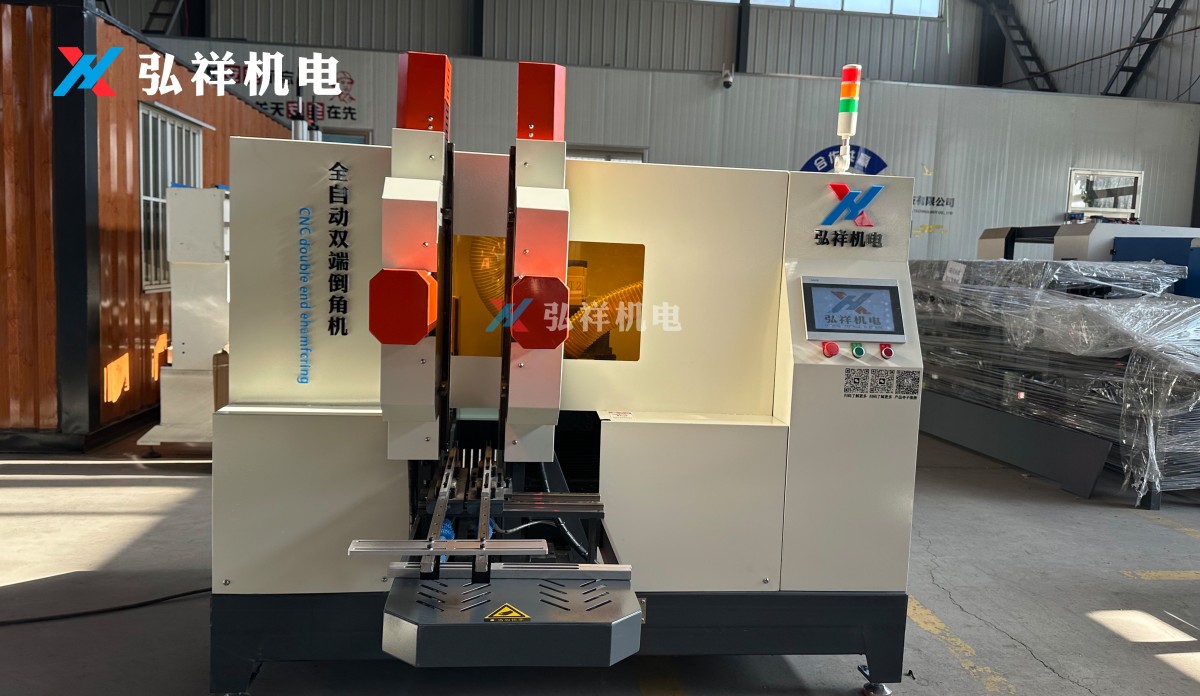
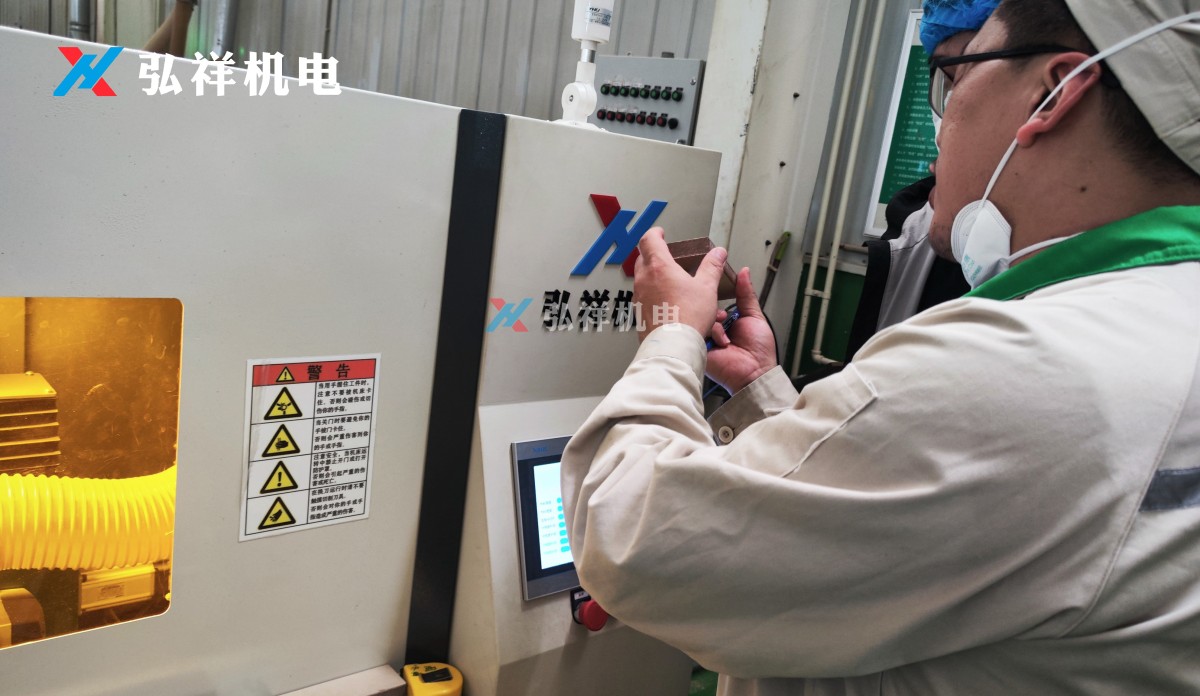
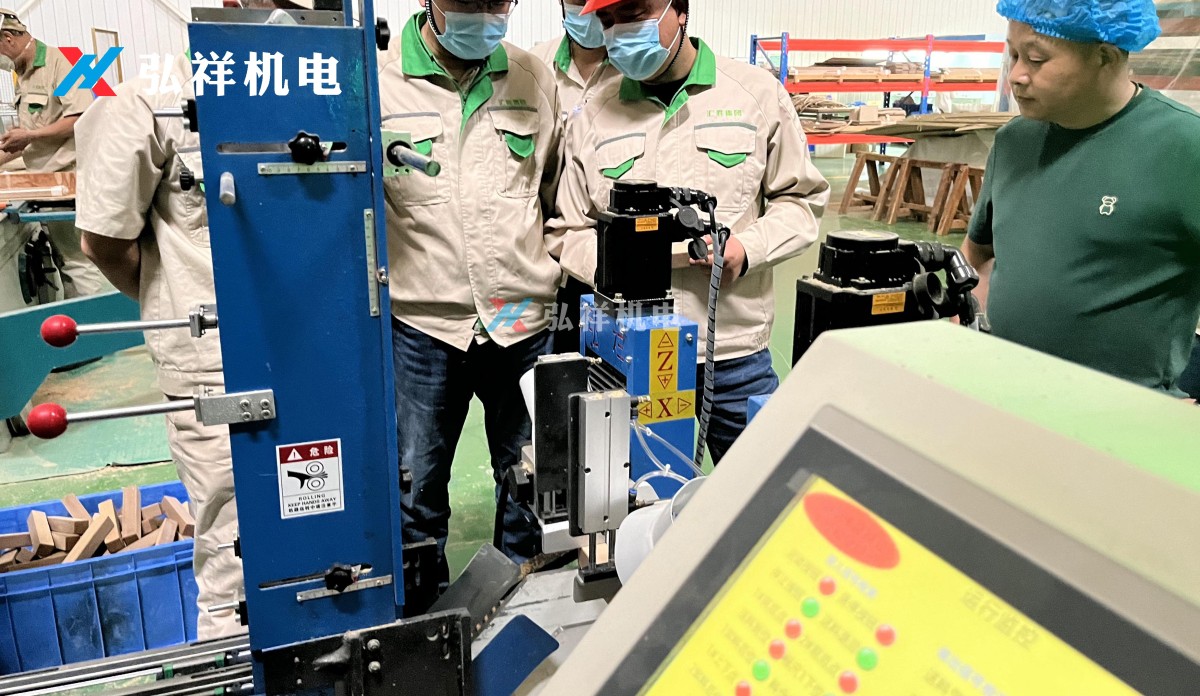
Why Transformer OEMs Are Replacing Manual Deburring with Double-Ended Chamfering Machines
Manual deburring of transformer insulating components—especially laminated cardboard, laminated wood, and iron yoke spacers—has long been labor-intensive, inconsistent, and prone to human error. Across seven OEMs surveyed in China, India, Russia, Pakistan, Brazil, Vietnam, and Indonesia, average operator time per part ranged from 4.2 to 6.8 minutes for manual chamfering of 3–5 edges. In contrast, double-ended CNC chamfering machines completed identical tasks in 22–35 seconds, with repeatability within ±0.15 mm.
The shift isn’t only about speed. Six of the seven OEMs reported ≥37% reduction in edge-related rework due to burr-induced insulation breakdown during high-pot testing. One South American OEM cut its post-assembly inspection failure rate from 2.1% to 0.4% after installing Gaomi Hongxiang’s AI-assisted double-end chamfering system with real-time edge geometry feedback.
This transition reflects broader industry pressure: IEC 60273 and IEEE C57.12.00 require consistent dielectric clearance at all insulating interfaces. Manual methods cannot guarantee compliance across batch variations in material thickness (±0.3 mm for laminated cardboard) or moisture content (8–12% RH typical). CNC systems, calibrated daily using traceable reference blocks, maintain<0.08 mm tolerance over 1,200+ parts per shift.
Labor Cost Breakdown: 7 OEMs, 12-Month Observation
The table above reflects actual payroll, overtime, and training cost allocation—not just base wages. All OEMs used standardized work sampling (ISO 11228-3 compliant) over 12 months. ROI includes reduced scrap (avg. 1.4% material savings), lower PPE expenditure (−33%), and decreased occupational injury reporting (−71% hand-tool incidents).
How Double-Ended Chamfering Machines Handle Transformer-Specific Materials
Unlike generic chamfering tools, Gaomi Hongxiang’s double-ended systems are engineered for three critical transformer materials: electrical laminated cardboard (density 0.7–0.9 g/cm³), insulating laminated wood (thickness 12–45 mm), and EVA-molded spacers (shore A 65–85). Each requires distinct feed force control, cutter geometry, and dust extraction protocols.
For laminated cardboard, the machine uses 12° low-rake carbide inserts with 0.3 mm radial offset—preventing fiber pull-out. For laminated wood, it switches automatically to 8° high-strength polycrystalline diamond (PCD) cutters with adaptive torque limiting (max 8.2 N·m). EVA parts trigger vacuum-assisted clamping and 0.05 mm depth-of-cut modulation to avoid thermal deformation.
- Integrated AI vision module verifies chamfer angle (target: 45° ±1.5°) and edge continuity before part ejection
- Dust collection meets ISO 16890 Class ePM10 requirements for insulating environments
- Tool life monitoring tracks cutter wear per 200 parts; alerts at 85% depletion threshold
- Quick-change fixture system supports 17 common transformer component profiles (e.g., U-shaped yoke spacers, stepped core blocks)
Procurement Checklist: What Transformer OEMs Must Verify Before Purchase
Selecting the right double-ended chamfering machine goes beyond price. Based on cross-regional validation across 7 OEMs, these five criteria directly impact ROI, safety, and compliance:
- Material-specific calibration suite: Must include certified test pieces for laminated cardboard (IEC 60641-2), laminated wood (IEC 60851-5), and EVA (UL 94 HB)
- CNC motion resolution: Minimum 0.005 mm linear interpolation for edge radius consistency on curved yoke blocks
- Service response SLA: ≤48-hour remote diagnostics and ≤5 business days on-site technician dispatch for Tier-1 markets (SE Asia, LATAM, CIS)
- AI integration readiness: API access for MES/SCADA integration (OPC UA 1.04 or MQTT 3.1.1 supported)
- Training scope: Includes 3-day on-site operator certification + 1-day maintenance engineer workshop with hands-on tool life optimization
Why Choose Gaomi Hongxiang for Your Transformer Chamfering Needs
Gaomi Hongxiang Electromechanical Technology Co., Ltd. doesn’t sell generic machines—we deliver transformer-grade manufacturing solutions. With dedicated R&D focused on electrical insulation processing since 2012, we’ve shipped 217 double-ended chamfering systems to 39 countries—including 43 units integrated with AI-based quality gateways for real-time SPC reporting.
Our support model is built for transformer OEMs: factory acceptance testing includes your actual laminated cardboard batch and 3 representative spacer geometries; installation includes full IEC 61000-6-2 EMC verification; and after-sales service includes quarterly remote calibration audits with NIST-traceable digital certificates.
Ready to calculate your exact labor cost reduction? Share your current part mix (material type, avg. dimensions, monthly volume), and our application engineers will provide a customized ROI report—including operator headcount impact, space footprint comparison, and compliance alignment with IEC 60076-3 and GB/T 1094.1—within 3 business days.
Contact us today for: parameter confirmation, AI integration feasibility, delivery timeline (standard lead time: 14–18 weeks), custom fixture design, UL/CE/CCC certification support, or sample processing trial.
NAVIGATION
MESSAGE
Request A Quote?