0000-00
For financial decision-makers, investing in durable transformer insulation cardboard processing equipment is not just a production upgrade—it is a long-term strategy for cost control, output stability, and asset efficiency. Understanding the real ROI factors behind equipment durability, maintenance, automation, and material precision can help businesses reduce operating risks while improving manufacturing performance in transformer insulation production.
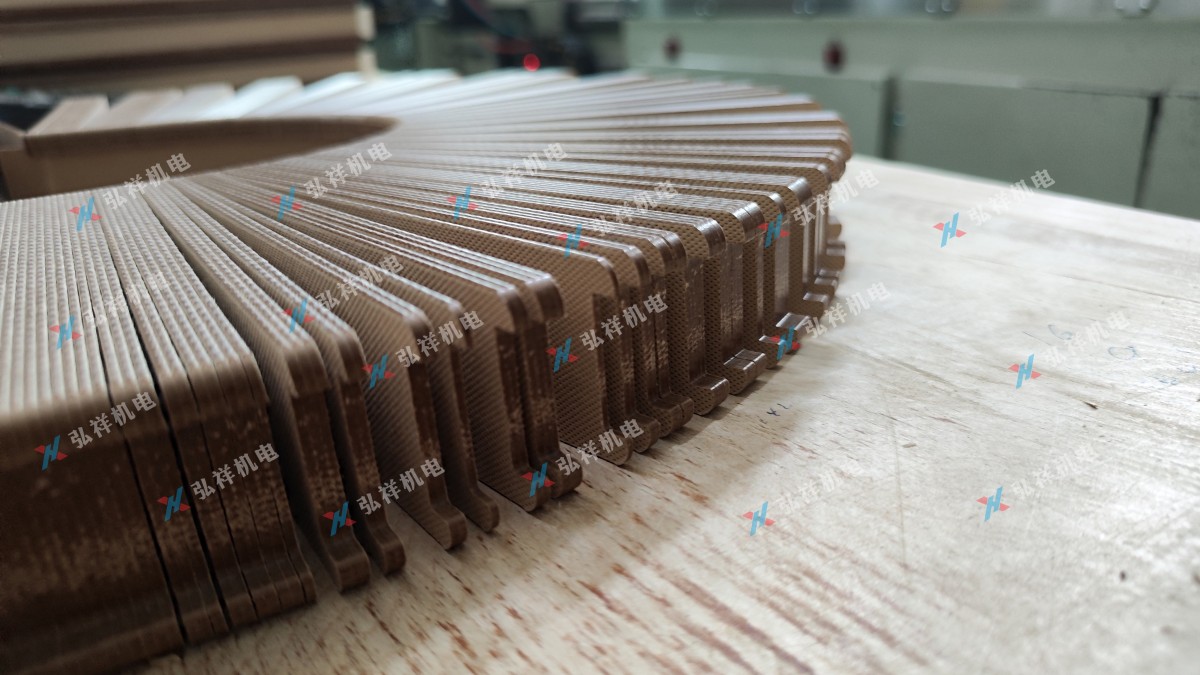
Why a checklist is essential for ROI evaluation
Durable transformer insulation cardboard processing equipment often looks similar at first glance. Real return, however, comes from lifecycle performance, not only purchase price.
A checklist-based review helps compare machine tool equipment with measurable factors. It reduces subjective judgment and exposes hidden costs in maintenance, scrap, downtime, and energy use.
In transformer insulation production, accuracy and repeatability directly affect downstream assembly. Small variation in cardboard cutting, slotting, pressing, or forming can multiply total operating cost.
Core checklist for durable transformer insulation cardboard processing equipment ROI factors
Use the following checklist to evaluate durable transformer insulation cardboard processing equipment before budgeting, comparing suppliers, or planning line expansion.
- Verify frame rigidity and machining accuracy, because a stable mechanical structure reduces vibration, improves edge quality, and keeps dimensional tolerance consistent over long production cycles.
- Check cutter, die, and feed system durability, since wear-resistant components lower replacement frequency and protect output quality when processing dense insulation cardboard batches.
- Measure actual material utilization rates, because optimized nesting, positioning, and feeding can reduce cardboard waste and improve cost recovery on every processed sheet.
- Review automation level carefully, including loading, alignment, parameter storage, and error alarms, to reduce labor dependence and minimize inconsistent manual intervention.
- Audit maintenance accessibility, especially lubrication points, tool change areas, electrical cabinets, and consumable replacement steps, because difficult service design increases downtime expense.
- Confirm control system reliability and parameter repeatability, so recurring jobs can be reproduced quickly without repeated trial cuts or frequent quality adjustments.
- Compare energy consumption under real load conditions, not only rated power, because inefficient drives and idle losses can weaken long-term ROI significantly.
- Inspect safety interlocks, guarding, and emergency response design, since accidents, stoppages, and compliance issues create direct and indirect financial losses.
- Evaluate compatibility with insulation laminated wood, insulating parts, and EVA-related processes if line integration is planned, because broader application improves equipment utilization.
- Request service response standards, spare parts lead time, and training scope, because durable transformer insulation cardboard processing equipment needs support to protect productivity.
- Track scrap rate before and after installation, as precision improvement in cutting and forming usually delivers one of the fastest measurable returns.
- Estimate resale value and upgrade potential, because machines with robust structures and modular controls preserve asset value better over longer ownership periods.
How ROI changes across application scenarios
High-volume standard insulation cardboard production
In high-volume lines, durable transformer insulation cardboard processing equipment creates value through throughput stability. The main ROI drivers are uptime, feed consistency, and reduced tool wear.
When orders repeat with similar specifications, quick parameter recall and low setup variation can save many production hours across a quarter.
Multi-specification transformer component processing
For mixed orders, flexibility becomes a stronger factor than pure speed. Equipment must switch dimensions, slot patterns, and board thickness with limited setup waste.
Here, durable transformer insulation cardboard processing equipment with programmable controls and stable positioning often delivers better ROI than lower-priced basic machinery.
Integrated insulation material workshops
Workshops processing insulating cardboard, laminated wood, and formed insulating parts benefit from broader machine compatibility. Utilization rate rises when one platform supports multiple material workflows.
This is especially relevant for enterprises like Gaomi Hongxiang Electromechanical Technology Co., Ltd., which combine R&D, manufacturing, installation, training, and after-sales service in transformer-related production.
Commonly ignored ROI factors and risk alerts
Ignoring tolerance drift over time
Initial samples may look acceptable, but long-run tolerance drift can increase scrap and rework. Durability must be proven under continuous operating conditions, not only during inspection day.
Overlooking operator training depth
Even durable transformer insulation cardboard processing equipment underperforms if setup logic, maintenance routines, and alarm handling are poorly understood. Training quality affects ROI directly.
Focusing only on purchase price
A cheaper machine can become more expensive after frequent blade replacement, unstable feeding, excessive energy use, or delayed service support. Total ownership cost matters more than invoice savings.
Missing downstream impact
Poor cardboard precision affects fit-up, insulation assembly, and transformer manufacturing rhythm. ROI must include downstream labor corrections, delivery risk, and quality claims exposure.
Neglecting spare parts localization
If critical wear parts have long lead times, a minor failure can stop production for days. Spare parts planning is a practical ROI protection measure.
Practical execution steps before investment
- Collect three to six months of production data, including scrap, downtime, labor hours, and material loss in insulation cardboard operations.
- Define target metrics such as yield improvement, cycle time reduction, energy efficiency, and maintenance interval extension.
- Match machine specifications to actual board sizes, thickness ranges, and process steps instead of buying excess capacity without payback logic.
- Request trial processing with real insulation cardboard samples and compare edge quality, repeatability, and throughput under production-like conditions.
- Calculate payback using total cost of ownership, including consumables, training, utilities, downtime risk, and expected residual value.
- Confirm installation, commissioning, and after-sales capability, especially if export delivery or multi-region service support is required.
Summary and next action
Durable transformer insulation cardboard processing equipment delivers ROI when durability, precision, maintainability, and process fit work together. The strongest returns usually come from lower scrap, steadier output, fewer stoppages, and better asset utilization.
A structured checklist prevents oversimplified buying decisions. It also helps compare machine tool equipment on measurable production economics, not only on quoted price.
The next practical step is to map current losses, test real materials, and score each candidate machine against lifecycle ROI factors. That approach makes durable transformer insulation cardboard processing equipment a controllable investment rather than a cost guess.
NAVIGATION
MESSAGE
Request A Quote?