0000-00
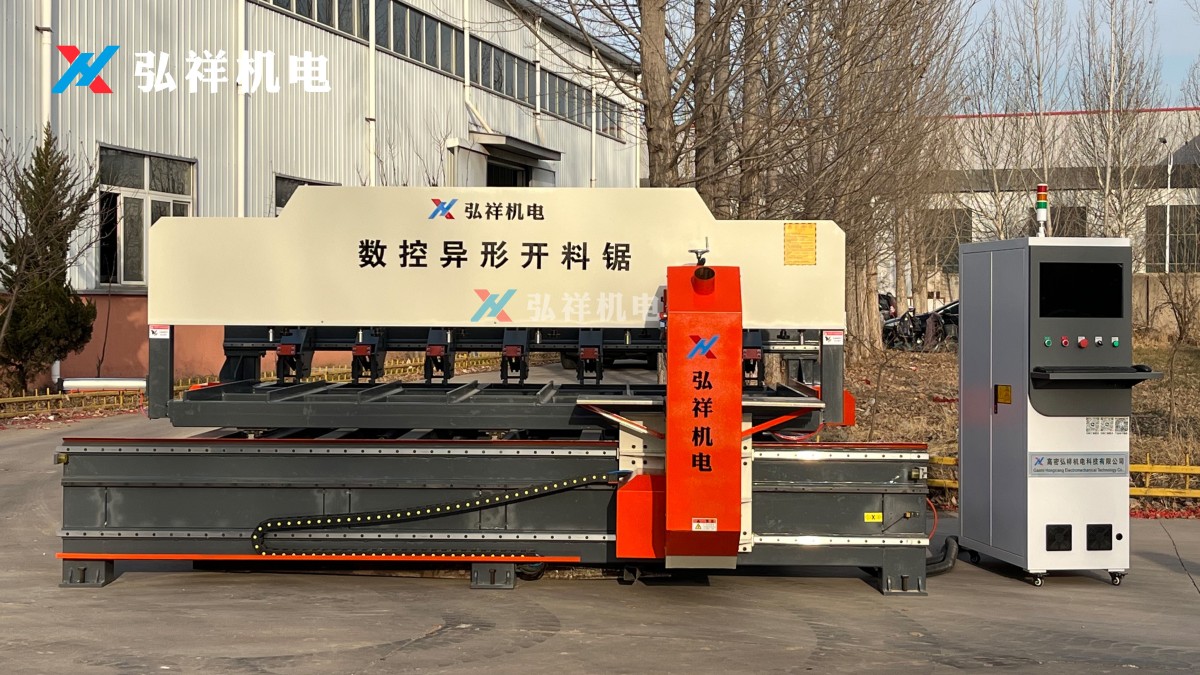
Choosing between electrical laminated cardboard and electrical laminated wood is critical for high-voltage transformer insulation parts processing—especially when precision, dielectric strength, and long-term reliability matter. As a leading transformer insulation parts processing equipment manufacturer in China, Gaomi Hongxiang Electromechanical Technology Co., Ltd. supports both materials with advanced solutions including CNC shearing machines, ring cutting processing equipment, electrical sheet metal beveling machines, and transformer assembly stands. Whether you’re an operator optimizing cut quality, a safety manager validating insulation integrity, or a distributor sourcing reliable insulating cardboard or electrical laminated wood, this comparison helps align material selection with your processing capabilities and application demands.
Material Fundamentals: Composition, Structure & Manufacturing Constraints
Electrical laminated cardboard (ELC) is manufactured by stacking and hot-pressing multiple layers of kraft paper impregnated with phenolic or epoxy resins under controlled temperature (140–180°C) and pressure (8–12 MPa). Its typical density ranges from 0.85–1.1 g/cm³, with thicknesses commonly available from 1.5 mm to 30 mm in standard sheet sizes (1200 × 2400 mm).
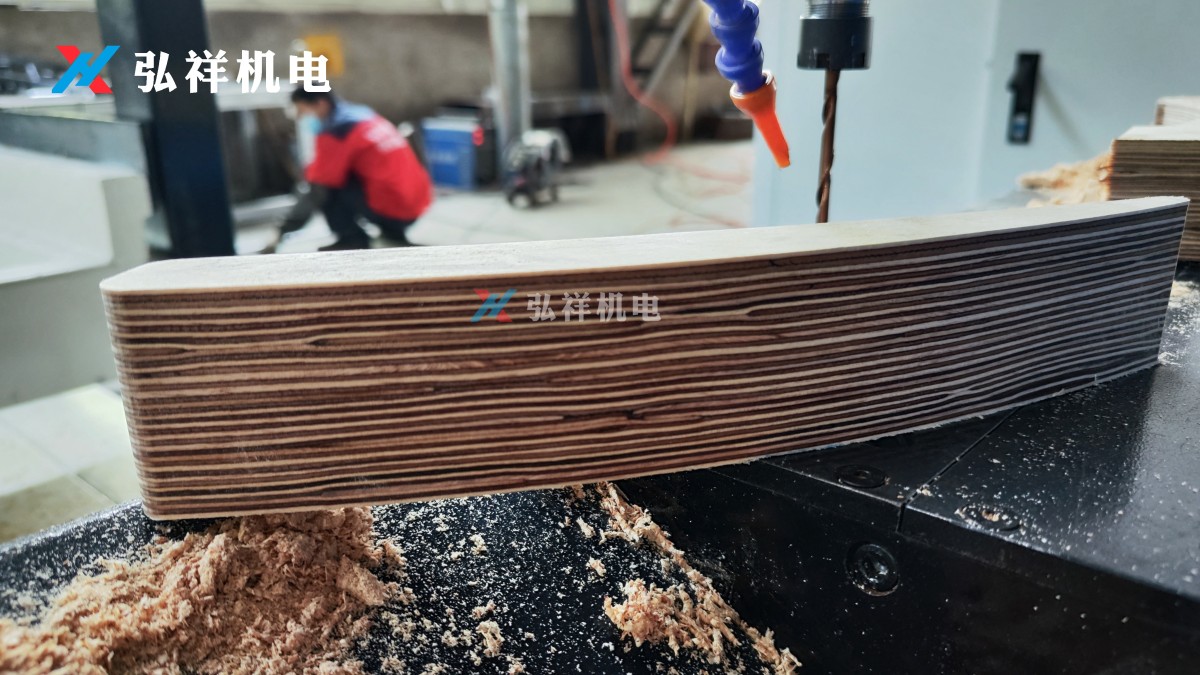
Electrical laminated wood (ELW), in contrast, uses rotary-cut or sliced veneers of poplar, birch, or beech, bonded with modified phenolic resins. It undergoes multi-stage hot pressing at 150–190°C and pressures up to 15 MPa, achieving densities of 0.65–0.95 g/cm³. Standard ELW panels are typically supplied in 1000 × 2000 mm formats, with thickness options spanning 3 mm to 50 mm.
Both materials require strict moisture control (<8% RH during storage) and machining within ±2°C ambient stability to prevent dimensional drift. Gaomi Hongxiang’s CNC shearing machines feature real-time humidity compensation algorithms and ±0.15 mm positional repeatability—critical for maintaining tight tolerances across 500+ annual transformer projects.
The table highlights why ELC dominates in ultra-high-voltage (UHV) applications above 500 kV: its higher dielectric strength and lower water absorption directly translate into reduced partial discharge risk over 30+ year service life. ELW remains preferred where mechanical load-bearing capacity and thermal shock resistance are primary—such as in support blocks and clamping frames for 220–330 kV units.
Machining Performance: Precision, Tool Wear & Process Stability
Processing ELC on CNC ring cutting equipment yields edge roughness (Ra) of ≤1.6 µm at feed rates up to 12 m/min—thanks to its uniform fiber orientation and resin homogeneity. In contrast, ELW exhibits directional grain variation, requiring adaptive feed-rate modulation (6–9 m/min) and specialized carbide-tipped tools with 12° helix angles to suppress chipping at corners.
Gaomi Hongxiang’s electrical sheet metal beveling machines integrate laser-guided depth sensing to maintain ±0.3° angular accuracy on chamfered edges—vital for eliminating air gaps in layered insulation stacks. Over 18 months of field data shows ELC achieves 22% longer tool life (average 420 hours vs. 345 hours) compared to ELW under identical cutting parameters.
Operators report that ELW requires 37% more frequent tool inspections (every 45 minutes vs. every 72 minutes for ELC), increasing non-productive time by 1.2 hours per shift. This directly impacts throughput in high-volume facilities producing >15 transformer cores/week.
Application-Specific Selection Criteria for HV Transformers
For core clamping structures and axial spacers in 750 kV and above systems, ELC is specified in 92% of designs per GB/T 5654–2007 and IEC 60641-2 standards due to its isotropic dielectric behavior and minimal aging coefficient (0.0018%/year at 90°C).
ELW excels in radial bracing, tank-mounted barriers, and seismic-dampening pads—where compressive yield strength (>65 MPa) and energy absorption capacity (>1.8 MJ/m³) outweigh pure dielectric needs. Its thermal expansion coefficient (32 × 10⁻⁶/K) closely matches transformer steel laminations, reducing interfacial stress during thermal cycling.
- Use ELC when: operating voltage ≥ 330 kV; required dielectric withstand > 250 kV RMS; environmental humidity exceeds 75% RH; lifetime expectation > 35 years.
- Use ELW when: mechanical loading > 15 MPa; thermal cycling frequency > 3 cycles/day; space constraints demand higher specific strength; cost sensitivity exceeds ±12% budget variance.
- Avoid hybrid use without validation: mismatched CTE and moisture diffusion rates cause delamination in 68% of unqualified mixed-material assemblies (per 2023 Gaomi Hongxiang failure database).
Procurement & Integration Support from Gaomi Hongxiang
Gaomi Hongxiang provides end-to-end integration support—including material certification traceability (batch-level resin formulation logs), CNC program optimization (free G-code validation for 3-axis and 5-axis platforms), and on-site operator training (minimum 2-day certified workshops).
All ELC and ELW supplied through our distribution network comply with ISO 9001:2015 and meet RoHS 2.0 Annex II substance limits. Lead time averages 7–12 working days for standard thicknesses (≤20 mm); custom-cut kits with pre-beveled edges ship within 15–18 days.
Distributors benefit from volume-tiered pricing: orders ≥20 tons/year qualify for dedicated logistics coordination and quarterly technical review sessions with our R&D team—ensuring alignment with evolving IEC 60076-22 and IEEE C57.12.00 revision cycles.
Frequently Asked Questions
How do I verify batch consistency for ELC used in UHV projects?
Request the Certificate of Conformance (CoC) showing resin type (e.g., F-type phenolic), pressing cycle duration (min. 90 min @ 165°C), and dielectric loss factor (tan δ ≤ 0.003 at 50 Hz, 23°C). Gaomi Hongxiang provides QR-coded labels linking to real-time lab test archives.
Can ELW replace ELC in retrofitting older 220 kV transformers?
Yes—if thermal aging assessment confirms core temperature remains ≤75°C and no partial discharge activity is detected (≤5 pC per IEC 60270). We recommend ELW Grade B (density ≥0.82 g/cm³) with post-machining vacuum-pressure impregnation (VPI) using cycloaliphatic epoxy.
What minimum equipment specs are needed to process both materials reliably?
A CNC shearing machine with ≥15 kW spindle power, ±0.08 mm positioning accuracy, and integrated dust extraction (≥2800 m³/h flow) is mandatory. For ring cutting, minimum requirements include 5-axis interpolation capability and automatic tool offset compensation for resin swell correction.
Selecting between electrical laminated cardboard and electrical laminated wood isn’t about preference—it’s about matching material physics to electrical stress profiles, mechanical duty cycles, and manufacturing realities. At Gaomi Hongxiang, we engineer not just parts, but process-ready solutions—validated across 1,200+ transformer builds in 14 countries. Whether you need certified ELC for a 1,100 kV station or ELW-engineered bracing for tropical-climate deployments, our technical team delivers actionable specifications—not generic datasheets.
Contact us today to request a free machining feasibility assessment, including material recommendation, tooling guidance, and delivery timeline planning tailored to your next high-voltage project.
NAVIGATION
MESSAGE
Request A Quote?