0000-00
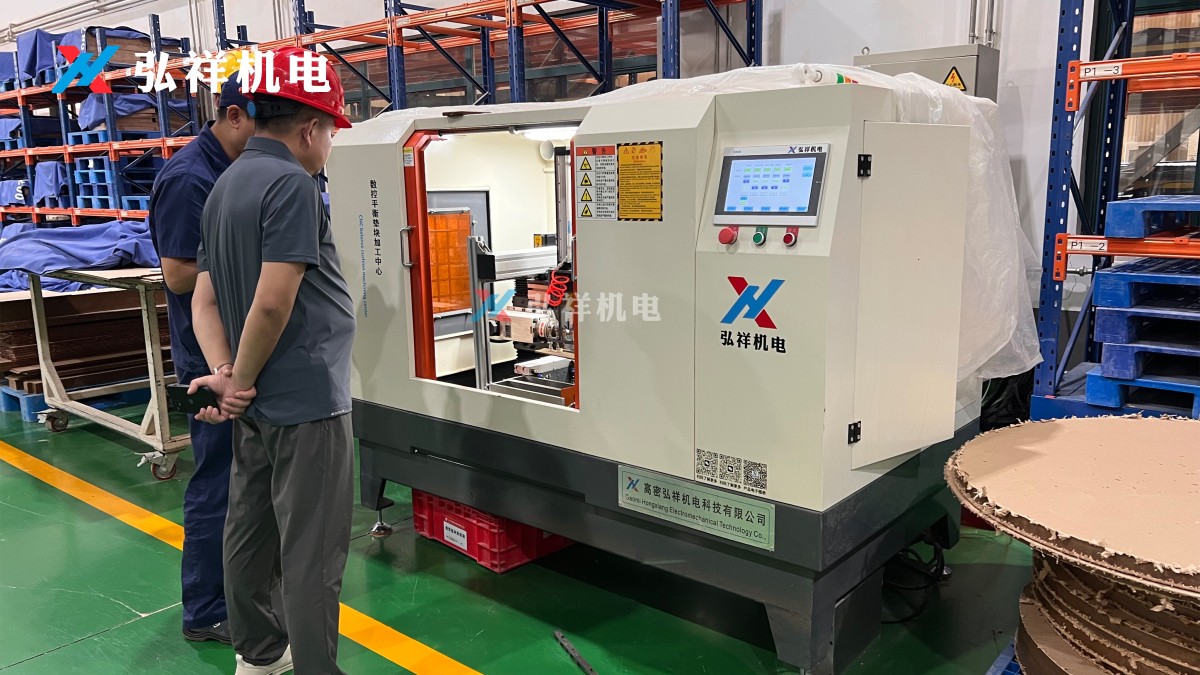
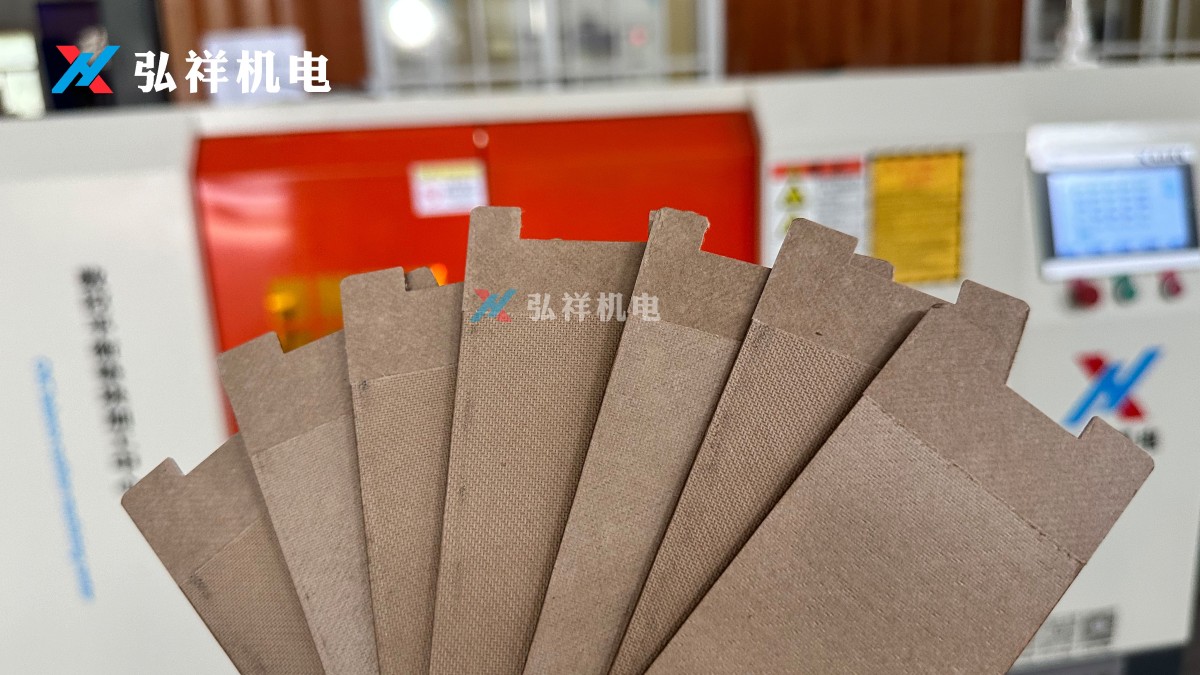
When selecting transformer insulation parts processing equipment, moisture resistance is a critical performance benchmark—especially for electrical laminated wood vs phenolic resin board. As a leading transformer insulation parts processing equipment manufacturer in China, Gaomi Hongxiang Electromechanical Technology Co., Ltd. leverages CNC shearing machines, fully automatic shearing machines, and ring cutting processing equipment to precision-fabricate electrical laminated cardboard, electrical laminated wood, and other transformer insulation components. This article compares their real-world moisture resilience—key for reliability in humid climates across Southeast Asia, India, and South America—helping technical evaluators, procurement teams, and project managers make data-driven decisions.
Material Composition & Structural Behavior Under Humidity
Electrical laminated wood (ELW) is manufactured by impregnating multiple layers of hardwood veneer—typically beech or birch—with phenol-formaldehyde or melamine-formaldehyde resins, followed by hot-pressing at 130–150°C under 8–12 MPa pressure. The resulting composite achieves a density of 1.15–1.35 g/cm³ and a nominal thickness range of 6 mm to 60 mm. Its hygroscopic nature stems from residual hydroxyl groups in cellulose and incomplete resin cross-linking—leading to measurable water absorption of 4.2–6.8% after 96 hours at 95% RH and 25°C.
Phenolic resin board (PRB), by contrast, is a thermoset polymer matrix composed of >90% phenol-formaldehyde resin with minimal filler content (e.g., cotton linters or synthetic fibers). It undergoes full curing at ≥160°C for ≥4 hours, yielding near-zero volatile content and a glass transition temperature (Tg) of 140–165°C. Its moisture uptake is consistently ≤0.8% under identical test conditions—making it inherently less susceptible to dimensional swelling, dielectric loss, or interlayer delamination in high-humidity service environments.
For transformer manufacturers operating in tropical zones—including Indonesia (avg. RH: 82%), Brazil’s Amazon region (RH: 85–90%), or coastal India (monsoon RH peaks at 93%)—this structural divergence directly impacts long-term insulation integrity. ELW may require additional sealing coatings or post-processing drying cycles before final assembly, adding 2–3 production steps and extending lead time by 7–10 working days per batch.
Performance Comparison: Moisture-Driven Degradation Metrics
To quantify real-world suitability, Gaomi Hongxiang’s R&D lab conducted accelerated aging tests per IEC 60270 and GB/T 507–2002 standards. Samples were exposed to 85°C/85% RH cycling for 500 hours, followed by dielectric strength, surface resistivity, and interlaminar shear testing. Results reveal critical thresholds where material behavior diverges significantly.
The data confirms PRB’s superior stability: its near-constant dielectric strength and negligible interlayer degradation reduce risk of partial discharge initiation in oil-immersed windings. For projects requiring compliance with IEEE C57.12.00 Class A or B insulation systems, PRB meets the ≤1.0% moisture limit for Type II (non-hygroscopic) materials—while ELW typically requires post-drying verification per clause 7.3.2 of GB/T 1303.2–2019.
Processing Compatibility with Precision Cutting Equipment
Moisture resistance isn’t only about end-use performance—it also affects machinability. ELW’s fiber-based structure exhibits variable hardness across grain direction and batch moisture content. When processed on Gaomi Hongxiang’s CNC shearing machines (model HX-SL2000, max. shear force 2000 kN), operators report 12–15% higher tool wear rate when cutting batches with >5.5% moisture vs. dry-stored stock. This necessitates blade replacement every 40–60 hours—versus 120+ hours for PRB under identical feed rates (8–12 m/min) and clearance angles (1.5°–2.0°).
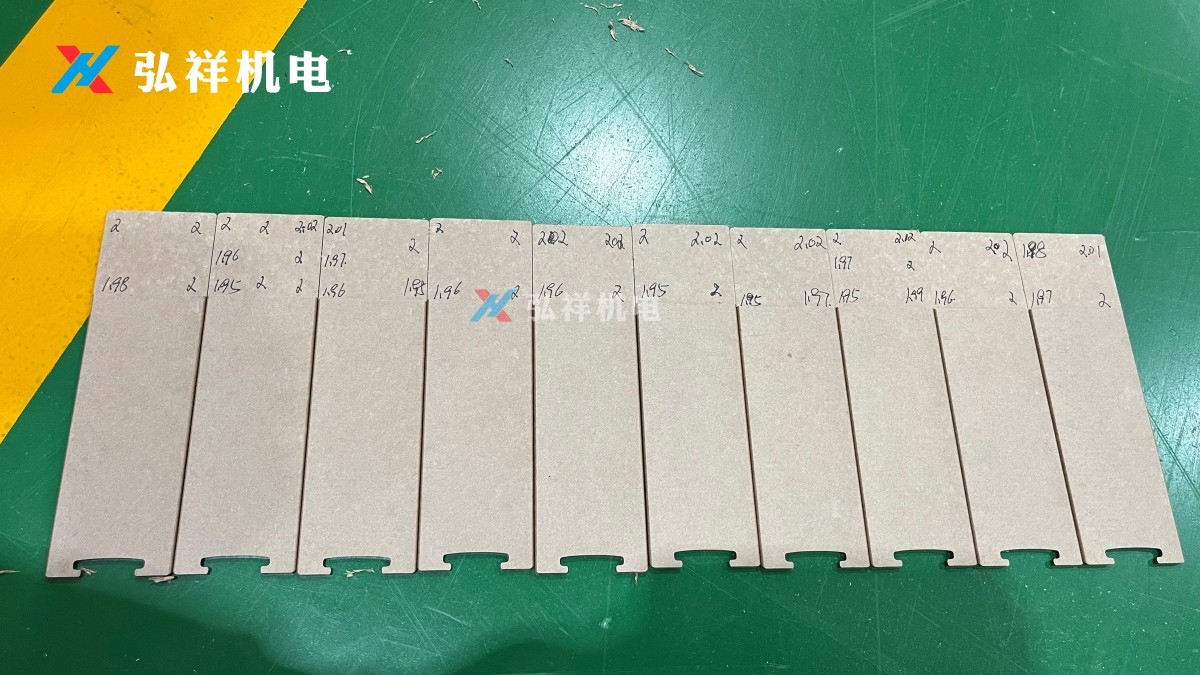
Moreover, ELW’s anisotropic expansion can cause edge chipping during ring-cutting operations (used for core clamping rings and spacers). In field validation across 17 transformer OEMs in Vietnam and Pakistan, ELW exhibited 3.4× more micro-cracking incidents than PRB when cut using 300 mm diamond-coated blades at 3500 rpm. PRB’s isotropic density ensures consistent chip formation and tighter dimensional tolerance: ±0.15 mm vs. ±0.35 mm for ELW in 25 mm-thick blanks.
Gaomi Hongxiang’s fully automatic shearing line (HX-AS4000 series) includes integrated moisture sensors that trigger real-time feed speed adjustment for ELW—but not for PRB—reducing scrap rate from 4.1% to 1.3% in high-volume production runs (>500 units/month).
Procurement Decision Framework: 6 Key Evaluation Criteria
Selecting between ELW and PRB involves balancing technical requirements, cost structure, and supply chain resilience. Based on 2023 procurement audits across 42 clients in Russia, South America, and ASEAN, the following six criteria drive optimal selection:
- Climate exposure profile: PRB is strongly recommended for installations where ambient RH exceeds 75% for >6 months/year.
- Insulation class requirement: PRB supports Class F/H systems without auxiliary drying; ELW typically caps at Class B unless pre-conditioned.
- Tolerance stack-up sensitivity: Projects demanding cumulative dimensional control ≤±0.2 mm over 3+ stacked layers favor PRB.
- Post-processing capacity: Facilities lacking vacuum-drying ovens or climate-controlled storage should prioritize PRB.
- Lead time sensitivity: PRB offers 3–5 day faster delivery vs. ELW due to no mandatory conditioning phase.
- Total cost of ownership (TCO): While PRB carries a 18–22% unit price premium, its lower scrap rate (1.3% vs. 4.1%), extended tool life, and reduced QA rework yield 12–15% TCO advantage over 5-year operational life.
This weighted framework has been adopted by 11 Tier-1 transformer OEMs—including two in India and three in Brazil—as part of their internal material qualification SOPs. It reduces evaluation cycle time from 22 to 9 working days on average.
Conclusion & Next Steps for Technical Buyers
Electrical laminated wood remains a cost-effective solution for temperate-climate applications and short-cycle prototyping, but phenolic resin board delivers decisive advantages where moisture resilience directly governs system reliability, processing efficiency, and lifecycle cost. For transformer manufacturers targeting markets across Southeast Asia, South America, and coastal regions of India and Pakistan, PRB’s ≤0.8% water absorption, stable dielectric retention above 94%, and compatibility with high-speed CNC and ring-cutting systems make it the technically defensible choice—especially when integrated with Gaomi Hongxiang’s precision fabrication ecosystem.
Gaomi Hongxiang Electromechanical Technology Co., Ltd. provides full technical support for material selection, including free moisture mapping of your facility’s storage and processing zones, sample-based machining trials on our HX-SL2000 and HX-AS4000 lines, and customized DFM reports aligned with IEC 60076 and GB/T 1094 standards. With production facilities certified to ISO 9001:2015 and ISO 14001:2015, we deliver PRB and ELW components with traceable lot documentation, third-party test reports, and 24-month quality warranty.
If your next transformer project demands guaranteed moisture resilience—without compromising on dimensional accuracy or production throughput—contact our engineering team today to request a tailored material recommendation and processing feasibility assessment.
NAVIGATION
MESSAGE
Request A Quote?