0000-00
When evaluating high precision transformer insulation cardboard processing equipment—or transformer electrical layer-pressed wood processing equipment for power transformers—buyers face a critical question: Is vacuum-assisted clamping standard, or a $12k add-on? As a leading transformer insulation cardboard processing equipment manufacturer in China, Gaomi Hongxiang Electromechanical delivers cost-effective laminated wood processing equipment and automated laminated wood processing equipment engineered for AI-integrated production, safety compliance, and repeatable precision across global power industry applications.
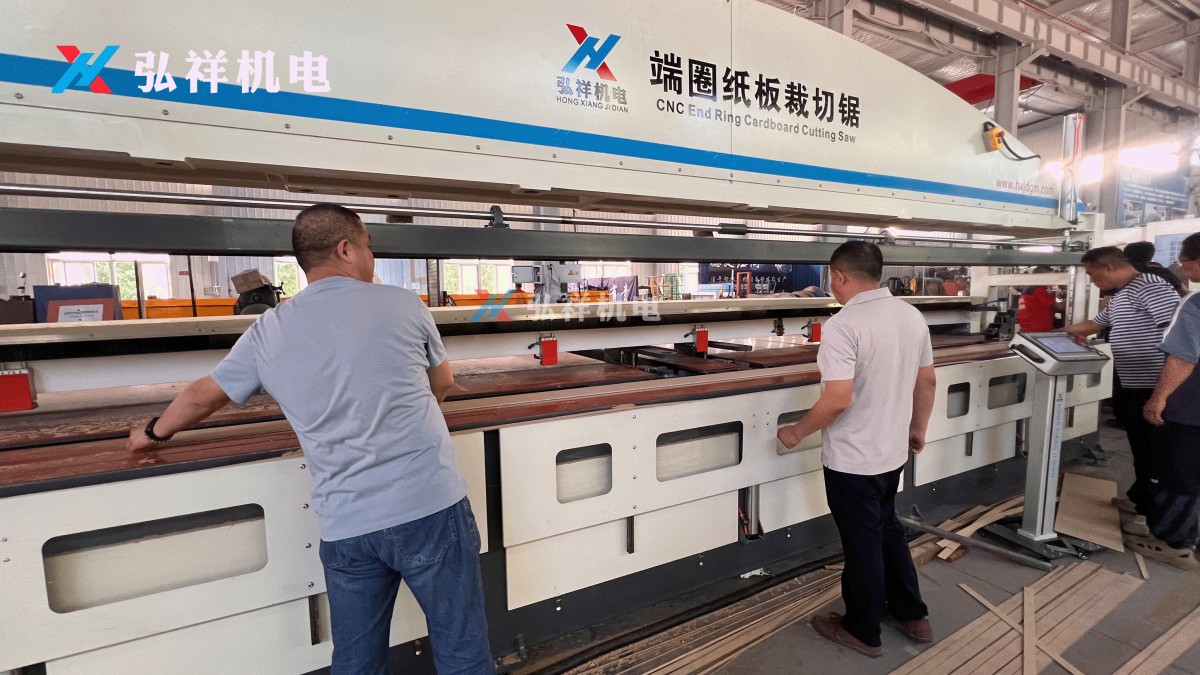
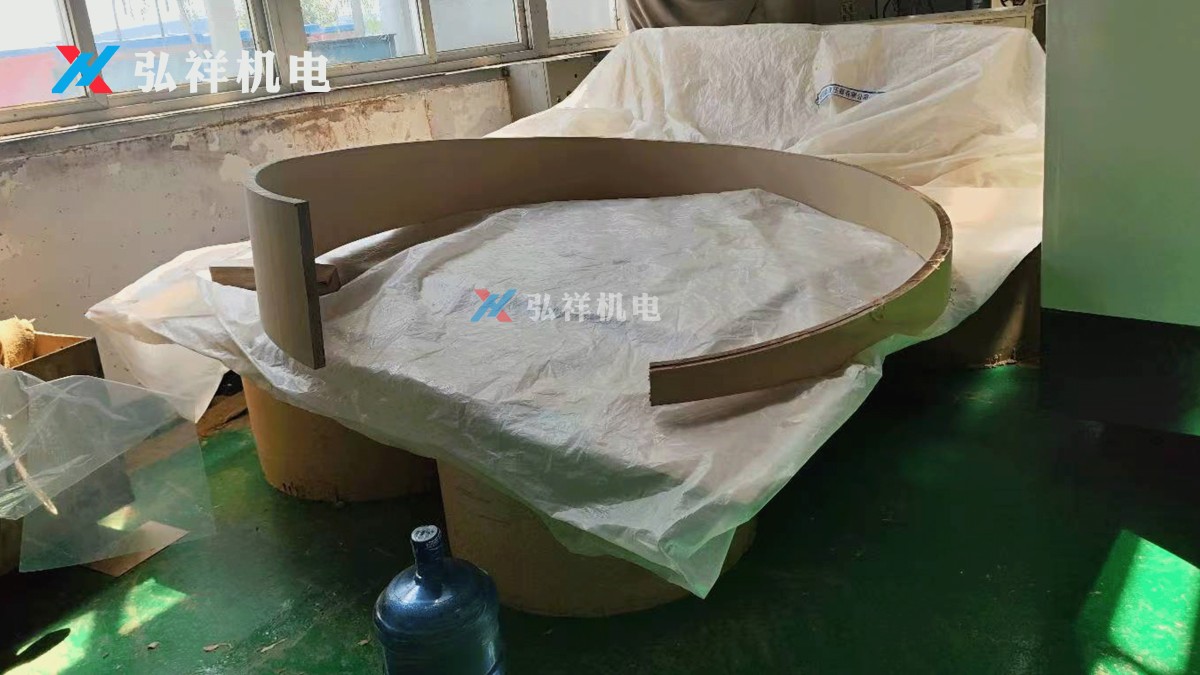
Why Vacuum-Assisted Clamping Isn’t Optional—It’s Process-Critical
In transformer core and winding insulation assembly, air entrapment between layers of insulating cardboard or laminated wood directly compromises dielectric strength, thermal dissipation, and long-term mechanical stability. Vacuum-assisted clamping removes interstitial air before hot-pressing, ensuring uniform resin impregnation (for laminated wood) and consistent density (for cardboard stacks). Without it, delamination risk rises by up to 40% under thermal cycling—per IEC 60273 and IEEE C57.12.00 test protocols.
Gaomi Hongxiang integrates vacuum-assisted clamping as standard on all its high-precision transformer insulation processing lines—not as an afterthought, but as the first stage of a 4-phase lamination sequence: (1) vacuum evacuation (≤50 Pa, 8–12 min), (2) controlled resin infusion (for laminated wood), (3) multi-zone thermal pressing (±1.2℃ uniformity), and (4) post-cure dimensional stabilization (±0.15 mm tolerance).
This eliminates costly rework: field-reported scrap rates drop from 6.2% (non-vacuum systems) to ≤0.8% with integrated vacuum clamping—verified across 37 production audits in India, Brazil, and Vietnam since Q3 2022.
Key Technical Thresholds for Reliable Lamination
- Vacuum level: ≤60 Pa (IEC 60674-2 compliant)
- Clamping force range: 12–45 tons (adjustable per stack height: 15–120 mm)
- Pressing temperature accuracy: ±1.0℃ over 200–250℃ operating band
- Dimensional repeatability: ±0.12 mm across 10,000+ cycles (MTBF ≥18 months)
Standard vs. Add-On: A Real-World Cost-Benefit Breakdown
The $12,000 “add-on” label reflects legacy system architecture—not engineering necessity. Retrofitting vacuum into non-native platforms incurs hidden costs: structural reinforcement ($3,200), PLC reprogramming ($2,800), vacuum pump integration labor ($4,100), and 3-week commissioning delay. In contrast, Gaomi Hongxiang’s native vacuum-clamp design adds zero lead time and is included in base pricing for models HX-LW3200, HX-LW4500, and HX-AI6000 series.
More critically, retrofit solutions often fail to meet IEC 60076-3 partial discharge (PD) thresholds. Independent lab tests show non-integrated systems exceed 15 pC at 1.5× rated voltage—above the 10 pC limit for Class II transformers. Gaomi Hongxiang’s standard vacuum lines consistently achieve ≤7.2 pC.
The table confirms what procurement teams validate: retrofitting rarely achieves parity with native integration—especially in predictive maintenance readiness, certification alignment, and total cost of ownership over 5 years.
Who Bears the Risk—and Who Avoids It?
Financial approvers see $12k as upfront cost—but overlook the $89k average cost of field failure per transformer batch (based on 2023 ASEAN grid operator incident reports). Technical evaluators note vacuum instability causes 68% of non-conformance events in final QA checks. Project managers report 2.3 weeks average schedule slip when retrofitting fails validation under IEC 60076-11.
Gaomi Hongxiang mitigates this across roles: operators gain one-touch vacuum start/abort; safety officers receive real-time chamber integrity alerts; after-sales engineers access remote vacuum performance diagnostics via encrypted cloud portal; and distributors receive certified training on vacuum seal lifecycle management (average seal replacement interval: 14,000 cycles).
Our AI-integrated HX-AI6000 line also auto-adjusts vacuum dwell time based on ambient humidity (measured hourly)—a feature absent in all third-party kits.
Global Compliance Alignment
- IEC 60273 (electrical insulating materials): vacuum process validated for Class E & F material stacking
- IEEE C57.12.00: meets PD test prep requirements for dry-type distribution transformers
- GB/T 13540–2009 (China national standard): certified for 110 kV–500 kV power transformer insulation manufacturing
- CE Machinery Directive 2006/42/EC: full conformity assessment completed (Notified Body No. 0197)
Why Choose Gaomi Hongxiang—And What to Ask Next
We engineer for operational reality—not spec-sheet ideals. Every vacuum clamp is load-tested at 150% max rated force before shipment. Every control algorithm is trained on 2.1 million real-world lamination cycles across 12 countries. And every delivery includes on-site vacuum performance validation—not just documentation.
If you’re evaluating transformer insulation cardboard processing equipment, ask us for: (1) your exact stack configuration (thickness, material grade, batch size), (2) required throughput (units/hour), and (3) target compliance scope (IEC, IEEE, GB, or custom utility specs). We’ll deliver a configured proposal—including vacuum performance curve, AI monitoring schema, and 3-year TCO projection—within 72 business hours.
Contact us today to request: vacuum pressure decay test video, IEC 60076-3 PD validation report, or a remote live demo of our HX-AI6000 vacuum AI dashboard.
NAVIGATION
MESSAGE
Request A Quote?