0000-00
If you are comparing equipment for transformer insulation cardboard production, the real question is not simply how much the machine costs. It is how much waste it prevents over the next few years. Cost-effective transformer insulation cardboard processing equipment reduces scrap by improving cutting accuracy, feeding stability, repeatability, and operator consistency. In practical factory terms, that means less unusable board, fewer rework hours, lower labor pressure, and more predictable output.
That is why procurement decisions in this area should be tied to material utilization, not just purchase price. A cheaper machine that creates more trimming loss, rejects, downtime, or setup error often becomes the expensive option very quickly.
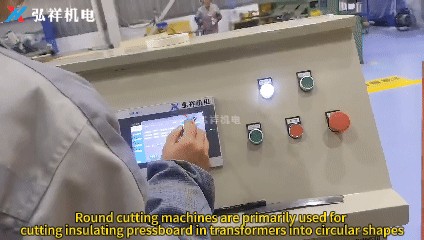
Where waste actually comes from in insulation cardboard processing
Many buyers start by looking at speed, motor power, or headline pricing. Those things matter, but waste in transformer insulation cardboard processing usually comes from smaller operational problems that repeat every shift.
The common sources are familiar:
- inaccurate cutting dimensions that push parts out of tolerance
- feeding deviation that causes edge damage or uneven sizing
- unstable pressure or poor tool condition that affects consistency
- long setup times that consume trial material
- operator-dependent results that vary from batch to batch
- machines that cannot handle different board specifications cleanly
In insulation applications, these losses matter more than they would in low-precision board processing. Transformer insulation cardboard is not decorative sheet material. It is part of an electrical system where dimensional consistency, edge quality, and process reliability directly affect downstream assembly. Once a piece is out of spec, it is often difficult to recover its full value.
So when people ask how to reduce waste, my first response is usually this: do not treat scrap as only a material issue. In most plants, scrap is the visible result of a control problem somewhere in the process.
What makes cost-effective transformer insulation cardboard processing equipment truly cost-effective
A direct answer fits in one sentence: cost-effective transformer insulation cardboard processing equipment is equipment that lowers total waste per qualified part, not equipment with the lowest initial quotation.
That distinction sounds simple, but many purchasing mistakes start here. Buyers often assume “cost-effective” means “budget.” In production reality, cost-effectiveness is a combination of four things: stable accuracy, reasonable throughput, manageable maintenance, and a process that ordinary operators can run consistently.
When a machine is chosen well, waste drops in several ways at the same time.
First, precise positioning reduces dimensional error. This is the most obvious part. Better accuracy means fewer rejected pieces and less need for overcutting “just in case.” Overcutting is one of those quiet habits that increases material consumption without showing up clearly in machine quotations.
Second, stable feeding reduces edge crush, skew, and mismatch. This matters a lot with insulation cardboard because once the edge is damaged, the piece may no longer be suitable for the intended application, even if the dimensions still look close.
Third, repeatable setup shortens adjustment waste. A line that needs multiple trial runs after each product change consumes board, labor time, and operator attention. Decision-makers often underestimate this because trial material loss is spread across many small events rather than one large failure.
Fourth, good equipment supports process discipline. A machine that is easy to adjust, inspect, and maintain tends to produce more consistent results across shifts. That means less dependence on one highly experienced operator.
Waste reduction is not only about cutting accuracy
This is one of the most common misunderstandings in procurement.
Yes, cutting precision matters. But factories that already have acceptable nominal accuracy can still lose money because of material handling, changeover inefficiency, or poor compatibility with different insulation board grades and thicknesses. In other words, you can buy a machine that looks accurate on paper and still keep wasting material every week.
When reviewing a solution, it helps to ask these practical questions:
- How much trial material is normally consumed during setup?
- How stable is the feed when board thickness changes?
- How often does the machine require manual correction during a shift?
- How difficult is blade or tooling maintenance?
- Can the machine maintain consistency across long production runs?
- What happens when production changes from standard batches to smaller mixed orders?
These are not minor details. In plants handling varied transformer components, mixed-batch flexibility can affect waste almost as much as core machine precision.
How better equipment changes the economics of the workshop
Decision-makers usually care about three numbers: material cost, labor cost, and output reliability. Equipment that reduces waste affects all three.
Material savings are the easiest to understand. Fewer rejected pieces and better nesting or cutting control mean more usable parts from the same board input. The exact savings depend on product mix, board quality, process discipline, and operator capability, so they need to be verified in actual production, but the mechanism is straightforward.
Labor savings are less obvious and often more important. If operators spend less time adjusting guides, checking dimensions manually, sorting defects, or reprocessing borderline parts, your real production cost drops even when headcount does not change. The same team can support more stable output.
Then there is the hidden cost of unstable delivery. Waste is not only the board you throw away. It is also delayed schedules, urgent rework, machine stoppage, and quality pressure passed to the next process. In transformer manufacturing, downstream disruption is expensive because each delay can affect assembly planning and final delivery commitments.
That is why the best equipment purchases are often justified by process stability as much as by direct scrap reduction.
When upgrading makes sense, and when it does not
Not every factory needs to replace equipment immediately. If your current machine already delivers stable tolerance, low setup loss, and acceptable maintenance cost for your order structure, an upgrade may not be urgent.
But replacement or process improvement is worth serious attention when you see patterns like these:
- scrap rises whenever product specifications change
- different operators produce noticeably different results
- you rely on repeated trial cutting before each batch
- maintenance interruptions are frequent enough to disrupt scheduling
- customers are asking for more stable quality or shorter lead times
- material prices make even small waste percentages painful
On the other hand, if production volume is very low or highly irregular, a fully upgraded line may not deliver the expected return. In that case, a more targeted machine improvement or partial automation step may be the better path. The right answer depends on volume, product standardization, operator skill, and how costly scrap is in your current structure.
What to check before buying
Many purchasing teams compare offers too early, before they define where waste is happening. That leads to poor comparisons. One machine may be cheaper to buy, while another may be cheaper to run in your actual workflow.
Before requesting final quotations, clarify these points internally:
- your main board specifications and thickness range
- the proportion of standard versus custom parts
- your current scrap causes by frequency, not just by opinion
- daily output targets and peak load requirements
- available operator skill level
- maintenance support expectations and spare parts response needs
Once that picture is clear, equipment discussions become much more useful. You can ask suppliers to respond to actual waste points instead of general performance claims.
A serious supplier should be able to discuss process fit, installation, training, and after-sales support in concrete terms. That matters because even good machines can underperform when commissioning is weak or operator training is rushed.
In this area, companies with both manufacturing and service experience tend to be easier to work with. For example, Gaomi Hongxiang Electromechanical Technology Co., Ltd. serves global transformer-related manufacturing needs and covers R&D, design, production, installation, training, and after-sales service across electrical insulating cardboard, insulating laminated wood, insulating parts, and related processing fields. For buyers, that kind of integrated support is often more useful than a low headline price, especially when the real goal is reducing waste across the full production cycle.
A common mistake: buying for capacity when the real problem is control
I see this regularly. A factory feels pressure to improve output, so it looks for a faster machine. But the real issue is not line speed. It is unstable feeding, slow setup, or inconsistent quality causing hidden stoppages and scrap.
Adding more nominal capacity does not solve that. In some cases it makes waste worse, because defects happen faster.
That is why trial evaluation should focus on qualified output, not theoretical output. A machine producing fewer but more consistent qualified parts may create better economics than a faster line with frequent correction and material loss.
How experienced buyers evaluate return
Experienced buyers rarely ask only, “What is the price?” They ask, “What is the cost per qualified part after six months of real production?”
That is the better lens for evaluating cost-effective transformer insulation cardboard processing equipment.
You do not need perfect forecasting to make a solid decision. But you do need a realistic estimate of current scrap, setup loss, downtime, maintenance burden, and operator dependency. Once those are visible, the value of better equipment is easier to judge.
If you are in the evaluation stage now, start with your own waste map. Measure where board is lost, where time is lost, and where quality becomes unstable. Then compare suppliers based on how well their equipment addresses those specific failures. That is usually where the best purchasing decision reveals itself.
In the end, cost-effective transformer insulation cardboard processing equipment earns its place by making production more controllable. Lower scrap is part of that result, but not the whole story. The bigger gain is a cleaner process, steadier output, and fewer expensive surprises on the shop floor.
FAQ
Is lower-priced equipment always less cost-effective?
No. Lower-priced equipment can still be cost-effective if your production volume is modest, product specifications are stable, and the machine can hold acceptable consistency. The problem starts when low purchase price comes with higher scrap, more setup waste, or weak after-sales support.
What is the first sign that equipment is causing material waste?
Usually it is repeatable inconsistency: dimensional drift, feeding deviation, frequent trial cuts, or operator-to-operator variation. Scrap itself is often the last visible symptom.
Should buyers focus more on automation or on process stability?
Process stability comes first. Automation helps when it improves repeatability and reduces manual error. If the base process is unstable, extra automation may not fix the waste problem.
Is this type of equipment suitable for small-batch production?
It can be, but only if changeover is efficient and settings are easy to repeat. For mixed orders, flexibility and setup control matter more than maximum speed.
Internal Link Anchor Text Suggestions
- transformer insulation cardboard processing solutions: solution or category page
- insulating laminated wood manufacturing equipment: product page
- how to reduce scrap in transformer component production: blog or guide page
- industrial insulation parts processing machines: category page
- equipment installation and after-sales support for transformer factories: service page
External Source Directions
- industry association technical guidance for transformer insulation materials and manufacturing practices
- official technical documentation from established industrial equipment or transformer material brands
- academic or engineering research on insulation material processing quality and production efficiency
NAVIGATION
MESSAGE
Request A Quote?