0000-00
For after-sales maintenance teams, unplanned stoppages can quickly disrupt transformer production and increase service pressure. Durable transformer electrical layer-pressed wood processing equipment helps reduce downtime by delivering stable performance, reliable precision, and longer service life under demanding operating conditions. Backed by Gaomi Hongxiang Electromechanical Technology Co., Ltd.’s integrated manufacturing and service capabilities, this equipment supports faster maintenance response, smoother daily operation, and more consistent output for power transformer component processing.
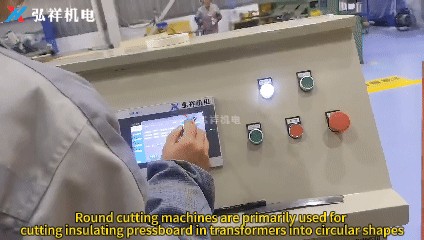
When maintenance personnel search for durable transformer electrical layer-pressed wood processing equipment, their main intent is usually practical rather than theoretical. They want to know which machine features truly reduce breakdowns, which design choices simplify repair work, and how equipment durability translates into fewer emergency interventions on the shop floor.
For after-sales teams, the most important question is straightforward: will this equipment stay stable under continuous production, and if it does fail, can it be restored quickly without affecting delivery schedules? That concern shapes how they evaluate machine structure, parts quality, control systems, maintenance access, and supplier support.
This is why a useful discussion should not stay at the level of “high quality” or “advanced manufacturing.” What matters more is how durability is built into the machine, how wear points are controlled, how precision is maintained over time, and how service teams can diagnose and resolve issues with less downtime pressure.
Why downtime is such a serious issue in layer-pressed wood processing for transformer production
In transformer manufacturing, electrical layer-pressed wood components are not optional auxiliary materials. They are critical insulating and structural parts that influence assembly accuracy, dielectric performance, and final product consistency. If the processing equipment stops unexpectedly, the impact can spread far beyond one machine.
Production schedules may be interrupted, downstream assembly stations may wait for missing parts, and maintenance teams may be forced into urgent repair mode. In many facilities, this creates a chain reaction: operators pause, quality checks are delayed, spare part usage increases, and after-sales technicians face pressure to restore operation immediately.
For maintenance personnel, the issue is not only machine failure frequency. It is also the time required to identify root causes, access damaged components, replace parts safely, recalibrate the machine, and verify that product tolerances are still within acceptable range. Durable equipment reduces downtime because it limits both the number of incidents and the complexity of recovery.
That is especially important in wood-based insulating material processing, where cutting, pressing, shaping, and dimensional control must remain stable. Even small deviations caused by mechanical wear, vibration, or alignment loss can lead to scrap, rework, or hidden quality risks. Durable machine construction therefore protects both uptime and product reliability.
What after-sales maintenance teams care about most when evaluating equipment durability
Maintenance teams often assess equipment differently from purchasing departments. Instead of focusing first on selling price or brochure specifications, they pay attention to service intervals, failure-prone assemblies, accessibility of wear parts, lubrication logic, electrical stability, and how easily common faults can be isolated.
One of their top concerns is whether the machine frame and transmission system can hold accuracy during long-term operation. If the base structure lacks rigidity, repeated stress can affect alignment, cause uneven cutting or pressing results, and increase load on bearings, motors, and guide components. Over time, that creates more stoppages and more difficult troubleshooting.
Another key issue is component standardization. When durable transformer electrical layer-pressed wood processing equipment uses reliable, well-matched electrical and mechanical components, maintenance becomes more predictable. Spare part planning improves, replacement time shortens, and technicians spend less time adapting to inconsistent configurations.
They also care about fault transparency. A machine may be mechanically strong, but if its control system gives poor diagnostics, maintenance time still increases. Clear alarms, stable wiring layouts, documented circuits, and logical access to sensors and actuators all help after-sales teams respond faster under pressure.
Finally, after-sales teams look closely at the supplier’s service capacity. Even durable equipment requires periodic support, commissioning guidance, training, and occasional troubleshooting. A manufacturer with integrated R&D, production, installation, training, and after-sales service can usually resolve field issues faster because it understands the machine at every level.
How durable machine design directly reduces maintenance-related downtime
Durability is not one single feature. It is the result of design decisions that reduce wear, resist deformation, maintain precision, and simplify recovery when problems occur. In layer-pressed wood processing equipment, this starts with a stable structural platform. A rigid machine body helps resist vibration and supports accurate machining under continuous load.
High-quality guide systems, transmission assemblies, and spindle-related components also matter. These parts often determine whether movement remains smooth and repeatable after long production cycles. When these assemblies are designed for stability and matched correctly to actual operating loads, maintenance frequency tends to decrease significantly.
Electrical system durability is equally important. In industrial environments, unstable connections, poor cabinet layout, dust contamination, or inadequate protection can trigger nuisance alarms and unexpected shutdowns. Robust electrical design, organized wiring, and reliable control integration reduce these risks and make diagnostics easier when service is needed.
Another major factor is protection against contamination. Processing insulating laminated wood and related materials can generate dust and debris. If these contaminants reach key motion, sensing, or electrical areas too easily, the machine will experience more wear and more unstable behavior. Good sealing, shielding, extraction support, and rational layout all contribute to longer operating life.
For maintenance teams, serviceability is part of durability. Machines that allow quick access to filters, belts, bearings, sensors, or lubrication points reduce downtime because technicians can complete preventive work faster and handle minor repairs before they become major failures. In real operation, this can matter as much as raw material strength.
Common failure points that durable equipment is designed to minimize
Many unscheduled stoppages come from a predictable set of weak points. These include drive instability, bearing wear, misalignment, sensor contamination, pneumatic inconsistency, and electrical contact problems. Durable equipment does not make failures impossible, but it reduces how often these weak points become production-stopping faults.
Mechanical fatigue is a frequent cause of long-term trouble. If machine frames, support arms, or moving assemblies are not sufficiently robust, repeated load cycles can gradually affect precision. This may first appear as a quality issue rather than a complete shutdown, but for maintenance teams that is often an early warning of larger repair needs ahead.
Another common issue is accelerated wear caused by poor lubrication paths or difficult maintenance access. When routine service is inconvenient, necessary checks may be delayed during busy production periods. Durable equipment addresses this by making regular maintenance simpler, more visible, and less disruptive to normal workflow.
Electrical faults can also be underestimated. Loose terminals, heat buildup, signal interference, and unclear wiring organization often extend downtime because the machine may stop intermittently and resist quick diagnosis. A well-built system with clear control architecture helps technicians isolate problems faster and reduces repeated service visits for the same issue.
Processing accuracy drift is another hidden source of downtime. If a machine slowly loses repeatability, operators may compensate manually until the problem becomes too severe. Durable transformer electrical layer-pressed wood processing equipment is designed to hold tolerances more consistently, helping maintenance teams avoid reactive repairs triggered by accumulated deviation.
What features make maintenance work faster and safer in daily operation
From an after-sales perspective, the best equipment is not only durable during production but also cooperative during service. That means inspection points should be easy to reach, consumable parts should be logically arranged, and maintenance instructions should match real operating conditions. Practical design saves service time every week, not just during emergencies.
Clear human-machine interface functions can make a major difference. If the control system records alarm history, parameter changes, and operating status clearly, technicians can identify patterns instead of troubleshooting in the dark. This improves first-time fix rates and helps prevent recurring faults.
Modular subassemblies are another advantage. When motors, control elements, feeding units, or adjustment mechanisms can be serviced or replaced without disassembling large portions of the machine, downtime is reduced sharply. Maintenance teams especially value machines where common fault areas are isolated and easy to test independently.
Safety is also closely linked to speed. Equipment that provides safe maintenance access, clear lockout points, stable guarding design, and sensible internal layout reduces hesitation and minimizes the risk of secondary incidents during repair work. For after-sales teams working under time pressure, these design details are far from minor.
Documentation quality should not be overlooked. Accurate wiring diagrams, maintenance schedules, lubrication instructions, wear-part lists, and troubleshooting references help both in-house and field technicians act faster. A durable machine supported by strong technical documents is easier to keep running at a stable level over the long term.
How durability improves product consistency, not just machine uptime
After-sales personnel often see the connection between maintenance and quality more clearly than others. In transformer insulation component processing, machine condition directly affects part dimensions, edge quality, fit, and consistency. A durable machine reduces downtime, but it also reduces the frequency of subtle quality variation caused by wear or instability.
Stable cutting, pressing, and forming performance is essential when manufacturing components from electrical insulating cardboard, insulating laminated wood, and related materials. If the machine remains rigid and accurate, the output is more predictable. This helps quality teams, operators, and assemblers work with fewer corrections and less rework.
For maintenance departments, fewer quality-related stoppages can be just as valuable as fewer mechanical failures. Machines that hold calibration longer reduce the need for emergency adjustments and repeated validation checks. That means less interruption to production and less strain on technical support resources.
In many factories, quality problems are initially treated as operator issues or material issues, when in fact they are linked to declining machine condition. Durable equipment reduces that ambiguity. It creates a more stable baseline, making it easier to distinguish between true process variation and machine-related deviation.
How to judge whether equipment is truly durable before and after installation
Maintenance teams should evaluate durability using both design evidence and operating behavior. Before installation, they can review machine structure, materials, key purchased components, electrical layout, service access, lubrication design, and supplier documentation. These details often reveal more than broad marketing claims.
It is also useful to ask practical questions. Which components typically wear first? What is the expected maintenance interval? Which spare parts should be stocked on site? How are alarms classified? How long does alignment recovery usually take after replacing key motion components? Clear answers indicate engineering maturity.
After installation, durability can be judged through measurable indicators. These include mean time between failures, repeat fault frequency, vibration trends, dimensional stability of processed parts, maintenance labor hours, and spare part consumption. When these metrics remain stable over time, the equipment is proving its value in real conditions.
Technicians should also monitor whether preventive maintenance is realistic. If a machine requires frequent intervention but access is poor, downtime risk remains high even if the machine appears robust at first. True durability supports a manageable service rhythm rather than creating hidden maintenance burden.
Another strong sign is consistency after repair. Durable equipment should return to stable production quickly after planned maintenance or part replacement. If every intervention leads to lengthy recalibration or recurring drift, the machine may not be as service-friendly as required for demanding transformer production environments.
The value of working with a manufacturer that supports the full equipment lifecycle
Durability is strengthened when the equipment builder understands not only manufacturing but also installation, training, and long-term service. Gaomi Hongxiang Electromechanical Technology Co., Ltd. combines R&D and design, production, sales, installation, training, and after-sales service, which is especially relevant for maintenance-focused customers.
For after-sales teams, this integrated capability means problems can be addressed with better technical continuity. The same company that designs and manufactures the machine is also positioned to support commissioning, operator guidance, spare parts planning, and troubleshooting. This shortens communication chains and improves repair accuracy.
The company’s experience in power transformer assembly and manufacturing services, along with processing of electrical insulating cardboard, insulating laminated wood, and insulating parts, is also important. It suggests a closer understanding of the real production environment in which the equipment operates, including quality demands, material behavior, and service priorities.
That industry familiarity matters when maintenance teams need more than replacement parts. They may need process-aware support, advice on wear patterns, adjustment suggestions, or training that helps operators avoid misuse that leads to avoidable faults. A supplier with broad lifecycle involvement is better equipped to provide that kind of support.
For companies serving domestic and international markets, reliable after-sales cooperation also supports continuity across regions. When equipment is exported to Southeast Asia, South America, India, Pakistan, Russia, and other markets, service systems must be organized enough to support varied production conditions and user expectations.
Practical steps maintenance teams can take to get the most from durable equipment
Even the most durable transformer electrical layer-pressed wood processing equipment performs best when paired with disciplined maintenance practices. After-sales teams can help maximize uptime by establishing condition-based inspection routines focused on alignment, transmission behavior, lubrication condition, dust management, and electrical cabinet health.
It is wise to create a fault history database rather than treating each breakdown as an isolated event. Tracking alarms, parts replaced, repair duration, and root causes can reveal patterns early. This allows teams to shift from reactive response to preventive action, which is where durable equipment delivers its full advantage.
Operator training should also be part of the downtime strategy. Many avoidable failures begin with incorrect loading, poor cleaning habits, delayed reporting of abnormal noise, or unauthorized parameter changes. When operators and maintenance staff share clear standards, machine durability translates more directly into production stability.
Spare part planning should be selective and data-based. Durable machines often reduce emergency part consumption, but key wear components should still be available before they are urgently needed. Coordinating this with the supplier helps avoid long stoppages caused not by failure severity, but by replacement delays.
Finally, schedule regular technical reviews with the equipment manufacturer or service provider. These reviews can cover operating trends, recurring minor issues, update opportunities, and preventive recommendations. Small adjustments made early often prevent the larger failures that create the highest downtime pressure later.
Conclusion: durability matters most when it makes maintenance simpler and production more reliable
For after-sales maintenance teams, the value of durable transformer electrical layer-pressed wood processing equipment is not abstract. It shows up in fewer unexpected failures, shorter repair time, more stable precision, lower spare part pressure, and smoother coordination with production and quality teams.
The most useful way to evaluate durability is to ask how well the machine resists wear, maintains accuracy, protects key systems, supports diagnostics, and allows fast service access. Equipment that performs well in these areas does more than stay running. It reduces the total operational burden placed on maintenance personnel.
In transformer component processing, where insulating laminated wood and related materials must be produced with consistency, durable equipment supports both uptime and output quality. Combined with integrated support from a manufacturer such as Gaomi Hongxiang Electromechanical Technology Co., Ltd., it becomes a practical tool for lowering downtime risk across the full equipment lifecycle.
For maintenance-focused buyers and users, the conclusion is clear: if your goal is fewer service emergencies and more dependable daily production, durability should be judged by serviceability, structural stability, diagnostic clarity, and supplier support—not by surface-level claims alone.
NAVIGATION
MESSAGE
Request A Quote?