0000-00
Sourcing reliable laminated wood processing equipment manufacturer in China? For procurement and QA teams in the power transformer industry, auditing a supplier—especially one producing transformer electrical layer-pressed wood processing equipment for power industry—is critical. This checklist helps you evaluate technical capability, quality control, customization flexibility, and cost-effectiveness of manufacturers like Gaomi Hongxiang Electromechanical Technology Co., Ltd.—a trusted provider of high precision transformer electrical layer-pressed wood processing equipment, insulation cardboard processing equipment, and custom solutions for global markets.
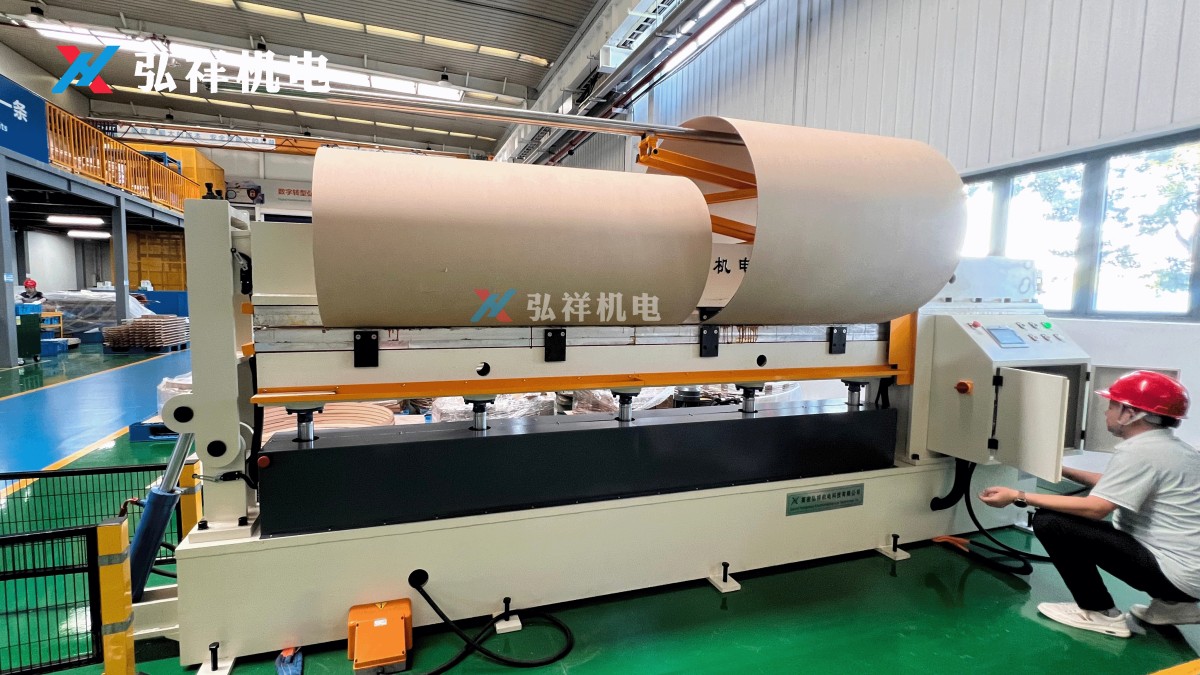
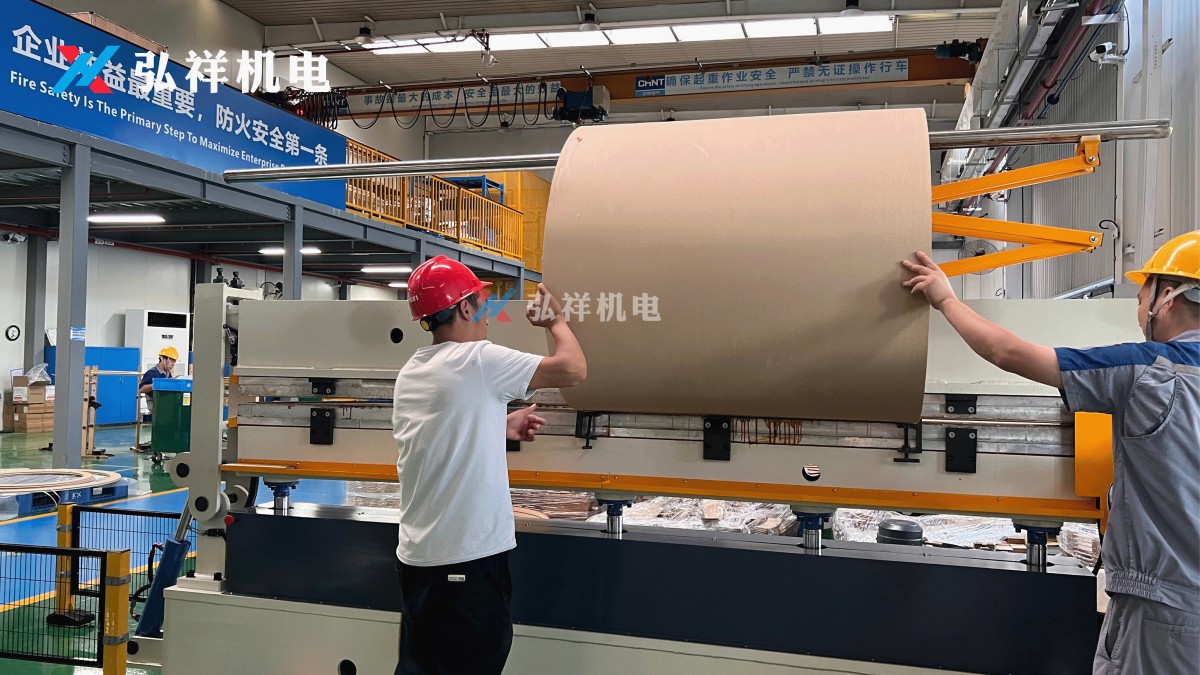
Technical Capability & Core Manufacturing Competence
A qualified laminated wood processing equipment manufacturer in China must demonstrate deep domain expertise—not just mechanical engineering proficiency, but intimate familiarity with electrical insulation material behavior under thermal, mechanical, and dielectric stress. For transformer electrical layer-pressed wood processing equipment for power industry applications, this includes mastery of resin impregnation dynamics, precise temperature/pressure profiling during hot-press cycles (typically 120–160°C at 8–15 MPa), and dimensional stability control within ±0.15 mm tolerance across 2,000 mm workpieces. Gaomi Hongxiang Electromechanical Technology Co., Ltd. validates its technical depth through ISO 9001:2015-certified production lines, in-house R&D labs equipped with ASTM D709-compliant testing setups, and over 12 years of dedicated focus on transformer insulation parts processing equipment manufacturer in China roles. Their high precision transformer electrical layer-pressed wood processing equipment integrates servo-driven hydraulic systems, real-time PLC feedback loops, and multi-zone heating plates calibrated to ±1.5°C—critical for consistent resin cross-linking and void-free lamination.
Beyond hardware, assess whether the supplier maintains proprietary process databases—e.g., pressure ramp curves optimized for phenolic vs. epoxy-impregnated laminates—or offers digital twin integration for predictive maintenance. Leading laminated wood processing equipment for insulation parts providers also embed traceability: each press cycle logs ambient humidity, pre-press moisture content (target ≤3.5%), and post-cure dielectric strength test results (≥18 kV/mm per IEC 60641-2). These capabilities separate commodity suppliers from strategic partners capable of co-developing next-generation AI-integrated pressing systems.
Quality Assurance Infrastructure & Certification Alignment
Robust QA infrastructure is non-negotiable when evaluating a transformer insulation cardboard processing equipment manufacturer in China. Look beyond basic ISO certification—verify documented calibration schedules for all metrology tools (e.g., coordinate measuring machines traceable to NIM), statistical process control (SPC) implementation across critical dimensions (thickness uniformity, edge squareness, surface roughness Ra ≤0.8 μm), and third-party audit reports from TÜV Rheinland or SGS covering both equipment manufacturing and material processing validation. Gaomi Hongxiang’s QA system complies with IEC 60076-21 (insulation coordination for power transformers) and incorporates 100% ultrasonic scanning for internal delamination detection in finished laminated wood blocks—a capability rarely found among cost-effective laminated wood processing equipment suppliers.
Cross-reference their inspection protocols against key industry standards: ASTM D6684 for compressive strength, IEC 60641-3 for bending modulus, and GB/T 5591.2-2017 for flame retardancy. A mature transformer insulation parts processing equipment manufacturer in China will maintain batch-level traceability linking raw board lot numbers, press parameters, and final test certificates—enabling rapid root-cause analysis if field failures occur. Request sample QA documentation before site visits; red flags include handwritten logs, missing calibration records, or absence of non-conformance reporting procedures.
Customization Flexibility & Engineering Collaboration Process
Standardized laminated wood processing equipment rarely meets evolving transformer design requirements—especially for HVDC, dry-type, or compact distribution units demanding ultra-thin (<6 mm), high-density laminates. Custom transformer electrical layer-pressed wood processing equipment demands proven engineering collaboration frameworks. Evaluate how the supplier handles change requests: Do they use 3D parametric modeling (SolidWorks/Inventor) with FEA validation for new press platens? Can they integrate customer-specific HMI interfaces or OPC UA data export for factory-wide MES connectivity? Gaomi Hongxiang supports full-cycle customization—from adapting existing platforms for EVA molding hybrid processes to developing turnkey lines handling 3,200 mm × 1,800 mm laminates with automated loading/unloading.
Request case studies where they modified core subsystems: e.g., replacing conventional steam heating with electric infrared zones for faster thermal response, or adding vacuum-assisted resin infusion modules. Verify lead time transparency—reputable custom transformer electrical layer-pressed wood processing equipment providers quote 8–12 weeks for mechanical modifications and provide weekly engineering review updates. Avoid vendors treating “custom” as cosmetic rebranding rather than functional adaptation.
Commercial Viability & Lifecycle Cost Analysis
Procurement teams often equate low upfront cost with value—but true cost-effectiveness in laminated wood processing equipment requires lifecycle analysis. Calculate total cost of ownership (TCO) across five years: energy consumption (modern high precision transformer electrical layer-pressed wood processing equipment reduces kWh/ton by 22% via regenerative braking and heat recovery), consumables (die life, heating element replacement frequency), downtime (MTBF >12,000 hours indicates robust hydraulics), and training costs. Gaomi Hongxiang’s cost-effective laminated wood processing equipment achieves ROI in<24 months for mid-volume producers (≥500 tons/year) through modular design that enables staged automation upgrades—avoiding full-line replacement.
Verify commercial terms align with operational reality: Does the warranty cover both mechanical components and control software? Are software updates included for 5+ years? Are service level agreements (SLAs) defined for response time (<48 hrs for critical faults)? Financially prudent buyers also confirm banking references, audited financial statements, and export compliance history—especially vital for shipments to regulated markets like India (BIS certification) or Russia (EAC marking).
Global Delivery & After-Sales Ecosystem
A laminated wood processing equipment manufacturer in China serving Southeast Asia, South America, and Eastern Europe must prove logistical and support maturity. Audit their regional footprint: Do they maintain certified local agents with trained technicians? Is there a documented spare parts logistics network with 72-hour delivery guarantees? Gaomi Hongxiang operates regional service hubs in Jakarta and São Paulo, stocks critical spares (heating plates, hydraulic valves, PLC modules) locally, and provides bilingual (English + Spanish/Portuguese) remote diagnostics. Their transformer insulation cardboard processing equipment for power transformers includes cloud-connected telemetry enabling predictive alerts for filter clogs or pressure drift—reducing unplanned stops by 37% according to client data.
Confirm training protocols: Are operator manuals available in target languages? Do they offer on-site “train-the-trainer” programs with competency assessments? Post-installation support isn’t optional—it’s the difference between equipment sitting idle and achieving >92% OEE. Request references from clients in your target region using similar product specifications.
Auditing a transformer electrical layer-pressed wood processing equipment manufacturer in China demands rigor across technical, quality, commercial, and operational dimensions. Gaomi Hongxiang Electromechanical Technology Co., Ltd. stands out as a vertically integrated partner—combining deep expertise in transformer insulation parts processing equipment manufacturer in China operations with global delivery discipline and engineering-led customization. Their high precision transformer electrical layer-pressed wood processing equipment consistently meets IEC, ASTM, and GB standards while supporting AI-enhanced manufacturing workflows. Whether you require standard laminated wood processing equipment for insulation parts or bespoke transformer insulation cardboard processing equipment for power transformers, their end-to-end capabilities—from R&D to after-sales—deliver measurable risk reduction and long-term value.
Ready to validate your next supplier against this comprehensive audit framework? Request a customized capability assessment report and schedule a virtual factory tour today.
NAVIGATION
MESSAGE
Request A Quote?