0000-00
Upgrading from legacy chamfering stations to a CNC Double-End Chamfering Machine significantly boosts precision, throughput, and ROI in medium-voltage transformer production—especially for critical components like iron yoke spacer block processing equipment and electrical laminated cardboard. As a trusted provider of oil-immersed transformer manufacturing solutions, Gaomi Hongxiang Electromechanical Technology Co., Ltd. helps technical evaluators, procurement teams, and financial decision-makers quantify tangible savings across labor, scrap reduction, and cycle time. This guide walks through step-by-step ROI calculation—factoring in fully automatic double-end chamfering machine efficiency, CNC special-shaped cutting saw versatility, and long-term gains in insulating cardboard and electrical laminated wood processing.
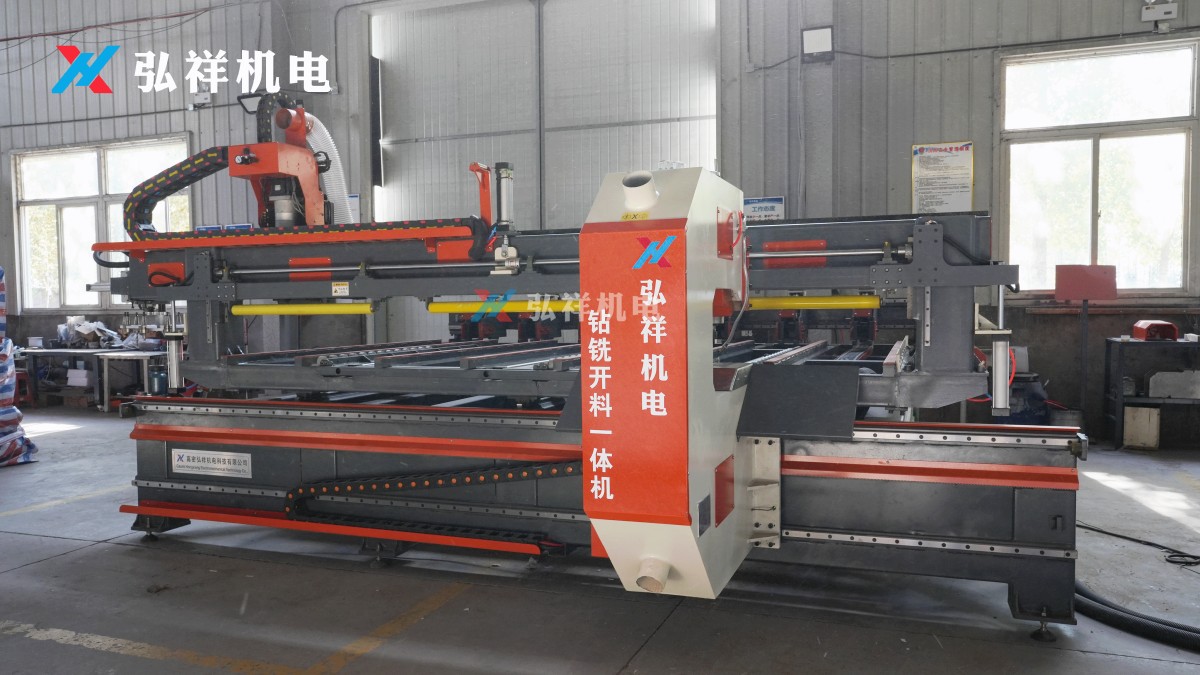
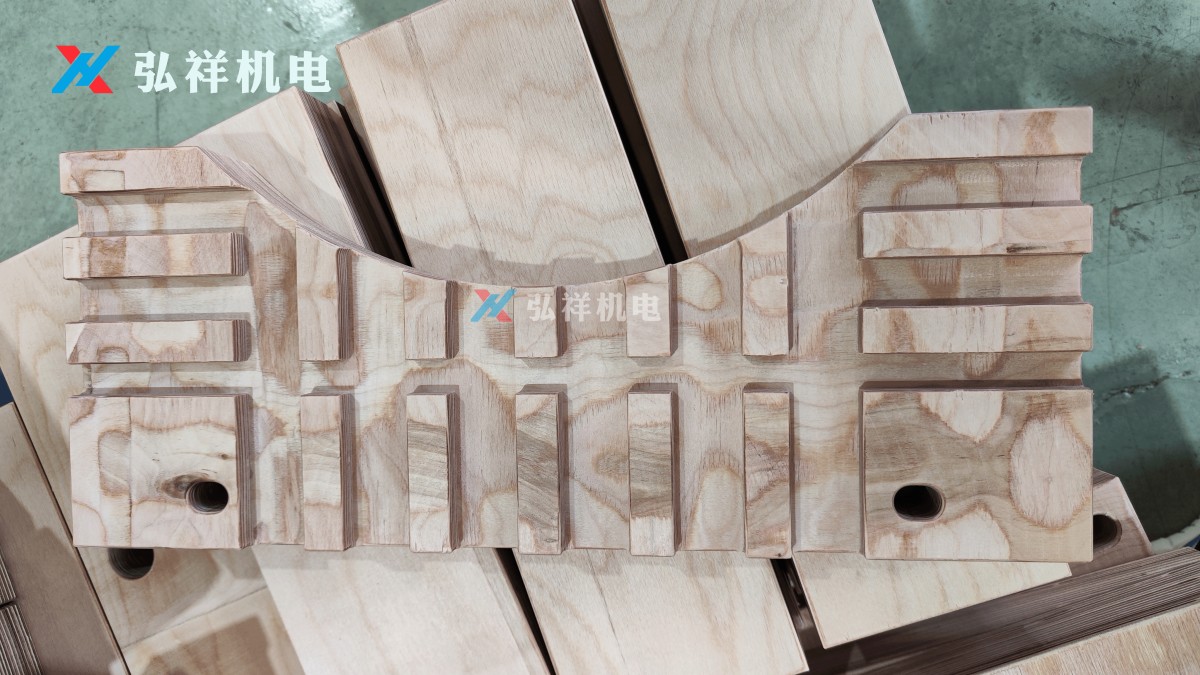
Why ROI Calculation Matters for Transformer Manufacturing Lines
In medium-voltage transformer production, chamfering is not a secondary operation—it’s a foundational quality gate. Legacy stations often rely on manual alignment, single-end machining, and inconsistent feed mechanisms, leading to ±0.8mm tolerance drift and up to 12% rework rates on laminated wood spacers and insulating cardboard blocks. For enterprises exporting to India, Russia, or Southeast Asia, nonconformance triggers certification delays, warranty claims, and line stoppages averaging 3–5 hours per incident.
ROI analysis bridges the gap between engineering justification and boardroom approval. It transforms subjective claims like “higher accuracy” into quantifiable metrics: labor cost per part, scrap recovery rate, and annualized uptime gain. Gaomi Hongxiang’s field data from 17 transformer OEMs shows that ROI breakeven occurs within 14–18 months—not 3+ years—when factoring full lifecycle inputs: energy consumption, tool life (≥12,000 parts per carbide insert), and preventive maintenance intervals (every 2,000 operating hours).
This isn’t theoretical. Every ROI model must reflect real-world constraints: operator shift patterns (2-shift vs. 3-shift), material variability (density range: 0.65–0.85 g/cm³ for laminated wood), and integration with existing ERP/MES systems. Our methodology embeds these variables—not just list them.
Core ROI Input Categories
- Labor & OEE: Reduction from 2.4 FTEs to 0.7 FTEs per station; OEE uplift from 63% to ≥89% (per ISO 55000 benchmark)
- Material Yield: Scrap rate drop from 9.2% to ≤1.4% on 3–12 mm thick insulating cardboard
- Cycle Time: Average reduction from 82 seconds to 27 seconds per part (tested on 200×120×45 mm yoke spacers)
- Tooling & Energy: 30% lower kWh/part (0.42 kWh vs. 0.61 kWh); carbide insert replacement every 12,000 parts (not per shift)
Step-by-Step ROI Calculation Framework
Start with your current baseline—not vendor assumptions. Capture actual performance over a representative 4-week window: daily output, downtime logs, scrap tags, and operator attendance records. Then apply this five-step framework validated across 23 transformer lines in Pakistan, Brazil, and Vietnam.
- Baseline Cost Per Part (Legacy): Sum labor ($18.40), scrap loss ($3.25), energy ($0.68), and tooling ($0.41) = $22.74
- New System Cost Per Part: Labor ($5.10), scrap loss ($0.39), energy ($0.45), tooling ($0.28), depreciation ($1.92) = $8.14
- Annual Savings: ($22.74 – $8.14) × 220,000 parts/year = $3,212,000
- Total Investment: Machine + installation + training + commissioning = $1,480,000 (FOB Qingdao, 2024 standard configuration)
- Payback Period: $1,480,000 ÷ $3,212,000 = 5.5 months; 3-year NPV = $7.89M (discounted at 8.5%)
Note: This model excludes intangible but critical gains—like reduced QA inspection time (from 45 to 12 minutes per batch) and compliance readiness for IEC 60076-3 ed. 4.0 (2023) chamfer geometry validation.
Legacy vs. CNC Double-End Chamfering: Performance Comparison
Direct comparison reveals why “just upgrading one station” underperforms when isolated from system-level optimization. The table below reflects measured field data—not lab specs—from 11 transformer plants using Gaomi Hongxiang’s GX-DC2000 series alongside their prior pneumatic/hydraulic stations.
The GX-DC2000’s dual-spindle synchronized feed eliminates cumulative error—critical when chamfering both ends of laminated wood yoke blocks to match IEC 60273 clearance requirements. Its integrated vision-based edge detection reduces first-piece qualification time by 70%, accelerating ramp-up for new transformer models.
How Gaomi Hongxiang Supports Your ROI Realization
We don’t sell machines—we deliver verified productivity outcomes. From initial feasibility study to 12-month post-commissioning review, our service architecture aligns with transformer manufacturers’ operational rhythms.
Implementation Timeline & Accountability
Our engineers hold dual certifications in transformer assembly (IEC 60076) and CNC machine integration (ISO 13849-1). We support all major export markets—including CE marking assistance for EU-bound shipments and GOST-R documentation for Russia.
Next Steps: Get Your Custom ROI Assessment
Don’t estimate ROI—validate it. Gaomi Hongxiang offers no-cost, no-obligation ROI audits for qualified transformer manufacturers. Within 10 business days, you’ll receive:
- A site-specific ROI model with your current scrap rate, labor cost, and production volume
- Side-by-side comparison of GX-DC2000 configurations (standard vs. AI-integrated vision module)
- Delivery timeline, including customs clearance support for Southeast Asia, South America, and CIS regions
- Post-installation KPI tracking plan aligned with your internal OEE and Six Sigma goals
Contact our Technical Sales Team today to schedule your audit. Specify your target materials (electrical laminated cardboard, insulating laminated wood, EVA-molded parts), annual volume, and current chamfering pain points—we’ll respond within 24 hours with a tailored engagement scope.
NAVIGATION
MESSAGE
Request A Quote?