0000-00
Choosing a cost-effective transformer wood equipment supplier requires more than comparing prices. Buyers in the power industry should evaluate machining accuracy, automation, insulation material compatibility, and long-term service support. As a Transformer electrical layer-pressed wood processing equipment manufacturer in China, understanding how to assess High precision transformer electrical layer-pressed wood processing equipment and Automated transformer electrical layer-pressed wood processing equipment can help you reduce production risks and improve overall value.
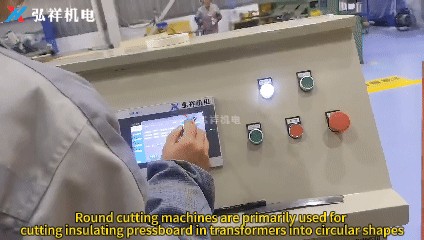
What does a cost-effective transformer wood equipment supplier really mean?
In transformer manufacturing, cost-effectiveness is not the same as low initial price. It means the supplier can provide stable machine performance, suitable process matching, acceptable maintenance cost, and reliable delivery support across the full equipment life cycle. For insulating laminated wood, electrical insulating cardboard, and related insulating parts, machining quality directly affects downstream assembly accuracy and insulation consistency.
For procurement teams, technical evaluators, operators, and project managers, the real question is simple: can the machine keep dimensional accuracy within the required range while maintaining efficient output over 1 shift, 2 shifts, or longer continuous production? If the answer is unclear, the cheapest quotation may become the most expensive choice after rework, downtime, and delayed transformer delivery.
A qualified transformer wood equipment supplier should understand more than machine tools. The supplier should know insulation materials, cutting behavior, pressing wood structures, process routes, and workshop implementation details. This is especially important when handling high precision transformer electrical layer-pressed wood processing equipment for grooves, bevels, holes, profile cutting, and batch repeatability.
Gaomi Hongxiang Electromechanical Technology Co., Ltd. serves global customers with transformer assembly and manufacturing services, insulating cardboard processing, insulating laminated wood manufacturing, insulating parts production, EVA molding processing, and related special machine support. This combination matters because a supplier with process-side understanding can usually identify unsuitable configurations earlier, reducing trial-and-error during the first 2–4 weeks of installation and ramp-up.
The 4 core dimensions behind supplier value
- Process fit: whether the machine matches insulating laminated wood thickness range, tool path complexity, and required surface finish.
- Output stability: whether the equipment can support small-batch, medium-batch, or larger repeat orders without frequent deviation.
- Service response: whether installation, training, spare parts, and remote troubleshooting can be organized within practical business timelines.
- Total ownership cost: whether energy use, tooling consumption, maintenance intervals, and operator requirements stay within budget over 3–5 years.
How should buyers compare suppliers beyond the quotation sheet?
Many purchasing mistakes happen because comparison is limited to equipment price, payment terms, and delivery days. In the machine tool equipment sector, especially for transformer wood processing, buyers should also compare precision consistency, structural rigidity, control logic, material adaptability, and after-sales depth. A quotation is only one layer of the decision; the process capability behind it is the decisive layer.
Technical teams usually care about tolerance, spindle stability, fixture method, and automation options. Financial approvers focus on payback cycle, hidden maintenance cost, and productivity gain. Quality and safety personnel look at repeatability, risk of material damage, guarding, and operating procedures. A good supplier should answer all three perspectives clearly, not only provide a machine list.
The table below helps compare transformer electrical layer-pressed wood processing equipment suppliers using practical B2B criteria. It is useful for information researchers, procurement personnel, business evaluators, distributors, and enterprise decision-makers who need a structured method instead of a price-only decision.
This comparison framework shows why supplier evaluation should include at least 4 dimensions, not just 1 number on the quotation. In many transformer production projects, a machine with better fixture design and more stable programming can save time on each batch, which gradually offsets a higher initial purchase price.
Questions procurement teams should ask
Ask the supplier what material thickness ranges are commonly processed, how often cutting tools require replacement under normal load, and what commissioning support is available during the first 3 stages of the project: installation, sample validation, and operator training. These questions quickly reveal whether the supplier understands actual workshop use.
A simple 5-point review checklist
- Request sample-part discussion based on your own drawing set.
- Confirm the normal delivery window, often around 2–8 weeks depending on configuration.
- Check whether remote and on-site service can both be arranged.
- Review operator training content, not just machine installation.
- Clarify spare parts and wear-part support before contract approval.
Which technical indicators matter most for high precision and automated transformer wood processing equipment?
When comparing high precision transformer electrical layer-pressed wood processing equipment, buyers should not focus on a single specification. Precision is a system result created by machine structure, drive response, spindle condition, fixture stability, tool selection, program logic, and material handling. If one element is weak, the final part quality will fluctuate even when other parameters look acceptable.
For automated transformer electrical layer-pressed wood processing equipment, efficiency must be evaluated together with accuracy. Some automation options reduce labor input but may not suit complex low-volume insulating parts. Others become valuable when orders are repetitive and production runs are long enough to justify programming and fixture setup time across weekly or monthly batches.
A practical technical review usually involves 3 categories: machining capability, production efficiency, and maintenance convenience. This is where a supplier with combined R&D, design, manufacturing, installation, training, and after-sales service can add measurable value, because the equipment decision is connected to process implementation, not just factory shipment.
Recommended technical review table
Use the following table to examine technical suitability before comparing transformer wood equipment suppliers. It combines parameter thinking, application matching, and maintenance practicality for machine tool equipment used in transformer insulation component production.
These ranges are not universal pass-fail thresholds, but they help buyers organize technical dialogue. The right target depends on your transformer type, part complexity, batch size, and internal quality requirements. For some insulation components, stability across 50–200 repeated parts matters more than peak speed on a single test part.
Why operators and maintenance teams should be involved early
Operators often identify practical issues that are missed in procurement meetings, such as dust collection convenience, tool-change accessibility, fixture loading ergonomics, and program adjustment steps. Maintenance teams can judge whether electrical layout, wear parts, and troubleshooting access will create future downtime. Bringing them into evaluation at least 1 round before final approval usually improves equipment selection quality.
How to evaluate total cost, lead time, and long-term risk?
A cost-effective transformer wood equipment supplier should be judged by total cost of ownership rather than machine price alone. Buyers should examine at least 5 cost layers: equipment investment, tooling and fixtures, installation and training, maintenance and spare parts, and production loss caused by instability or delayed startup. This approach is especially important when budgets are tight but delivery pressure is high.
Lead time also deserves close review. A standard configuration may ship faster, while customized transformer wood equipment usually requires extra engineering and testing time. In many industrial projects, a realistic timeline includes design confirmation, manufacturing, inspection, shipment, installation, and sample trial. Compressing every step may look attractive in negotiations, but it can increase commissioning risk later.
The table below provides a practical cost and schedule view for evaluating suppliers of transformer electrical layer-pressed wood processing equipment. It helps financial approvers, project leaders, and procurement teams discuss business feasibility using concrete categories instead of vague promises.
This table makes one point clear: supplier cost evaluation should connect finance, engineering, and operations. A lower-cost machine with weak service organization can become expensive if it causes repeated trial runs, material waste, or missed shipment windows. For export-oriented transformer manufacturers, that business risk is often larger than the equipment price difference itself.
Common hidden costs buyers forget
- Repeated sample correction because the supplier did not fully understand the insulating material processing route.
- Extra tooling consumption caused by unstable cutting conditions or unsuitable fixture design.
- Unplanned operator training time when software or control logic is too complex for the workshop team.
- Quality inspection delays because batch repeatability is not stable enough for normal acceptance rhythm.
What standards, service capabilities, and implementation steps should you verify?
For transformer wood equipment, compliance is usually less about a single label and more about whether the supplier can align with common industrial requirements for electrical safety, operating procedures, machine documentation, and inspection discipline. Buyers should ask what technical documents, wiring information, operation guidance, and maintenance instructions will be delivered together with the equipment.
Service capability should be reviewed in stages. Before shipment, the supplier should confirm drawings, process requirements, and configuration scope. During commissioning, the focus shifts to installation, program validation, and sample acceptance. After handover, the critical issue becomes whether operators, quality staff, and maintenance personnel can manage daily use without waiting for external intervention on every small issue.
A supplier like Gaomi Hongxiang Electromechanical Technology Co., Ltd., which integrates R&D, design, production, sales, installation, training, and after-sales service, is often better positioned to support this full sequence. That matters for global buyers in Southeast Asia, South America, India, Pakistan, Russia, and other markets where fast clarification and practical implementation support are essential.
A practical 6-step implementation path
- Confirm drawings, material type, thickness range, batch size, and target output per shift.
- Review the recommended equipment solution, automation level, and fixture concept.
- Lock the commercial scope, delivery cycle, training plan, and acceptance criteria.
- Complete manufacturing, inspection, and shipment coordination.
- Carry out installation, trial processing, and operator training over several practical scenarios.
- Enter routine operation with daily checks, periodic maintenance, and service follow-up.
What documents are worth confirming before approval?
Request a clear equipment configuration list, operation and maintenance instructions, utility requirements, spare parts proposal, and acceptance scope. If your project involves custom insulating parts or mixed material processing, also confirm sample validation rules and responsibility boundaries for process adjustments during the initial startup period of 7–15 days.
FAQ: common purchasing questions about transformer wood equipment suppliers
How do I know whether high precision transformer electrical layer-pressed wood processing equipment is necessary?
It depends on your part geometry, fit requirement, and inspection standard. If you produce transformer insulation components with tight assembly relationships, repeated slotting, hole positioning, or profile consistency requirements, high precision capability becomes important. If the product mix is simple and tolerance demand is wider, a more basic solution may be sufficient. The best decision comes from matching machine precision to actual drawing requirements, not from buying the most advanced model by default.
What is the typical delivery cycle for transformer wood equipment?
There is no single fixed answer. Standard machine configurations are often discussed in a range such as 2–6 weeks, while customized solutions may need more time depending on design complexity, tooling, testing, and logistics. Buyers should also add time for installation, sample trial, and training. For urgent projects, it is wiser to confirm scope carefully than to accept an unrealistic delivery promise.
Should I prioritize automation or manual flexibility?
Choose according to batch structure. If your factory handles repeated orders and wants to reduce labor dependency across 1–2 shifts, automated transformer electrical layer-pressed wood processing equipment can improve workflow stability. If product types change frequently and lot sizes are small, flexible semi-automatic or manually assisted equipment may deliver better overall value. The supplier should help you calculate this based on production rhythm, not marketing language.
What are the biggest mistakes when comparing suppliers?
The most common mistakes are comparing quotations without comparing process understanding, ignoring installation and training details, underestimating tooling and maintenance cost, and failing to involve operators or quality staff early. Another frequent error is assuming that all machine tool equipment suppliers understand transformer insulation materials. In practice, material behavior and part function matter as much as machine configuration.
Why choose us when comparing transformer wood equipment suppliers?
Gaomi Hongxiang Electromechanical Technology Co., Ltd. combines transformer assembly and manufacturing service experience with processing capability for electrical insulating cardboard, insulating laminated wood, insulating parts, and EVA molding. This matters because equipment selection is stronger when it is informed by practical material handling and manufacturing knowledge, not only by generic machine sales experience.
For buyers comparing cost-effective transformer wood equipment suppliers, we support decision-making across multiple roles: technical evaluation, procurement review, project planning, quality control, operator training, and after-sales use. Instead of offering only a standard quotation, we can discuss processing routes, expected automation level, typical lead time, maintenance planning, and suitable configurations for different production scales.
If you are reviewing high precision transformer electrical layer-pressed wood processing equipment or automated transformer electrical layer-pressed wood processing equipment, you can contact us to confirm key details such as material type, part drawings, thickness range, process complexity, expected output, delivery cycle, installation plan, and sample support scope. This helps reduce uncertainty before budget approval and technical sign-off.
You can also consult us for quotation communication, configuration comparison, customization options, service process clarification, and export-oriented project coordination. A practical discussion at the early stage often saves weeks later. If your team needs help comparing supplier options, defining acceptance points, or planning a transformer insulation component processing solution, we are ready to support the next step with clearer technical and commercial input.
NAVIGATION
MESSAGE
Request A Quote?