0000-00
Choosing the right Transformer electrical layer-pressed wood processing equipment supplier in India requires more than comparing prices. Buyers should assess manufacturing strength, automation level, precision, after-sales support, and application fit for electrical insulation and the power industry. As a Transformer electrical layer-pressed wood processing equipment manufacturer in China, Gaomi Hongxiang helps global customers identify cost-effective, high precision, and automated solutions that support reliable transformer production.
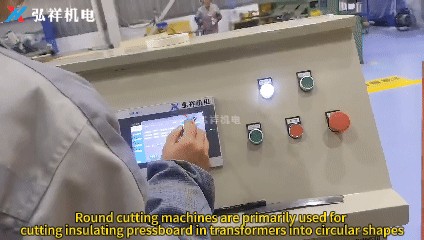
What should buyers in India examine first when evaluating a supplier?
In the machine tool equipment sector, a supplier cannot be judged only by quotation value or catalog photos. For transformer wood equipment, the first review should cover 5 core dimensions: manufacturing capability, process accuracy, automation level, material adaptability, and service response. This is especially important in India, where buyers often need equipment that can handle both routine production and customized insulation part processing for power transformer projects.
A practical screening method is to divide supplier evaluation into 3 stages. Stage one is document review, including company profile, export background, production scope, and service commitment. Stage two is technical verification, where the buyer checks tolerances, machine configuration, control system logic, and tool suitability. Stage three is commercial validation, which includes delivery cycle, installation planning, spare parts support, and operator training.
For technical evaluators and project managers, the key question is simple: can the supplier support the actual manufacturing process of electrical insulating laminated wood and related transformer insulation components? For procurement and finance teams, another question matters just as much: does the supplier offer a balanced combination of capital cost, uptime, and serviceability over a 3–5 year operating cycle?
Gaomi Hongxiang serves global customers in transformer assembly and insulation material processing. Its business scope covers electrical insulating cardboard, insulating laminated wood, insulating parts, EVA molding processing, and related special machine manufacturing. This background is valuable because buyers usually prefer a supplier that understands not only equipment structure, but also the downstream production demands of transformer manufacturing.
A quick prequalification checklist
- Confirm whether the supplier has direct experience with transformer wood equipment, not only general woodworking machines.
- Check if the factory can support custom machine design, process adjustment, and fixture optimization for insulation part geometry.
- Ask for the usual lead time range, often 4–12 weeks depending on customization depth and electrical configuration.
- Review after-sales coverage, including remote support within 24–72 hours and spare parts planning for the first 6–12 months.
- Verify whether installation, commissioning, training, and maintenance instructions are part of the supply package.
This type of structured prequalification reduces decision risk. It also helps distributors, plant operators, and safety managers align around the same evaluation language instead of relying on fragmented opinions from different departments.
Which technical capabilities matter most for transformer laminated wood processing equipment?
Transformer electrical layer-pressed wood processing equipment must do more than cut or shape panels. It must maintain dimensional consistency, support repeatable edge quality, and minimize processing defects that can affect insulation component assembly. For many buyers, 4 technical points are decisive: precision stability, machine rigidity, feed control, and compatibility with multiple insulation materials.
Typical requirements vary by workpiece size and production method, but buyers often look for repeatable machining performance within a practical tolerance range such as ±0.1 mm to ±0.5 mm, depending on the process step. Tighter tolerance may be required for matched parts, slotting positions, or laminated structures used in transformer insulation assemblies. A serious supplier should explain where precision is measured and under what operating conditions.
Automation level is another major factor. Semi-automatic equipment may fit small-batch or mixed-product workshops, while more automated lines better serve medium-volume and large-volume production. In many factories, the difference is not only labor reduction. Automation also improves process repeatability, material positioning, and cycle consistency during 8–16 hour operating windows.
Because transformer component workshops often process electrical insulating cardboard, laminated wood, and customized insulating parts in parallel, the ideal machine tool equipment supplier should be able to discuss spindle selection, clamping method, feed adjustment, dust collection interface, and tool life management in one integrated technical conversation.
Technical questions your team should ask
Before finalizing a transformer wood equipment supplier in India, ask technical questions that connect directly to production risk. Generic sales answers are not enough. The supplier should be able to describe the machine’s working logic, maintenance points, and limits under real shop-floor conditions.
This table helps technical teams compare suppliers beyond brochure language. A reliable supplier should provide specific answers, explain process limitations honestly, and suggest configuration changes when part size, material thickness, or output expectations fall outside standard ranges.
Why process knowledge is as important as machine hardware
Many equipment vendors can assemble a frame and install motors, but fewer understand the processing behavior of electrical insulation materials. In transformer manufacturing, surface quality, edge integrity, and dimensional stability influence downstream assembly and product reliability. That is why a supplier with practical exposure to transformer production and insulating part manufacturing can often provide more useful advice than a general woodworking machine builder.
Gaomi Hongxiang’s involvement in transformer assembly and insulation material processing gives buyers a more application-focused perspective. This matters when your team needs advice on matching machine configuration to a process route, especially for mixed production involving different insulating materials and custom part shapes.
How can procurement teams compare suppliers on cost, delivery, and service?
Procurement departments often receive quotes that appear similar on paper but differ significantly in total ownership cost. A lower initial price may exclude tooling, installation, operator training, or spare parts. In transformer wood equipment projects, the more useful comparison includes at least 6 cost-related items: machine base price, electrical configuration, tooling package, commissioning scope, training duration, and after-sales support terms.
Delivery planning is equally important. Standard machine tool equipment may ship in 4–8 weeks, while customized transformer laminated wood processing lines can require 8–16 weeks, especially when fixture design, voltage adaptation, or control logic changes are needed. Buyers in India should ask for a milestone schedule rather than a single shipment date, because manufacturing, inspection, packing, transport, and installation each affect the real project timeline.
For commercial evaluators and finance approvers, the right question is not “Which quote is cheapest?” but “Which supplier gives the most controllable risk?” A slightly higher quote may be commercially stronger if it reduces startup delay, unplanned downtime, or spare part shortages during the first 12 months of use.
This is where integrated suppliers have an advantage. Companies that combine R&D, design, production, sales, installation, training, and after-sales service can usually provide clearer responsibility boundaries. That reduces coordination gaps during pre-shipment review and post-installation troubleshooting.
A practical supplier comparison table
When shortlisting a transformer wood equipment supplier in India or overseas, use a scoring table instead of relying on subjective preference. The structure below is suitable for procurement managers, project leaders, and cross-functional approval teams.
The purpose of this comparison is to expose real execution differences. A supplier that serves Southeast Asia, South America, India, Pakistan, and Russia may already understand common export handling needs, documentation flow, and international project communication. That experience often makes procurement smoother and reduces delays caused by preventable misunderstandings.
Recommended 4-step procurement process
- Define the part range, material type, output target, and precision requirement before requesting a quote.
- Request technical confirmation, including machine layout, main configuration, utilities, and acceptance scope.
- Compare 2–3 suppliers using the same checklist so commercial and technical judgments remain aligned.
- Approve the supplier only after clarifying delivery milestones, training method, spare parts list, and after-sales response path.
This process is especially helpful when several departments must approve the same capital purchase. It gives procurement, engineering, quality, and finance teams a common basis for review.
What application fit and compliance points are often overlooked?
One common mistake in transformer wood equipment sourcing is to buy a machine that looks technically capable but does not fully match the production environment. Application fit includes part dimensions, material density, workshop layout, operator skill level, dust handling, utility conditions, and expected batch size. A machine suitable for general panel work may not be ideal for precision transformer insulation parts.
Quality and safety personnel should also examine whether the supplier can support practical compliance needs. Depending on project location and buyer policy, this may include electrical safety conformity, documentation completeness, operator manuals, maintenance procedures, and acceptance records. While exact requirements vary, serious suppliers should be ready to discuss standard machine safety practices and provide reasonable inspection support.
Installation conditions are frequently underestimated. Before shipment, buyers should confirm at least 5 workshop factors: power supply specification, floor condition, air requirement if relevant, dust extraction interface, and material flow path. Missing any of these may add several days or even 1–2 weeks to startup time after the equipment arrives.
For users and maintenance teams, serviceability is part of application fit. If daily cleaning, tool replacement, lubrication, and fault diagnosis are too complicated, actual production efficiency drops even when the machine performs well during factory testing. Good supplier evaluation therefore includes not only performance, but also maintainability and operator usability.
Application scenarios that require different equipment thinking
- Small-batch custom transformer parts: flexible setup and easy parameter adjustment matter more than maximum output.
- Medium-volume routine production: repeatability, fixture stability, and lower changeover time become key priorities.
- Multi-material workshops: the machine should support laminated wood, insulating cardboard, and related insulating components without excessive reconfiguration.
- Export-oriented manufacturing plants: documentation, packing discipline, and remote technical support are more important than many buyers expect.
Common misconceptions during evaluation
The first misconception is assuming all woodworking-style equipment can process transformer laminated wood with the same quality level. In reality, insulation-related applications demand more controlled cutting behavior, better positioning, and cleaner process stability. The second misconception is focusing only on maximum machine speed. High speed without stable precision and proper tool matching may increase scrap, rework, and maintenance frequency.
The third misconception is treating after-sales support as a secondary issue. For overseas buyers, remote diagnosis speed, spare part supply planning, and training quality often determine whether the machine reaches expected productivity in the first 30–90 days. A supplier that can explain service workflow clearly is usually easier to work with after delivery.
FAQ and final decision advice for transformer wood equipment sourcing
Buyers researching a transformer wood equipment supplier in India usually share the same concerns: how to compare vendors fairly, how to avoid under-specification, and how to reduce startup risk. The answers below address the questions most often raised by engineers, procurement staff, distributors, and business decision-makers.
How many suppliers should we compare before making a purchase?
In most B2B machine tool equipment purchases, comparing 2–3 qualified suppliers is usually enough. Fewer than 2 limits decision quality, while too many options can slow approval without adding real insight. The important point is to use the same technical and commercial checklist for every supplier so the comparison remains objective.
What is a reasonable lead time for customized transformer laminated wood equipment?
A common range is 4–8 weeks for relatively standard configurations and 8–16 weeks for deeper customization. The exact timeline depends on machine complexity, fixture design, electrical options, control programming, and pre-shipment testing requirements. Buyers should ask for a phased schedule rather than relying on a single promised delivery date.
What should operators and maintenance staff focus on before commissioning?
They should verify 4 items before startup: utility readiness, safety confirmation, tool installation, and cleaning or dust extraction preparation. It is also wise to request training that covers routine inspection, alarm handling, lubrication frequency, and basic spare parts usage. Good training reduces early misuse and improves machine stability during the first weeks of operation.
How do we know whether a supplier truly understands transformer applications?
Ask whether the supplier can discuss your part drawings, material properties, production sequence, and downstream assembly concerns in detail. A supplier with application understanding will ask clarifying questions about thickness range, batch size, precision expectation, and insulation part function. That depth of discussion is usually a stronger indicator than polished sales language.
Why choose a supplier with integrated manufacturing and service capability?
An integrated supplier can coordinate design, production, installation, training, and after-sales service more effectively than a seller that only trades equipment. This reduces communication gaps and helps buyers solve technical issues faster. For transformer wood equipment, where process fit matters as much as hardware, that integrated approach can improve both startup efficiency and long-term operational control.
Why work with us for transformer wood equipment and related processing solutions?
Gaomi Hongxiang Electromechanical Technology Co., Ltd. focuses on global customers and provides assembly and manufacturing services for power transformers. The company is engaged in processing and manufacturing of electrical insulating cardboard, insulating laminated wood, insulating parts, and EVA molding processing, while also supporting the manufacturing of special machines for artificial intelligence. This combination helps buyers discuss both equipment and application requirements in one place.
For Indian buyers evaluating a transformer wood equipment supplier, this means you can consult on more than a machine list. You can discuss part characteristics, production goals, customization direction, and service planning. If your project involves small-batch custom components, medium-volume processing, or a broader transformer insulation workflow, the conversation can be aligned to actual use instead of generic specification sheets.
If you are comparing options now, you can contact us for 6 practical topics: parameter confirmation, product selection, material suitability review, delivery cycle discussion, customized solution planning, and quotation communication. We can also discuss installation scope, operator training needs, and what type of machine configuration is more suitable for your transformer laminated wood or insulating parts production line.
A good sourcing decision should lower risk, not just lower purchase price. If you want to evaluate transformer electrical layer-pressed wood processing equipment more accurately, share your workpiece size range, material type, expected output, and precision target. That will make supplier comparison clearer and help your team move faster toward a suitable, serviceable, and commercially sound solution.
NAVIGATION
MESSAGE
Request A Quote?