0000-00
Choosing a reliable Transformer insulation parts processing equipment manufacturer in China requires more than comparing prices. Buyers should evaluate technical strength, machining accuracy, customization ability, and service support for electrical cardboard, Electrical laminated wood, and Transformer insulation components. From CNC Special-shaped Cutting Saw to CNC Double-End Chamfering Machine solutions, the right partner can greatly improve efficiency, quality consistency, and long-term project value.
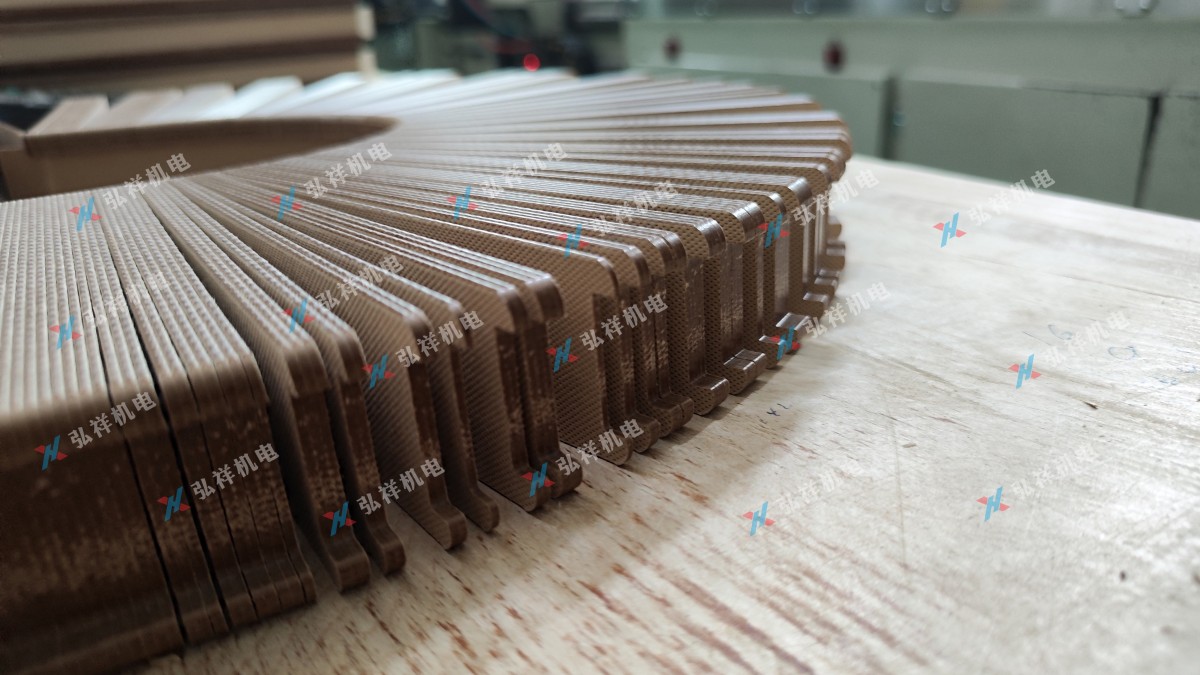
For researchers, operators, engineers, purchasers, project managers, quality teams, and business decision-makers, the evaluation process should connect machine capability with actual production needs. In transformer insulation parts manufacturing, a small machining deviation can affect assembly fit, insulation reliability, and downstream labor time. That is why supplier selection should cover equipment design, process experience, delivery discipline, and after-sales support.
Companies such as Gaomi Hongxiang Electromechanical Technology Co., Ltd. serve global customers with transformer assembly and manufacturing services, including electrical insulating cardboard, insulating laminated wood, insulating parts, and EVA molding processing. For buyers assessing a Chinese equipment maker in this field, the goal is not simply to find a machine vendor, but to identify a long-term manufacturing partner able to support R&D, production, installation, training, and service across multiple markets.
Understand the Manufacturer’s Real Industry Fit
Not every machine tool builder is suitable for transformer insulation parts processing. This niche requires more than general cutting equipment. A qualified maker should understand the properties of electrical insulating cardboard, laminated wood, and formed insulation components, including cutting behavior, edge quality, burr control, dust handling, and dimensional consistency during batch production.
A practical first step is to review whether the supplier serves power transformer applications rather than only broad woodworking or panel processing markets. If the manufacturer can discuss materials, slotting, chamfering, special-shape cutting, and assembly tolerances in specific terms, that usually indicates stronger process understanding. Buyers should expect evidence of at least 3 clear application areas, such as coil insulation parts, structural laminated components, and custom-shaped insulation inserts.
For technical evaluators, the key question is whether the equipment design matches production reality. A machine may look advanced on paper but still perform poorly if it cannot handle variable sheet thicknesses, repeated shape changes, or stable feeding. In many transformer workshops, the useful thickness range may span from around 1 mm to more than 30 mm depending on the insulating material and part design, so flexibility matters.
Signs of a true specialization advantage
An experienced manufacturer usually shows specialization through its engineering conversation, not just brochures. Ask how the machine controls edge collapse on laminated wood, how tool wear is managed, and how accuracy is maintained over 8-hour to 12-hour shifts. Clear answers are more valuable than generic claims about high efficiency.
- Ability to process multiple insulation materials on one production line or through coordinated machines.
- Experience with custom fixtures, part nesting, and irregular contour cutting.
- Understanding of dust collection, edge quality, and operator safety in insulation material machining.
- Capability to support pilot samples, small batch orders, and scaled production runs.
A supplier with integrated R&D, design, production, sales, installation, training, and after-sales service is often easier to work with for international projects. That structure reduces the risk of handoff delays between departments and shortens the time from machine design confirmation to final commissioning. In real procurement cycles, even a 1- to 2-week communication delay can affect plant launch schedules and budget approval windows.
Check Machining Accuracy, Process Stability, and Equipment Configuration
For transformer insulation parts equipment, accuracy is not just a specification sheet number. It must remain stable under repeated operation, different material densities, and changing part geometries. Buyers should ask for typical tolerance ranges under production conditions, such as cutting accuracy, chamfer repeatability, and end-face consistency. In many purchase evaluations, an accuracy expectation such as ±0.2 mm to ±0.5 mm is more meaningful when linked to specific materials and part sizes.
Configuration details also matter. A CNC Special-shaped Cutting Saw and a CNC Double-End Chamfering Machine may both appear suitable, but their usefulness depends on spindle stability, feeding precision, control system logic, fixture adaptability, and tool replacement convenience. For operations teams, machine uptime and changeover speed often influence total output more than peak theoretical speed.
When reviewing machine tools, ask to compare standard and optional configurations. Some buyers focus only on motor power or frame size, but overlook control software, dust removal integration, or material support design. These details can reduce scrap, especially in complex insulation parts with narrow grooves, angular edges, or repeated hole positions.
Key technical factors to verify
The table below can help technical teams and purchasers review the most important equipment points during supplier screening, sample testing, and final comparison.
A strong equipment maker should be able to explain each item with operating logic, not just catalog terms. If a supplier cannot discuss test samples, tooling wear, or repeatability under daily output loads, the risk of unstable production rises quickly after installation.
Why sample testing matters
Whenever possible, request a sample run using your own drawings and materials. A test batch of 10 to 30 representative parts can reveal feed stability, edge finish, dimensional deviation, and actual cycle time. This is especially important for customized transformer insulation components where irregular geometry may expose weaknesses that a standard demo cannot show.
Evaluate Customization Ability and Project Delivery Control
Transformer insulation parts processing rarely follows a one-size-fits-all model. Different transformer ratings, plant layouts, labor structures, and product mixes require different machine arrangements. That is why customization ability should be evaluated at both equipment level and project management level. A reliable Chinese manufacturer should be able to adapt machine dimensions, fixture methods, software logic, and process flow based on customer drawings and production targets.
For project managers and engineering leaders, delivery control is just as important as design flexibility. A customized machine that arrives 3 weeks late can disrupt installation teams, operator training, and factory acceptance planning. Buyers should ask for a realistic project schedule covering design confirmation, manufacturing, internal testing, shipment preparation, installation, and commissioning. In many standard projects, the practical lead time may fall within 4 to 10 weeks depending on complexity.
Another important issue is whether the maker can support communication across departments. Commercial teams may discuss contracts, but technical review often requires drawings, tolerances, process sequence, and electrical configuration approval. The best manufacturers usually assign both a sales contact and a technical coordinator so questions are answered within 24 to 72 hours rather than being delayed across multiple layers.
Project evaluation points before placing an order
- Confirm the material range, thickness interval, and target part types for at least the next 12 months.
- Review whether the machine needs single-station, double-station, or linked workflow design.
- Define acceptance standards, including dimensional accuracy, cycle time, and operator training scope.
- Check export packing, voltage requirements, documentation language, and remote service capability.
The table below summarizes how buyers can compare different supplier capabilities in a structured way during procurement review.
This comparison helps procurement and finance teams move beyond unit price. A machine with better delivery control and better technical coordination may reduce hidden costs from project delay, rework, or repeated service calls during the first 6 to 12 months of operation.
Review Service, Training, and Long-Term Operating Cost
The true value of a transformer insulation parts equipment maker appears after the machine is installed. Service response speed, training quality, spare parts availability, and maintenance guidance all affect long-term output. For operators and maintenance teams, even a well-built machine can become inefficient if documentation is unclear or troubleshooting support is too slow.
Buyers should clarify what after-sales support actually includes. Does the supplier provide remote diagnosis within 24 hours? Are installation and commissioning included, or billed separately? Is operator training limited to startup, or does it cover parameter adjustment, basic maintenance, and safe tool replacement? In export projects, these details influence both operational readiness and budget control.
Long-term cost should also include consumables, tool life, maintenance frequency, and downtime recovery. For example, a machine that saves 10% to 15% in labor but requires hard-to-source spare parts may not be the best choice for overseas users. Practical ownership cost should be considered over at least a 3-year cycle, especially for factories running one or two shifts daily.
Support items that deserve written confirmation
- Commissioning scope, including electrical connection guidance and trial production support.
- Training content for operators, maintenance staff, and production supervisors.
- Recommended spare parts list for the first 6 to 12 months of operation.
- Remote and on-site service response path, including normal response time and escalation process.
Common service-related risks
One common mistake is assuming all machine builders offer the same support depth. In reality, some provide only shipment and startup, while others support installation, training, and process optimization. Another risk is failing to define acceptance criteria. Without a clear checklist covering dimensions, output, and machine stability, disputes can arise after delivery.
For international buyers in Southeast Asia, South America, India, Pakistan, Russia, and similar markets, documentation language and remote communication capability are especially important. A manufacturer with export experience is often better prepared to handle packaging, customs paperwork coordination, voltage adaptation, and follow-up technical communication across time zones.
Use a Practical Supplier Audit Framework Before Final Decision
A final supplier decision should combine technical review, commercial assessment, operational risk control, and future scalability. This is particularly important for business evaluators, finance approvers, distributors, and senior managers who need a balanced decision rather than a purely engineering-led choice. A structured audit framework makes internal approval easier and helps compare offers more objectively.
Start by giving weight to 4 major categories: technical fit, customization ability, service capability, and commercial reliability. Many companies use a scorecard approach out of 100 points. For example, technical fit may account for 35 points, service and training 25 points, project delivery 20 points, and price plus payment terms 20 points. This method prevents a low quoted price from outweighing critical production risks.
Site visits or video factory audits can also improve judgment quality. During a review, look at workshop organization, machine assembly flow, testing area discipline, and communication quality from engineers. Even a 60- to 90-minute audit can reveal whether the supplier has a controlled manufacturing environment or only a sales-focused presentation.
A simple 6-point audit checklist
- Can the maker explain your transformer insulation part process in detail?
- Has sample testing been completed with your drawings or equivalent materials?
- Is there a written project schedule with milestones and acceptance criteria?
- Are service scope, training, and spare parts support clearly defined?
- Does the supplier show export handling and cross-border communication experience?
- Do total operating costs over 3 years make sense compared with production goals?
FAQ for common buyer concerns
How many suppliers should be compared? In most B2B machine purchases, comparing 3 to 5 qualified suppliers is enough. Fewer than 3 may limit perspective, while more than 5 can slow decision-making without adding much value.
Is the lowest quotation a red flag? Not always, but it requires deeper review. Check whether tooling, installation, training, electrical adaptation, or spare parts are excluded. A lower initial price can become a higher operating cost within 6 months.
How long should acceptance testing take? For a standard customized machine, factory acceptance and onsite verification may take from 1 to 3 days depending on process complexity, part variety, and operator training scope.
What matters most for long-term value? Stable accuracy, reliable support, and suitable customization usually matter more than maximum speed. In transformer insulation part processing, consistency over hundreds of parts is often more valuable than a short-term cycle time advantage.
Judging a transformer insulation parts equipment maker in China requires a full view of process knowledge, machine performance, customization depth, delivery discipline, and post-sales support. The right partner should help reduce scrap, shorten changeover time, support stable accuracy, and fit the real production demands of electrical insulating cardboard, laminated wood, EVA, and custom transformer insulation components.
For buyers seeking a supplier with integrated R&D, production, installation, training, and after-sales service, it is worth prioritizing manufacturers with export experience and practical understanding of transformer assembly and insulation parts manufacturing. If you are evaluating equipment such as CNC Special-shaped Cutting Saw or CNC Double-End Chamfering Machine solutions, now is the right time to request sample testing, compare project plans, and review long-term support details.
Contact us today to discuss your processing requirements, get a tailored equipment proposal, and explore a more reliable solution for transformer insulation parts manufacturing.
NAVIGATION
MESSAGE
Request A Quote?