0000-00
Is cheaper always smarter when selecting transformer wood machinery? In many cases, the answer is no—but a lower-priced machine can still be a smart investment if it matches your production requirements, insulation quality standards, and long-term operating goals. For buyers comparing cost-effective transformer electrical layer-pressed wood processing equipment with premium models, the real issue is not just purchase price. It is whether the machine can deliver stable precision, acceptable automation, manageable maintenance, and dependable output over time. As a Transformer electrical layer-pressed wood processing equipment manufacturer in China, Gaomi Hongxiang helps global customers evaluate these factors before making a decision.
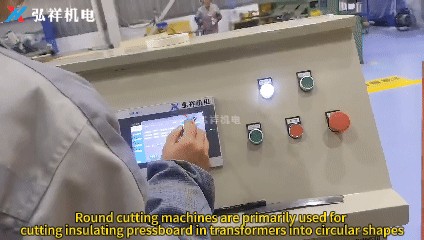
What Buyers Really Want to Know: Is Lower-Priced Equipment a Risk or a Rational Choice?
The core search intent behind this topic is practical decision-making. Buyers, technical evaluators, production managers, and financial approvers are not simply asking whether cheap equipment exists. They want to know whether lower-priced transformer wood equipment can still meet process needs, product quality expectations, and business targets without creating hidden costs later.
For most target readers, the biggest concerns are straightforward:
- Will the machine maintain the machining accuracy required for insulation components?
- Can it process electrical insulating cardboard, laminated wood, and related insulating parts consistently?
- Is the lower price due to simpler configuration, or due to lower material quality and weaker reliability?
- What are the trade-offs in automation, output, maintenance, and lifespan?
- Will it help reduce initial investment without increasing total cost of ownership?
This means the most useful article is not one that repeats general ideas about “budget vs premium.” Instead, it should help readers judge when cost-effective transformer wood equipment is worth buying, how to compare models, and what risks must be checked before purchase.
Short Answer: Yes, Cost-Effective Transformer Wood Equipment Can Be Worth It—If the Application Fits
Lower-priced equipment can absolutely be worth it in the transformer manufacturing field, but only under the right conditions. A cost-effective machine is a good choice when your processing tasks are relatively clear, your tolerance requirements are well defined, and your production volume does not require a top-end automated line.
It is often suitable for:
- Small to mid-sized transformer component manufacturers
- Factories expanding capacity in stages
- Buyers entering a new market and controlling initial capital spending
- Operations focused on specific insulating wood or pressboard processes rather than highly complex mixed production
- Customers who value serviceability and practical output over unnecessary premium features
However, it may not be the best choice if your production depends on continuous high-speed operation, advanced automation integration, extremely tight repeatability, or minimal downtime across multiple shifts.
So the real conclusion is simple: lower price is not automatically better or worse. Value depends on process fit.
Where Lower Price Usually Comes From—and Why That Matters
One of the most important evaluation points is understanding why one machine is cheaper than another. A lower price can come from reasonable configuration differences, or from cost-cutting that affects long-term performance.
Acceptable reasons for a lower price may include:
- Simpler automation level
- Lower production speed for non-mass-production use
- Standardized machine structure instead of heavy customization
- Focused functionality for a limited range of transformer insulation part processing
- Locally optimized manufacturing and supply chain efficiency
Risky reasons for a lower price may include:
- Lower-grade structural materials
- Weak spindle, drive, or motion-control components
- Insufficient machine rigidity
- Unstable dimensional control
- Poor electrical safety design
- Lack of after-sales support and operator training
This distinction matters because a machine that is “cost-effective” is not the same as a machine that is merely “cheap.” In transformer insulation processing, poor consistency can directly affect product quality, assembly efficiency, and even insulation reliability in downstream applications.
What Technical Evaluators Should Check First
For engineers, quality teams, and technical assessment staff, the first priority is not list price. It is process capability. Transformer electrical layer-pressed wood processing equipment must support stable machining of insulation-related materials without damaging material structure or creating unacceptable dimensional variation.
Focus on these points:
- Machining accuracy and repeatability: Can the equipment maintain stable tolerance across batches?
- Material adaptability: Is it suitable for electrical insulating cardboard, insulating laminated wood, and other insulation parts your production actually uses?
- Surface and edge quality: Will the processing result support downstream assembly and insulation performance requirements?
- Machine rigidity and vibration control: Weak structure can reduce cut quality and consistency.
- Control system usability: Can operators quickly set, adjust, and repeat jobs with low error risk?
- Tooling compatibility and maintenance access: Easy maintenance reduces downtime and operator burden.
If a lower-priced machine performs reliably in these core areas, it may deliver excellent value even without premium automation packages.
For Procurement and Finance Teams: Look Beyond the Initial Quote
Procurement personnel, business evaluators, and finance approvers often need to balance budget discipline with operational risk. The best approach is to calculate value across the full equipment lifecycle, not just the purchase order amount.
Questions that matter include:
- How much labor can the equipment save compared with current processing methods?
- What is the expected scrap rate and rework rate?
- How often will key components need replacement?
- What is the likely maintenance cost over one, three, and five years?
- Will after-sales support reduce downtime during installation and operation?
- Can the machine support future production growth, or will replacement come too soon?
A lower-priced transformer wood equipment solution can make strong financial sense when it shortens payback time, reduces manual dependence, and supports stable output without expensive upkeep. But if downtime, part failure, or inconsistent quality create repeated indirect losses, the “cheaper” option can become more expensive in practice.
Common Hidden Costs That Buyers Often Miss
Many buyers compare machines based on visible configuration and quoted price, but hidden costs often determine the real return on investment.
Watch for these overlooked expenses:
- Downtime losses: If the machine is unstable, production interruptions can quickly outweigh the initial savings.
- Operator learning inefficiency: Poor software design or weak training support increases setup time and mistakes.
- Quality-related waste: In insulation processing, small deviations may lead to rejected parts or downstream assembly problems.
- Spare parts delay: Inadequate service support can extend repair cycles.
- Limited process flexibility: A machine that only fits today’s job may create replacement pressure as product needs change.
This is why serious buyers should ask not only “What does this machine cost?” but also “What will this machine cost us to use successfully?”
When Cost-Effective Equipment Is Usually the Best Choice
There are many realistic scenarios where a cost-effective transformer electrical layer-pressed wood processing equipment solution is the better option than a premium model.
It is especially suitable when:
- Your production volume is moderate rather than very high
- Your product range is relatively stable
- You need dependable processing rather than advanced smart-factory integration
- You want faster return on investment
- You are building or upgrading workshop capacity step by step
- Your team needs practical, maintainable equipment instead of a highly complex system
For these users, a well-designed, cost-effective machine can provide the right balance of price, performance, and maintainability.
When Paying More Is Usually Justified
Premium equipment is often worth the higher price when your production environment places heavy demands on output, automation, integration, or precision stability.
You may need a higher-end solution if:
- You run continuous multi-shift production
- You require advanced automation and reduced manual intervention
- You must integrate with digital production systems or smart manufacturing platforms
- You produce complex part varieties with frequent changeovers
- Your quality standard leaves very little room for process variation
- The cost of downtime is extremely high
In these cases, the premium price is not just for branding. It may reflect stronger machine architecture, better automation, more stable controls, and lower operational risk under demanding conditions.
How to Judge a Supplier, Not Just a Machine
Even excellent equipment can become a poor investment if the supplier cannot support implementation, training, and after-sales needs. For overseas buyers especially, supplier capability is a major part of equipment value.
Evaluate the supplier on:
- Experience in transformer-related processing equipment
- Understanding of insulation materials and finished-part requirements
- Ability to provide customization when needed
- Installation guidance and operator training
- Responsiveness in after-sales service
- Availability of spare parts and technical communication
Gaomi Hongxiang Electromechanical Technology Co., Ltd. serves global customers with assembly and manufacturing services for power transformers, along with processing and manufacturing solutions for electrical insulating cardboard, insulating laminated wood, and insulating parts. This kind of industry specialization matters because buyers often need more than a machine—they need process understanding, application support, and long-term service confidence.
A Practical Buyer Checklist Before You Decide
If you are comparing a budget-friendly option with a more expensive machine, use this checklist to make a better decision:
- Define your actual material types, part sizes, tolerances, and batch volume.
- Separate “must-have” functions from “nice-to-have” features.
- Ask for sample processing results or real application references.
- Confirm machine stability, control system quality, and maintenance convenience.
- Review expected spare parts support and service response time.
- Estimate total cost of ownership, not only equipment price.
- Check whether the supplier understands transformer insulation processing, not just general machine manufacturing.
- Match the machine level to your business stage and future production plan.
This process helps avoid two common mistakes: overpaying for features you do not need, or underbuying and creating avoidable risk.
Conclusion: Lower Price Is Worth It Only When Performance, Quality, and Support Still Meet the Job
Cost-effective transformer wood equipment can absolutely be worth the lower price, but only when it still delivers the accuracy, consistency, safety, and support your operation requires. The smartest buyers do not choose the lowest quote or the most expensive machine by default. They choose the solution that fits their production reality, quality standard, staffing capability, and financial goals.
If your application is clear, your output demand is moderate, and the supplier can provide reliable equipment plus responsive service, a cost-effective solution may offer the strongest overall value. But if your line depends on high automation, maximum uptime, and advanced precision control, paying more may be the safer long-term decision.
In short, the question is not whether cheaper equipment is good or bad. The real question is whether it is good enough for your process—and strong enough to protect your results over time.
NAVIGATION
MESSAGE
Request A Quote?