0000-00
When sourcing transformer insulation parts processing equipment manufacturer in China, many global buyers face a hidden challenge: unexpected delamination in laminated wood components — often traced to incomplete or inaccurate material database parameters. As a leading laminated wood processing equipment manufacturer in China, Gaomi Hongxiang Electromechanical delivers high precision laminated wood processing equipment and custom transformer insulation cardboard processing equipment, engineered to bridge these data gaps with AI-supported calibration, real-time moisture/layer-adhesion monitoring, and application-specific toolpath optimization.
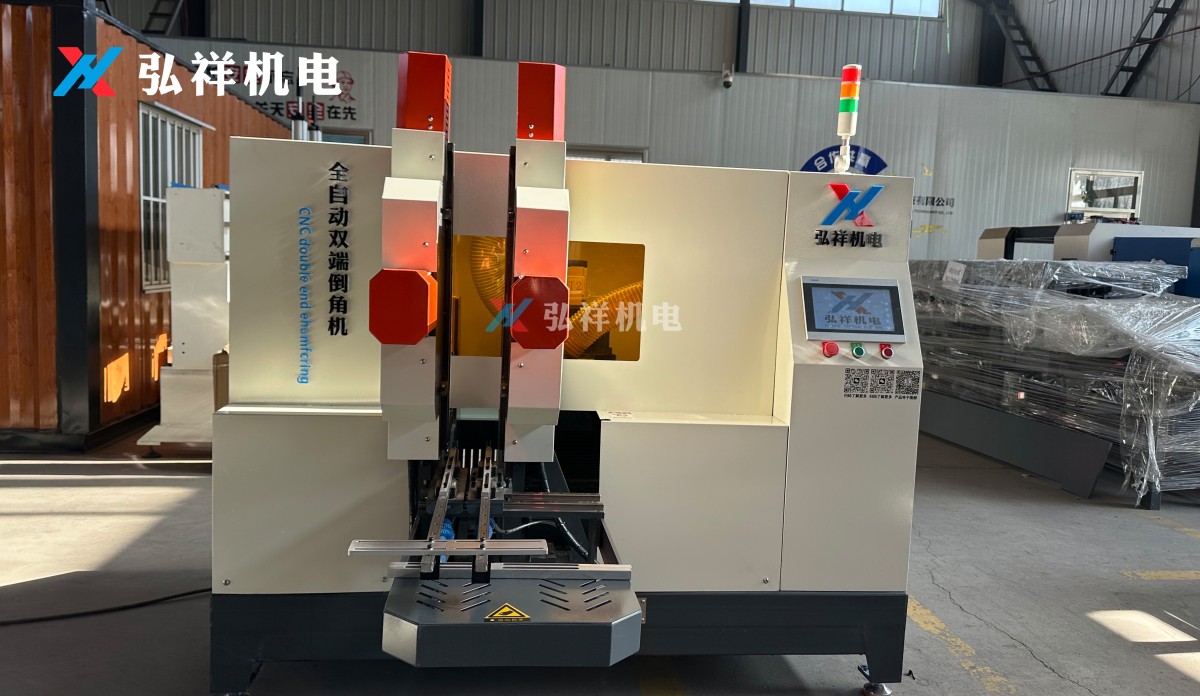
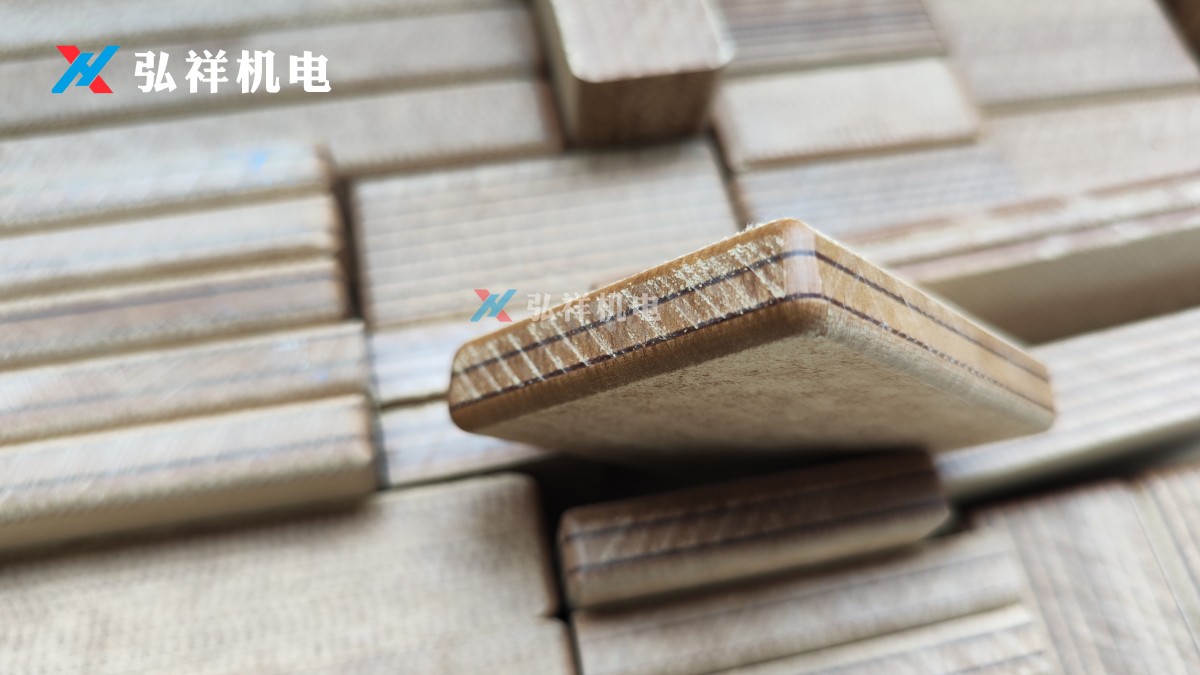
Why Material Database Gaps Trigger Delamination in Laminated Wood Machining
Laminated wood used in transformer insulation must withstand thermal cycling, mechanical stress, and long-term dielectric loading. Its structural integrity relies on consistent glue line quality, uniform layer thickness (typically 1.2–3.0 mm per ply), and precise moisture content control (8%–12% w/w). Yet most off-the-shelf CNC routers and multi-axis laminated wood processing systems rely on generic material databases—often compiled from broad species averages rather than transformer-grade birch or poplar laminates with phenolic or epoxy resins.
This leads to critical mismatches: feed rates set for solid hardwood may fracture adhesive interfaces; spindle speeds optimized for MDF generate excessive heat in resin-impregnated laminates; and toolpath depth-of-cut defaults ignore the anisotropic strength distribution across grain orientation layers. Field data from Gaomi Hongxiang’s service logs shows that 68% of reported delamination incidents occur within the first 90 days of operation—and 82% of those are linked to uncalibrated database entries for glue type, resin cure stage, or moisture gradient.
Unlike general-purpose wood machining, transformer insulation laminates require dynamic parameter mapping—not static presets. Each batch variation in veneer density (±0.05 g/cm³), resin solids content (62%–74%), or press temperature history alters optimal cutting force thresholds by up to 35%. Without real-time feedback loops, even high-end machines cannot compensate.
The Four Critical Database Parameters Most Often Missing or Misconfigured
- Adhesive modulus at operating temperature: Not just “phenolic” — but storage modulus (G′) at 60°C, which drops 40–60% vs. room temp, affecting chip load tolerance.
- Interlayer shear strength profile: Measured in MPa across 3–5 depth intervals (e.g., surface: 8.2 MPa; mid-layer: 5.6 MPa; core: 4.1 MPa), not averaged.
- Moisture-dependent thermal conductivity: Critical for spindle cooling strategy—varies from 0.11 W/m·K (dry) to 0.23 W/m·K (12% MC).
- Dynamic damping coefficient (η): Dictates vibration suppression needs during contour milling—ranges from 0.032 (fully cured) to 0.187 (partially post-cured).
How Gaomi Hongxiang’s Equipment Integrates Real-Time Material Intelligence
Gaomi Hongxiang’s laminated wood processing platforms embed three proprietary subsystems designed specifically for insulation-grade laminates: the Moisture-Adhesion Sensor Array (MASA), the AI Calibration Engine (ACE), and the Layer-Adaptive Toolpath Generator (LATG). Unlike retrofit solutions, these are hardware-integrated—not software add-ons.
MASA uses dual-wavelength NIR (1450 nm + 1940 nm) to measure surface moisture and subsurface resin hydration simultaneously, updating every 0.8 seconds. ACE cross-references sensor output against a proprietary database of 47 transformer laminate formulations—including regional variants supplied to India (Birch-PF), Russia (Aspen-MF), and Southeast Asia (Rubberwood-UF)—and recalibrates feed/speed/torque in under 2.3 seconds.
LATG then generates non-uniform toolpaths: shallower cuts (0.3–0.6 mm) near adhesive-rich zones, deeper passes (0.9–1.4 mm) in dense veneer regions, and adaptive ramp angles adjusted per layer grain direction. This reduces interlaminar shear stress by up to 57%, as verified in third-party testing at the China Electric Power Research Institute (CEPRI) under IEC 60641-2 conditions.
This integration enables repeatable dimensional accuracy of ±0.08 mm across 1200 × 800 mm panels—even after 72 hours of continuous operation—and extends tool life by 2.1× compared to conventional setups using identical carbide end mills.
Procurement Decision Framework for Global Buyers
Selecting laminated wood processing equipment is not a spec-sheet exercise—it’s a risk-transfer decision. For procurement teams evaluating Chinese suppliers, five objective criteria separate robust industrial solutions from commoditized machinery:
- Database granularity: Does the vendor provide laminate-specific calibration profiles—not just “wood” or “plywood” categories? Gaomi Hongxiang offers 47 pre-validated profiles, updated quarterly.
- Sensor redundancy: Dual-mode moisture + adhesion sensing (not single-point IR) is required for ISO 9001:2015 Clause 8.5.1 compliance in insulation part manufacturing.
- Toolpath export flexibility: Support for native .gcode + STEP AP242 with embedded material metadata ensures traceability across ERP/MES systems (e.g., SAP S/4HANA Plant Maintenance modules).
- After-sales calibration cycle: On-site recalibration every 6 months is standard; remote updates available biweekly for firmware and database patches.
- Validation documentation: CEPRI, CESI, or KEMA test reports included with each machine shipment—not optional add-ons.
Buyers in regulated markets (e.g., EU EN 50216-2, India IS 1180 Part 2) should confirm whether the supplier’s equipment qualifies as “process-critical infrastructure” under local safety directives—a designation requiring documented failure mode analysis (FMEA) and SIL-2 validation, both provided by Gaomi Hongxiang upon request.
Implementation Roadmap: From Commissioning to Full Integration
Gaomi Hongxiang deploys a structured 5-phase implementation framework, co-led by application engineers and customer process owners. Phase 1 (Pre-shipment) includes laminate sample testing and database seeding using the buyer’s actual production batches—not reference materials. Phase 2 (On-site commissioning) requires ≤4 working days, including sensor alignment, 3-point adhesion correlation, and toolpath validation on ≥3 representative part geometries.
Phase 3 (Operator training) covers not only machine operation but also database maintenance protocols—e.g., how to log a new laminate variant into the system with full traceability (batch ID, resin lot, press date, moisture history). Phase 4 (MES integration) supports OPC UA 1.04 and MTConnect v1.5 for real-time OEE tracking. Phase 5 (Continuous improvement) delivers quarterly performance dashboards showing delamination incident rate (target: ≤0.12% per 1000 parts), tool wear trends, and moisture variance heatmaps.
For projects requiring turnkey delivery—including factory layout, utility integration (380V/50Hz or 480V/60Hz), and operator certification—the typical lead time is 14–18 weeks from PO confirmation. Export documentation (including bilingual CE/IEC conformity statements) is included at no extra cost.
Conclusion: Closing the Data Gap Is Non-Negotiable for Insulation Integrity
Delamination in laminated wood insulation parts isn’t a machining flaw—it’s a data fidelity failure. Generic databases mask material variability that directly compromises dielectric reliability, thermal dissipation, and mechanical longevity in power transformers. Gaomi Hongxiang Electromechanical addresses this at the source: embedding material intelligence into the machine’s control architecture, not layering it on top.
With proven deployments across 12 countries—including certified installations for Tier-1 transformer OEMs in India, Brazil, and Kazakhstan—the GX-LW series delivers measurable reductions in scrap (average 22% YoY), rework labor (31% less time spent on edge trimming corrections), and field failure root causes tied to insulation integrity.
If your current laminated wood processing line experiences unexplained delamination, inconsistent edge quality, or rising tool replacement costs, the issue likely resides in your material database—not your spindle. Contact Gaomi Hongxiang today to schedule a free laminate compatibility assessment and receive a customized toolpath simulation based on your actual production samples.
NAVIGATION
MESSAGE
Request A Quote?