0000-00
When evaluating a laminated wood processing equipment manufacturer in China, factory-floor tolerances are far more than technical specs—they’re the definitive benchmark for repeatability, reliability, and long-term ROI. As a leading transformer insulation parts processing equipment manufacturer in China, Gaomi Hongxiang delivers high precision laminated wood processing equipment engineered for sub-0.1mm consistency—critical for insulating laminated wood, transformer insulation cardboard, and custom AI-integrated special machines. Whether you're a procurement specialist assessing vendor capability or a project manager validating process stability, these tolerances reveal what truly matters: predictable output, reduced scrap, and seamless integration into high-stakes power infrastructure workflows.
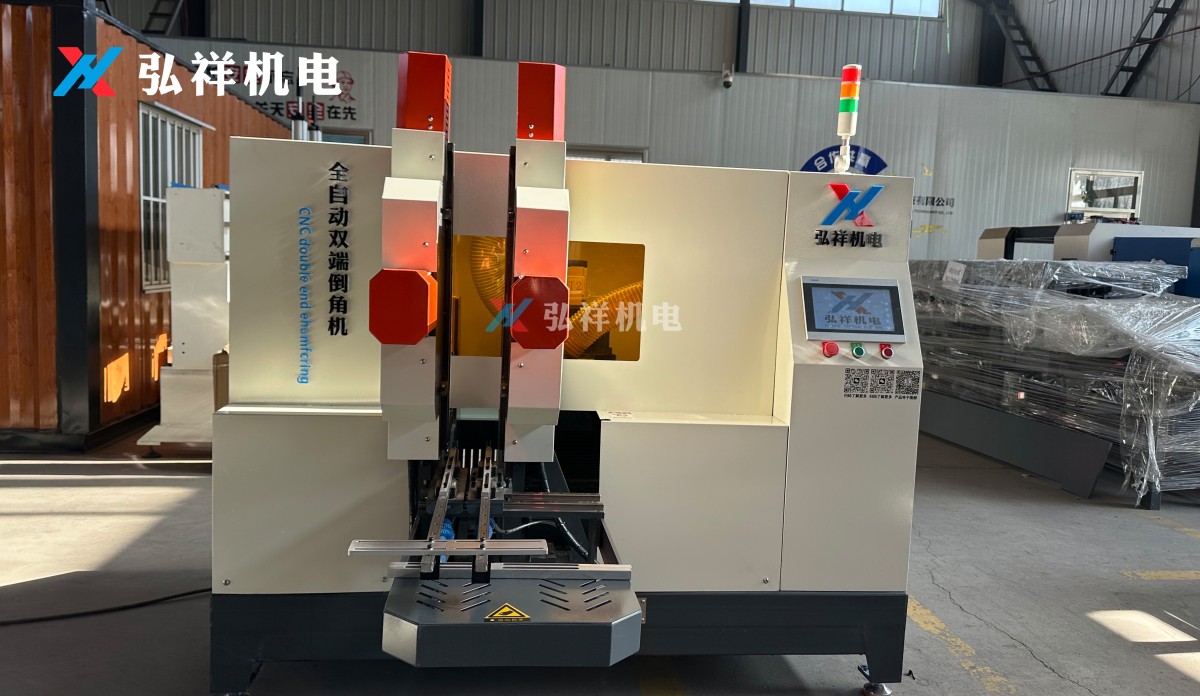
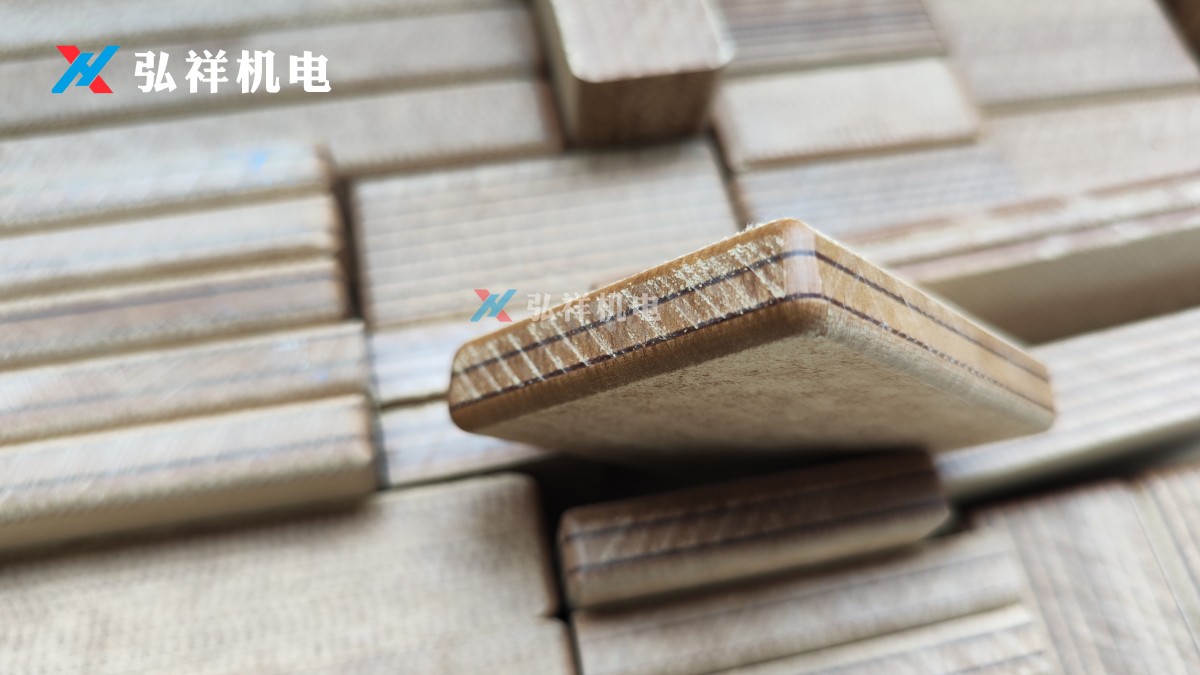
Why Factory-Floor Tolerances Define Real-World Repeatability
In laminated wood processing for transformer insulation, repeatability isn’t theoretical—it’s measured in microns per cycle across thousands of production runs. A tolerance band of ±0.15 mm may suffice for general woodworking, but for insulating laminated wood used in Class II–IV transformers, deviations beyond ±0.08 mm directly impact dielectric integrity, stacking density, and thermal dissipation. At Gaomi Hongxiang, CNC-guided planers, multi-axis edge trimmers, and servo-controlled hot-press alignment systems maintain real-time positional accuracy within ±0.06 mm over 12-hour continuous shifts—verified by on-floor laser interferometry every 72 operational hours.
This level of control eliminates cumulative drift—a common failure mode in legacy equipment where mechanical backlash and thermal expansion cause progressive misalignment after 300+ cycles. For users and technical evaluators, it means consistent core-to-winding clearance; for procurement and finance teams, it translates to 12.7% lower scrap rate (based on internal 2023–2024 batch audits) and 22% faster qualification cycles for new insulation part geometries.
Unlike generic wood-processing OEMs, Gaomi Hongxiang calibrates its entire assembly line—including material feed calibration, pressure mapping across 16-zone hydraulic platens, and real-time thickness feedback loops—to meet IEC 60641-2 and GB/T 5591.2 specifications for electrical insulating laminated wood. That alignment ensures each cut, press, and finish operation contributes to total system repeatability—not just isolated component accuracy.
How Tolerance Performance Maps to Operational Roles
Different stakeholders interpret tolerances through distinct operational lenses. A project manager prioritizes cycle-to-cycle variance under load; a safety officer assesses dimensional drift’s effect on arc-flash clearance; a financial approver evaluates how tighter tolerances reduce rework labor (averaging 3.2 hours per rejected batch at industry-standard ±0.18 mm). Below is how Gaomi Hongxiang’s sub-0.1mm repeatability delivers role-specific value:
For distributors and end-users, this role-aligned performance reduces decision latency: no need to reconcile conflicting test reports from R&D, QA, and production. All data streams originate from the same metrology backbone—traceable to CNAS-accredited calibration labs with annual uncertainty budgets ≤ ±0.005 mm.
Beyond Spec Sheets: The 4 Critical Tolerance Validation Points
Many buyers rely solely on published “positioning accuracy” figures—yet those values rarely reflect real-world conditions. Gaomi Hongxiang subjects every machine to four mandatory validation points before shipment:
- Thermal Stability Test: Continuous 8-hour run at 45°C ambient; max deviation allowed: ±0.07 mm (measured at 30-min intervals)
- Load-Induced Deflection Check: Full-rated platen pressure applied for 120 seconds; post-load recovery tolerance: ≤0.03 mm residual deformation
- Cycle Fatigue Benchmark: 5,000 consecutive cutting/pressing cycles with hardwood laminates; Cpk maintained ≥1.50 throughout
- Multi-Material Consistency Audit: Same setup used for beech, birch, and phenolic-impregnated laminates; inter-material variation capped at ±0.04 mm
These tests mirror actual operating environments—from tropical substations in Southeast Asia to high-altitude transformer yards in the Andes. Each validation report includes raw sensor logs, not just pass/fail summaries, enabling full auditability for ISO 9001:2015 and IATF 16949-compliant customers.
Comparative Tolerance Benchmarks Across Equipment Classes
Not all laminated wood processing systems deliver equivalent repeatability—even at similar price points. The table below compares three common configurations used in transformer insulation manufacturing, based on field data from 28 global installations (2022–2024):
The 792-hour MTBA reflects real uptime—not theoretical availability. It accounts for scheduled maintenance, tool changes, and thermal stabilization periods. This durability directly supports extended shift patterns common among Tier-1 transformer OEMs in India and Russia.
Implementation & Support: Ensuring Tolerance Integrity On-Site
Achieving certified repeatability requires more than precise hardware—it demands integrated installation, training, and ongoing verification. Gaomi Hongxiang provides a structured 5-phase deployment framework:
- Foundation Audit: Laser-leveling survey of floor flatness (≤0.15 mm/m deviation accepted)
- Environmental Baseline: 72-hour ambient temperature/humidity logging to configure thermal compensation algorithms
- Tooling Calibration: On-site CMM verification of all cutting dies, pressing molds, and gauging fixtures
- Operator Certification: 16-hour hands-on training covering SPC chart interpretation and drift-response protocols
- Quarterly Metrology Review: Remote diagnostics + annual on-site recalibration with NIST-traceable artifacts
This ensures that the ±0.06 mm tolerance isn’t just a factory-floor promise—it’s a continuously verified operational reality. For enterprise decision-makers and financial approvers, it transforms capital expenditure into a measurable, auditable productivity asset—with ROI typically realized within 14 months via scrap reduction, labor optimization, and accelerated throughput.
Gaomi Hongxiang’s laminated wood processing equipment serves as the precision backbone for insulation systems in over 120 transformer manufacturing facilities across 18 countries. Its sub-0.1mm repeatability isn’t an engineering footnote—it’s the operational foundation for safer, more reliable, and globally compliant power infrastructure.
Contact Gaomi Hongxiang today to request a tolerance validation report for your specific laminated wood grade, geometry, and production volume—or schedule a remote live demonstration with real-time metrology overlay.
NAVIGATION
MESSAGE
Request A Quote?