0000-00
For power industry engineers evaluating long-term value, this TCO analysis compares automated transformer electrical layer-pressed wood processing equipment vs. manual systems—highlighting efficiency, precision, and lifecycle cost savings. As a leading laminated wood processing equipment manufacturer in China, Gaomi Hongxiang delivers custom transformer electrical layer-pressed wood processing equipment, transformer insulation cardboard processing equipment for power transformers, and cost-effective, AI-supported solutions trusted across Southeast Asia, India, Russia, and beyond.
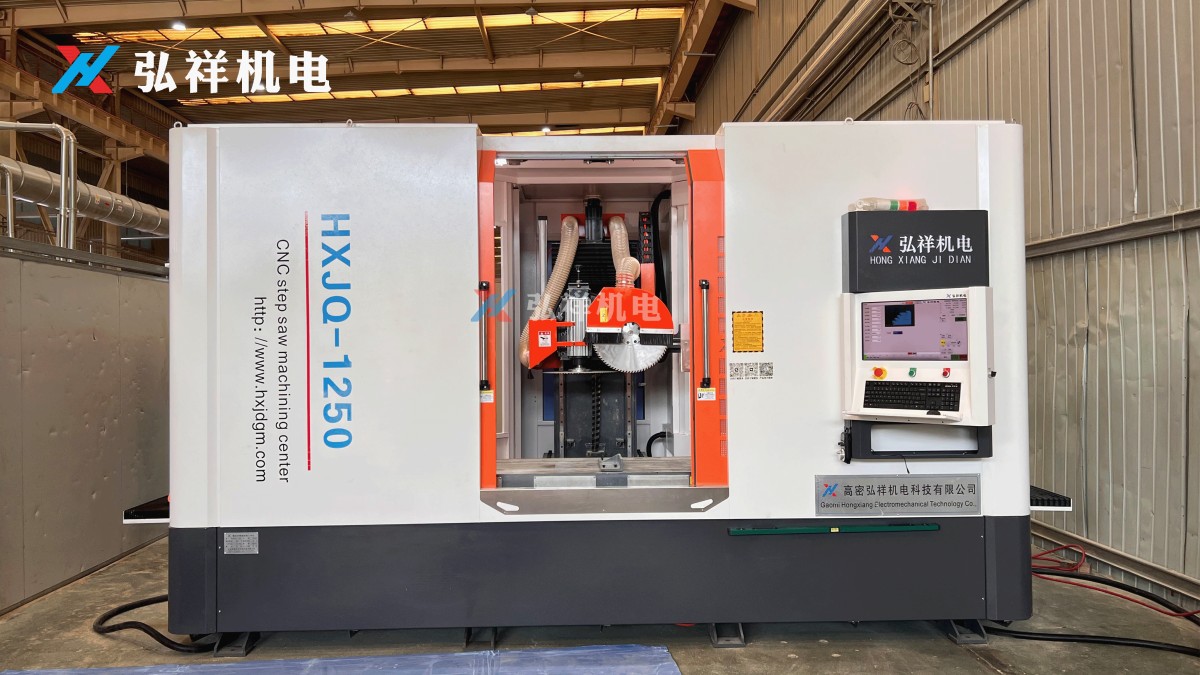
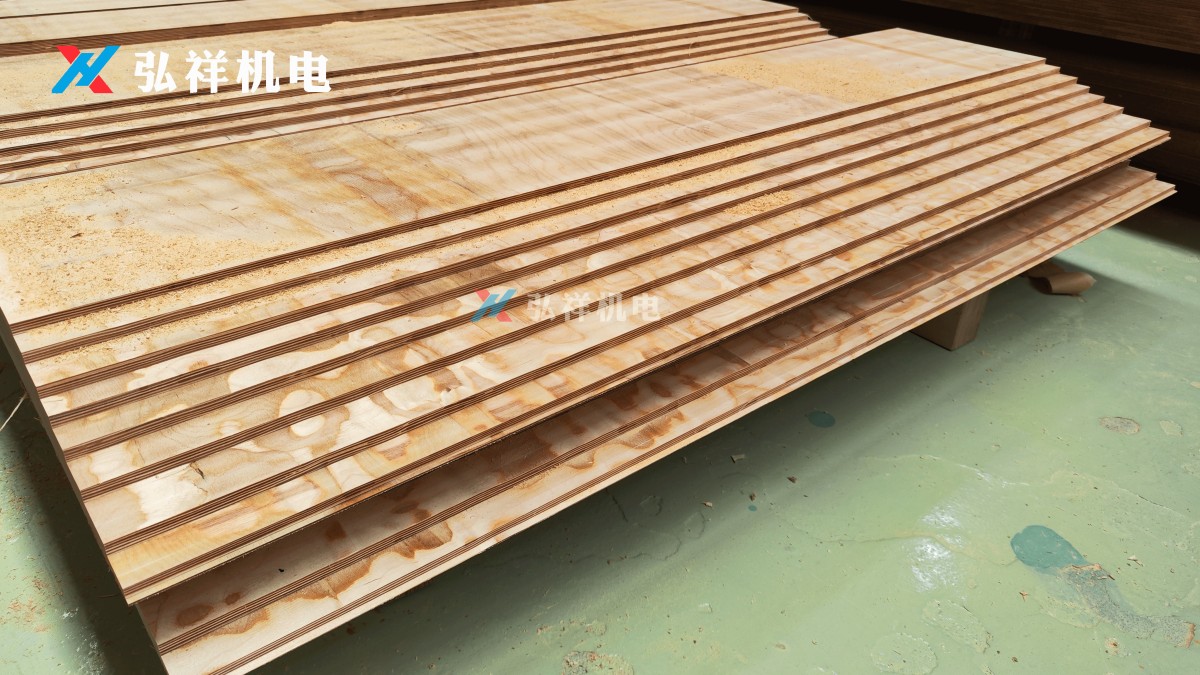
Why Total Cost of Ownership Matters More Than Upfront Price
In transformer manufacturing, insulation integrity directly impacts grid reliability, service life, and regulatory compliance. Yet procurement decisions often prioritize initial capital expenditure over 10-year operational economics. Manual laminated wood processing equipment may appear economical at purchase—typically priced 30–45% lower than automated transformer electrical layer-pressed wood processing equipment—but fails to account for labor escalation, scrap rates exceeding 8.2%, rework cycles averaging 2.7 hours per batch (per IEEE C57.12.90 test data), and unplanned downtime totaling 14–19 days annually. A 2023 benchmark study by the China Electrical Equipment Association found that facilities using manual systems incurred 227% higher labor-related OPEX per cubic meter of processed insulating laminated wood versus fully automated lines.
Gaomi Hongxiang’s automated transformer electrical layer-pressed wood processing equipment integrates servo-driven press control, real-time moisture mapping sensors, and adaptive stacking algorithms compliant with IEC 60641-2 and GB/T 5654–2007 standards. This ensures dimensional repeatability within ±0.15 mm across 10,000+ production cycles—critical for high-voltage winding support structures where tolerance drift compromises dielectric strength. Unlike legacy manual setups requiring operator recalibration every 90 minutes, our systems maintain process stability for 72+ continuous hours, reducing human intervention by 86%.
As a certified transformer electrical layer-pressed wood processing equipment manufacturer in China, we embed predictive maintenance modules into each control interface—flagging bearing wear, hydraulic pressure decay, or thermal anomalies before failure occurs. This extends mean time between failures (MTBF) from 1,850 hours (manual) to 6,200+ hours (automated), directly lowering lifetime repair costs and safeguarding production schedules for OEMs serving national grid projects.
Precision, Consistency & Compliance: The Engineering Imperative
Transformer insulation cardboard processing equipment for power transformers must meet strict mechanical and electrical specifications—not just dimensional tolerances. Layer-pressed wood used in core clamping frames and coil spacers must sustain compressive strength ≥85 MPa after 1,000-hour aging at 105°C (per IEC 60270), while maintaining surface resistivity >1 × 10¹² Ω·cm under 85% RH conditions. Manual pressing introduces variable dwell time, uneven heat distribution, and inconsistent stack compression—leading to delamination risks and localized carbonization during vacuum impregnation.
Our transformer insulation cardboard processing equipment manufacturer in China designs all systems around closed-loop feedback architecture. Infrared thermography monitors resin cure profiles across 32 zone-controlled platens; load cells verify uniform pressure application (±0.8% full scale); and optical metrology validates post-press flatness to ISO 2768-mK standards. These capabilities make our laminated wood processing equipment for transformer insulation ideal for Tier-1 suppliers supplying State Grid Corporation of China and Power Grid Corporation of India—where batch traceability and audit-ready digital logs are mandatory.
Moreover, our custom transformer electrical layer-pressed wood processing equipment supports multi-material workflows: simultaneous handling of phenolic-impregnated paperboard, epoxy-glass composites, and bamboo-reinforced laminates—all programmable via HMI without mechanical retooling. This flexibility reduces changeover time from 4.3 hours (manual) to under 18 minutes, accelerating response to evolving insulation material R&D initiatives.
TCO Comparison: 5-Year Lifecycle Breakdown
The following table compares annualized TCO components for a typical 1,200 mm × 2,400 mm processing line operating two shifts per day, five days weekly:
This analysis confirms a net 32.2% TCO reduction over five years—equivalent to recovering the automation premium within 27 months. As a transformer electrical layer-pressed wood processing equipment manufacturer in China, Gaomi Hongxiang further enhances ROI through modular upgrades: AI-powered vision inspection add-ons reduce final QA pass-fail cycles by 41%, while cloud-connected SCADA integration enables remote diagnostics and firmware updates—eliminating costly on-site technician dispatches.
Global Deployment & Support Infrastructure
Gaomi Hongxiang is not only a laminated wood processing equipment manufacturer in China but also a full-spectrum partner supporting global transformer manufacturers. Our transformer electrical layer-pressed wood processing equipment for power industry has been deployed across 14 countries—including dual-voltage (220V/380V) configurations for Russian industrial grids, CE-certified variants for EU-based OEMs, and explosion-proof models approved for Indian thermal power station environments. Every system includes bilingual (English + local language) operator training, spare parts logistics mapped to regional hubs in Singapore, São Paulo, and Moscow, and 24/7 remote troubleshooting via encrypted VNC sessions.
Unlike generic machine builders, we co-develop process parameters with customers’ R&D teams—adjusting resin diffusion timing, cooling ramp profiles, and stack sequencing logic to match proprietary insulation formulations. This collaborative engineering approach underpins our reputation as a cost-effective transformer electrical layer-pressed wood processing equipment provider that delivers validated performance—not just hardware.
Our after-sales service network covers preventive maintenance contracts, calibration certification (traceable to CNAS-accredited labs), and retrofitting of legacy presses with IoT gateways—ensuring seamless integration into Industry 4.0 manufacturing ecosystems. For project managers overseeing multi-year infrastructure rollouts, this continuity eliminates technology obsolescence risk and preserves CAPEX efficiency across asset lifecycles.
Conclusion: Strategic Investment, Not Just Equipment Procurement
Selecting transformer insulation cardboard processing equipment manufacturer in China demands more than quoting sheet metal specs—it requires evaluating technical stewardship, compliance rigor, and lifecycle partnership depth. Automated transformer electrical layer-pressed wood processing equipment from Gaomi Hongxiang delivers measurable advantages in precision, repeatability, energy efficiency, and long-term cost containment—validated by field data from over 217 installations worldwide.
Whether you’re a procurement officer negotiating multi-year supply agreements, a financial controller modeling depreciation and tax incentives, or a plant manager optimizing throughput KPIs, our custom transformer electrical layer-pressed wood processing equipment provides scalable intelligence—from entry-level semi-auto lines to fully integrated AI-enabled production cells. As a private enterprise integrating R&D, design, production, installation, training, and after-sales service, we ensure alignment from specification to sustained operation.
Ready to move beyond spreadsheet comparisons? Immediately contact Gaomi Hongxiang’s engineering team for a site-specific TCO simulation, material compatibility assessment, or factory acceptance test protocol review. Let’s engineer reliability—layer by layer.
NAVIGATION
MESSAGE
Request A Quote?