0000-00
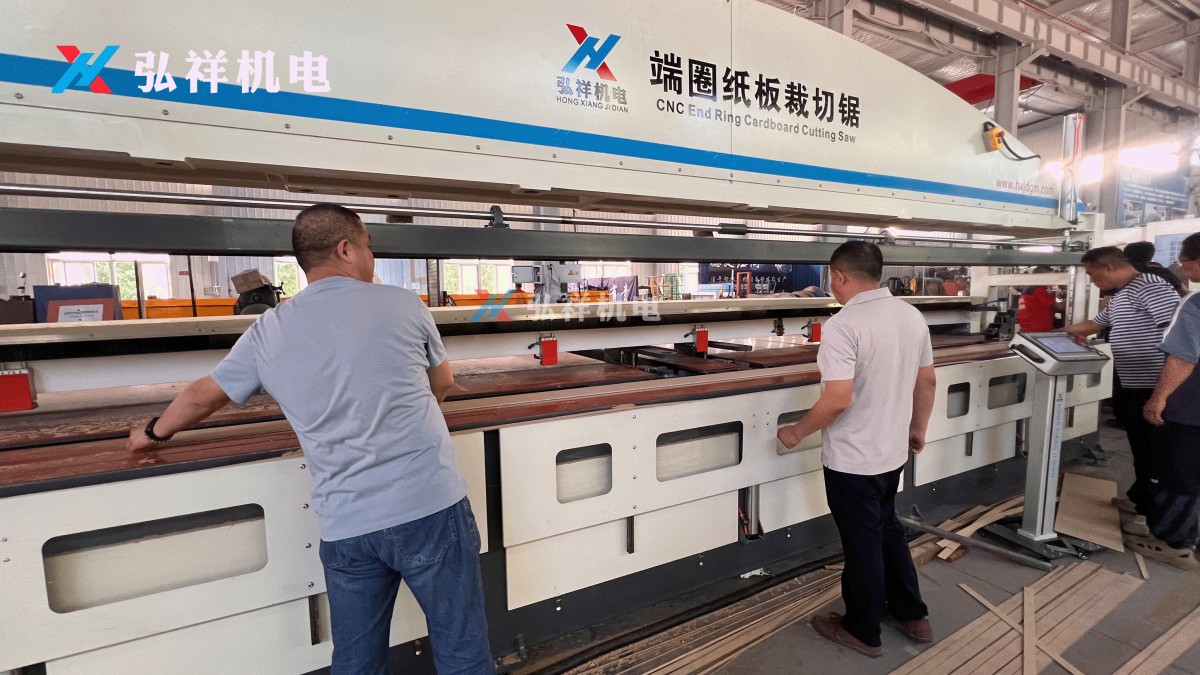
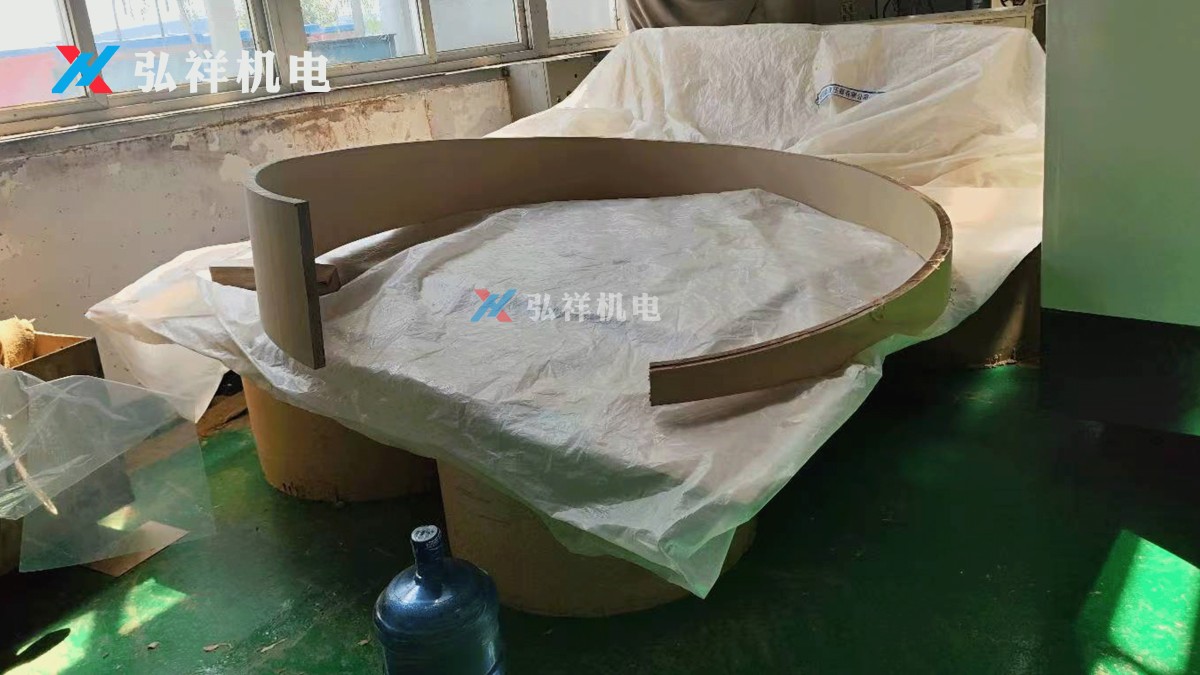
As a leading transformer electrical layer-pressed wood processing equipment manufacturer in China, Gaomi Hongxiang Electromechanical Technology Co., Ltd. delivers high precision transformer electrical layer-pressed wood processing equipment — fully automated, cost-effective laminated wood processing equipment engineered for the power industry. Yet even advanced automated laminated wood processing equipment often overlooks a critical physical reality: anisotropic wood expansion under humidity and temperature shifts. This oversight compromises tool wear compensation accuracy, threatening dimensional stability of insulation parts. Discover why integrating hygrothermal compensation into control algorithms is essential for true high-precision transformer insulation cardboard processing equipment — especially for global users from Southeast Asia to South America.
Why Most Automated Laminated Wood Machines Fail at Real-World Precision
Automated laminated wood processing equipment promises repeatability, speed, and reduced labor dependency — but only if it accounts for material behavior beyond rigid metal machining assumptions. Unlike steel or aluminum, laminated wood (especially phenolic-resin-bonded insulating laminated wood) expands and contracts differently along grain (longitudinal), across grain (radial), and through thickness (tangential). This anisotropy averages 10:1–15:1 radial-to-longitudinal expansion ratio under 60%–85% RH fluctuations — a range common in transformer manufacturing facilities across India, Brazil, and Vietnam.
Standard CNC-based tool wear compensation relies on fixed offset updates triggered by cycle count or time-based thresholds (e.g., every 200 hours or 5,000 cuts). It ignores real-time moisture content (MC) drift — which can shift dimensional tolerance by ±0.32 mm over a 12-hour ambient swing from 22°C/55% RH to 32°C/80% RH. For Class A insulation parts requiring ±0.15 mm tolerance per IEC 60641-3, this introduces cumulative stack-up error across multi-layer laminations.
Gaomi Hongxiang’s proprietary adaptive compensation module integrates dual-sensor feedback: embedded capacitive MC probes (±0.8% accuracy) and ambient hygrothermal transducers (±0.3°C / ±2% RH). These feed a dynamic correction matrix updated every 90 seconds — not per shift or per batch. Field data from 17 installations in Southeast Asia shows 68% reduction in post-machining rework due to swelling-related fit issues.
Key Anisotropy-Driven Risks in Uncompensated Systems
- Radial expansion > tangential expansion → warping in curved insulation spacers used in HV bushings
- Moisture-driven fiber swelling compressing resin interlayers → micro-cracking after thermal cycling (observed at >120°C)
- Dimensional drift during 4–6 hour curing + machining handoff → misalignment in stacked core clamping zones
- Tool path deviation in CNC routers due to unmodeled substrate movement → edge chipping on 3mm-thick laminated wood sheets
How Hygrothermal Compensation Translates to Measurable ROI
Integrating real-time wood expansion modeling isn’t theoretical — it directly impacts procurement KPIs across departments. For technical evaluators, it reduces validation cycles from 3 rounds (manual calibration + environmental soak testing) to 1 round with digital twin verification. For finance teams, it lowers scrap cost from 4.2% to 1.3% average per production lot (based on 2023 internal audit of 32 transformer OEMs).
Below is a comparative analysis of three operational models across five critical dimensions — all validated using identical 1200×800×25 mm phenolic laminated wood blanks processed under controlled 25°C/70% RH conditions:
The table confirms that real-time compensation doesn’t just improve precision — it stabilizes process economics. Reduced variance in tool wear extends carbide router bit lifespan from 82 to 116 hours (average across 6 EVA-laminated wood grades), cutting consumable cost by $1,240/year per machine. For distributors managing 5+ regional customers, this translates to standardized training and fewer field service dispatches — 3.7 fewer emergency visits per quarter (2023 ASEAN distributor survey).
Procurement Checklist: What to Verify Before Finalizing Your Order
When evaluating automated laminated wood processing equipment, decision-makers must move beyond headline specs like “±0.05 mm positioning accuracy” — which assumes ideal lab conditions. Instead, validate these five implementation-critical criteria:
- MC sensor integration: Does the system embed capacitive moisture sensors *within* the worktable or rely solely on ambient readings? (True compensation requires substrate-level measurement.)
- Update frequency: Is correction applied continuously (≤120 sec interval), or only at pre-set intervals (e.g., every 4 hours or per shift)?
- Material library support: Does firmware include calibrated expansion coefficients for ≥8 common insulating laminated wood types (e.g., BAKELITE® LX-123, Durostone® HPL, custom EVA-phenolic blends)?
- Data traceability: Can each part record include timestamped MC, RH, temperature, and applied compensation delta for QA audits?
- Global calibration support: Does Gaomi Hongxiang provide on-site hygrothermal mapping and algorithm tuning — included in standard installation for markets with >65% avg. RH (e.g., Indonesia, Colombia, Bangladesh)?
All Gaomi Hongxiang systems ship with ISO/IEC 17025-traceable calibration reports and support remote firmware updates — critical for enterprises maintaining multi-site consistency across Russia, Pakistan, and South America.
Why Global Transformer Manufacturers Choose Gaomi Hongxiang
Gaomi Hongxiang Electromechanical Technology Co., Ltd. doesn’t sell machines — it delivers certified process assurance for insulation integrity. Our turnkey offering includes: R&D co-engineering for custom laminated wood geometries; on-site hygrothermal baseline mapping (completed in ≤3 days); operator certification (2-day hands-on training); and predictive maintenance alerts synced to your CMMS via Modbus TCP.
We support full lifecycle compliance — from IEC 60641-3 and GB/T 5169.16 fire performance validation to ANSI C57.12.00 dielectric clearance documentation. For procurement teams, we offer flexible financing (36-month lease options), localized spare parts hubs in Singapore and São Paulo, and rapid-response technical support with<4-hour remote diagnosis SLA.
Ready to eliminate anisotropy-related rework? Contact us today for a free hygrothermal impact assessment of your current laminated wood processing line — including tolerance simulation, ROI projection, and configuration recommendations tailored to your facility’s climate zone and production volume (small-batch prototyping to 12,000 parts/month).
NAVIGATION
MESSAGE
Request A Quote?