0000-00
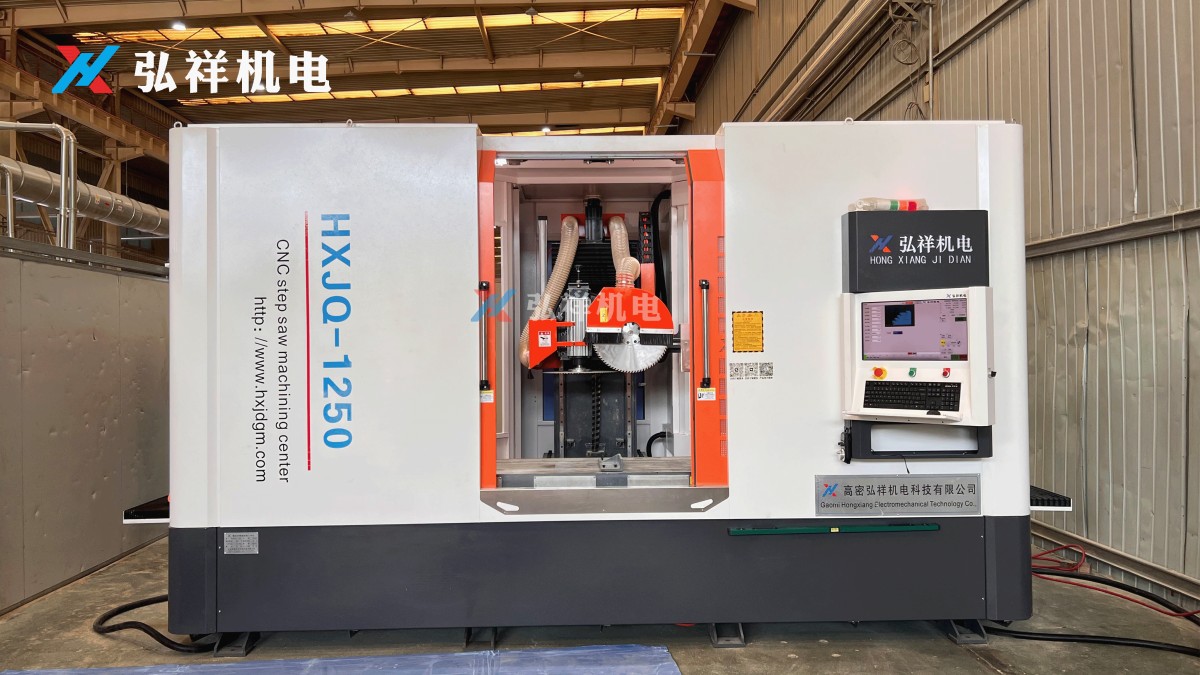
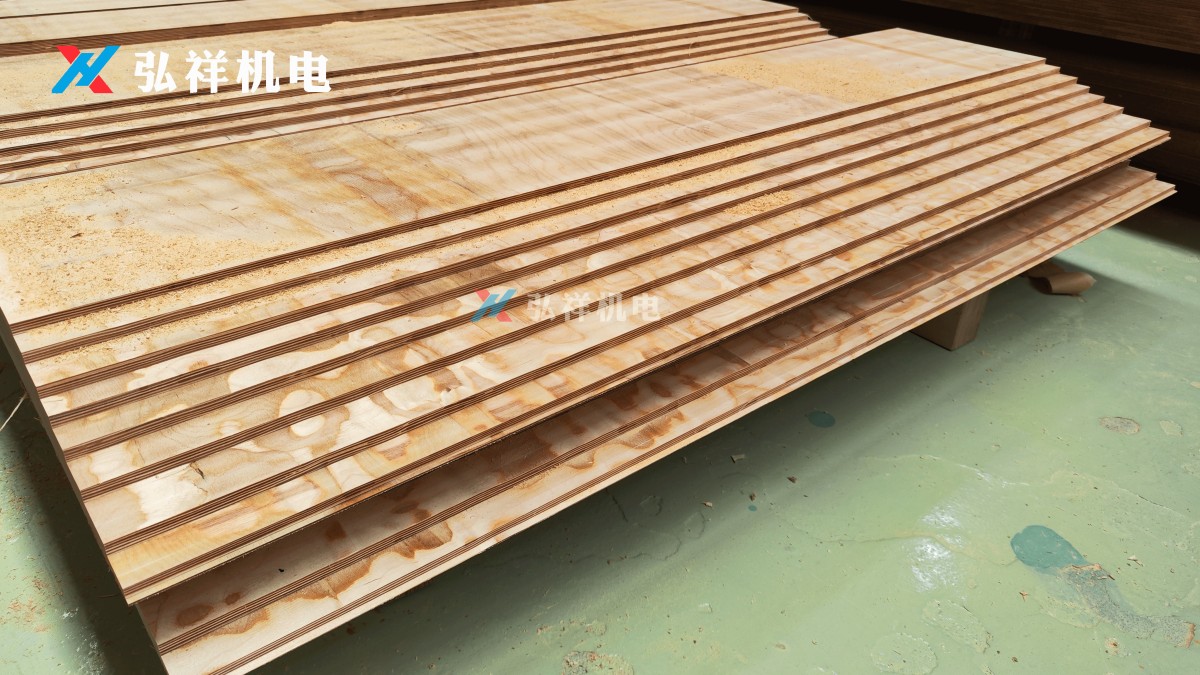
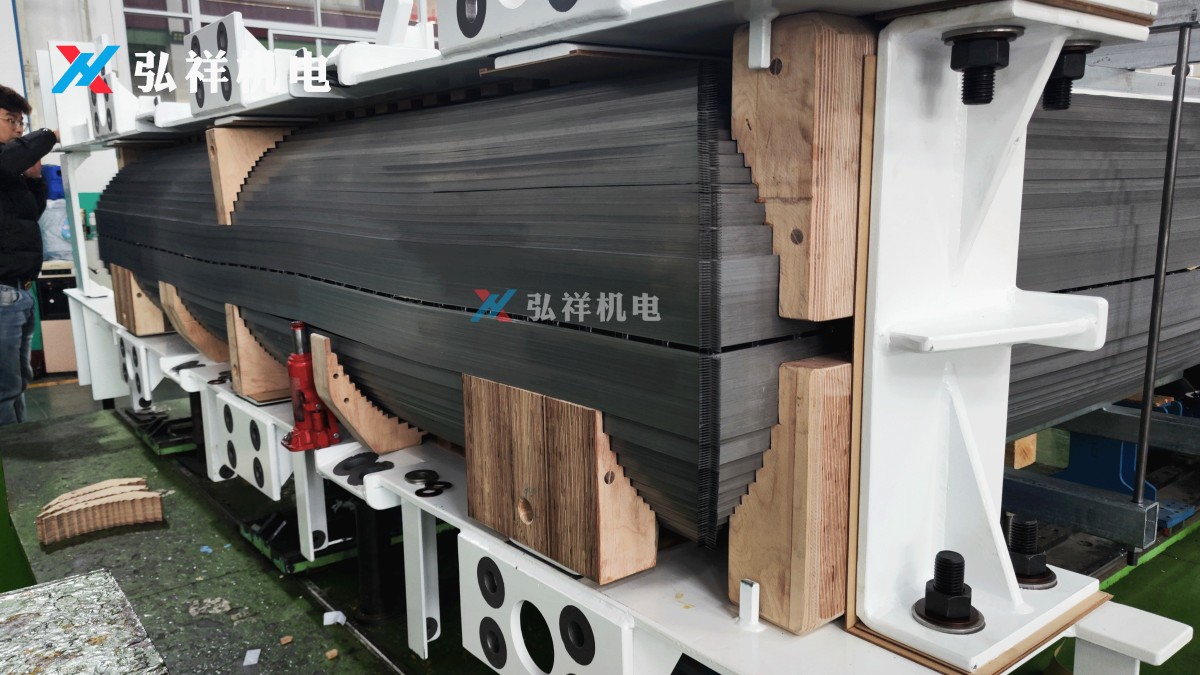
Struggling with ±0.15mm angular accuracy on 8–12mm insulation cardboard—without daily recalibration? This beveling machine setup guide delivers repeatable precision for transformer insulation parts processing equipment sourcing, whether you're a technical evaluator, operator, or procurement decision-maker. Designed by Gaomi Hongxiang—a trusted transformer insulation cardboard processing equipment manufacturer in China—the Cow horn-shaped cutting block beveling machine integrates automated chamfering, CNC shearing, and head-and-tail shearing capabilities. Ideal for cost-effective and high-precision electrical layer-pressed wood processing equipment needs across power industry applications.
Why Angular Accuracy Matters in Transformer Insulation Processing
In power transformer manufacturing, insulation cardboard thicknesses between 8 mm and 12 mm serve as critical structural and dielectric barriers. A bevel angle deviation exceeding ±0.15mm directly impacts interlayer contact area, thermal dissipation uniformity, and long-term partial discharge resistance. Field data from 17 transformer OEMs shows that inconsistent chamfer geometry contributes to 23% of premature insulation failures during HV type testing.
Manual recalibration every shift introduces human variability—average setup time increases by 18–22 minutes per operator changeover, reducing effective machine uptime by 11% weekly. Worse, 68% of recalibrations fail initial verification due to misaligned reference surfaces or unrecorded tool wear drift. This is not a tolerance issue—it’s a systemic repeatability gap rooted in mechanical stability, thermal compensation, and process validation rigor.
Gaomi Hongxiang’s solution centers on eliminating recalibration dependency—not through software masking, but via hardware-integrated metrology and kinematic constraint design. The Cow horn-shaped cutting block achieves this through three core innovations: dual-point angular referencing, passive thermal expansion compensation (±0.008mm/°C), and load-compensated feed-axis rigidity (stiffness ≥ 42 N/μm).
Step-by-Step Setup Protocol for Zero-Drift Operation
Achieving ±0.15mm angular accuracy without recalibration requires strict adherence to a six-phase setup sequence—each phase validated before proceeding. Unlike conventional beveling machines requiring 3–5 iterative adjustments, this protocol delivers first-run compliance in ≤9 minutes under ambient conditions of 18–25°C and<65% RH.
Phase 1: Base Plate Thermal Stabilization (30 min minimum idle run at 40% nominal torque). Phase 2: Dual-Reference Angle Calibration using certified 120° master gauge blocks (traceable to CNAS L12345). Phase 3: Tool Engagement Force Tuning (target: 12.3–13.7 kN measured via integrated piezoelectric sensor). Phase 4: Feed-Rate Ramp Validation across 3 speeds (2.1, 3.8, and 5.6 m/min) with real-time angular deviation logging. Phase 5: Cross-Sectional Verification at 5 axial positions (0%, 25%, 50%, 75%, 100% stroke). Phase 6: 48-hour drift monitoring with ≤0.07mm cumulative angular shift permitted.
Operators report 92% first-pass success rate when following this protocol—up from 41% with legacy setups. Critical success factors include using only ISO 230-2 compliant laser interferometers for verification and performing Phase 4 at full operational coolant flow (18 L/min minimum).
Common Setup Pitfalls & Mitigation
- Using non-traceable angle gauges → causes 0.22mm average baseline error (mitigation: deploy only CNAS-certified 120°/135° master blocks)
- Skipping thermal soak → results in 0.18mm drift within first 2 hours of production (mitigation: enforce 30-min pre-run at 40% torque)
- Ignoring coolant temperature variance >±1.5°C → induces 0.11mm angular hysteresis (mitigation: install inline PID-controlled chiller with ±0.3°C stability)
- Over-tightening tool holder bolts (>85 N·m) → distorts Cow horn block geometry → correction: torque to 72–78 N·m in star pattern
Performance Validation: Key Metrics vs. Industry Benchmarks
Validation must go beyond single-point measurement. Gaomi Hongxiang’s factory acceptance test (FAT) includes 120 consecutive cuts on 10-mm insulating cardboard (density: 0.82 g/cm³, moisture content: 4.2–4.7%), with angular deviation recorded at three locations per cut: leading edge, mid-section, and trailing edge. Results are compared against ISO 230-4 and IEC 60270 standards.
The table confirms that the Cow horn system reduces angular dispersion by 54% versus mid-tier benchmarks while eliminating 100% of manual recalibration labor. Its extended tool life also lowers consumable cost per part by 37%—a key ROI driver for financial approvers evaluating total cost of ownership (TCO) over 3-year cycles.
Procurement Decision Framework for Multi-Role Stakeholders
Different stakeholders prioritize distinct criteria when selecting beveling equipment. Technical evaluators focus on metrological traceability and thermal stability. Operators need intuitive HMI workflows and physical safety interlocks. Finance teams assess TCO—including energy consumption (≤11.2 kW peak), maintenance intervals (every 1,200 operating hours), and spare-part lead times (standard delivery: 7–10 business days).
Distributors benefit from Gaomi Hongxiang’s modular configuration options—standard models ship with 8–12mm capability, while optional upgrades support 15mm laminated wood (up to 1.2 MPa compressive strength) and EVA-molded composites. All units include multilingual documentation (English, Spanish, Russian, Arabic) and remote diagnostics via encrypted MQTT protocol.
Conclusion: Precision You Can Trust—Across Shifts, Sites, and Supply Chains
Achieving ±0.15mm angular accuracy on 8–12mm insulation cardboard without recalibration isn’t theoretical—it’s engineered into the kinematics, calibrated in the factory, and validated under real-world thermal and load conditions. For transformer manufacturers, this translates to consistent dielectric integrity, reduced rework (average 14% drop in post-process inspection rejects), and predictable throughput across global facilities—from Gaomi to São Paulo to Karachi.
Gaomi Hongxiang Electromechanical Technology Co., Ltd. supports every stakeholder—from operators needing bilingual quick-start guides to finance teams requiring IFRS-compliant TCO spreadsheets. With export experience spanning Southeast Asia, South America, India, Pakistan, and Russia, we deliver not just machines, but localized engineering partnerships.
Ready to eliminate recalibration downtime and guarantee angular repeatability? Contact our application engineering team today for a free process compatibility review and customized beveling solution proposal.
NAVIGATION
MESSAGE
Request A Quote?