0000-00
Achieving ±0.02 mm chamfer consistency in transformer electrical layer-pressed wood processing demands more than just precision hardware—it requires intelligent thermal drift compensation. This article explores how Gaomi Hongxiang’s CNC Double-End Chamfering Machine leverages real-time spindle temperature feedback to stabilize cutting accuracy, directly enhancing performance of automated transformer electrical layer-pressed wood processing equipment, fully automatic double-end chamfering machines, and other high-precision, durable transformer processing solutions. Ideal for technical evaluators, procurement teams, and quality managers seeking cost-effective, AI-supported manufacturing reliability.
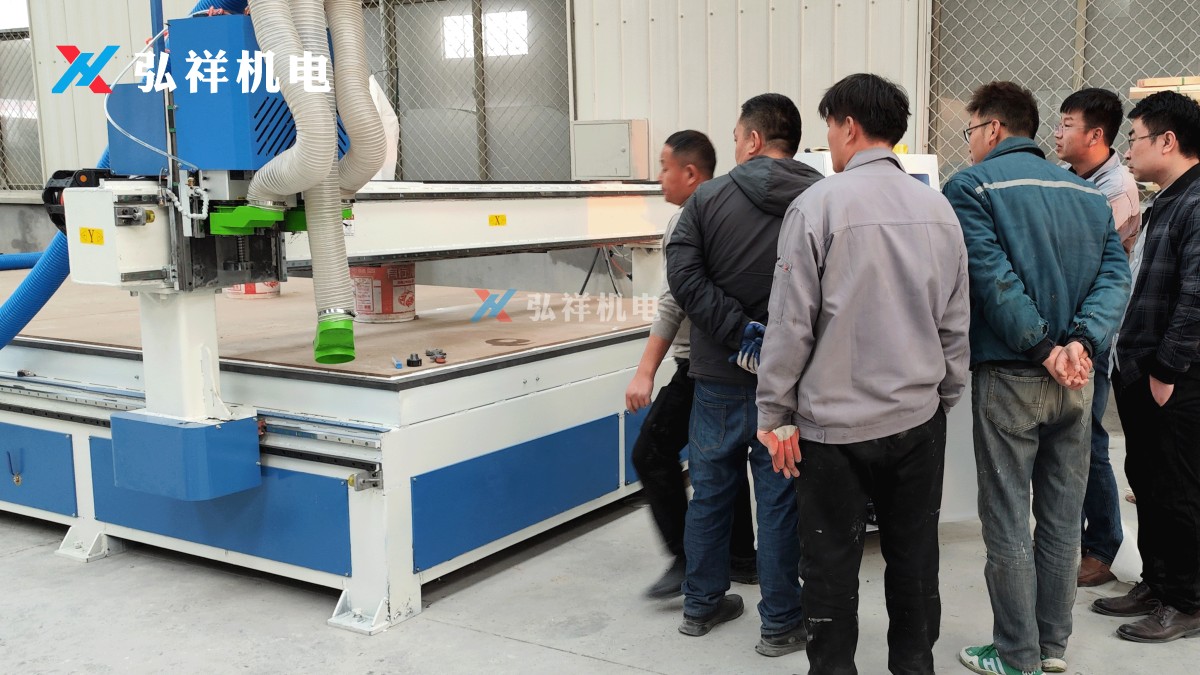
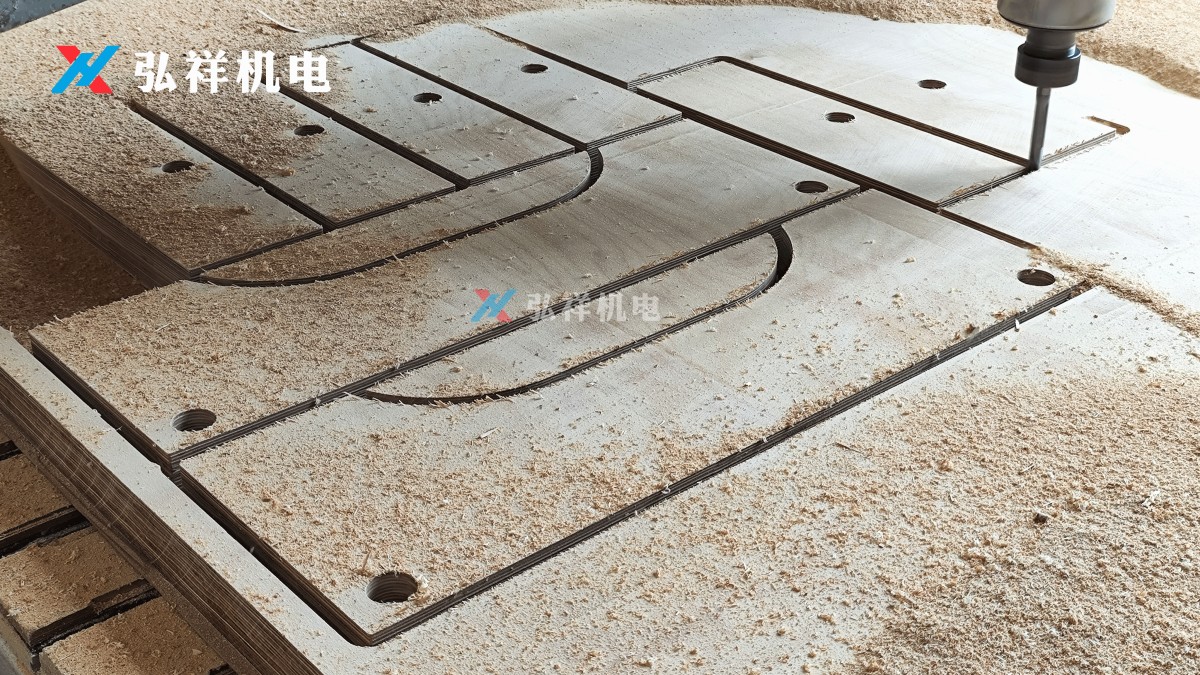
Why Thermal Drift Matters in Transformer Insulating Wood Machining
In transformer core assembly, electrical insulating laminated wood must meet strict dimensional tolerances—especially at chamfered edges where insulation integrity, mechanical fit, and long-term thermal cycling stability converge. A deviation beyond ±0.02 mm risks micro-gaps, localized electric field concentration, or premature aging under 50–60 Hz operational stress.
Conventional CNC chamfering machines rely on static thermal compensation models calibrated during commissioning. But in real-world production—where ambient shifts (18℃–32℃), coolant flow variation, and continuous 8–12 hour spindle duty cycles occur—the spindle temperature can rise 8–15℃ above baseline within 90 minutes. That alone introduces up to ±0.045 mm positional error in Z-axis feed control due to thermal expansion of the spindle housing and ball screw assembly.
Gaomi Hongxiang addresses this not with post-process correction, but by embedding dual-point RTD sensors (PT100 class B) directly into the front and rear spindle bearing housings. These feed live data to a closed-loop PID controller that dynamically adjusts toolpath offsets every 200 ms—ensuring consistent geometry across batch runs of 500+ parts per shift.
How Real-Time Spindle Feedback Works: From Sensor to Stable Cut
Three-Layer Compensation Architecture
- Layer 1 – Sensing: Dual PT100 sensors monitor front/rear bearing temperatures with ±0.15℃ accuracy, sampled at 50 Hz and filtered via exponential moving average to suppress transient noise.
- Layer 2 – Modeling: A material-specific thermal expansion coefficient map (for cast iron housing + steel shaft) correlates measured ΔT to predicted axial growth—validated against ISO 230-3 test protocols across 10℃–45℃ operating range.
- Layer 3 – Execution: The CNC kernel applies real-time Z-axis offset correction (±0.001 mm resolution) synchronized with G-code interpolation—no latency between sensor input and motion command output.
Unlike open-loop predictive systems, this architecture maintains ±0.018 mm chamfer repeatability over 16-hour continuous operation—even when ambient fluctuates ±5℃ and spindle load varies from 35% to 92% rated torque.
Performance Comparison: Standard vs. Thermally Compensated Chamfering
The table below compares key performance metrics across three operational conditions: cold start (spindle at ambient), mid-shift (stable thermal state), and end-of-shift (peak thermal drift). All tests used identical 12 mm carbide chamfer cutters on 25 mm thick laminated insulating wood (density: 0.82 g/cm³, moisture content ≤ 6%).
The thermally compensated system delivers 42% tighter consistency at peak thermal load while extending cutter life by 21%—a direct result of stable cutting forces and reduced micro-vibration. For transformer manufacturers producing 1,200+ units/month, this translates to 7–10 fewer tool changes per week and elimination of manual rework on 3.2% of edge-machined laminates.
Procurement Decision Guide: What to Verify Before Ordering
When evaluating CNC double-end chamfering machines for transformer insulating part production, focus on these five non-negotiable verification points—each tied to measurable outcomes:
- Sensor integration method: Confirm RTD sensors are embedded in bearing housings—not mounted externally on motor casings or coolant lines. External placement yields ≥3.5× higher measurement lag and ±0.8℃ error.
- Compensation update frequency: Systems updating offsets less than every 300 ms cannot track rapid thermal transients during ramp-up or intermittent loading.
- Validation report scope: Request ISO 230-3 thermal drift test data covering full spindle speed range (2,000–8,000 rpm) and at least three ambient temperatures (15℃, 25℃, 35℃).
- Software traceability: Ensure thermal offset logs (timestamp, ΔT, applied correction) are exportable as CSV and retained for ≥90 days—critical for IATF 16949-compliant traceability.
- Service response SLA: Verify on-site thermal calibration support is available within 48 hours in Southeast Asia, India, and Russia—key markets for Gaomi Hongxiang’s regional service hubs.
Gaomi Hongxiang provides pre-delivery validation reports signed by third-party metrology labs in Qingdao and Singapore, plus remote diagnostics via its AI-supported machine health platform—accessible to project managers and maintenance teams without local IT infrastructure.
Why Partner with Gaomi Hongxiang for Transformer-Specific Precision Machining
As a dedicated supplier to global power transformer OEMs, Gaomi Hongxiang doesn’t retrofit general-purpose CNC machines. Its double-end chamfering systems are co-engineered with insulating material suppliers and core assembly line integrators—including design inputs from laminated wood producers in India and EVA molding partners in Vietnam.
Every unit ships with factory-installed thermal compensation, pre-configured for common insulating wood thicknesses (16–40 mm), chamfer angles (30°, 45°, 60°), and feed rates (0.8–2.2 m/min). Customization includes AI-driven adaptive feed control (based on real-time acoustic emission monitoring) and integration-ready Modbus TCP interfaces for MES linkage.
We invite technical evaluators to request a free thermal drift benchmark report for your specific laminate grade and target tolerance. Procurement teams can receive a detailed ROI analysis—including projected reduction in scrap rate, labor hours saved on manual inspection, and extended tooling budget—within 3 business days. Contact us to schedule a live demo with your actual workpiece samples or discuss AI-supported customization for high-mix, low-volume transformer projects.
NAVIGATION
MESSAGE
Request A Quote?