0000-00
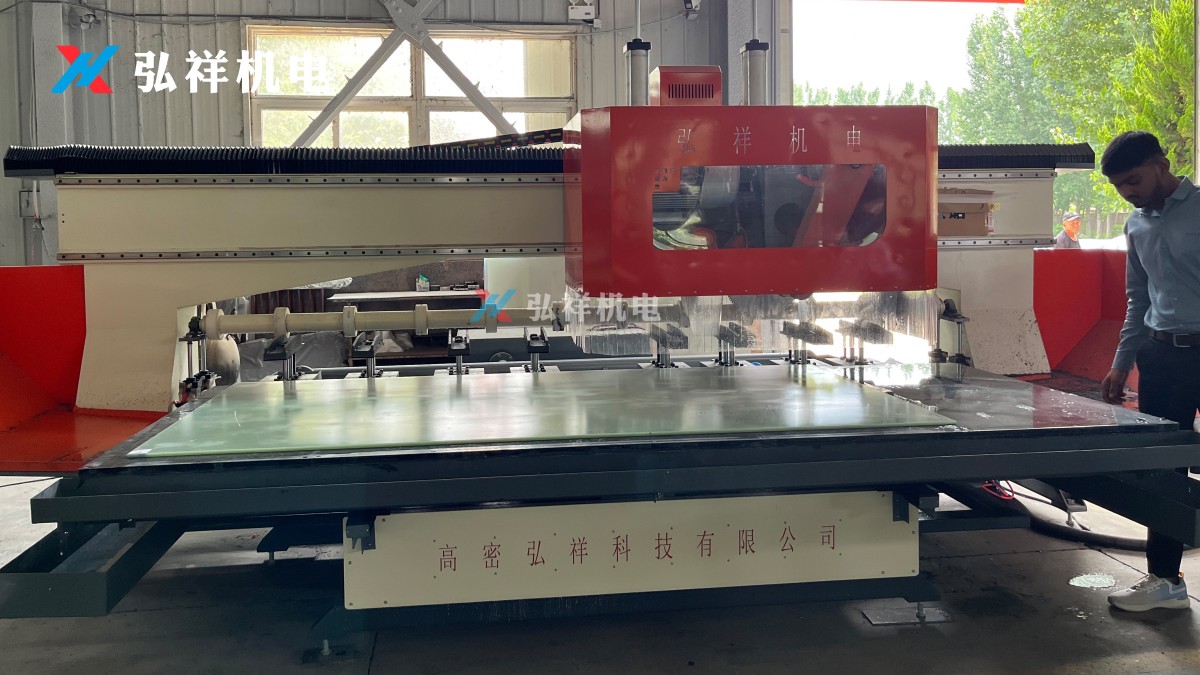
Complex cutting jobs rarely fail because of raw power alone. They usually fail when the machine cannot hold a profile, repeat a path, or keep dimensions stable across batches. That is why the CNC Special-shaped Cutting Saw has become increasingly relevant in machine tool applications where shaped materials, insulating components, and custom parts must be cut with both flexibility and control.
In practical production, the real question is not simply whether a machine can cut. It is whether it can cut the required profile consistently, within tolerance, and without creating unnecessary finishing work. For operations involving insulating cardboard, laminated wood, EVA materials, or shaped industrial parts, that distinction directly affects output quality and downstream assembly.
Why profile cutting matters in current production
Many workshops no longer deal only with straight strips or simple rectangular blanks. Product designs now include stepped edges, arcs, slots, relief cuts, angled sections, and irregular outlines that must match assembly requirements more closely than before.
This is especially true in transformer-related manufacturing and electrical insulation processing. Parts made from insulating cardboard or insulating laminated wood often need precise geometry so they fit safely into structured assemblies. Even a small dimensional drift can affect installation, pressure distribution, or insulation performance.
A CNC Special-shaped Cutting Saw addresses that pressure by combining programmed motion with controlled feeding and cutting action. The result is not just faster work. More importantly, it brings repeatability to shapes that would otherwise depend heavily on operator skill.
What a CNC Special-shaped Cutting Saw is really designed to do
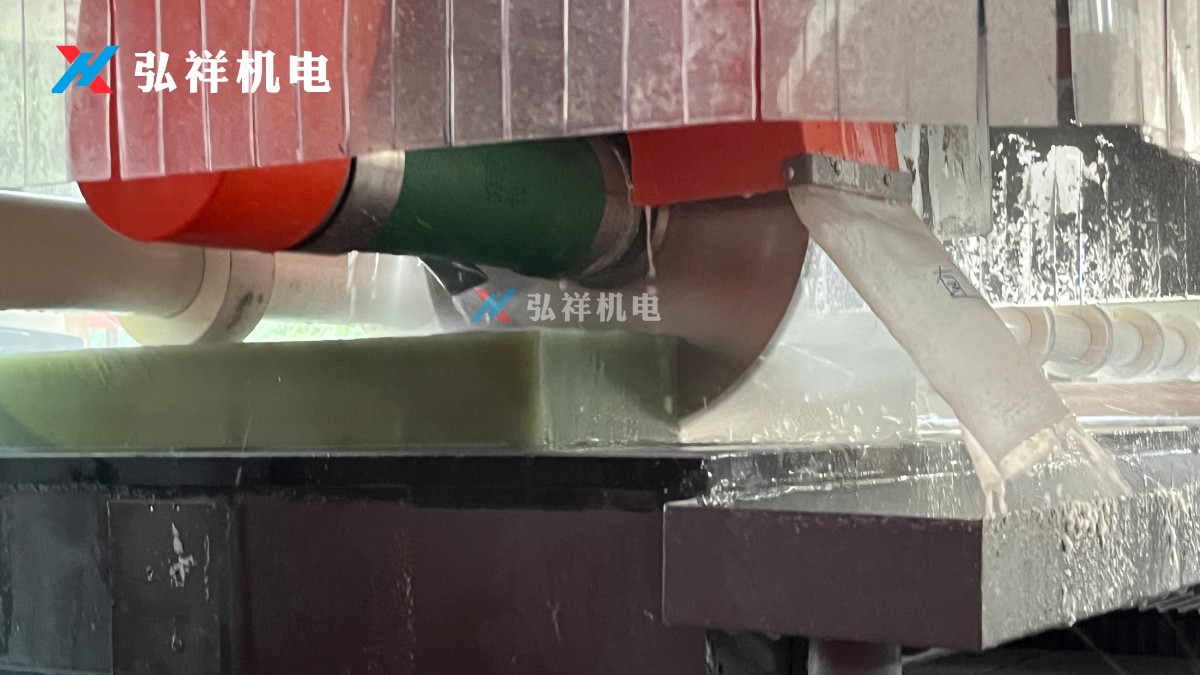
Despite the name, this equipment is not limited to unusual contours alone. A CNC Special-shaped Cutting Saw usually covers standard straight cuts, angled cuts, and shaped cutting within one production platform.
Its value comes from path control. Instead of relying on manual templates, repeated measurement, or physical guides for every change, the machine follows programmed coordinates and motion parameters. That makes profile switching easier and reduces variation from one piece to the next.
In machine tool terms, it sits between basic sawing and more advanced contour-processing equipment. It offers a practical balance for operations that need shaped cutting but do not want the complexity or cost of a broader machining center for every part.
What profiles can it cut
The profile range of a CNC Special-shaped Cutting Saw depends on blade type, axis configuration, fixture design, and software capability. Still, several categories are common across industrial applications.
Straight and angled sections
Basic straight cutting remains essential. Many shaped workflows still start from strip stock, panel stock, or bar stock that must be cut to length accurately before contour work begins.
Angled ends, chamfered edges, and miter-like transitions are also common. These features matter where parts must seat tightly in assemblies or where edge geometry influences the next manufacturing step.
Curved and arc-based outlines
A well-configured CNC Special-shaped Cutting Saw can cut arcs, rounded corners, radiused transitions, and partial circular paths. This is valuable when parts must avoid stress concentration, match housings, or fit into curved structural spaces.
Stepped and multi-level contours
Some insulating or support parts require stepped geometry rather than smooth outlines. These profiles may include offset edges, depth changes, nested shoulders, and repeating contour sections. Such cuts are difficult to reproduce by hand at volume.
Slots, notches, and relief features
Profile cutting often includes more than the outside edge. Internal slots, alignment notches, and local relief cuts help parts interlock, route around adjacent components, or reduce interference during assembly.
Custom irregular shapes
This is where the CNC Special-shaped Cutting Saw becomes most useful. For low-volume custom production or frequent design changes, irregular profiles can be programmed directly from drawings. That avoids repeated manual jig preparation for every variant.
How accurate is a CNC Special-shaped Cutting Saw
Accuracy should never be judged by one number alone. In real production, it includes positioning accuracy, repeatability, cut-edge quality, dimensional consistency across a batch, and stability after long operating hours.
A CNC Special-shaped Cutting Saw can generally maintain far better consistency than manual or semi-manual cutting methods. However, actual tolerance depends on material type, saw blade condition, machine rigidity, fixture reliability, and program quality.
For softer or layered materials, cut-edge compression and rebound may also affect the final measured result. That means the machine may position correctly, while the material still changes slightly after cutting. In those cases, process matching matters as much as the machine specification.
The factors behind stable precision
- Servo control and motion path resolution affect how accurately the tool follows the programmed contour.
- Frame rigidity influences vibration, especially during longer cuts or complex profile transitions.
- Clamping strength determines whether the workpiece shifts under feed pressure.
- Blade sharpness and blade selection affect kerf quality, burning, burr formation, and dimensional drift.
- Operator setup still matters, especially for zero-point calibration, fixture alignment, and parameter confirmation.
Simple parts may show excellent dimensional control even on a moderate machine. Complex profiles expose the whole system. That is why repeatability tests on actual parts are more useful than relying only on brochure tolerances.
Materials and industries where it shows clear value
The strongest value appears where materials are not easy to process manually and where part shape affects assembly quality. This is common in electrical insulation production, transformer component processing, EVA forming support work, and special-purpose machine manufacturing.
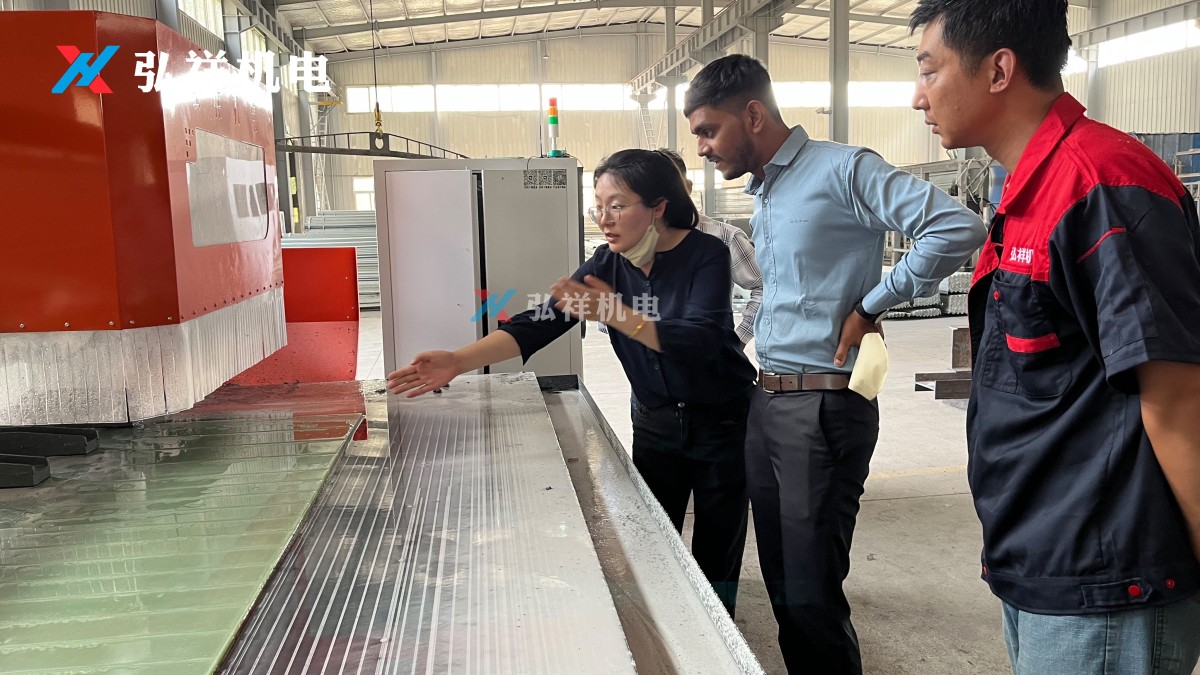
Gaomi Hongxiang Electromechanical Technology Co., Ltd. operates in exactly this type of environment. Its work spans transformer assembly and manufacturing services, electrical insulating cardboard, insulating laminated wood, insulating parts, and EVA molding processing. In such applications, shaped cutting is not decorative. It is functional.
When a business also handles R&D, design, production, installation, training, and after-sales support, machine selection tends to be judged by long-term usability. A CNC Special-shaped Cutting Saw is therefore evaluated not only by peak speed, but by how well it fits the full production chain.
What to look at before choosing one
Selecting a CNC Special-shaped Cutting Saw starts with the profile library, not the catalog cover. The first step is to list the actual shapes, thickness range, and batch pattern that the machine must support.
Useful evaluation points
- Maximum and minimum workpiece size that can be clamped reliably.
- Supported profile complexity, including arcs, inner cuts, and repeated stepped features.
- Tolerance performance on the actual material, not only on a standard test sample.
- Programming convenience when small design changes occur frequently.
- Tooling, blade replacement, and maintenance accessibility.
- Training depth and after-sales responsiveness for future troubleshooting.
It is also worth checking whether the supplier understands the production context. A machine configured for metal profiles may not be ideal for insulation materials or EVA-related shaped cutting. Material behavior should shape the final machine configuration.
Using the machine well after installation
Even a capable CNC Special-shaped Cutting Saw needs disciplined operating practice. Accuracy declines quickly when calibration is skipped, blades are used past their stable life, or fixtures are adjusted informally between shifts.
A sound routine usually includes first-piece verification, scheduled blade inspection, fixture cleaning, and regular comparison between programmed dimensions and measured finished parts. This keeps small errors from becoming batch-level waste.
Where product types change often, building a reliable program library is equally important. Reusing proven parameter sets shortens setup time and protects consistency across operators and production cycles.
A practical way to judge fit
The most practical way to judge a CNC Special-shaped Cutting Saw is to match three things: the real profile range, the required tolerance level, and the production rhythm. When those three align, the equipment becomes a stable production tool rather than a specialized machine used only occasionally.
For operations handling insulating board, laminated wood, EVA parts, or other custom industrial materials, shaped cutting accuracy is closely tied to downstream quality. Looking at sample parts, repeat-cut data, fixture behavior, and service support will give a much clearer answer than headline specifications alone.
Before moving forward, it helps to sort current parts by profile complexity, identify the tightest tolerance requirements, and compare them against real cutting demonstrations. That makes the next equipment decision more grounded, especially when consistency matters as much as output.
NAVIGATION
MESSAGE
Request A Quote?