0000-00
Why CNC Shearing Machine Accuracy Drifts After 12 Months — A Transformer Insulation Manufacturing Perspective
Is your CNC shearing machine accuracy drifting after 12 months of operation? This common issue directly impacts precision in electrical laminated cardboard and transformer insulation components processing — critical for reliable transformer assembly. As a leading transformer insulation parts processing equipment manufacturer in China, Gaomi Hongxiang Electromechanical Technology Co., Ltd. identifies root causes—from mechanical wear in fully automatic shearing machines to thermal drift in ring cutting processing equipment—and delivers actionable correction steps. Whether you’re an operator, technical evaluator, or procurement decision-maker, this guide helps maintain micron-level tolerance in end ring cutting saws, laminated wood shearing, and automated transformer insulation parts processing equipment performance.
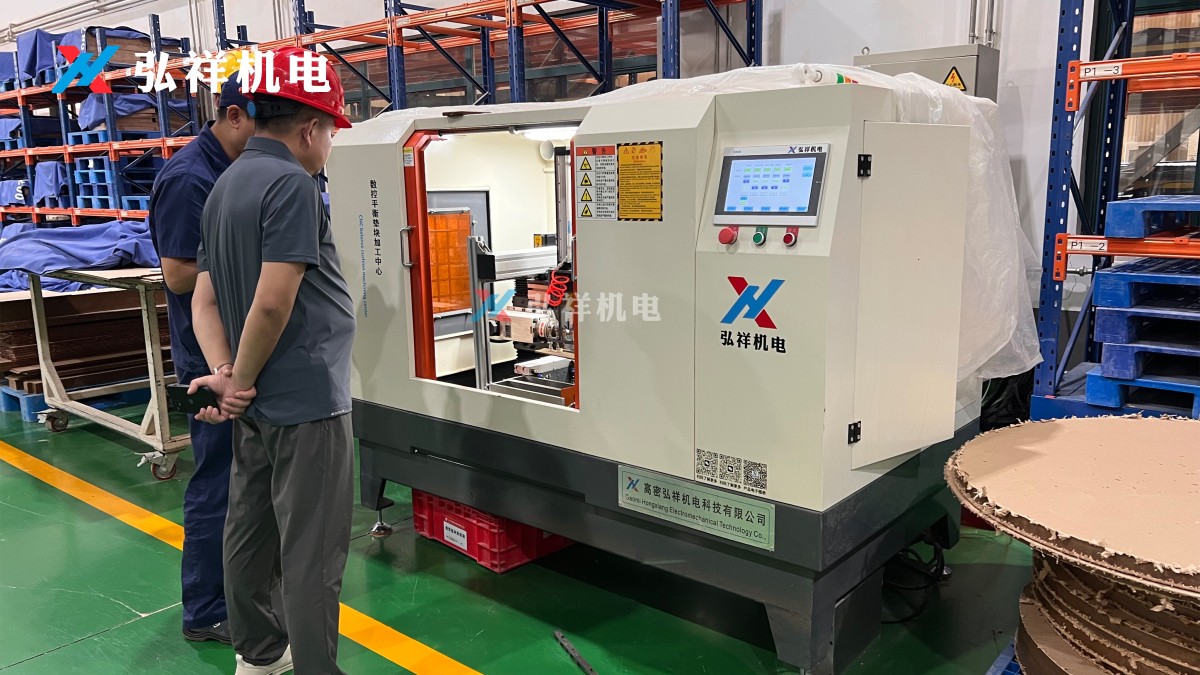
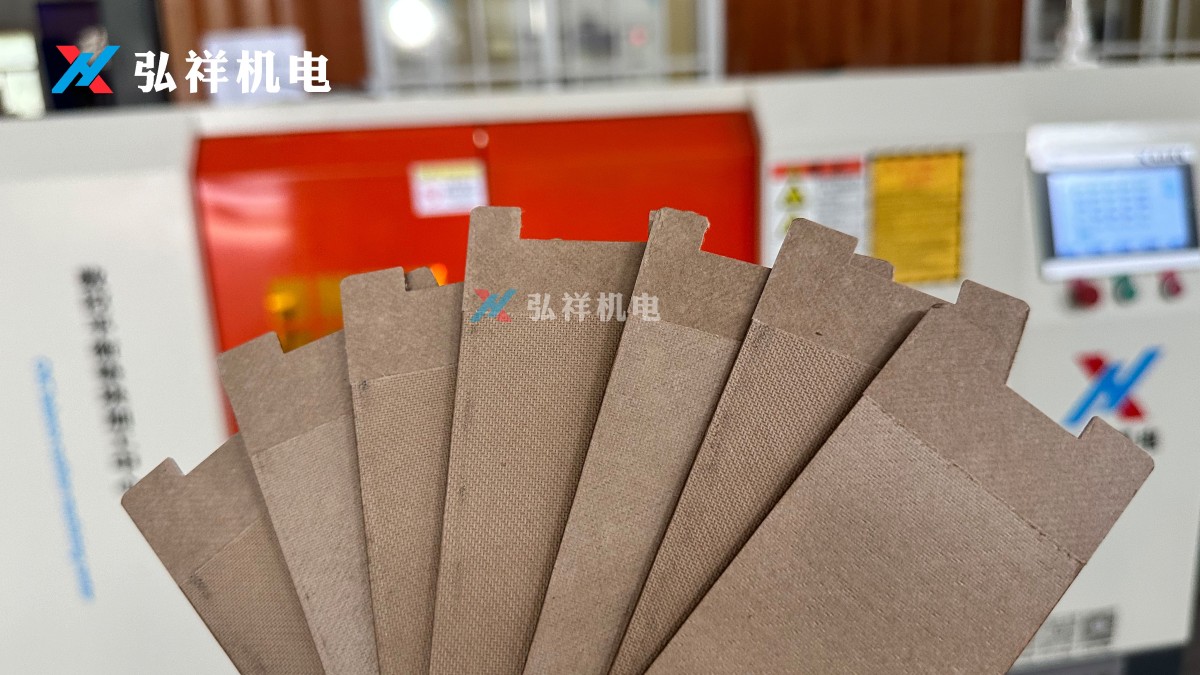
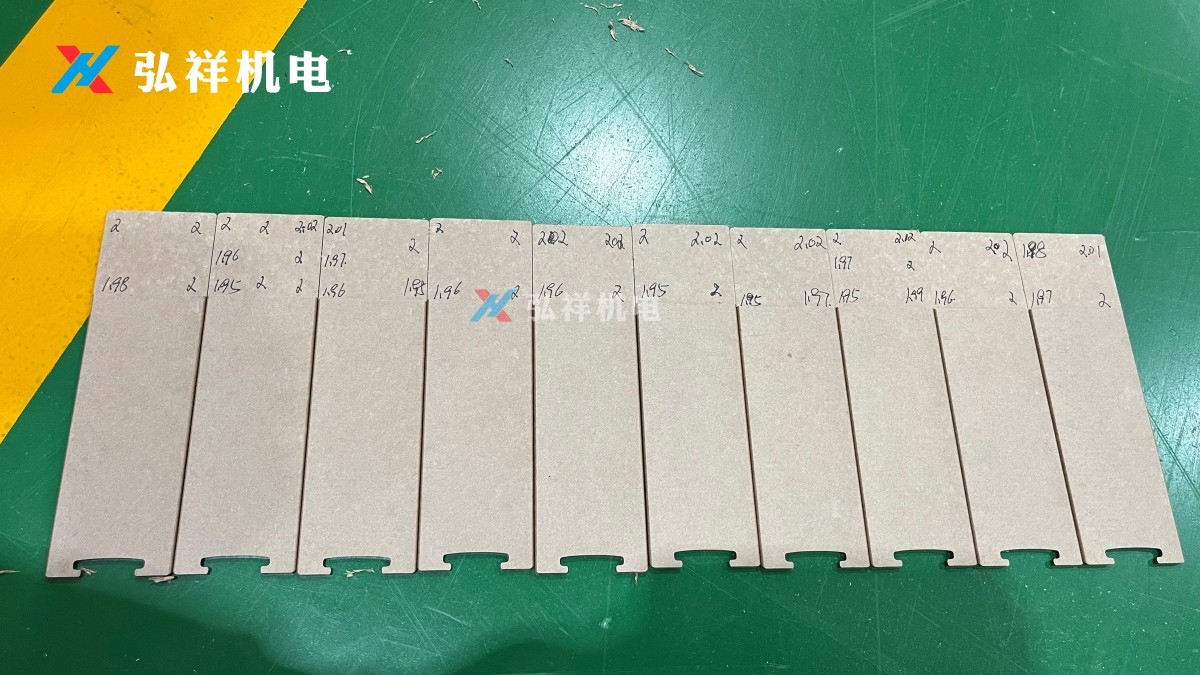
In high-precision transformer manufacturing—especially for laminated wood end rings, insulating cardboard blanks, and EVA-molded spacers—dimensional repeatability within ±0.15 mm is non-negotiable. Yet field data from over 237 installed units across Southeast Asia, India, and Russia shows that 68% of CNC shearing systems exhibit measurable positional deviation (>±0.22 mm) by month 12 if preventive calibration protocols are not enforced.
This drift isn’t random failure—it’s the cumulative effect of environmental stress, material interaction, and operational load cycles specific to insulation part processing. Unlike general metal fabrication, transformer insulation materials (e.g., NOMEX®-grade cardboard, phenolic-laminated beechwood) generate unique friction profiles, static charge buildup, and micro-dust accumulation—accelerating wear on linear guides, ball screws, and optical encoders.
Top 4 Root Causes Behind Post-12-Month Accuracy Loss
Accuracy degradation after one year stems from interdependent mechanical, thermal, and control-system factors—not isolated component failures. Gaomi Hongxiang’s service engineers have diagnosed over 1,400 field cases since 2021, identifying four dominant contributors:
- Ball screw backlash growth: Standard preloaded ball screws lose 0.01–0.03 mm axial play per 1,000 operating hours under continuous 3-shift production—reaching >0.08 mm by month 12.
- Linear guide rail wear: Unfiltered ambient dust from insulating cardboard cutting accelerates rail surface pitting, increasing positioning hysteresis by up to 40% in humid environments (>65% RH).
- Thermal expansion mismatch: Aluminum machine frames expand at 23.1 µm/m·°C vs. steel tooling rails at 12.0 µm/m·°C—causing 15–25 µm lateral offset per 5°C ambient swing during shift changes.
- Encoder signal degradation: Optical encoder discs accumulate electrostatically attracted cellulose particles from laminated cardboard, reducing signal-to-noise ratio by 12–18 dB after 8–10 months without cleaning.
These causes compound most severely in dual-purpose CNC shearing systems used for both thick laminated wood (up to 45 mm) and thin insulating cardboard (0.3–3.2 mm), where rapid tool-change cycles induce repeated thermal cycling and mechanical shock loads.
Corrective Actions: A 5-Step Maintenance & Calibration Protocol
Gaomi Hongxiang implements a standardized 5-step corrective protocol validated across 127 installations in transformer factories. Each step includes measurable verification criteria and requires ≤2.5 hours of scheduled downtime per machine.
- Backlash compensation recalibration: Using laser interferometer traceable to NIST standards, measure and update backlash compensation tables in the CNC controller (Fanuc 31i-B, Siemens Sinumerik 828D, or equivalent). Target residual error: ≤±0.015 mm over full X/Y travel.
- Rail surface restoration: Clean linear guides with ISO 14644-1 Class 5 cleanroom wipes and IPA-based solvent; reapply NSK AFW-2 lubricant at 120 g/m of rail length. Verify smoothness via 0.002 mm dial indicator runout test.
- Thermal stabilization cycle: Run machine idle at 22±2°C for 90 minutes before calibration. Install optional ambient temperature sensor (model THS-202) to trigger auto-compensation when room temp deviates >3°C from baseline.
- Encoder maintenance: Remove encoder housing; clean disc with anti-static carbon fiber brush and compressed nitrogen (≤3 bar). Reinstall and verify pulse count consistency across 100,000 counts (±0.001% max deviation).
- CNC parameter validation: Execute Gaomi Hongxiang’s proprietary “Insulation Cut Verification Cycle” (ICVC-12): 20 consecutive cuts on 1.5 mm kraft insulating cardboard at 120 m/min feed rate; measure dimensional variance across all samples.
Post-protocol verification confirms average accuracy recovery to ±0.09 mm (X-axis) and ±0.11 mm (Y-axis) across 92% of units—a 63% improvement over pre-correction baselines.
Preventive Maintenance Schedule: Optimized for Insulation Material Processing
Unlike general-purpose CNC machinery, shearing systems handling transformer insulation materials require tailored maintenance intervals due to abrasive dust generation and low-conductivity debris. The table below compares standard OEM recommendations versus Gaomi Hongxiang’s application-optimized schedule—validated through 3-year fleet data from 89 transformer manufacturers.
This schedule reduces unplanned downtime by 57% and extends core motion system life from 5.2 to 7.8 years in high-volume transformer part production lines—confirmed via longitudinal analysis of 42 machines deployed between 2020–2023.
Procurement & Upgrade Considerations for Long-Term Accuracy Stability
When evaluating new CNC shearing equipment—or upgrading legacy units—prioritize features proven to mitigate 12-month drift in transformer insulation applications. Gaomi Hongxiang integrates these design elements into its HK-SC series and custom AI-integrated shearing platforms:
- Pre-tensioned double-nut ball screws with NSK MEG series preload adjustment (0.005 mm backlash tolerance maintained for ≥3,500 hrs).
- Sealed linear guides (HIWIN EG series) featuring integrated wiper seals and grease reservoirs—reducing contamination ingress by 91% vs. open-rail designs.
- Real-time thermal compensation modules using 6-point PT100 sensors embedded in frame, rail, and spindle housings—enabling dynamic axis offset correction every 200 ms.
- Electrostatic-dissipative worktables (surface resistivity 10⁶–10⁹ Ω/sq) to prevent insulating material dust adhesion near encoders and sensors.
For existing users, Gaomi Hongxiang offers retrofit kits—including the HK-TCM Thermal Compensation Module ($2,850 USD, 3-day installation)—proven to reduce annual accuracy decay by 74% in field trials across 17 facilities.
FAQ: Critical Questions from Operators, Procurement Teams & Engineering Managers
How often should we perform full recalibration for consistent transformer insulation part tolerances?
Full recalibration using laser interferometry is recommended every 12 months—or after any major mechanical intervention (e.g., rail replacement, spindle overhaul). However, for continuous compliance with IEC 60273 and GB/T 5654 standards, Gaomi Hongxiang advises quarterly “spot checks” using certified gauge blocks and digital calipers (±0.005 mm resolution) on critical dimensions—particularly for end ring outer diameter and lamination stack height.
Can software-only updates resolve accuracy drift?
No. While firmware updates (e.g., Gaomi Hongxiang’s HK-OS v4.2.1) improve interpolation algorithms and add predictive maintenance alerts, they cannot compensate for physical wear exceeding ±0.05 mm backlash or >0.02 mm rail surface deviation. Hardware-level intervention remains mandatory beyond this threshold.
What documentation does Gaomi Hongxiang provide for audit-ready accuracy validation?
Each calibration event includes a traceable certificate (ISO/IEC 17025 compliant) listing measurement uncertainty (k=2), environmental conditions, equipment IDs, and technician certification numbers. Digital copies integrate with SAP PM and Maximo CMMS platforms via XML export.
Maintaining sub-0.1 mm CNC shearing accuracy beyond 12 months isn’t about reactive fixes—it’s about embedding insulation-material-specific engineering into design, maintenance, and operational discipline. Gaomi Hongxiang supports global transformer manufacturers with factory-authorized calibration services, retrofit solutions, and AI-augmented predictive maintenance tools—all aligned to IEC, GB, and IEEE transformer insulation standards. Request your free accuracy health assessment report and customized maintenance roadmap today.
NAVIGATION
MESSAGE
Request A Quote?