0000-00
For quality control and safety managers, understanding the common defects in Transformer electrical layer-pressed wood processing equipment for electrical insulation is essential to maintaining transformer reliability and production safety. From dimensional instability and surface damage to bonding flaws and moisture-related issues, these problems can directly affect insulation performance, compliance, and operational risk. Identifying their causes early helps improve product consistency, reduce failures, and strengthen overall manufacturing control.
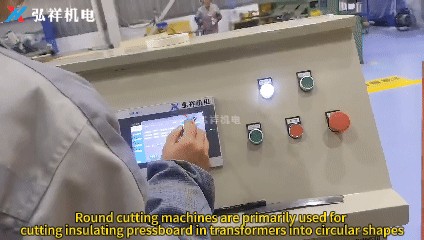
Why a checklist-based review works better for quality and safety teams
When evaluating Transformer electrical layer-pressed wood processing equipment for electrical insulation, quality and safety managers usually face two pressures at the same time: they must verify finished-product conformity, and they must control process-related hazards before defects move downstream. A checklist approach is effective because it reduces subjective judgment, standardizes inspections across shifts, and helps teams link visible defects to machine condition, material handling, operator behavior, and environmental control.
In practice, many failures in insulating laminated wood processing are not caused by one dramatic event. They come from accumulated deviations such as unstable pressing pressure, poor board conditioning, tool wear, misalignment, moisture fluctuation, and inconsistent curing parameters. For this reason, Transformer electrical layer-pressed wood processing equipment for electrical insulation should be reviewed through defined checkpoints rather than broad visual approval alone.
First-priority checks: what to confirm before deeper inspection
Before analyzing specific defects, start with the most influential control points. These items help determine whether the problem comes from the machine, the material, the environment, or the operating method.
- Confirm raw material consistency, including density, moisture content, grain direction, thickness tolerance, and storage condition of the laminated wood or insulating board.
- Check whether the Transformer electrical layer-pressed wood processing equipment for electrical insulation has stable pressure, temperature, feed speed, cutting accuracy, and platen parallelism.
- Verify tool condition, especially blade sharpness, wear pattern, vibration, clamping reliability, and spindle runout.
- Review environmental controls such as workshop humidity, dust load, and temperature variation, which strongly affect insulation materials.
- Confirm process records, operator training, inspection frequency, and lot traceability for each batch.
If any of these foundation items are unstable, defect analysis at the finished-part stage becomes less reliable and corrective action tends to be delayed.
Core defect checklist for Transformer electrical layer-pressed wood processing equipment for electrical insulation
1. Dimensional instability and tolerance drift
One of the most common quality issues is inconsistent length, width, thickness, slot depth, or hole position. In transformer insulation parts, even small dimensional errors can affect assembly fit, creepage distance, compression behavior, and dielectric spacing.
Priority checks include feed positioning accuracy, fixture wear, CNC calibration, platen uniformity, tool expansion under heat, and material rebound after cutting or pressing. A useful judgment standard is whether deviation appears randomly or follows a repeated pattern. Random variation often suggests clamping or material inconsistency, while repeated offset usually points to calibration error, fixture displacement, or machine-axis misalignment.
2. Surface damage, tear-out, and machining marks
Surface quality matters because scratches, burrs, fiber tear-out, compression marks, and burn traces may reduce assembly quality and create local stress points. In Transformer electrical layer-pressed wood processing equipment for electrical insulation, rough surfaces can also increase the risk of poor bonding or contamination retention.
Common causes include dull blades, improper feed speed, unsuitable cutting angle, weak material support, and vibration from spindle imbalance. Safety managers should also pay attention to dust extraction performance, because excessive dust buildup can worsen surface finish and create fire or inhalation risks.
3. Delamination and bonding defects
Delamination is a high-risk defect because it directly affects mechanical strength and dielectric reliability. It may appear as edge separation, internal voids, weak bond lines, blistering, or partial lifting after machining. In many cases, the issue is not visible at first but appears during downstream shaping, drying, assembly, or electrical testing.
Check whether pressing pressure is evenly distributed, curing temperature is verified, adhesive application is uniform, and pre-press timing is controlled. Moisture imbalance before lamination is another frequent cause. For quality teams, lot-based bond strength sampling and edge-section inspection are more effective than visual top-surface approval alone.
4. Moisture-related deformation and insulation risk
Electrical insulation materials are sensitive to moisture. Excess moisture may lead to swelling, warping, reduced dielectric performance, unstable machining dimensions, and poor long-term reliability in service. Over-drying can also create brittleness, cracking tendency, or internal stress release after processing.
For Transformer electrical layer-pressed wood processing equipment for electrical insulation, this means moisture checks must be integrated into receiving, storage, pre-processing conditioning, in-process inspection, and packaging release. If dimensional drift and cracking happen together, moisture imbalance should be investigated before machine adjustment alone.
5. Edge cracking, corner breakage, and hidden structural weakness
Thin sections, corners, grooves, and drilled areas are vulnerable to chipping and fracture. This is especially important when insulating parts must withstand assembly force or long-term compression in transformers. Edge damage may look minor but can grow during transport or installation.
Review cutting sequence, corner support design, drill exit control, stacking method, and post-machining handling. If breakage rates rise after tool replacement, the problem may be parameter mismatch rather than material quality.
Quick judgment table: defect, likely cause, and immediate action
Additional checkpoints by role and application scenario
For quality control personnel
- Define incoming, in-process, and final inspection limits separately instead of using one general acceptance rule.
- Link defect codes to machine number, shift, operator, raw material batch, and environmental readings.
- Use trend analysis to identify slow drift in Transformer electrical layer-pressed wood processing equipment for electrical insulation before nonconformity becomes severe.
For safety managers
- Verify guarding, emergency stop response, lockout procedures, and dust extraction reliability.
- Pay attention to heat sources, friction, and fine dust accumulation around machining and pressing areas.
- Review whether rework practices expose operators to unsafe manual trimming, lifting, or repeated handling.
For export-oriented manufacturers
If products are supplied to markets in Southeast Asia, South America, India, Pakistan, Russia, and other regions, climate variation becomes a practical quality issue. Packaging, storage, and moisture control standards should match shipping duration and destination conditions, not just the factory environment. This is especially important for Transformer electrical layer-pressed wood processing equipment for electrical insulation used to produce parts that must remain dimensionally stable after long transport cycles.
Commonly overlooked risks that deserve earlier attention
Several issues are often underestimated during routine inspections. First, acceptable appearance does not guarantee internal bond integrity. Second, machine accuracy checks without material conditioning review can lead to false conclusions. Third, moisture meters may give misleading readings if measurement points and stabilization time are not standardized. Fourth, mixed lots of insulating wood with small density differences can behave very differently during pressing and cutting. Finally, defect rework may hide recurring process instability instead of solving it.
Another overlooked point is documentation quality. If records do not capture parameter changes, maintenance timing, or environmental shifts, root-cause analysis becomes weak. For machine-tool environments, this is not a paperwork issue alone; it directly affects response speed, audit readiness, and preventive action quality.
Practical execution plan for improving process control
- Create a defect map for each product family, showing where delamination, cracking, surface damage, or dimensional drift most often occurs.
- Set control limits for moisture, thickness, tool life, pressure, and temperature based on actual production data, not only nominal equipment settings.
- Introduce layered audits covering machine condition, process discipline, material storage, and safety compliance.
- Use first-piece approval and change-point verification after tool replacement, maintenance, parameter adjustment, or raw material batch change.
- Review training content so operators understand why Transformer electrical layer-pressed wood processing equipment for electrical insulation demands tighter control than general wood processing lines.
What to prepare before discussing equipment optimization or supplier support
If your company plans to improve output quality, reduce defect rates, or evaluate a new Transformer electrical layer-pressed wood processing equipment for electrical insulation solution, prepare a focused information package first. Include part drawings, tolerance requirements, insulation performance targets, raw material specifications, current defect photos, batch traceability data, workshop humidity range, production volume, and any safety constraints. This shortens technical evaluation time and makes recommendations more accurate.
For manufacturers with integrated capabilities such as R&D, design, production, installation, training, and after-sales service, early communication should also cover customization needs, special-machine requirements, automation level, maintenance response expectations, and operator skill level. That is often the fastest way to move from defect reaction to stable process control.
Final action guide
The most effective way to manage common quality issues in Transformer electrical layer-pressed wood processing equipment for electrical insulation is to inspect in layers: start with material and environment, verify machine stability, review operator execution, and then confirm finished-part results. For quality control and safety managers, the priority is not simply finding defects, but building a repeatable method for judging causes, ranking risks, and applying corrective action quickly.
If you need to confirm equipment parameters, process suitability, customization options, project cycle, budget range, or cooperation method, it is best to first clarify your part type, target tolerances, insulation requirements, output expectations, defect history, and on-site safety conditions. With that information ready, technical communication becomes more efficient and any improvement plan for Transformer electrical layer-pressed wood processing equipment for electrical insulation will be far more practical and reliable.
NAVIGATION
MESSAGE
Request A Quote?