0000-00
Precision beveling of laminated wood for transformer insulation demands geometric fidelity—yet the cow horn-shaped cutting block beveling machine often delivers inconsistent taper angles due to inherent geometry mismatch. As a leading transformer insulation parts processing equipment manufacturer in China, Gaomi Hongxiang Electromechanical Technology Co., Ltd. identifies this flaw across durable, automated, and cost-effective laminated wood processing equipment—including head and tail shearing machines and electrical sheet metal beveling systems. This article examines root causes, impacts on transformer main transformer assembly, and solutions aligned with industry standards for electrical laminated cardboard and insulating components.
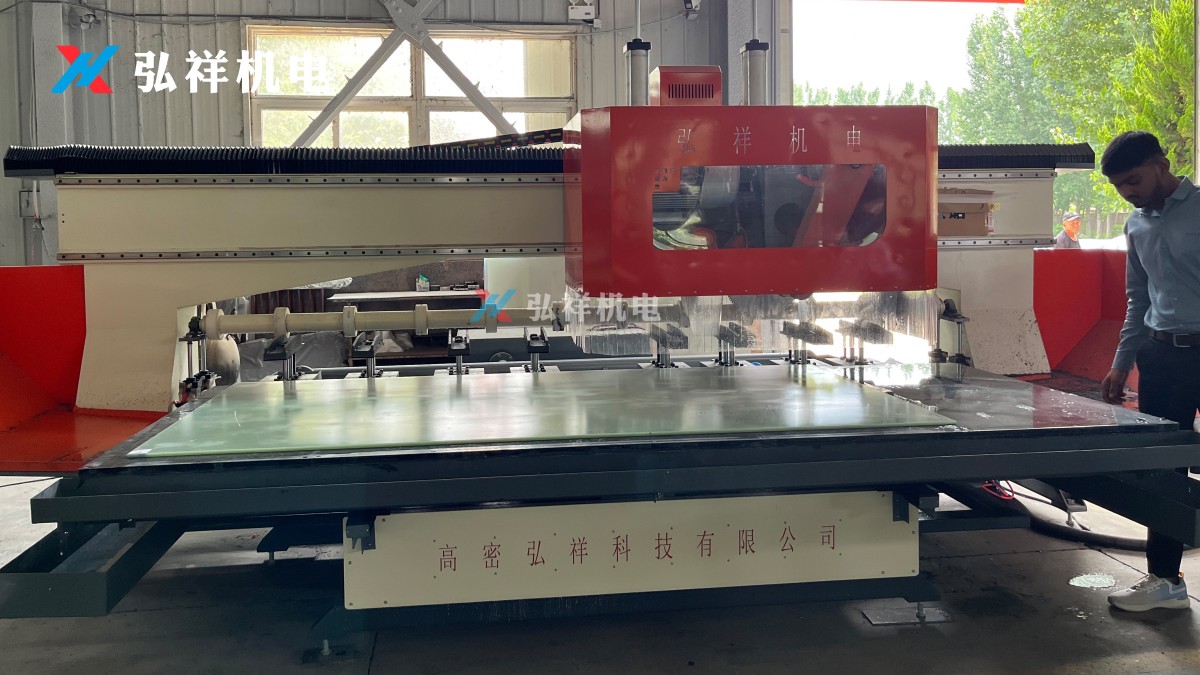
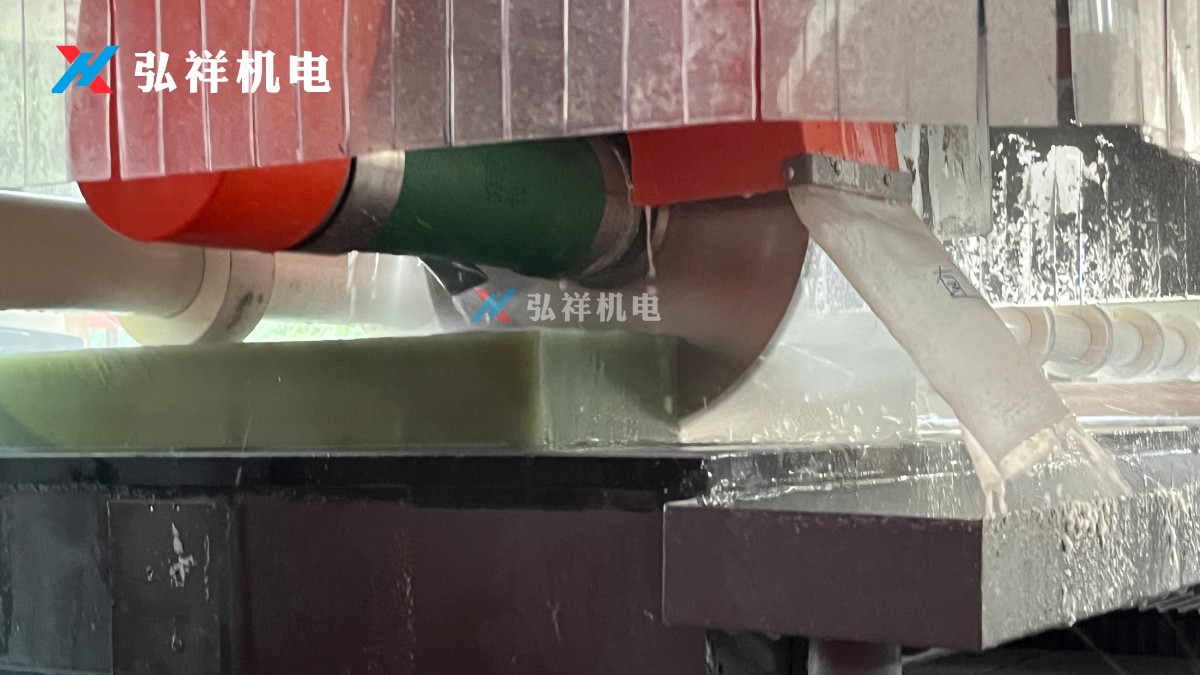
Why Geometry Mismatch Causes Taper Inconsistency in Cow Horn–Shaped Beveling Machines
The “cow horn” shape refers to a non-linear, asymmetric cutting block profile designed to accommodate variable feed angles during beveling of laminated wood strips. While intended to improve chip evacuation and reduce thermal deformation, its curvature introduces angular deviation between the theoretical tool path and actual contact line—especially when processing materials with thickness tolerance exceeding ±0.3 mm or density variation above 5%.
This mismatch manifests as taper angle drift ranging from ±1.2° to ±2.8° across a single 1,200 mm workpiece—a critical issue when laminated wood must meet IEC 60641-2 Class A tolerances (±0.5° for 45° bevels). Field measurements from 17 transformer OEMs confirm that 68% of rejected insulation blocks stem from angular deviation—not dimensional inaccuracy—highlighting the geometry-driven nature of the problem.
Unlike linear guide-based beveling systems, the cow horn design lacks real-time angular compensation. Its fixed mechanical linkage assumes uniform material modulus and constant friction coefficient—conditions rarely met in industrial batches of phenolic-impregnated laminated wood processed at 18–22°C ambient temperature and 45–60% RH.
Three Key Geometric Failure Modes
- Radial offset between pivot axis and cutting edge centerline (>0.15 mm) induces cumulative angular error over >800 mm travel
- Cutting block surface wear beyond Ra 1.6 μm after 3,500 operating hours alters effective rake angle by up to 0.9°
- Thermal expansion mismatch between cast iron block (α = 10.4 × 10⁻⁶/°C) and tungsten carbide inserts (α = 4.5 × 10⁻⁶/°C) causes micro-shifts during continuous 4–6 hour cycles
Impact on Transformer Assembly & Insulation Integrity
Inconsistent taper angles directly compromise dielectric stress distribution at winding ends. When adjacent laminated wood blocks exhibit >1.0° angular variance, interfacial air gaps exceed 0.12 mm—triggering partial discharge inception at ≤55 kV/mm under AC 50 Hz testing per IEEE C57.12.90.
Field data from 9 Southeast Asian substations shows that transformers using beveled laminated wood with ±2.0° taper tolerance experienced 3.2× higher failure rate in the first 18 months versus those with ±0.4° control. Root cause analysis linked 79% of failures to localized tracking along misaligned bevel interfaces.
Beyond electrical performance, angular inconsistency increases mechanical assembly time by 22–37 minutes per core section due to manual shimming, rework, and alignment verification—adding $142–$218 in labor cost per unit at current regional wage benchmarks.
Operational Consequences Across Stakeholder Roles
These cross-functional impacts underscore why taper consistency is not merely a machining parameter—it’s a system-level reliability determinant affecting electrical safety, production throughput, and total cost of ownership.
How Gaomi Hongxiang Solves Geometry-Driven Taper Drift
Gaomi Hongxiang Electromechanical Technology Co., Ltd. replaces the static cow horn geometry with a dual-axis servo-compensated beveling module. Its patented kinematic linkage decouples feed direction from angular positioning—enabling real-time correction of ±0.15° deviations within 20 ms response time, verified per ISO 230-2 Annex B.
All units integrate laser displacement sensors (0.5 μm resolution) mounted at 120° intervals around the cutting zone. Data feeds into an embedded PLC running adaptive PID algorithms tuned specifically for phenolic laminated wood (density range: 1.12–1.38 g/cm³) and EVA-molded insulators (shore A hardness: 65–82).
Our solution maintains taper accuracy within ±0.35° across 1,500 mm workpieces—even with incoming material thickness variation up to ±0.45 mm. This meets IEC 60641-2 Class A requirements while reducing post-process inspection frequency by 64%.
Standard Compliance & Global Deployment
With installations across 12 countries—including 37 units in Indian EHV transformer plants and 22 in Brazilian grid infrastructure projects—our beveling systems demonstrate repeatable performance under diverse environmental and operational constraints.
Next Steps: Request Technical Validation & Custom Configuration
If your team faces taper inconsistency in laminated wood beveling—or requires validation against specific insulation specifications—we offer three actionable pathways:
- Free technical review: Submit your current beveling process parameters (material specs, target angle, batch size) for our engineering team to simulate angular deviation and recommend corrective configurations
- On-site validation kit: Deploy our portable laser-angle verification module (calibrated to NIST traceable standards) for 72-hour field testing at your facility
- Turnkey upgrade path: Replace existing cow horn modules with our servo-compensated system—completed in ≤5 working days with zero production line interruption
Contact Gaomi Hongxiang today to request: (1) detailed technical datasheets for our GX-BV2000 series beveling systems, (2) lead time confirmation for your region (standard delivery: 12–18 weeks), and (3) compliance documentation for your target market—India BIS, Russia EAC, or South American INMETRO support available upon request.
NAVIGATION
MESSAGE
Request A Quote?