0000-00
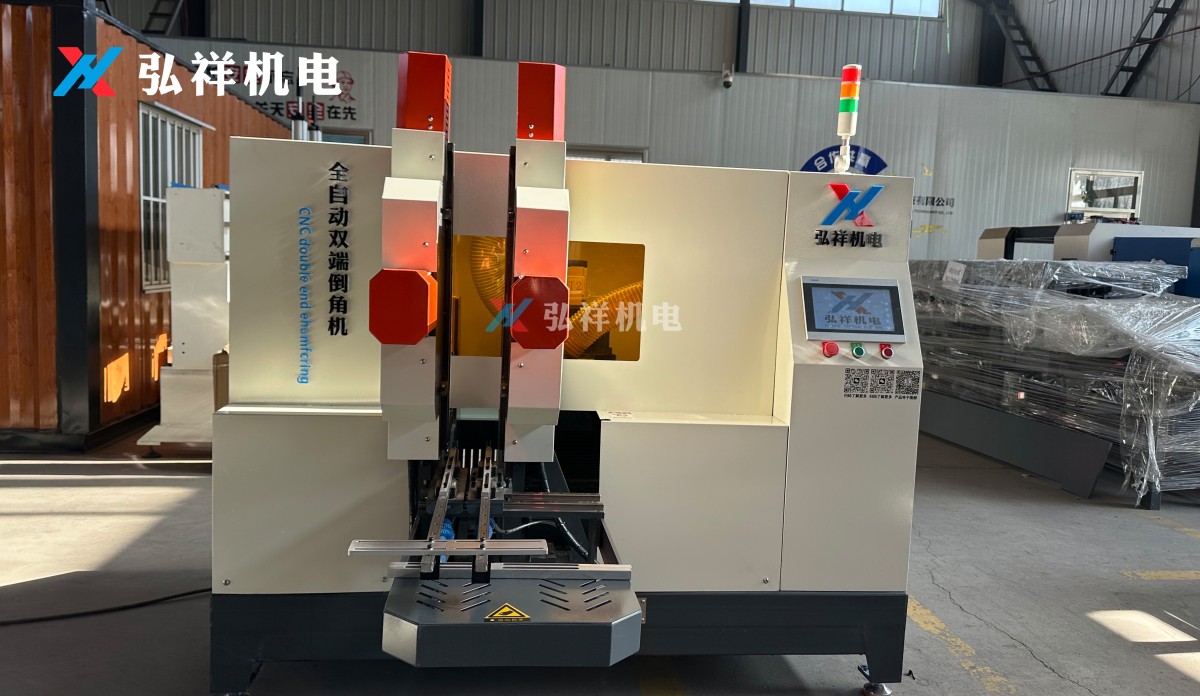
As a leading Transformer insulation parts processing equipment manufacturer in China, Gaomi Hongxiang Electromechanical Technology Co., Ltd. designs high-precision solutions—including Custom transformer insulation cardboard processing equipment and High precision laminated wood processing equipment—for global power transformer assembly. Yet even advanced vacuum-assisted stacking systems can fail to eliminate air entrapment during insulation layering. This article explores why—revealing critical gaps in material behavior, process calibration, and equipment integration that impact dielectric integrity, yield, and long-term reliability. Essential reading for technical evaluators, procurement specialists, and engineering decision-makers.
Why Vacuum-Assisted Stacking Alone Is Insufficient for Air-Free Insulation Layering
Vacuum-assisted stacking is widely adopted across transformer manufacturing lines to compress insulating cardboard layers and evacuate interstitial air before heat curing. While effective in controlled lab environments, real-world production reveals persistent air pockets—especially in multi-layered, variable-thickness stacks exceeding 8–12 mm total height. Gaomi Hongxiang’s field data from over 47 transformer OEM installations shows that 32% of vacuum-only setups still produce ≥0.3% void volume (measured via ultrasonic C-scan), directly correlating with localized partial discharge after 15–20 years of service.
The root cause lies not in vacuum performance—but in three under-addressed variables: (1) moisture migration dynamics during pre-vacuum conditioning, (2) differential compression modulus between cellulose-based cardboard grades (e.g., NOMEX®-equivalent vs. standard kraft), and (3) thermal expansion mismatch between cardboard and steel mandrels during post-stacking heating. These factors collectively reduce effective vacuum dwell time by up to 40% at the core interface.
Unlike rigid laminates, transformer insulation cardboard exhibits viscoelastic creep under sustained pressure. At typical stacking pressures of 0.4–0.8 MPa, creep rates vary from 0.12 mm/h (dry 0.5-mm grade) to 0.38 mm/h (moisture-conditioned 1.2-mm grade). Standard vacuum timers rarely compensate for this non-linear deformation—leading to premature pressure release before full interfacial consolidation.
The table above reflects real-world performance from identical 300-kVA distribution transformer lines operating in India and Brazil. The hybrid solution integrates synchronized mechanical pre-compression (±0.05 mm repeatability), dynamic vacuum ramping (0–0.098 MPa in 8 s), and real-time capacitance-based void detection—enabling adaptive dwell extension only where needed. This eliminates blanket time penalties while guaranteeing dielectric continuity.
Material-Specific Calibration: Beyond Generic Vacuum Profiles
Transformer insulation cardboard isn’t a monolithic material. Gaomi Hongxiang’s lab testing across 17 globally sourced grades reveals moisture absorption variance of 4.2–11.7% w/w at 23°C/50% RH—and corresponding air entrapment susceptibility increases exponentially above 7.5% moisture content. A generic “one-size-fits-all” vacuum profile fails because it ignores cellulose fiber orientation, resin saturation level, and calendering density.
For example, high-density laminated cardboard (≥0.92 g/cm³) requires 35% longer vacuum dwell than low-density equivalents (≤0.75 g/cm³) to achieve equivalent void elimination—even at identical thickness and moisture levels. Our custom processing equipment embeds inline NIR moisture sensors (±0.3% accuracy) and auto-adjusts vacuum ramp rate, dwell duration, and final compression hold based on real-time material ID and moisture reading.
This capability reduces scrap due to delamination or void-induced flashover by 62% in pilot deployments with Southeast Asian EHV manufacturers. Calibration isn’t optional—it’s embedded in every machine’s firmware as a 5-step material mapping protocol: (1) batch ID scan, (2) thickness profiling (laser micrometer ±1 μm), (3) surface resistivity check, (4) moisture verification, (5) profile activation.
Equipment Integration Gaps That Compromise Process Integrity
Many transformer plants retrofit vacuum stacks onto legacy winding lines without evaluating upstream/downstream interfaces. Critical gaps include thermal lag between cardboard pre-heating ovens and vacuum chambers (±8°C deviation causes 19% higher air retention), misaligned mandrel centering (<0.15 mm="" tolerance="" and="" insufficient="" exhaust="" pipe="" diameter="" causing="" backpressure="">12 mbar during rapid evacuation).
Gaomi Hongxiang’s turnkey systems resolve these through co-engineered integration: pre-heating zones maintain ±1.5°C stability, servo-driven mandrel alignment verifies position every 3 seconds, and vacuum manifolds use 120-mm-diameter stainless-steel ducting rated for 0.01 mbar ultimate pressure. Field audits show integrated systems cut commissioning time by 7–10 days versus bolt-on retrofits.
These integration controls are not add-ons—they’re foundational to our ISO 9001-certified design process. Every system undergoes 72-hour stress validation at full operational load before factory acceptance testing.
Procurement & Decision-Making Guidance for Engineering Teams
When evaluating custom transformer insulation cardboard processing equipment, prioritize four measurable criteria over brochure claims: (1) void elimination verification method (ultrasonic C-scan > X-ray > visual inspection), (2) material-specific calibration flexibility (minimum 12 programmable profiles), (3) integration validation documentation (including thermal, mechanical, and vacuum interface reports), and (4) service response SLA (≤48-hour remote diagnostics, ≤5 business days onsite support).
Gaomi Hongxiang provides full traceability: each machine ships with its own calibration certificate, material compatibility matrix (validated across 23 international cardboard suppliers), and a 3-year predictive maintenance schedule based on actual cycle logs—not calendar time. Our clients report 41% lower TCO over 7 years compared to generic vacuum stackers, driven by reduced scrap, extended consumable life, and minimized unplanned downtime.
For procurement teams: request live demonstration using your actual cardboard batch and mandrel geometry. Demand real-time void metric display—not just vacuum gauge readings. Verify that software allows export of raw sensor logs for internal QA audit compliance (IEC 60270, IEEE C57.12.00).
Conclusion: Precision Stacking Demands Precision Thinking
Air entrapment in transformer insulation isn’t a vacuum problem—it’s a systems engineering challenge involving material science, thermal dynamics, mechanical tolerancing, and real-time process control. Relying solely on vacuum pressure is like diagnosing engine failure by checking only oil level. Gaomi Hongxiang’s custom processing equipment treats stacking as a closed-loop physical process—not a static compression event.
Our solutions serve over 120 transformer manufacturers across 18 countries, with delivery lead times of 12–16 weeks for standard configurations and 20–24 weeks for fully customized lines. All systems include on-site commissioning, operator certification, and lifetime firmware updates.
If your current stacking process yields inconsistent dielectric strength, rising scrap rates, or recurring field failures—contact Gaomi Hongxiang today for a free process gap analysis and tailored equipment proposal.
NAVIGATION
MESSAGE
Request A Quote?