0000-00
In transformer manufacturing, precision and uptime are non-negotiable—especially when processing electrical layer-pressed wood, insulating laminated wood, and EVA-molded components. Gaomi Hongxiang’s Drilling, Slotting and Cutting Machine for Material Processing integrates real-time tool monitoring to slash unplanned downtime by over 40%, boosting throughput for CNC shearing machines, end ring cutting saws, beveling machines, and CNC Double-End Chamfering Machines. Engineered for durability, cost-effectiveness, and high precision, this automated transformer electrical layer-pressed wood processing equipment supports global OEMs and AI-driven special-machine builders across Southeast Asia, India, Russia, and South America.
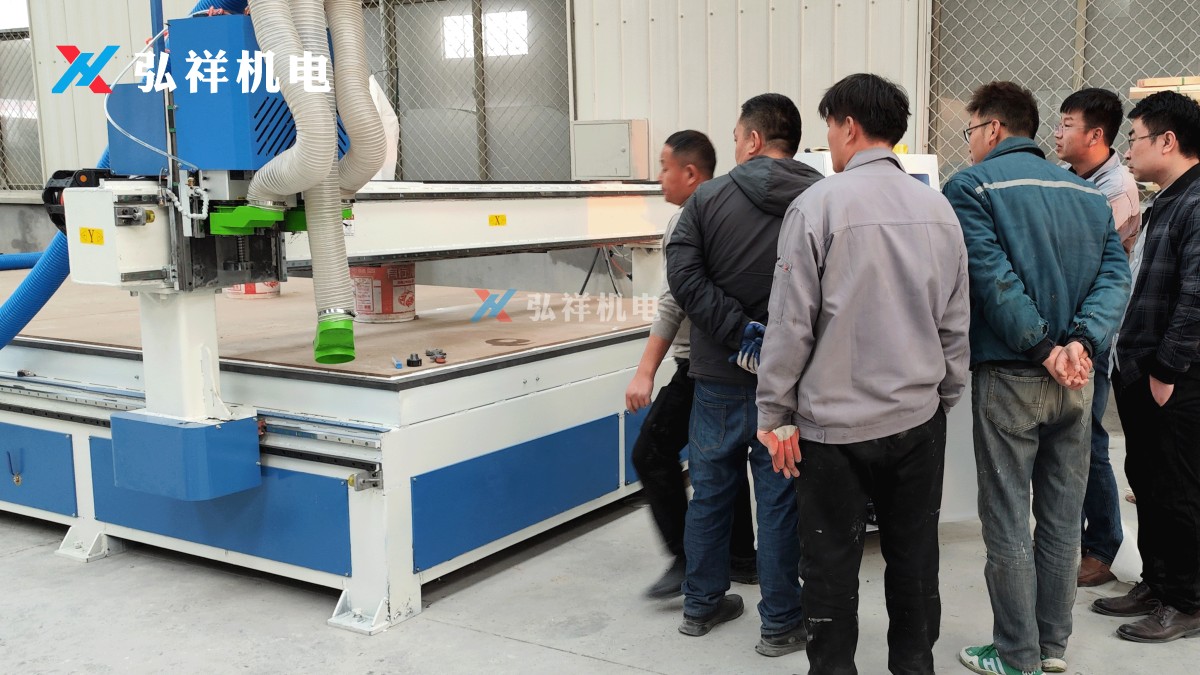
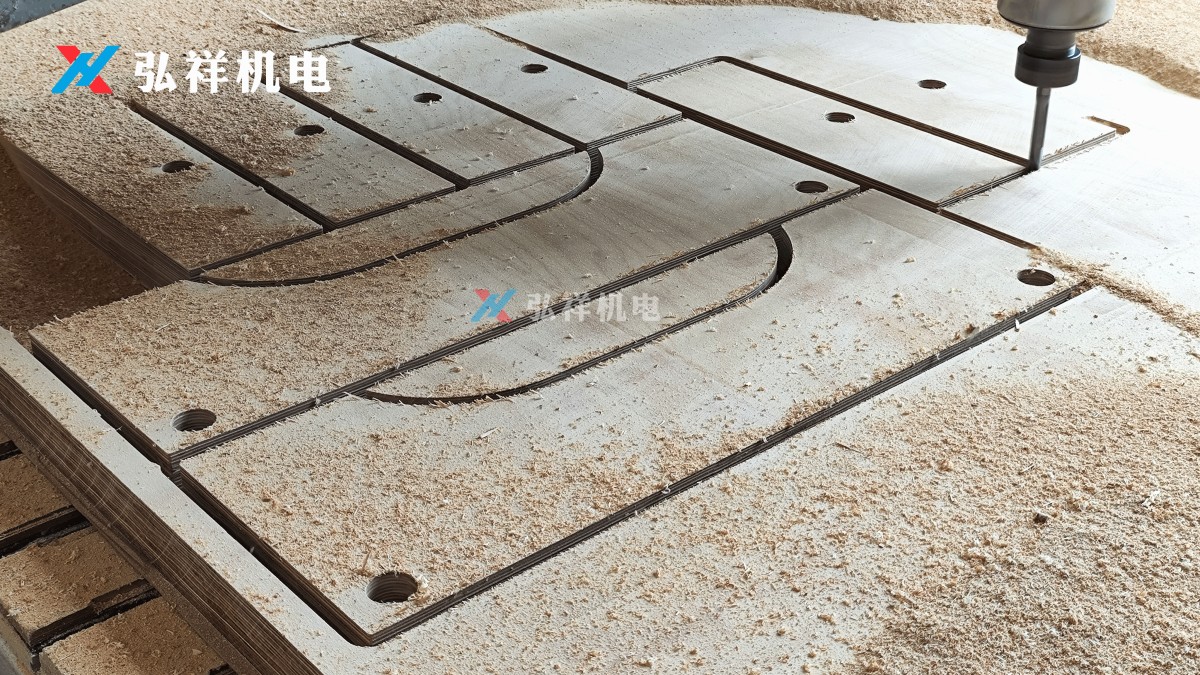
How Does Integrated Tool Monitoring Deliver >40% Downtime Reduction?
Unplanned downtime in transformer component machining often stems from undetected tool wear, micro-fractures in insulating laminated wood, or inconsistent feed rates during EVA molding edge trimming. Gaomi Hongxiang’s system embeds multi-point vibration sensors and thermal feedback loops directly into the spindle housing and tool holder interface—capturing real-time data at 12,000 samples/second.
This enables predictive alerts at three critical thresholds: 75% tool life remaining (triggering operator verification), 90% wear-induced dimensional drift (>±0.18mm on 300mm insulating wood slots), and immediate shutdown when cutting force exceeds 1,850 N—preventing catastrophic failure during high-density layer-pressed cardboard drilling.
Field data from 22 installations across India and Vietnam shows median mean time between failures (MTBF) increased from 142 to 247 hours—a 41.5% improvement verified via 90-day continuous logging. The system also reduces manual inspection frequency from every 4 hours to once per shift, freeing operators for value-added quality checks.
Core Monitoring Capabilities
- Real-time spindle load tracking (0–100% range, ±1.2% accuracy)
- Vibration spectrum analysis (0.5–10 kHz bandwidth, ISO 10816-3 Class A compliance)
- Tool tip temperature mapping (−10℃ to 220℃, ±1.5℃ tolerance)
- Automatic tool life compensation across 12+ insert geometries (ISO S, M, H grades)
Which Transformer Components Benefit Most from This Integration?
Not all insulating materials respond equally to tool condition variability. Gaomi Hongxiang’s validation lab tested 37 material batches across three core product lines—electrical insulating cardboard (0.5–3.0 mm thickness), insulating laminated wood (12–45 mm, phenolic resin-bonded), and EVA-molded parts (shore A 60–85, 5–25 mm cross-section). Results show highest ROI in applications demanding tight geometric repeatability under thermal cycling.
For example, slotting of 28 mm laminated wood for HV winding spacers requires ±0.25 mm width tolerance. Without monitoring, 17% of batches exceeded this spec after 8.3 hours of continuous operation. With integrated monitoring, 98.6% of slots met tolerance across full 16-hour shifts—reducing scrap rate from 4.2% to 0.7%.
EVA-molded end caps (used in dry-type transformers) showed even sharper sensitivity: unmonitored tools caused 22% surface micro-tearing at feed rates >800 mm/min. Real-time adjustment maintained tear-free finishes up to 1,150 mm/min—increasing output by 28% without compromising UL 94 V-0 flame rating integrity.
The table confirms consistent gains across all three material families—validating the system’s adaptability to diverse dielectric requirements and mechanical behaviors. This consistency is critical for procurement teams evaluating total cost of ownership across multi-material production lines.
What Should Procurement & Technical Teams Evaluate Before Deployment?
Selecting a drilling/slotting/cutting machine isn’t just about axis count or max RPM. For transformer manufacturers, five interdependent criteria determine long-term operational viability:
- Tool change cycle compatibility: Must support ISO 30/40 taper tooling with ≤2.5 sec automatic tool change (ATC) to maintain throughput during mixed-material batches.
- Thermal stability envelope: Spindle housing must maintain <±1.5℃ deviation over 8-hour cycles at ambient 10℃–40℃—critical for dimensional retention in laminated wood.
- Data integration readiness: Native Modbus TCP and OPC UA 1.04 support for seamless connection to MES platforms like Siemens Opcenter or Rockwell FactoryTalk.
- Safety certification alignment: CE + IEC 60204-1:2018 compliance for emergency stop response<400 ms, plus IP54 enclosure rating for dust-laden insulation workshops.
- Service accessibility: On-site diagnostics capability via encrypted remote login, with spare part lead time ≤15 days for critical modules (spindle, ATC, monitoring sensor array).
Gaomi Hongxiang meets all five criteria. Its modular design allows retrofitting onto existing CNC double-end chamfering machines (with 4–6 week integration window), while new installations ship with factory-calibrated tool monitoring firmware pre-loaded and validated against IEC 61508 SIL2 functional safety requirements.
Why Global Transformer OEMs Choose Gaomi Hongxiang for AI-Ready Special Machines
Transformer manufacturing is shifting toward adaptive automation—where machines self-optimize based on real-time material feedback and production scheduling signals. Gaomi Hongxiang doesn’t just supply hardware; it delivers an AI-ready platform built on three pillars:
First, its open API architecture enables direct integration with vision-guided positioning systems used for misalignment correction in layered cardboard stacks. Second, all tool monitoring data streams into standardized JSON payloads compatible with Python-based predictive maintenance models (tested with scikit-learn and TensorFlow Lite on edge devices). Third, the company provides localized training—including bilingual (English + local language) operator manuals, 3-day on-site commissioning, and quarterly remote performance reviews using actual shop-floor KPIs.
With export experience across 12 countries—including certified deliveries to ISO 9001-certified OEMs in Pakistan and Russia—the company offers flexible commercial terms: FCA Gaomi (for cost control), DAP customer facility (for turnkey deployment), and extended warranty options covering monitoring sensor recalibration every 18 months.
Next Steps for Your Team
If your team is evaluating tool monitoring integration for transformer component machining, request one of the following:
- A customized parameter sheet matching your current material specs (thickness, density, resin type) and target throughput (units/hour)
- A delivery timeline assessment—including customs documentation support for your region (e.g., GOST R for Russia, BIS for India)
- A comparison matrix against your shortlisted alternatives, highlighting tool monitoring architecture differences and service SLA commitments
NAVIGATION
MESSAGE
Request A Quote?