0000-00
For after-sales maintenance teams, keeping durable transformer insulation cardboard processing equipment in peak condition is essential to ensure stable output, reduce downtime, and extend service life. This guide outlines practical maintenance priorities, common wear points, and efficient service methods to help technicians improve reliability, support transformer production quality, and deliver faster, more professional customer support.
What After-Sales Technicians Need to Know First
The core search intent behind this topic is practical maintenance guidance. Technicians are not looking for broad theory. They want a clear way to prevent faults, shorten troubleshooting time, and keep equipment running consistently.
For this audience, the biggest concerns are usually unplanned downtime, unstable processing accuracy, repeat service calls, parts wear, lubrication issues, electrical failures, and the challenge of maintaining output quality under continuous production pressure.
The most useful content is therefore hands-on and decision-oriented. After-sales teams need inspection priorities, maintenance cycles, common fault patterns, wear-point identification, and field-proven service methods that can be applied quickly at customer sites.
This means the article should focus on maintenance routines, critical components, fault prevention, and service efficiency. General introductions to transformer manufacturing should be minimized because they do not solve urgent maintenance problems.
Why Maintenance Matters for Durable Transformer Insulation Cardboard Processing Equipment
Durable transformer insulation cardboard processing equipment operates in demanding production conditions. Precision cutting, forming, pressing, slotting, or shaping of insulating cardboard requires stable movement, consistent pressure, and accurate dimensional control throughout the full production cycle.
When maintenance slips, the first signs are often small but costly. Edge quality declines, dimensional deviation appears, material feeding becomes uneven, vibration increases, and the machine may begin producing inconsistent insulation parts.
For transformer manufacturers, this is not just a machine issue. Poorly processed insulation cardboard can affect assembly efficiency, internal fit, and final product quality. That makes maintenance directly linked to both production reliability and customer trust.
For after-sales teams, proactive servicing reduces emergency repairs and improves credibility. A well-maintained machine also helps customers achieve longer operating life, fewer spare-part replacements, and better output stability over time.
Which Components Fail Most Often in Daily Operation
In most field cases, wear concentrates in motion, contact, cutting, and transmission areas. These points work continuously and are exposed to friction, dust, load changes, and operator adjustment errors.
Feed rollers are a common concern. If roller surfaces harden, wear unevenly, or collect cardboard dust, feeding accuracy can drift. This may lead to misalignment, inconsistent length control, or unstable material entry.
Guide rails and linear motion parts also deserve close attention. Poor lubrication or contamination can increase resistance, create abnormal noise, and gradually reduce positioning precision. These problems usually worsen before operators notice serious performance loss.
Cutting tools, trimming blades, punching units, and pressure components are among the most frequent wear items. As edges become dull or clearances shift, the machine may produce rough cuts, burrs, deformation, or material tearing.
Transmission assemblies such as belts, chains, couplings, and gearboxes should never be ignored. Slack, imbalance, or poor alignment in these areas often causes vibration, unstable speed, and additional stress on motor systems.
Electrical control systems are another major fault source. Loose terminals, aging relays, sensor contamination, cable fatigue, and overheating inside control cabinets can create intermittent failures that are difficult to reproduce without systematic inspection.
Daily Maintenance Priorities That Prevent Most Downtime
The most effective maintenance strategy begins with disciplined daily checks. Many severe failures develop from small, visible problems that were not addressed early enough during routine service.
Start every inspection with cleanliness. Transformer insulation cardboard processing equipment often generates fine dust and scraps. If dust accumulates around sensors, moving guides, rollers, and electrical cabinets, it can reduce accuracy and increase heat and friction.
Next, verify lubrication status. Technicians should confirm that grease points and oiling locations match the manufacturer’s maintenance standard. Over-lubrication can attract debris, while under-lubrication accelerates wear and damages precision surfaces.
Check fasteners, covers, guards, and mounting structures for looseness. Vibration can gradually shift mechanical parts out of position. What looks like a minor mounting issue may eventually affect cutting precision or transmission stability.
Review the condition of blades, rollers, dies, and pressing parts before major production runs. If wear is visible, replacing or adjusting these components early is cheaper than allowing defective products to accumulate.
Technicians should also observe sound, temperature, and movement during startup and normal operation. A change in machine noise, motor heat, or travel smoothness often provides the earliest warning of a developing issue.
Weekly and Monthly Service Checks That Improve Long-Term Reliability
Daily checks reduce immediate risk, but weekly and monthly service work supports long-term reliability. This is where after-sales teams can make a real difference in extending machine life.
On a weekly basis, inspect transmission tension, alignment, and wear. Belts should not slip, chains should not be excessively loose, and couplings should not show signs of offset or abnormal movement.
Measure the operating condition of feed mechanisms and positioning systems. If the equipment depends on repeatable dimension control, calibration drift should be identified early rather than after customer complaints about batch inconsistency.
Inspect pneumatic or hydraulic sections if the machine uses pressure-based actions. Look for leakage, unstable pressure, delayed response, contaminated fluid, and worn seals. These problems can directly affect forming quality and cycle stability.
Monthly service should include a more detailed electrical inspection. Clean cabinet interiors, tighten terminals, verify grounding integrity, inspect cooling fans, and confirm that sensors and limit switches respond correctly.
It is also wise to review maintenance records monthly. Repeated adjustments to the same area usually indicate a root cause that has not been resolved. Good records help technicians move from reactive repair to planned prevention.
How to Troubleshoot Common Field Problems Faster
After-sales maintenance teams are often judged by response speed. The fastest troubleshooting method is not random replacement, but structured fault isolation based on symptoms and machine behavior.
If the machine shows feeding instability, first inspect material path cleanliness, roller condition, pressure setting, and alignment. Then check sensor feedback and motor synchronization if the problem persists.
If cutting quality drops, verify blade sharpness, tool mounting, clearance settings, vibration sources, and worktable stability. Dimensional errors often come from more than one cause, so avoid assuming the blade alone is responsible.
When there is abnormal vibration, start with transmission components. Check belt tension, coupling condition, bearing wear, frame rigidity, and fastener security. A vibration issue left unresolved can quickly damage secondary components.
For intermittent electrical faults, look closely at terminals, connectors, cable flex points, and contaminated sensors. Many electrical issues appear random but are actually linked to vibration, heat buildup, or poor contact quality.
If a machine stops unexpectedly, inspect the safety circuit before deeper disassembly. Emergency stops, door interlocks, overload signals, and sensor blocks are common reasons for shutdown and can often be verified quickly.
How Maintenance Affects Processing Quality and Transformer Production
Maintenance is not only about avoiding stoppages. It has a direct effect on the consistency of insulation cardboard parts used in transformer assembly and manufacturing.
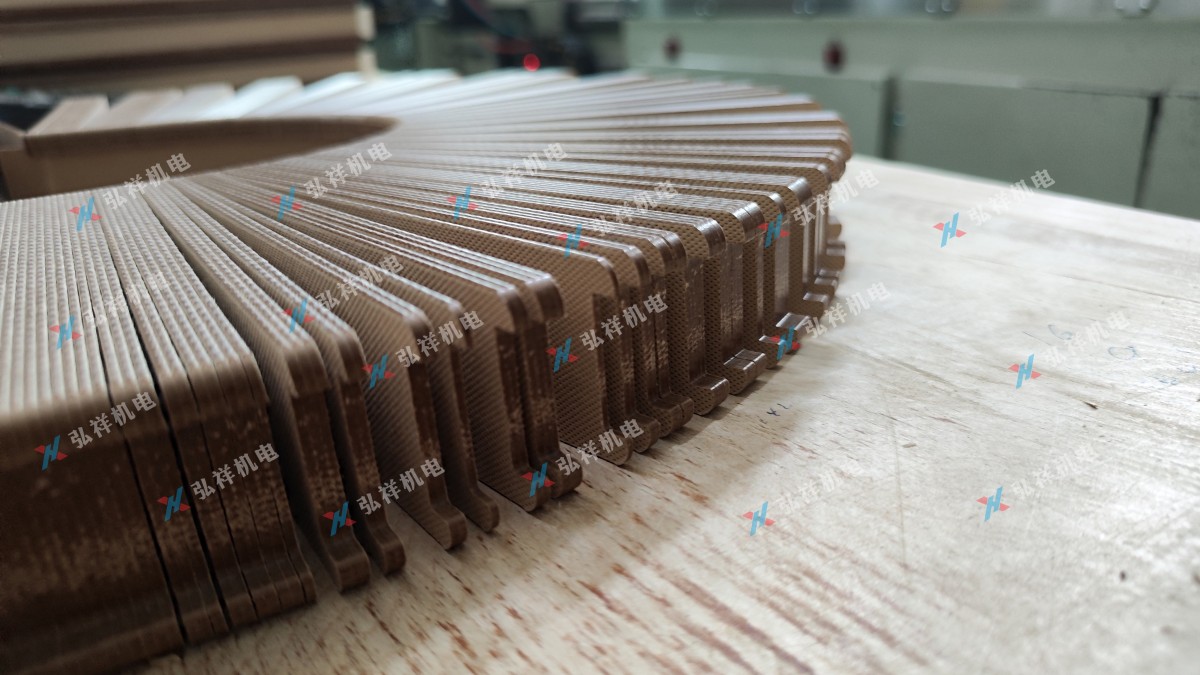
When a durable transformer insulation cardboard processing equipment system is correctly maintained, it supports stable dimensions, cleaner cuts, better repeatability, and smoother material flow. This improves downstream assembly efficiency and reduces rework.
On the other hand, poor maintenance can produce shape deviation, rough surfaces, material damage, or inaccurate slotting. These defects may seem small during processing but can create larger fit and quality problems later.
That is why after-sales teams should communicate maintenance value in production terms. Customers respond better when technicians explain how service actions protect output quality, reduce rejects, and improve machine availability.
Practical Spare Parts and Wear-Part Management
One of the most overlooked service issues is spare-parts planning. A machine may be maintainable in theory, but if basic wear items are unavailable, downtime becomes much longer than necessary.
After-sales technicians should help customers identify critical spare parts based on actual wear frequency and machine structure. Typical examples include blades, rollers, bearings, belts, seals, sensors, relays, and pneumatic components.
It is helpful to divide parts into three categories: routine consumables, medium-cycle wear parts, and emergency critical parts. This makes inventory planning more practical and reduces unnecessary stock while still protecting uptime.
Part replacement should also be linked to condition, not only calendar time. Some customers run at higher loads, more shifts, or with more abrasive material conditions, so service schedules should reflect real operating intensity.
Clear labeling and recordkeeping are important. If customers or technicians install incorrect substitutes, machine performance may decline even if the part seems dimensionally similar. Accuracy in parts management protects both function and safety.
Service Standards That Make After-Sales Support More Professional
Good maintenance is not only technical. It also depends on service discipline. Professional after-sales support combines technical skill with process consistency, communication clarity, and proper documentation.
Before arriving on site, technicians should review previous service records, machine model details, fault history, and available spare parts. Preparation reduces wasted time and improves first-visit resolution.
During service, technicians should record the fault symptom, root cause, action taken, replaced parts, and performance after repair. This information becomes valuable for future visits and for continuous improvement across similar machines.
Customer communication matters as well. Operators should be informed which problem was corrected, what warning signs to watch for, and what daily checks they can perform to prevent recurrence.
Training support is especially important for complex equipment. Even a durable machine can suffer early wear if operators use the wrong material feed method, force adjustments, or ignore lubrication and cleaning requirements.
Building a Preventive Maintenance Plan for Better Uptime
The best way to support durable transformer insulation cardboard processing equipment is to move from breakdown response to preventive maintenance planning. This reduces cost, stress, and production interruption for both service teams and end users.
A strong plan should define daily, weekly, monthly, and quarterly tasks. Each task should include inspection points, acceptable conditions, recommended tools, and action thresholds for adjustment or replacement.
It is also useful to classify service items by risk level. Parts that affect safety, accuracy, or core machine movement should receive priority over low-impact cosmetic issues.
Where possible, create standard checklists for similar machine series. This helps technicians maintain consistency across customer sites and makes training easier for new service personnel.
For companies serving global customers, preventive maintenance planning also supports remote guidance and faster technical coordination. Clear standards reduce misunderstandings and improve service quality across different regions.
Conclusion
For after-sales maintenance personnel, the real goal is simple: keep equipment reliable, accurate, and ready for production. The most effective approach is early inspection, disciplined cleaning and lubrication, fast fault isolation, and planned replacement of wear-prone parts.
Durable transformer insulation cardboard processing equipment performs best when maintenance is treated as a quality-control function, not just a repair task. Better service protects machine life, supports transformer manufacturing quality, and strengthens customer confidence.
When technicians focus on actual wear points, maintain accurate records, and guide customers with practical advice, they reduce downtime and improve long-term operating results. That is what makes after-sales support truly valuable in this industry.
NAVIGATION
MESSAGE
Request A Quote?