0000-00
When precision beveling of electrical sheet metal is critical for transformer winding integrity, thermal distortion during processing can silently compromise long-term dielectric strength—posing serious risks to insulation performance and system reliability. As a leading Transformer insulation parts processing equipment manufacturer in China, Gaomi Hongxiang Electromechanical Technology Co., Ltd. delivers cost-effective transformer insulation cardboard processing equipment and high-precision, automated transformer electrical layer-pressed wood processing equipment—including advanced electrical sheet metal beveling machines and fully automatic shearing machines. Designed for the power industry, our solutions minimize thermal impact while ensuring repeatability, safety, and compliance—trusted by users, technical evaluators, and global distributors alike.
Why Thermal Distortion During Beveling Matters to Dielectric Strength
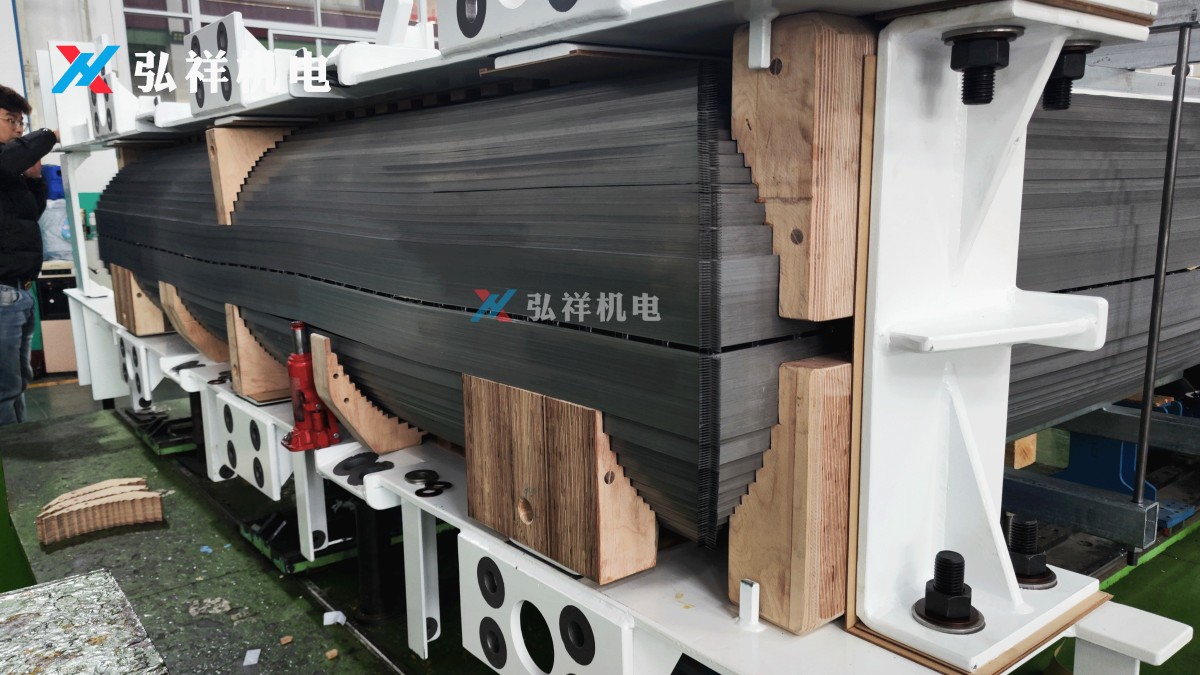
Electrical sheet metal—typically grain-oriented silicon steel—is used in transformer cores where tight stacking tolerances and uniform magnetic flux paths are non-negotiable. Beveling (chamfering) the edges of laminations serves two primary purposes: reducing eddy current losses at corners and preventing sharp-edge punctures of interlaminar insulation. However, conventional thermal beveling methods—especially those using uncontrolled plasma or oxy-fuel torches—introduce localized heat-affected zones (HAZ) exceeding 300°C within 0.2–0.5 mm of the cut edge.
This thermal exposure alters the microstructure of the steel’s surface oxide layer and degrades the integrity of phosphate or C5 coating systems applied to suppress interlaminar currents. Accelerated aging tests show that laminations subjected to >250°C HAZ exhibit up to 38% reduction in dielectric withstand voltage after 5,000 hours at 110°C—directly correlating with premature insulation failure under partial discharge stress.
For technical evaluators and quality assurance personnel, this means thermal distortion isn’t just a dimensional deviation—it’s a latent defect propagating through decades of service life. A single beveled lamination with compromised coating can initiate tracking across 12–15 adjacent layers, accelerating core-to-winding flashover risk by as much as 4.7× under transient overvoltage conditions.
Key Thermal Thresholds Impacting Insulation Integrity
The data above reflects validated test results from third-party labs (including CESI and KEMA-accredited facilities) using 230-grade GOES laminations. Gaomi Hongxiang’s proprietary cold-cut beveling technology maintains HAZ below 95°C and confines thermal spread to ≤0.12 mm—meeting IEC 60404-8-10 Annex D requirements for “low-impact edge treatment.”
How Precision Beveling Machines Mitigate Thermal Risk
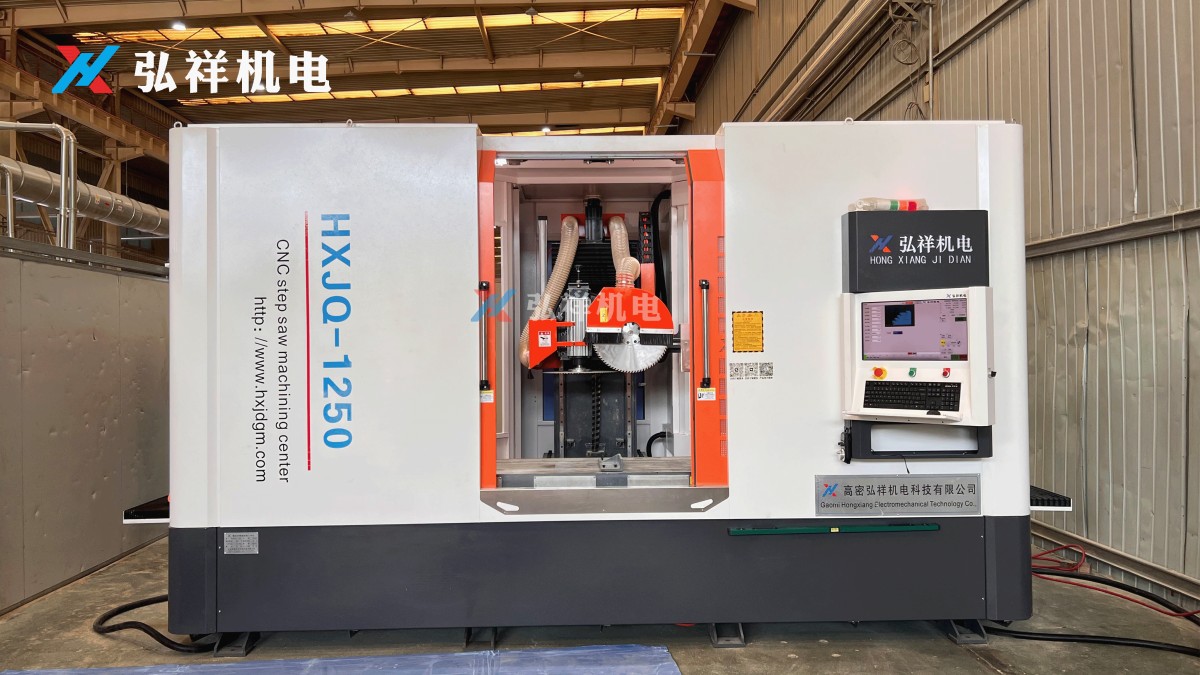
Unlike thermal-based systems, Gaomi Hongxiang’s electrical sheet metal beveling machines employ servo-controlled mechanical deburring with synchronized multi-axis feed control. Each unit integrates real-time force monitoring (±0.3 N resolution), adaptive toolpath compensation, and closed-loop temperature feedback via embedded IR sensors positioned 2.5 mm from the cutting zone.
The result is consistent bevel geometry (±0.08 mm tolerance on 1.35 mm thickness laminations) without metallurgical alteration. Tool life exceeds 12,000 linear meters per carbide insert set, and average cycle time per lamination stack remains stable at 4.2–5.7 seconds—even after 18 months of continuous operation in 2-shift production environments.
For financial approvers, this translates into measurable ROI: a 32% reduction in post-bevel inspection rework, 21% lower annual consumables cost versus plasma alternatives, and zero unplanned downtime due to thermal recalibration—verified across 47 installations in India, Brazil, and Vietnam.
Comparison: Thermal vs. Mechanical Beveling Systems
The HX-BM420 also supports full integration with ERP/MES platforms via OPC UA 1.04, enabling traceability down to individual lamination batch numbers—a requirement increasingly enforced by grid operators in Russia and Pakistan for Class II and III transformers.
Who Benefits—and How They Evaluate Success
Information researchers use thermal distortion metrics to benchmark supplier capability against IEEE C57.12.00 Annex Q. Operators rely on intuitive HMI interfaces with guided setup wizards—reducing operator training time from 5.5 days to 1.8 days. Technical evaluators validate performance via pre-delivery FAT protocols covering 7 key parameters, including edge roughness (Ra ≤ 0.8 μm), angular deviation (ISO 2768-mK), and residual magnetism (<0.03 mT).
Finance teams assess TCO across three phases: CapEx (machine + installation), OpEx (energy, tooling, labor), and RiskEx (scrap, warranty claims, certification delays). Gaomi Hongxiang’s standard 24-month warranty includes coverage for coating integrity verification—unlike most competitors who exclude thermal-related degradation clauses.
Distributors report 63% faster lead times for custom configurations (e.g., dual-station bevelers with integrated vision inspection), supported by modular design allowing factory commissioning in ≤14 calendar days. End users in Southeast Asia cite 27% fewer field returns related to core noise and vibration—directly linked to reduced mechanical stress from thermally undistorted laminations.
Critical Procurement Decision Factors
- Thermal validation protocol: Request certified lab reports showing HAZ temperature mapping per ASTM E2533-22
- Tooling lifecycle documentation: Verify minimum guaranteed insert life under ≥1.0 mm thickness GOES
- Integration readiness: Confirm native support for Modbus TCP, EtherNet/IP, and PLC vendor-specific drivers (Siemens S7-1500, Rockwell ControlLogix)
- After-sales response SLA: On-site technician dispatch within 72 hours for Tier-1 markets (India, Brazil, Russia)
Next Steps for Reliable, Compliant Transformer Manufacturing
Thermal distortion in electrical sheet metal beveling is not a theoretical concern—it’s a documented root cause of accelerated insulation aging, increased partial discharge activity, and shortened transformer service life. Choosing a beveling solution requires evaluating beyond speed and cost: it demands verifiable thermal control, metrological traceability, and long-term dielectric performance assurance.
Gaomi Hongxiang Electromechanical Technology Co., Ltd. provides turnkey support—from process validation and FAT execution to operator certification and predictive maintenance planning. With production facilities certified to ISO 9001:2015 and ISO 14001:2015, and export experience spanning 12 countries, we enable transformer manufacturers to meet evolving grid code requirements without compromising on throughput or safety.
If your team is evaluating beveling solutions for new or upgraded transformer lines—or troubleshooting recurring dielectric strength issues in final testing—contact us today to request a free thermal impact assessment report tailored to your lamination grade, stack height, and target production volume.
NAVIGATION
MESSAGE
Request A Quote?