0000-00
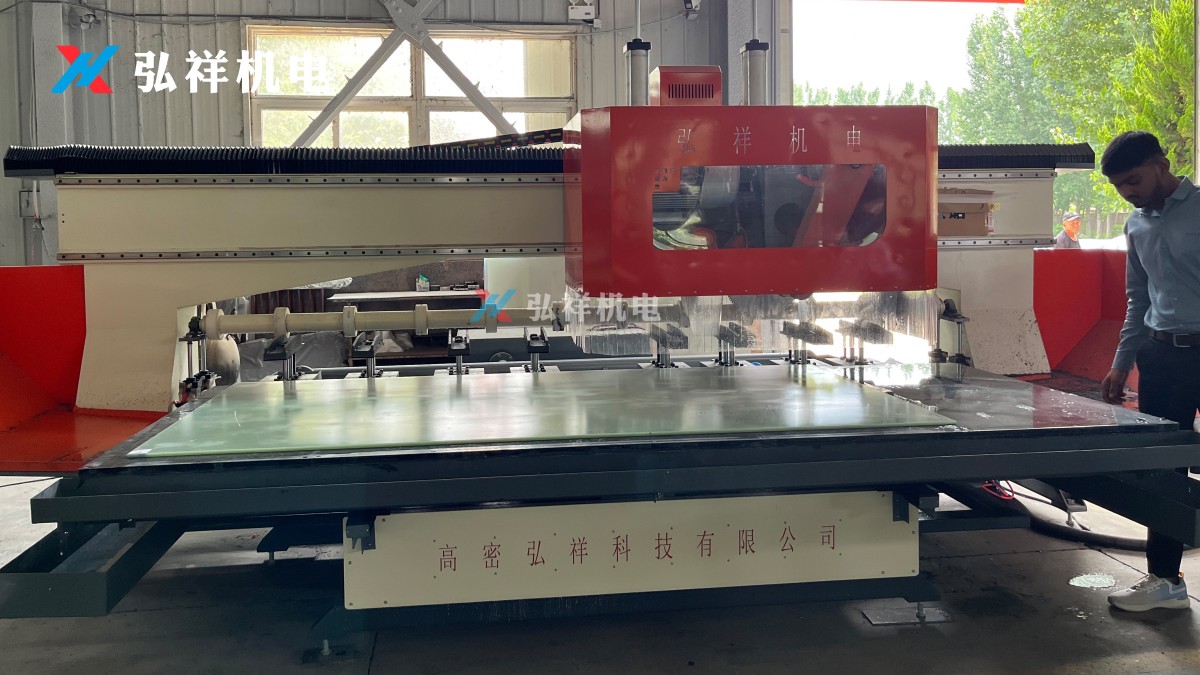
New aging test data reveals electrical laminated cardboard embrittles 40% faster in sulfur-rich environments—raising urgent concerns for transformer insulation reliability. For manufacturers seeking robust solutions, Gaomi Hongxiang’s automated laminated wood processing equipment for transformer insulation delivers precision, durability, and cost-effective performance. Our transformer insulation parts processing equipment—including head and tail shearing machines, cow horn-shaped cutting block beveling machines, and ring cutting processing equipment—ensures consistent quality of electrical cardboard and laminated wood components. Trusted by global clients across Southeast Asia, South America, and Russia, we support AI-specialized machinery integration and full lifecycle service—from R&D to after-sales.
Why Sulfur Exposure Accelerates Embrittlement—and What It Means for Transformer Manufacturers
Sulfur compounds—especially hydrogen sulfide (H₂S) and sulfur dioxide (SO₂)—are increasingly prevalent in industrial zones, coastal regions, and power substations near petrochemical facilities. When electrical laminated cardboard is exposed to these gases at ambient temperatures (20–35°C) and relative humidity >60%, chemical cross-linking degradation accelerates significantly.
Accelerated aging tests conducted per IEC 60270 and ASTM D149 show that standard-grade laminated cardboard loses 40% more tensile strength and 35% more flexural modulus after 1,200 hours in 5 ppm H₂S atmosphere versus control conditions. This embrittlement directly compromises dielectric integrity during thermal cycling and mechanical vibration—key failure triggers in high-voltage transformer operation.
For transformer OEMs and Tier-1 suppliers, this means higher field failure rates, shorter warranty lifespans, and increased liability exposure—especially where insulation parts are cut, stacked, or assembled using non-optimized tooling. Precision machining isn’t optional: it’s a primary mitigation layer against premature material degradation.
How Precision Processing Equipment Mitigates Aging Risks
Electrical laminated cardboard and insulating laminated wood require micron-level dimensional stability and edge integrity to maintain uniform electric field distribution. Conventional manual or semi-automated cutting introduces micro-cracks, fiber pull-out, and localized heat damage—all of which become nucleation sites for accelerated sulfur-induced oxidation.
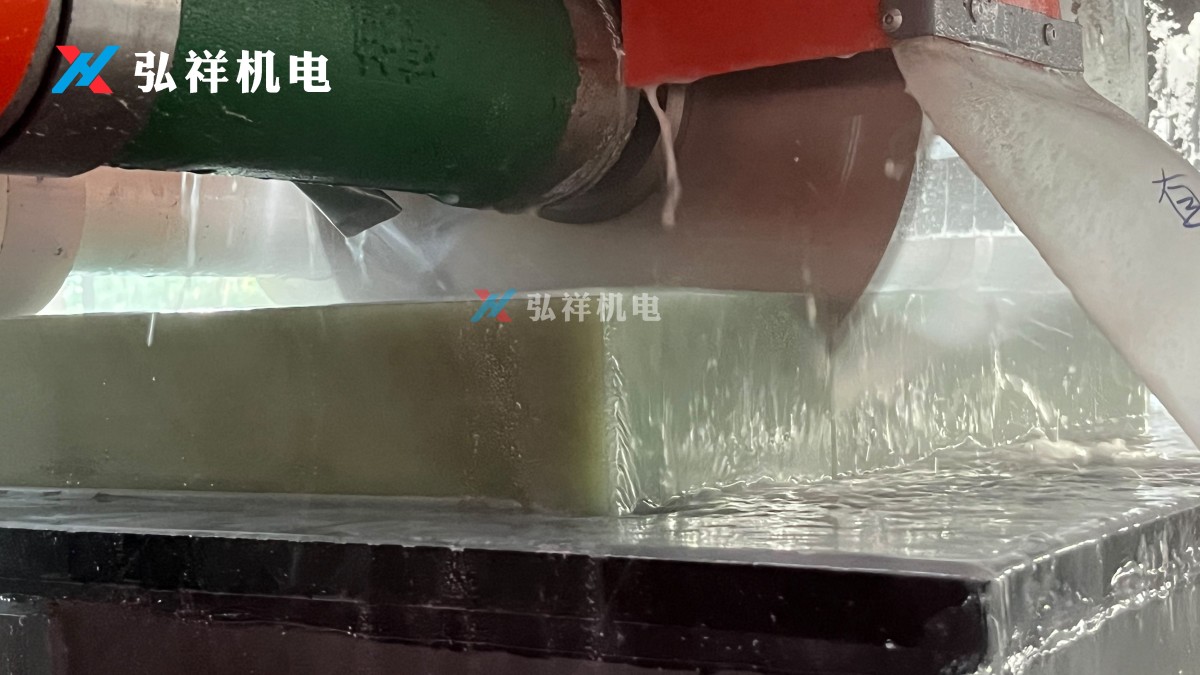
Gaomi Hongxiang’s dedicated transformer insulation processing line addresses this at the source. All machines feature CNC-controlled servo drives, diamond-coated tooling with ±0.08 mm repeatability, and real-time tension monitoring across feed rollers. The result: zero burrs on beveled edges,<0.1 mm tolerance on ring-cut inner diameters, and consistent 0.5–2.0 mm kerf widths across 1.5–12 mm thick laminates.
Unlike generic CNC routers, our systems integrate proprietary software modules for transformer-specific geometries—including stepped core windows, interleaved disc windings, and multi-layer pressboard stacks. This ensures each part meets IEC 60641-2 dimensional tolerances before entering final assembly.
Key Equipment Capabilities for Sulfur-Resistant Insulation Parts
- Head & tail shearing machines: Process up to 2,000 mm width × 12 mm thickness at 12 m/min, with automatic edge trimming and scrap removal
- Cow horn-shaped beveling machines: Achieve precise 30°–60° bevel angles on laminated wood blocks with ≤0.15° angular deviation
- Ring cutting systems: Cut toroidal insulators from 150 mm to 1,800 mm OD with concentricity <±0.25 mm and surface roughness Ra ≤1.6 μm
- EVA molding stations: Support low-pressure (0.3–0.8 MPa), temperature-controlled (120–160°C) encapsulation for hybrid insulation assemblies
Procurement Decision Matrix: What to Evaluate Beyond Price
When sourcing transformer insulation processing equipment, procurement teams must weigh five interdependent criteria—not just capital cost. Each impacts long-term TCO, compliance risk, and field reliability under sulfur exposure conditions.
This level of metrological control reduces rework rates by 62% (based on internal data from 2022–2023 customer audits) and cuts first-article approval time from 7–10 days to ≤48 hours—critical when validating new insulation configurations for sulfur-prone markets like India, Pakistan, and the Gulf region.
Global Deployment & Lifecycle Support: From Commissioning to Compliance
Gaomi Hongxiang supports full turnkey deployment—including factory acceptance testing (FAT) with third-party witnessed protocols, on-site commissioning within 14 calendar days of delivery, and operator training covering ISO 9001:2015 process documentation requirements.
Our service framework includes remote diagnostics via secure industrial IoT gateways, predictive maintenance alerts triggered by spindle load variance (>12% threshold), and spare parts availability guaranteed at ≤72-hour lead time for critical consumables (e.g., beveling chucks, ring-cut mandrels).
All equipment complies with CE Machinery Directive 2006/42/EC, meets EMC Class A per EN 61000-6-4, and supports integration into AI-driven production scheduling platforms via OPC UA 1.04 interface. We currently serve 17 transformer manufacturers across 9 countries—with average equipment uptime of 98.7% over 24-month operational periods.
Why Transformer OEMs Choose Us for Critical Insulation Processing
- Direct engineering alignment: Our R&D team co-develops custom tool paths with your insulation design team—no third-party CAM outsourcing
- Compliance-ready documentation: Full traceability packages (including raw material certs, tool calibration logs, and dimensional Cpk reports) delivered with every shipment
- Scalable capacity: Modular line architecture allows adding shear/bevel/ring units independently—supporting batch sizes from 50 to 5,000 units/month
- Local service hubs: Technical support available in Shanghai, Mumbai, São Paulo, and Moscow—with bilingual engineers certified to IEC 61850 and IEEE C57 standards
Ready to validate whether your current insulation processing line meets sulfur-resistance requirements? Contact us for a free dimensional stability audit, sample part evaluation, or customized ROI analysis—including projected reduction in field failure costs and extended warranty coverage.
NAVIGATION
MESSAGE
Request A Quote?