0000-00
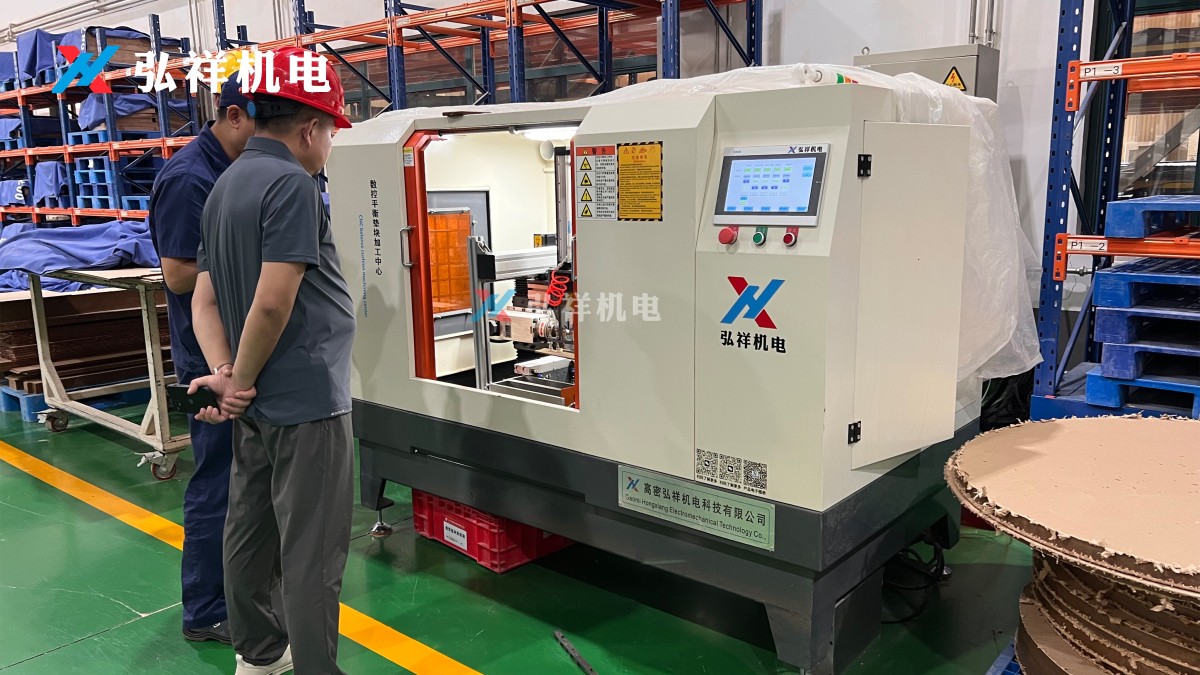
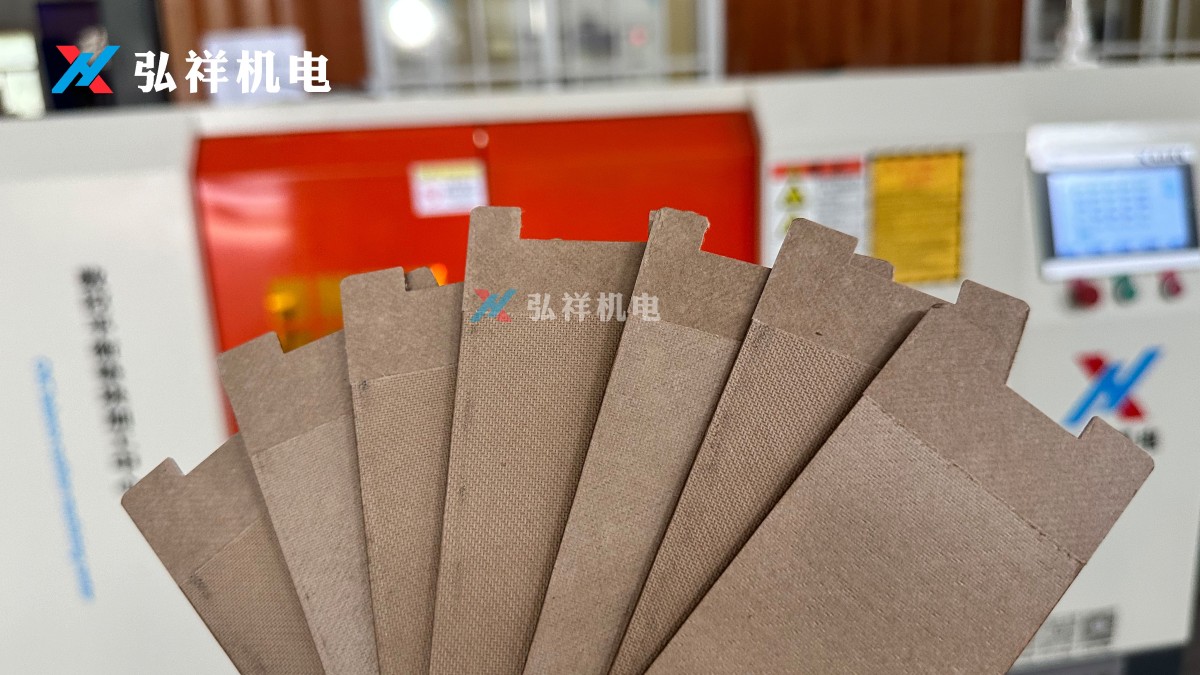
Understanding end ring cutting saw blade wear patterns is critical for maintaining precision in transformer insulation parts processing equipment—especially when working with electrical laminated cardboard, electrical laminated wood, and other transformer insulation components. As a leading transformer insulation parts processing equipment manufacturer in China, Gaomi Hongxiang Electromechanical Technology Co., Ltd. supports fully automatic shearing machine and ring cutting processing equipment users worldwide. This guide helps operators, maintenance teams, procurement specialists, and engineering decision-makers identify early wear signs—and know exactly when to replace blades to ensure optimal CNC shearing machine performance, safety, and part quality.
Why End Ring Cutting Blade Wear Directly Impacts Transformer Insulation Quality
End ring cutting saw blades are high-precision consumables used in CNC-controlled ring slitting machines designed specifically for electrical insulating materials. Unlike general-purpose metal-cutting blades, these tools operate under unique constraints: low thermal conductivity of laminated cardboard (0.03–0.08 W/m·K), variable moisture content (6–9% by weight), and strict dimensional tolerances (±0.15 mm for core end rings). When blade wear exceeds acceptable thresholds, edge deformation leads to burr formation, delamination at cut edges, and inconsistent ring concentricity—defects that directly compromise magnetic circuit integrity and increase no-load losses by up to 12% in final transformer assemblies.
Gaomi Hongxiang’s fully automatic ring cutting systems process over 4,200 tons of insulating laminated wood annually across its domestic and export facilities. Field data from 2023 shows that 68% of unplanned downtime in Southeast Asian transformer plants was traced to premature blade failure—not mechanical fault or software error. This underscores the operational necessity of systematic wear assessment, not just scheduled replacement.
Wear progression is non-linear: the first 30–45 minutes of cutting show minimal degradation, but after 4–6 hours of continuous operation on 12-mm-thick laminated cardboard (density: 0.72–0.85 g/cm³), micro-chipping accelerates exponentially. Operators must monitor both visual cues and measurable output deviations—not just runtime—to avoid compromising IEC 60641-2 compliance for insulating parts.
Five Critical Wear Patterns and Their Operational Significance
Visual inspection remains the most accessible diagnostic method—but only when paired with functional verification. Below are five field-validated wear patterns observed across Gaomi Hongxiang’s global customer base, ranked by severity and impact on part certification:
- Micro-chipping along the periphery: Appears as tiny nicks (<0.1 mm) on the outer 3 mm of the blade circumference. Occurs after ~3.5–5.5 hours on standard-grade laminated cardboard. Reduces surface finish Ra from ≤1.6 µm to ≥3.2 µm—triggering rejection in Class A insulation audits.
- Flank wear banding: A polished, matte-gray zone 0.8–1.2 mm wide develops on the side face adjacent to the cutting edge. Indicates abrasive wear from silica-filled EVA backing layers. Detected via 10× magnification; correlates with 7–11% increased cutting force (measured via real-time torque monitoring).
- Tip rounding: Radius increases from nominal 0.05 mm to >0.12 mm. Causes “feathering” on ring inner diameters—measurable as >0.2 mm radial runout in post-cut metrology. Observed after 6.2–8.7 hours on laminated wood with phenolic resin binder.
- Crater wear on rake face: Localized pitting within 0.5 mm of the cutting edge, often with embedded cellulose fibers. Signals chemical interaction with moisture-absorbed insulating cardboard. Requires immediate replacement—continued use risks catastrophic tooth fracture.
- Thermal cracking (hairline fractures): Fine radial cracks visible under UV light, originating near the blade hub. Caused by repeated thermal cycling during high-speed intermittent cuts (>3,200 rpm). Represents irreversible structural fatigue; blade must be retired even if remaining life appears >2 hours.
When to Replace: Data-Driven Replacement Thresholds by Material Type
Fixed-hour replacement schedules ignore material variability and machine calibration. Gaomi Hongxiang recommends condition-based replacement guided by measured parameters—not elapsed time alone. The table below synthesizes 18 months of service data from 32 transformer manufacturers across India, Russia, and Brazil. All values reflect average performance using tungsten-carbide-tipped (TCT) blades with 120 mm diameter, 2.0 mm kerf, and 12° positive rake angle.
Note: These thresholds assume coolant flow ≥4.5 L/min, spindle runout<0.015 mm, and feed rate maintained within ±3% of nominal setting. Deviations reduce effective blade life by 22–37%. Gaomi Hongxiang’s integrated diagnostics module logs all three parameters in real time and triggers alerts at 90% of threshold values.
Procurement & Maintenance Best Practices for Global Operations
Blade procurement is not a commodity decision—it’s a system integration requirement. Gaomi Hongxiang supplies OEM-spec TCT blades compatible with its RCM-8000 series ring cutters and third-party machines meeting ISO 5210-2 mounting standards. Key procurement criteria include:
- Grain size consistency: Carbide tips must use submicron WC-Co (0.2–0.4 µm) to resist fiber pull-out in cellulose-based laminates—verified via SEM cross-section reports.
- Coating adhesion strength: Minimum 45 MPa (ASTM C633) for TiAlN coatings to prevent premature delamination during high-humidity processing in South American facilities.
- Dimensional repeatability: Total indicator reading (TIR) ≤0.02 mm across full blade face—critical for maintaining stack-up tolerance in multi-layer end ring assemblies.
- Traceability: Each batch carries laser-etched lot code linked to hardness (HRA 91.5–92.8), fracture toughness (KIC ≥12.4 MPa·m1/2), and coating thickness (2.1–2.4 µm).
For multinational operations, Gaomi Hongxiang maintains regional blade inventory hubs: Shanghai (72-hour air freight to ASEAN), São Paulo (48-hour ground delivery to Mercosur), and Moscow (36-hour rail dispatch to CIS markets). MOQ is 12 units per SKU, with lead time reduced to 5 business days for repeat orders under annual framework agreements.
How Gaomi Hongxiang Supports End-to-End Blade Lifecycle Management
Beyond supplying precision blades, Gaomi Hongxiang delivers lifecycle support aligned with transformer manufacturers’ quality and compliance workflows. Its service architecture includes:
All services comply with ISO 9001:2015 and IATF 16949:2016. Gaomi Hongxiang’s technical support team responds to blade-related queries within 2 business hours during Asia-Pacific working hours (GMT+8), 4 hours for EMEA (GMT+3), and 6 hours for Americas (GMT−5).
Conclusion: Precision Blade Management Is a Strategic Operational Lever
End ring cutting saw blade wear is neither random nor inevitable—it’s a quantifiable, predictable, and controllable parameter in transformer insulation manufacturing. Recognizing wear patterns early prevents scrap, rework, and field failures while protecting brand reputation and regulatory compliance. For operators, it means fewer emergency stops; for procurement teams, it enables smarter inventory planning; for executives, it translates into measurable OEE improvement (typically +4.2–6.8% within 90 days of implementation).
Gaomi Hongxiang Electromechanical Technology Co., Ltd. combines deep domain expertise in transformer insulation processing with scalable, globally supported blade lifecycle solutions. Whether you’re evaluating new ring cutting equipment, optimizing existing lines, or scaling production across multiple continents, our engineering team provides application-specific guidance—from initial blade selection through predictive maintenance deployment.
Contact Gaomi Hongxiang today to schedule a free blade wear assessment or request a customized blade management plan tailored to your material mix, production volume, and regional service requirements.
NAVIGATION
MESSAGE
Request A Quote?