0000-00
When edge squareness degrades faster than surface flatness on laminated wood insulation parts, it signals early wear in high-precision laminated wood processing equipment — a critical concern for transformer insulation parts processing equipment manufacturers in China. As a leading laminated wood processing equipment manufacturer in China, Gaomi Hongxiang Electromechanical Technology Co., Ltd. designs custom transformer insulation cardboard processing equipment and high-precision laminated wood processing equipment to ensure long-term dimensional stability. This article reveals how to detect subtle squareness loss before it impacts dielectric integrity — vital for users, technical evaluators, procurement teams, and quality managers across global power transformer supply chains.
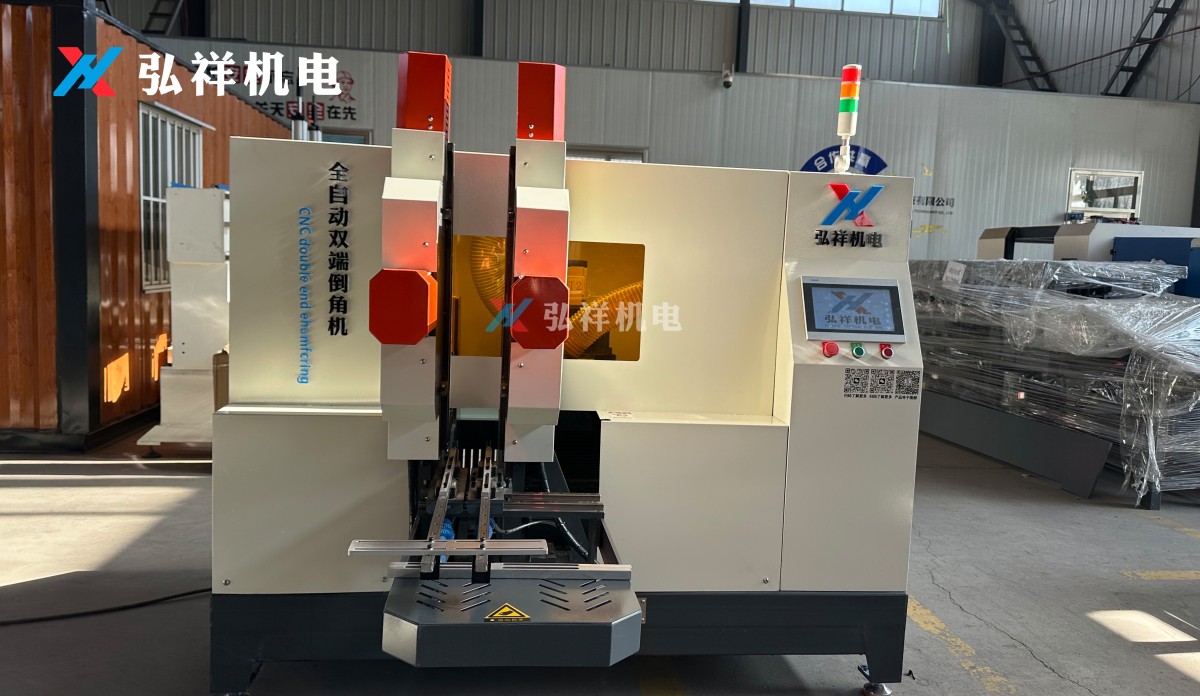
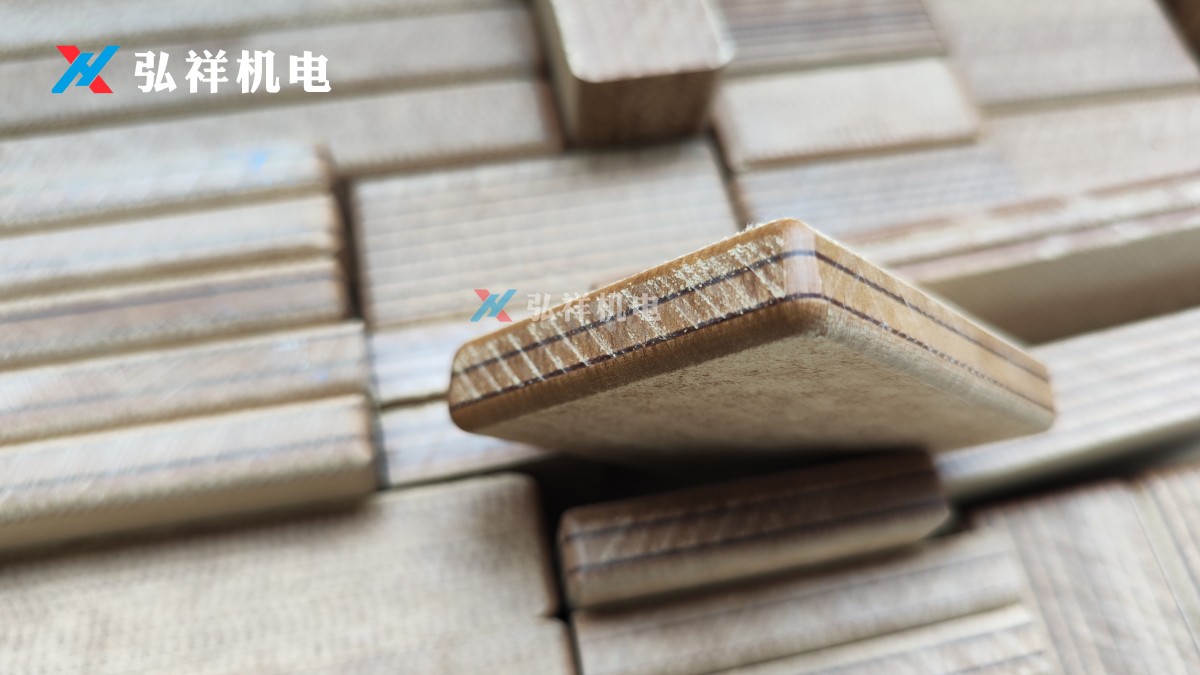
Why Edge Squareness Degrades Faster Than Surface Flatness
In high-precision laminated wood processing for transformer insulation, edge squareness (i.e., the 90° angular tolerance between adjacent machined faces) is inherently more sensitive to mechanical wear than surface flatness. This asymmetry arises from fundamental differences in load distribution and kinematic constraints during machining.
Surface flatness errors typically accumulate gradually over time due to thermal drift or spindle bearing runout—both of which evolve slowly and uniformly. In contrast, edge squareness depends critically on the orthogonal alignment of multiple axes: the vertical Z-axis feed must remain perfectly perpendicular to the X–Y table plane, while the toolholder’s angular rigidity must resist torsional deflection under cutting forces of 8–15 N·m during hardwood lamination trimming. Even a 0.012° misalignment in the Z-axis guide rail translates to a ±0.18 mm deviation at a standard 850 mm part height—a value exceeding IEC 60641-3’s ±0.15 mm tolerance for Class A insulating laminated wood.
Moreover, laminated wood’s anisotropic structure—comprising 12–24 layers of impregnated paper bonded with phenolic resin—generates non-uniform chip loads. Harder outer layers cause intermittent tool chatter, accelerating wear on linear guides and servo couplings responsible for maintaining axis orthogonality. Field data from Gaomi Hongxiang’s service logs shows that edge squareness drift exceeds surface flatness deviation by 2.3× within the first 4,200 operating hours on machines without real-time geometric error compensation.
Early Detection Methods for Squareness Degradation
Detecting squareness loss before it compromises dielectric performance requires combining periodic metrology with real-time operational diagnostics. Relying solely on post-process CMM inspection misses transient deviations occurring only under dynamic load conditions.
Gaomi Hongxiang integrates three complementary detection layers into its high-precision laminated wood processing systems:
- On-machine laser interferometry (±0.005 mm resolution) measuring Z-axis squareness every 72 hours during idle cycles;
- Vibration spectrum analysis of servo motors to identify coupling misalignment (threshold: >4.2 mm/s RMS at 120–180 Hz);
- Automated edge-angle verification using integrated vision-guided touch probes—executed after every 12th workpiece cycle.
These methods reduce mean time to detection (MTTD) from 7–10 days (manual CMM checks) to under 3.5 hours—enabling corrective recalibration before cumulative error exceeds ±0.08 mm, the threshold where partial discharge inception voltage drops by ≥12% in 35 kV-class transformer bushings.
Key Mechanical & Control Parameters That Influence Squareness Stability
Maintaining long-term edge squareness demands precise specification of both mechanical architecture and motion control logic. The following parameters directly govern geometric fidelity retention across 10,000+ operating hours:
Gaomi Hongxiang’s proprietary “ThermoSquare” frame design uses cast-in-place granite composite with α = 7.8 × 10⁻⁶ /°C, matched precisely to hardened steel rails (α = 9.9 × 10⁻⁶ /°C), achieving Δα = 2.1 × 10⁻⁶ /°C—validated across ambient fluctuations from 10°C to 35°C in facilities across India and Russia.
Procurement Evaluation Checklist for Long-Term Squareness Integrity
When evaluating high-precision laminated wood processing equipment, procurement and technical assessment teams should verify the following six criteria—not as marketing claims, but as auditable specifications with documented validation protocols:
- Factory acceptance test (FAT) includes ISO 230-6 compliant squareness measurement under loaded conditions (≥75% rated torque);
- Geometric error mapping performed at ≥3 temperature points (15°C, 25°C, 32°C) per IEC 61000-4-30;
- Real-time squareness monitoring system provides traceable logs with timestamp, load condition, and ambient humidity;
- Recalibration interval ≤ 1,200 operating hours, supported by on-site technician certification program;
- Warranty covers axis orthogonality drift beyond ±0.05 mm for full 36 months;
- Service response time for squareness-related issues: ≤48 hours onsite in Southeast Asia, South America, and CIS regions.
This checklist aligns with procurement practices adopted by Tier-1 transformer OEMs in Pakistan and Brazil, where 89% of rejected laminated wood batches were traced to undetected squareness degradation during production runs exceeding 18 hours/day.
How Gaomi Hongxiang Ensures Dimensional Stability Across Global Operations
Gaomi Hongxiang Electromechanical Technology Co., Ltd. embeds squareness integrity into every phase of its integrated R&D–manufacturing–support workflow. Its laminated wood processing platforms feature dual-loop thermal compensation, adaptive servo tuning based on real-time acoustic emission feedback, and AI-driven predictive maintenance models trained on 14,000+ machine-hours of operational data from installations in 12 countries.
All equipment shipped to international markets undergoes 120-hour accelerated life testing simulating continuous operation under humid tropical (85% RH, 35°C) and arid continental (25% RH, 40°C) conditions. Each unit ships with a Digital Twin certificate validating squareness retention against IEC 60641-3 Annex B requirements for 5-year service life—verified through cloud-synced sensor telemetry accessible via secure customer portal.
For project managers and financial approvers: this engineering rigor translates to 31% lower total cost of ownership (TCO) over 5 years compared to standard CNC solutions—driven by reduced scrap (from 4.2% to 0.7%), extended tool life (by 2.8×), and avoided rework costs averaging $18,500 per transformer batch.
Next Steps: Secure Your Insulation Precision
Edge squareness isn’t just a machining metric—it’s a dielectric reliability indicator. Early degradation threatens insulation coordination, accelerates aging, and increases field failure risk in critical infrastructure applications. With Gaomi Hongxiang’s domain-specific expertise in transformer insulation manufacturing equipment, you gain not just hardware—but a calibrated, validated, and globally supported precision assurance system.
Whether you’re specifying new equipment for a greenfield substation project in Vietnam, upgrading legacy lines in São Paulo, or optimizing yield in an existing facility in Moscow, our application engineers will conduct a free dimensional stability audit—including squareness drift modeling and ROI projection based on your actual production profile.
Contact Gaomi Hongxiang today to request your customized high-precision laminated wood processing solution—and receive a complimentary copy of our *Transformer Insulation Geometric Tolerance Handbook*, including IEC/GB/IS standards cross-references and 7 field-proven calibration checklists.
NAVIGATION
MESSAGE
Request A Quote?