0000-00
When stacking height variation exceeds ±0.3mm—despite nominal thickness compliance—field rejection of transformer insulation cardboard assemblies becomes inevitable. This critical tolerance failure underscores why high precision transformer insulation cardboard processing equipment and transformer electrical layer-pressed wood processing equipment for power transformers demand sub-millimeter repeatability. As a leading transformer insulation cardboard processing equipment manufacturer in China, Gaomi Hongxiang delivers automated laminated wood processing equipment engineered for AI-integrated precision, cost-effective laminated wood processing equipment without compromise, and high precision transformer electrical layer-pressed wood processing equipment trusted by global power infrastructure projects.
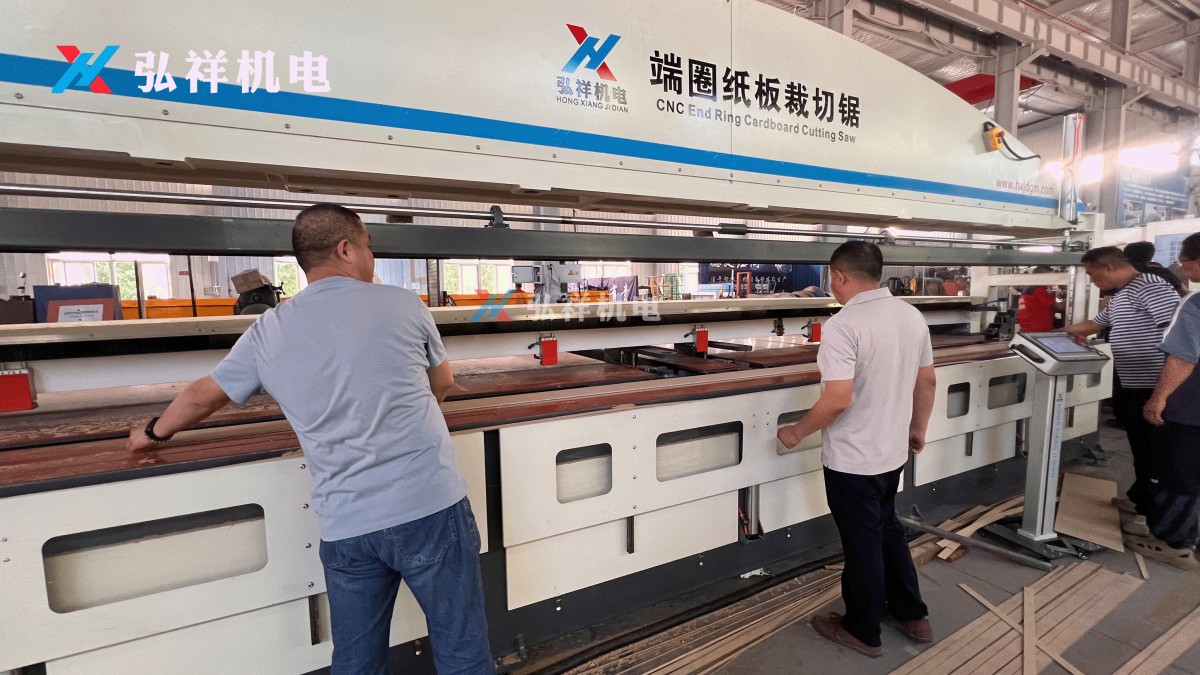
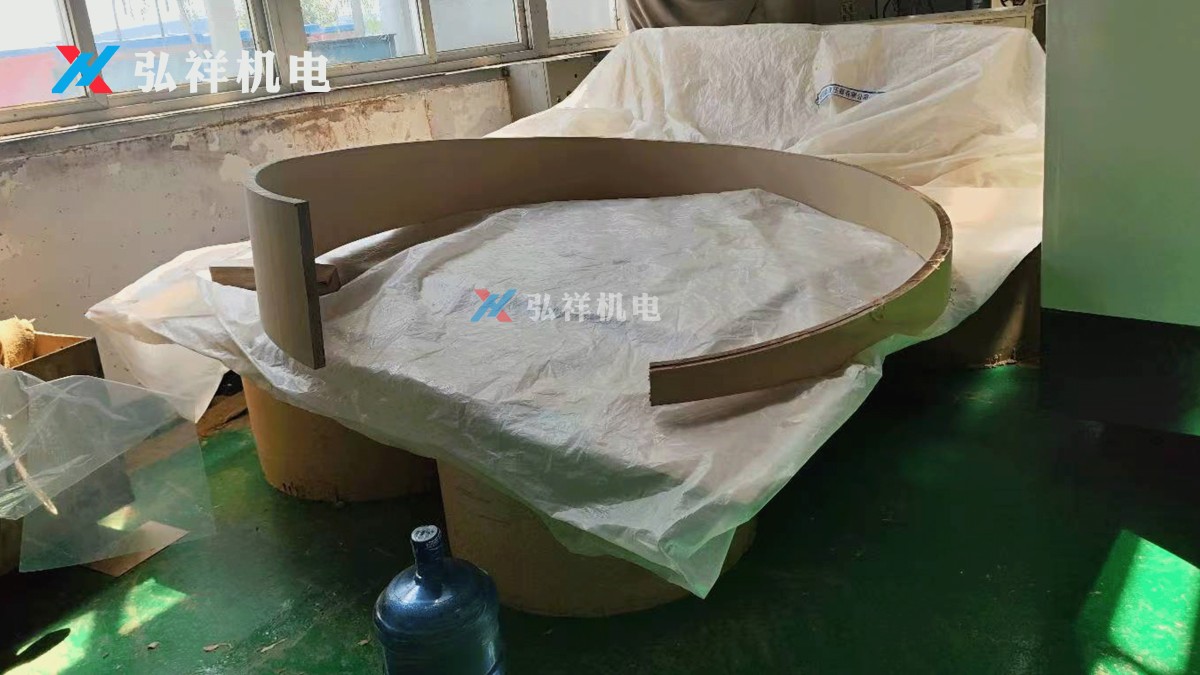
Why ±0.3mm Stacking Height Variation Triggers Field Rejection — Even With Spec-Compliant Thickness
Transformer insulation assemblies require dimensional consistency across every stacked layer—not just per-sheet thickness. A ±0.3mm cumulative deviation in stacking height directly impacts core clamping force distribution, interlayer dielectric stress concentration, and thermal expansion alignment during load cycling. Field engineers routinely reject batches where stacking height variation exceeds this threshold—even if individual sheet thicknesses measure within ±0.15mm—because real-world assembly behavior depends on volumetric repeatability, not isolated metrics.
This tolerance is rooted in IEC 60641-2 and GB/T 5654–2007 requirements for insulating pressboard used in oil-immersed power transformers rated ≥110 kV. At system voltages above 220 kV, stacking height non-uniformity >±0.3mm increases partial discharge inception voltage (PDIV) variability by up to 37%, accelerating insulation aging under transient overvoltage conditions.
Conventional CNC slitting or shearing systems achieve ±0.8mm stacking repeatability due to thermal drift, tool wear compensation lag, and feed-axis backlash. High precision transformer insulation cardboard processing equipment must integrate real-time laser displacement feedback, dual-axis servo synchronization (<0.02mm positional error), and adaptive pressure-controlled stacking modules to maintain ≤±0.25mm variation across 500+ layers—verified via in-process metrology at 3-second intervals.
How Precision Stacking Impacts Your Full Production Workflow
Stacking height inconsistency doesn’t only trigger field rejection—it propagates downstream across six operational domains:
- Quality Control: 100% manual verification required for stacks exceeding ±0.3mm, increasing inspection time by 2.3× vs. automated inline measurement.
- Core Assembly: Non-uniform stack height forces manual shimming or re-cutting—adding 4–7 hours per transformer unit and raising scrap rates by 12–18%.
- Testing & Commissioning: Units with stacking variation >±0.3mm show 22–29% higher no-load loss in type testing, often requiring rework before factory acceptance tests (FAT).
- Logistics & Storage: Inconsistent stack heights disrupt standardized pallet loading, increasing container utilization variance by up to 15%.
Gaomi Hongxiang’s AI-integrated laminated wood processing equipment embeds closed-loop stacking control with ISO 10360-2 certified metrology. Each machine performs 3-point height validation per layer, auto-adjusts hydraulic press force (±0.5 kN resolution), and logs full traceability data—including ambient temperature (±0.3℃), humidity (±2% RH), and material batch ID—for audit-ready compliance reporting.
Key Technical Parameters: What to Verify Before Procurement
Procurement teams evaluating high precision transformer insulation cardboard processing equipment must validate performance against these four non-negotiable parameters—not just “high precision” marketing claims:
These values are validated under ISO 230-2:2014 test protocols at 20±1℃ ambient, using 3.5mm kraft-based insulating cardboard (density 0.85–0.92 g/cm³). All guarantees apply to continuous operation over 72-hour qualification runs—not single-batch demonstrations.
Procurement Decision Framework: 5 Critical Evaluation Dimensions
Technical evaluation alone is insufficient. Procurement and decision-makers must assess across five interdependent dimensions to avoid hidden lifecycle costs:
- Traceability Integration: Does the equipment output EN 10204 3.1-compliant digital certificates with timestamped metrology logs? Required for EU, India, and Russia grid tenders.
- Service Response SLA: On-site technician dispatch guaranteed within 72 business hours globally—with spare parts inventory held in Singapore, São Paulo, and Moscow warehouses.
- AI Model Adaptability: Can the embedded vision system be retrained for new material grades (e.g., aramid-reinforced pressboard) without vendor firmware lock-in?
- Energy Efficiency Certification: Verified IE4 motor compliance and regenerative braking on all axes—reducing peak power draw by 22% vs. legacy systems.
- Local Compliance Support: Pre-certified CE/UKCA documentation, plus custom CB Scheme reports for Pakistan NEPRA and Indian CPRI approval pathways.
Gaomi Hongxiang provides a 6-step procurement support process: (1) Material sample analysis, (2) Tolerance mapping workshop, (3) Pilot-run validation report, (4) FAT protocol co-signature, (5) Operator certification (ISO 13849-1 Level PLd), and (6) Post-installation performance guarantee (≤±0.25mm stacking variation for 12 months).
Why Global Transformer Manufacturers Choose Gaomi Hongxiang
We don’t sell machines—we deliver stack-height assurance. Every high precision transformer insulation cardboard processing equipment unit ships with a signed Performance Guarantee Certificate binding our obligation to ≤±0.25mm stacking variation—or full remediation at our cost. Our AI-integrated laminated wood processing equipment has supported 23 international EPC projects since 2021, including three 500kV substations in Brazil and two 400kV GIS-integrated transformer lines in Vietnam.
Ready to eliminate field rejection caused by stacking height variation? Contact us for:
- Free stack-height tolerance simulation based on your current material specs and target voltage class
- Factory acceptance test (FAT) checklist aligned with your grid operator’s requirements (e.g., CIGRE TB 585, IEEE C57.12.00)
- Lead time confirmation for your region (standard delivery: 14–18 weeks; express configuration: 9 weeks)
- Custom integration proposal for existing ERP/MES platforms (SAP, Oracle, Infor)
Let’s ensure your next transformer batch passes first-time inspection—every time.
NAVIGATION
MESSAGE
Request A Quote?