0000-00
For technical evaluators, cut consistency, dimensional precision, and material stability are critical when selecting production solutions. Automated insulating parts processing equipment helps improve cut accuracy by reducing manual variation, optimizing tool paths, and ensuring reliable processing of insulating cardboard, laminated wood, and molded materials. Understanding how this technology enhances precision can support better equipment assessment and smarter manufacturing decisions.
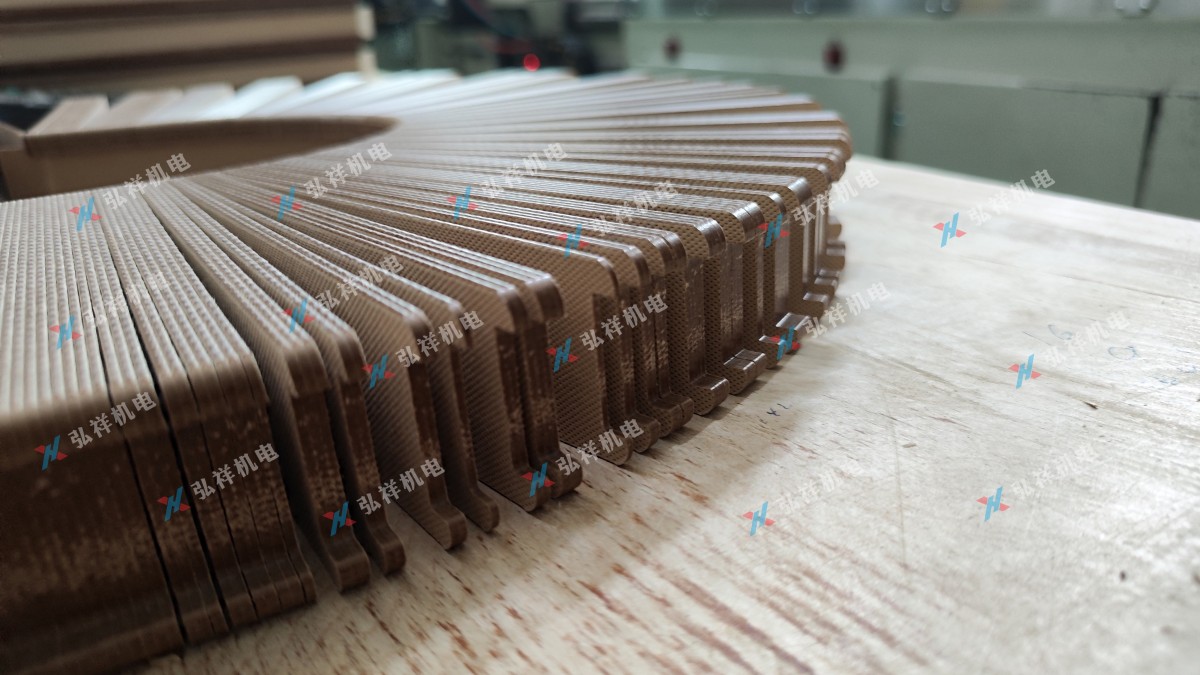
In transformer-related manufacturing, a cutting deviation of even ±0.3 mm to ±0.5 mm can affect downstream assembly, insulation fit, and material utilization. That is why automated insulating parts processing equipment has become a key evaluation point for buyers comparing machine tool solutions for electrical insulation components.
For companies producing insulating cardboard parts, laminated wood structures, and EVA molded components, precision is not only about a cleaner edge. It also influences repeatability across batches, scrap rates, operator dependence, and the stability of production over 1 shift, 2 shifts, or continuous multi-day operation.
Gaomi Hongxiang Electromechanical Technology Co., Ltd. serves global customers in power transformer assembly and manufacturing, while also supporting processing of electrical insulating cardboard, insulating laminated wood, insulating parts, and EVA molding applications. For technical teams assessing equipment, understanding how automation improves cut accuracy is essential for better selection, implementation, and long-term process control.
Why Cut Accuracy Matters in Insulating Parts Processing
In machine tool applications for insulating materials, cut accuracy affects more than geometry. It determines whether a part can move directly to drilling, slotting, bonding, stacking, or transformer assembly without rework. In many workshops, a 2% to 5% reduction in dimensional error can create a noticeable improvement in line balance.
Material behavior creates precision challenges
Electrical insulating cardboard, laminated wood, and EVA do not respond like standard metal stock. Fiber direction, density variation, moisture content, and compression behavior can change the cutting result. A machine that performs well on rigid sheet stock may still struggle to hold stable tolerance on insulation materials.
For example, laminated wood can show localized hardness differences, while insulating cardboard may deform under uneven clamping pressure. If the processing method does not compensate for these conditions, edge drift, burr formation, or dimensional mismatch may appear within the same production lot.
Common risks in manual or semi-manual cutting
- Tool path deviation caused by operator judgment
- Inconsistent feed speed between shifts
- Variable clamping force leading to movement during cutting
- Difficulty maintaining repeated dimensions across 50 to 200 pieces
- Higher scrap rates when complex contours or multiple holes are required
These risks become more serious when parts have narrow slots, stepped shapes, or matched assembly interfaces. In such cases, automated insulating parts processing equipment provides a more controlled process window and reduces dependence on individual skill level.
How Automated Insulating Parts Processing Equipment Improves Cut Accuracy
Automated insulating parts processing equipment improves precision through coordinated control of motion, tooling, clamping, and process parameters. Instead of relying on manual adjustment at each step, the machine executes repeatable movements based on programmed geometry and preset cutting logic.
1. Reduced manual variation
One of the biggest sources of inaccuracy is variation between operators. Automated systems standardize feed rates, positioning sequences, and cut order. When a part program is reused on day 1, day 10, or day 100, the process remains much more stable than manual trimming or template-guided cutting.
2. More precise motion control
Servo-driven axes, guided motion structures, and controlled acceleration allow the machine to maintain path stability on straight lines, curves, and corners. In many evaluation scenarios, technical teams focus on practical tolerance ranges such as ±0.2 mm, ±0.3 mm, or ±0.5 mm depending on material type and part thickness.
3. Optimized tool paths for material-specific cutting
Automated systems can sequence cuts to reduce vibration, avoid overloading at corners, and minimize deformation around narrow sections. This matters when processing insulating laminated wood with dense zones or cardboard sheets where edge pressure must be carefully controlled.
4. Better clamping consistency
Uniform holding pressure reduces part shift during machining. If clamping is inconsistent by even a small amount, thin insulation sheets may lift or creep, causing cumulative dimensional error. Automated fixtures or vacuum-based support layouts can improve repeatability across long production runs.
5. Stable output in batch production
A technical evaluator should not only ask whether a sample part is accurate, but whether part number 1 and part number 300 remain within the same control band. Automated insulating parts processing equipment is valuable because it supports repeatability over larger quantities, not only one-time demonstration quality.
The table below outlines how key automation functions influence cut accuracy in machine tool applications for insulation materials.
For technical evaluators, the most important conclusion is that accuracy is not created by one component alone. It comes from the interaction of motion control, material handling, process programming, and tooling compatibility. A machine with strong axis accuracy but poor fixture design may still produce unstable parts.
Key Evaluation Criteria for Technical Buyers
When comparing automated insulating parts processing equipment, technical teams should move beyond basic brochure claims and assess the full process capability. A practical evaluation usually includes at least 4 dimensions: dimensional accuracy, repeatability, material adaptability, and service support.
Tolerance and repeatability
Ask suppliers how tolerance is verified under real production conditions rather than ideal sample runs. It is useful to test 10 to 30 repeated pieces from the same program and compare outer dimensions, hole positions, and edge quality. Repeatability over multiple cycles often reveals more than a single sample measurement.
Supported material range
A suitable machine should process the actual material portfolio used in production, such as electrical insulating cardboard, laminated wood, and EVA molded components. Thickness range, density variation, and sheet size all affect equipment suitability. A system optimized only for one category may underperform on mixed production tasks.
Tooling and process flexibility
Technical buyers should confirm how quickly the machine can switch between part types, whether tooling change is manual or assisted, and how parameter libraries are stored. If one workshop produces 5 to 20 part families each week, setup simplicity becomes a direct contributor to precision and output stability.
Operator training and after-sales response
Even a well-built machine needs stable operation, parameter discipline, and service access. Companies such as Gaomi Hongxiang Electromechanical Technology Co., Ltd., which integrate R&D, production, installation, training, and after-sales support, can help reduce commissioning risk and shorten the time needed to reach stable output.
The following table can be used as a practical shortlist tool during equipment comparison or supplier review.
This comparison framework helps evaluators avoid a common mistake: choosing equipment based only on cutting speed. In insulating parts manufacturing, a machine that runs 15% faster but creates frequent corrections may be less efficient than a stable system with lower nominal speed but tighter control.
Implementation Factors That Influence Real-World Precision
Buying automated insulating parts processing equipment is only the first step. Actual cut accuracy depends on installation, parameter tuning, material control, and maintenance discipline. Many precision problems come from process mismatch rather than hardware defects alone.
Machine installation and calibration
During commissioning, evaluators should confirm axis calibration, fixture alignment, tool zero setting, and sample part validation. A 3-stage acceptance approach is useful: no-load motion check, sample cutting verification, and batch repeatability test. This structure identifies hidden variation early.
Recommended acceptance checkpoints
- Check straight-line and circular interpolation behavior
- Verify dimensional deviation on at least 3 representative part shapes
- Test repeat cutting over 20 or more pieces
- Inspect edge quality, corner integrity, and material compression marks
- Review operator interface and parameter storage logic
Material storage and conditioning
Insulating materials can react to humidity and storage conditions. If sheets absorb moisture or experience warping before cutting, even a high-quality machine may show unstable results. Technical teams should define storage windows, flatness checks, and material traceability for at least the most critical part categories.
Tool wear management
Cut quality often declines gradually, not suddenly. Evaluators should ask how the process tracks tool life, how often edge condition is inspected, and whether operators have clear replacement thresholds. In some applications, checking tooling every 1 shift or every defined batch count is more reliable than waiting for visible defects.
Programming discipline
Automated insulating parts processing equipment delivers best results when programs are standardized. A central library for feed rates, cut entry points, and material-specific settings reduces inconsistency. Without this discipline, two operators may run the same part with different logic and produce different outcomes.
Where This Equipment Fits Best and What Buyers Should Ask
The strongest value of automated insulating parts processing equipment appears in production environments where precision must be maintained across repeated orders, mixed material types, or transformer-related assembly requirements. It is especially suitable when manual correction has become a regular cost center.
Typical application scenarios
- Transformer insulating part production with matched assembly dimensions
- Mixed cutting of electrical insulating cardboard and laminated wood
- Small to medium batches with 10 to 50 recurring part designs
- Facilities requiring lower scrap and more stable cross-shift output
- Workshops expanding into EVA molding support or special machine component supply
Questions technical evaluators should raise with suppliers
Ask suppliers to process your actual drawings, not generic demo parts. Request sample verification on 2 to 3 material categories and compare tolerance stability, edge condition, and setup time. It is also important to clarify installation scope, training duration, and the expected lead time for spare parts support.
For international buyers, after-sales coordination matters as much as machine capability. A supplier with export experience to Southeast Asia, South America, India, Pakistan, Russia, and other regions may better understand packaging, commissioning communication, and remote service needs across different industrial environments.
Conclusion and Next Step
Automated insulating parts processing equipment improves cut accuracy by controlling the variables that most often reduce precision: operator inconsistency, unstable tool paths, uneven clamping, and weak repeatability in batch production. For technical evaluators, the decision should focus on measurable performance across actual materials and real operating conditions.
In machine tool applications for transformer insulation components, a well-matched automated solution can support tighter dimensional control, more reliable edge quality, and a more predictable production process from setup through batch delivery. This is particularly valuable for operations handling insulating cardboard, laminated wood, insulating parts, and related molded materials.
If you are assessing equipment for insulation part manufacturing, Gaomi Hongxiang Electromechanical Technology Co., Ltd. can support your review with solution-oriented discussion around processing requirements, manufacturing scope, and service coordination. Contact us to get a customized solution, discuss product details, or learn more about precision-focused equipment options for your application.
NAVIGATION
MESSAGE
Request A Quote?