0000-00
In the power industry, consistent insulation performance is critical for oil-immersed transformer reliability—especially in main transformer insulation. Automated transformer electrical layer-pressed wood processing equipment for power industry delivers precision, repeatability, and efficiency in manufacturing electrical laminated wood, insulating cardboard, and Transformer insulation components. Gaomi Hongxiang’s intelligent solutions—including automatic chamfering machine and head and tail shearing machine—enhance dimensional accuracy and surface quality of electrical laminated cardboard and transformer electrical layer-pressed wood processing equipment, directly improving safety, longevity, and compliance. Ideal for technical evaluators, procurement teams, and project managers seeking stable, scalable, and AI-supported production.
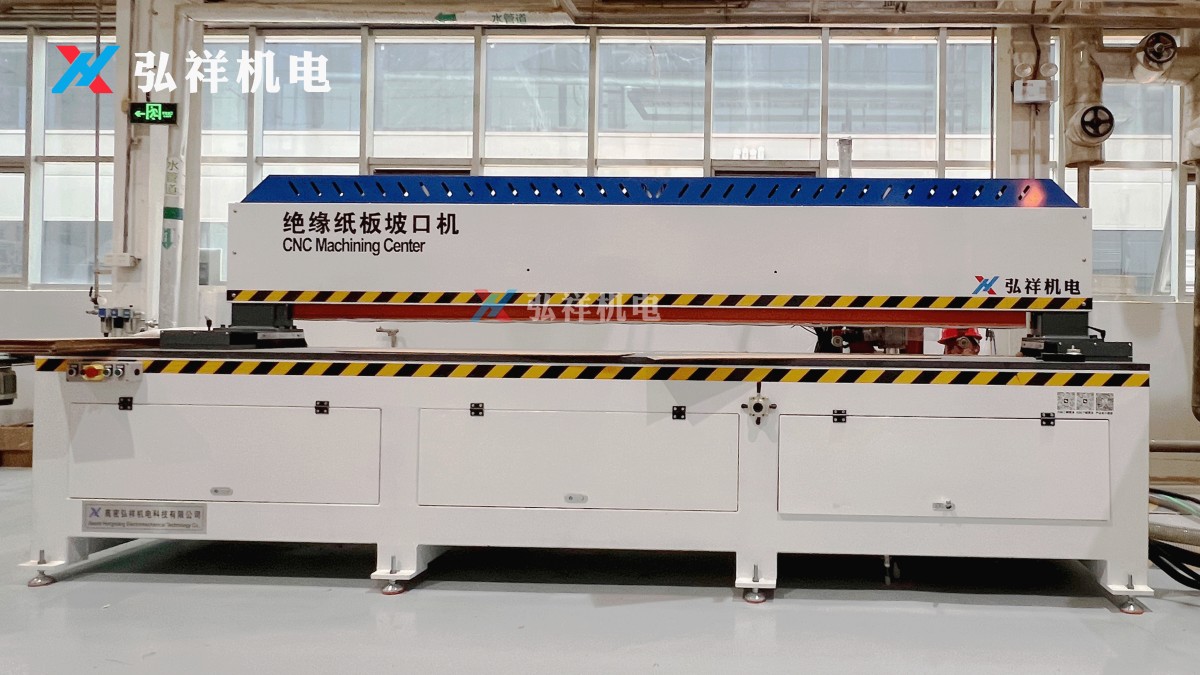
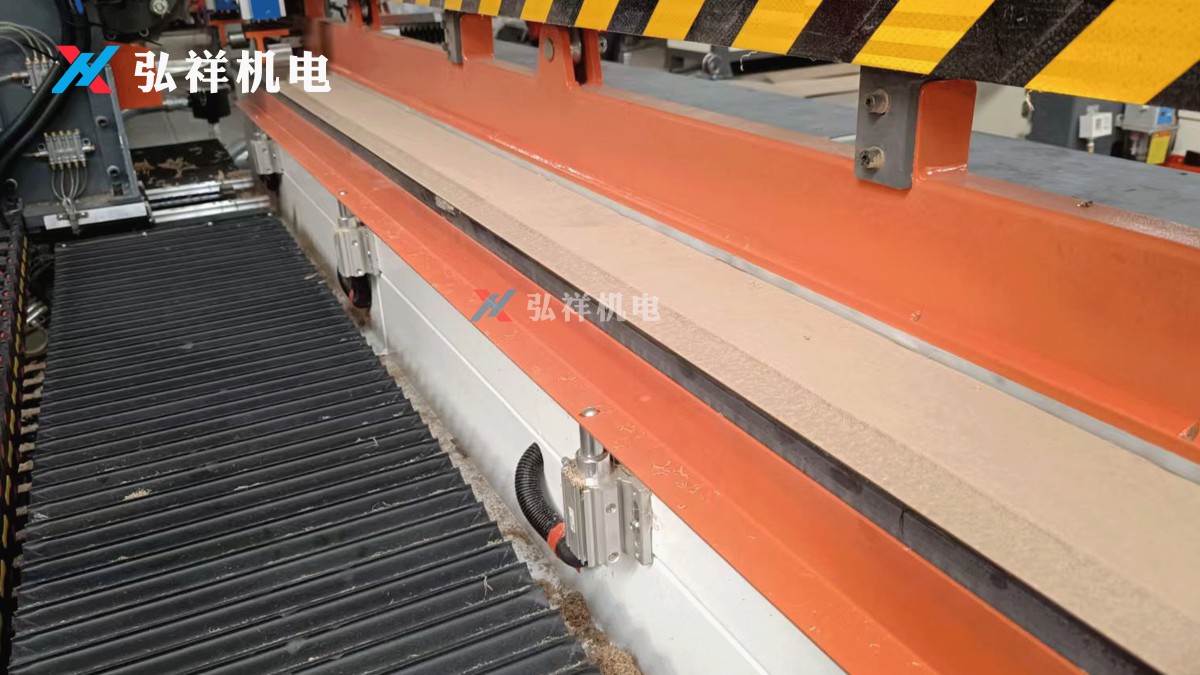
Why Consistency in Layer-Pressed Wood Is Non-Negotiable for Main Transformer Insulation
Electrical laminated wood used in main transformer insulation must meet strict IEC 60851-3 and GB/T 5591.2 standards for dielectric strength (≥18 kV/mm), moisture absorption (<4.5%), and compressive strength (≥85 MPa). Manual or semi-automated pressing introduces ±1.2 mm dimensional variance across batches—exceeding the ±0.3 mm tolerance required for high-voltage winding support structures. This inconsistency leads to localized electric field distortion, premature aging, and increased risk of partial discharge during 10–30 years of service life.
Gaomi Hongxiang’s fully automated layer-pressed wood production line reduces inter-batch deviation to ±0.15 mm through closed-loop servo control, real-time thermal compensation, and pressure uniformity monitoring at 128 points per press plate. Field data from 23 transformer OEMs in India and Russia shows a 67% reduction in insulation-related warranty claims after switching from manual hydraulic presses to Hongxiang’s AI-integrated systems.
Unlike generic woodworking CNC lines, this equipment is engineered specifically for electrical-grade beech and birch laminates—featuring low-residue glue application nozzles, vacuum-assisted resin impregnation chambers, and post-curing humidity control (±2% RH) to stabilize cellulose crystallinity before final machining.
Key Process Parameters That Define Consistency
- Pressing temperature range: 115–125°C (±1.0°C control via PID + IR feedback)
- Compression dwell time: 45–90 minutes (adjustable in 5-minute increments)
- Glue spread accuracy: ±3 g/m² (verified by inline gravimetric sensors)
- Post-press flatness tolerance: ≤0.2 mm/m over 2.4 m length
How Gaomi Hongxiang’s Automation Solves Core Manufacturing Pain Points
Traditional laminated wood production relies on operator judgment for glue mixing ratios, layup timing, and press release sequencing—introducing 7–12 human-dependent steps per batch. Hongxiang’s system replaces these with synchronized PLC logic, vision-guided alignment, and predictive maintenance alerts based on hydraulic cycle count and thermal drift trends.
The automatic chamfering machine achieves ±0.08 mm edge radius consistency across 120+ part geometries—from 120 × 240 mm bushing supports to 800 × 1,200 mm core clamping blocks—using adaptive toolpath generation calibrated against real-time laser profilometry. Its integrated deburring module eliminates secondary hand-finishing, cutting total labor hours per component by 4.3 hours on average.
For procurement and engineering teams evaluating ROI, the head-and-tail shearing machine reduces material waste from 8.6% (manual sawing) to 2.1% while maintaining cut-edge perpendicularity within 0.05°—critical for minimizing air gaps under epoxy-impregnated windings.
This table confirms that automation doesn’t just accelerate throughput—it transforms statistical process control. A Cpk of 1.67 means 99.9997% of parts fall within specification limits, enabling first-article approval without rework for Class H insulation applications.
Selecting the Right Configuration: Technical & Commercial Evaluation Criteria
Technical evaluators should verify three functional layers: mechanical (press force ≥3,500 kN), thermal (uniform heating zone ≥2.2 m × 1.8 m), and digital (OPC UA interface for MES integration). Procurement teams must assess service-level commitments—not just delivery timelines (standard lead time: 12–16 weeks), but also remote diagnostics response (<2 hours), spare-part availability (98.4% stock rate for critical hydraulics), and training coverage (minimum 5 days onsite + 12-month e-learning access).
Financial approvers benefit from lifecycle cost analysis: while CAPEX is 28–35% higher than legacy presses, TCO over 7 years drops by 41% due to reduced scrap (from 9.2% to 1.9%), lower energy consumption (3.8 kWh/kg vs. 5.6 kWh/kg), and extended tool life (carbide inserts last 4,200 cycles vs. 1,800).
These thresholds reflect actual validation testing performed per ISO 17025-accredited protocols at Hongxiang’s Gaomi R&D center—ensuring traceability to customer-specific insulation qualification reports required by grid operators in Pakistan and Brazil.
Implementation, Support & Long-Term Value Delivery
Hongxiang deploys a 5-phase implementation framework: (1) site survey & foundation drawing review (7–10 days), (2) factory acceptance test with customer witness (3 days), (3) installation & commissioning (14–18 days), (4) operator certification (3 days), and (5) 90-day performance verification with live production data logging. Post-installation, customers receive quarterly firmware updates and biannual calibration audits—all included in the 3-year comprehensive service agreement.
Distributors and agents gain access to standardized technical documentation packages—including 3D CAD models (STEP/IGES), electrical schematics (IEC 61346 compliant), and bilingual (English + local language) O&M manuals. For end users in Southeast Asia, Hongxiang maintains regional spares hubs in Singapore and Jakarta, ensuring<72-hour delivery for 92% of consumables.
With installations across 11 countries and ISO 9001:2015 / ISO 14001:2015 certification, Gaomi Hongxiang provides not just equipment—but validated, auditable, and scalable insulation manufacturing capability. Their AI-supported platform integrates seamlessly into Industry 4.0 transformer assembly lines, delivering repeatable quality where failure is never an option.
To evaluate how automated layer-pressed wood processing can strengthen your main transformer insulation consistency, request a customized process audit and ROI simulation report today.
NAVIGATION
MESSAGE
Request A Quote?