0000-00
For transformer manufacturers seeking higher efficiency and tighter quality control, Automated transformer electrical layer-pressed wood processing equipment is becoming a key investment. By reducing manual intervention, improving machining precision, and supporting stable large-scale production, this advanced solution helps enterprises boost throughput while lowering labor costs and material waste. It offers a practical path for decision-makers aiming to strengthen competitiveness in the power transformer supply chain.
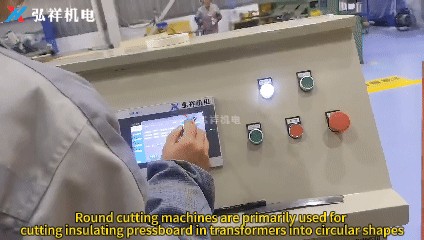
Why This Equipment Is Gaining Attention Now
Across the transformer manufacturing sector, a clear shift is underway. Producers are no longer evaluating equipment only by whether it can complete a process step. They are increasingly judging machinery by its ability to stabilize output, shorten lead times, reduce dependence on skilled manual labor, and support consistent quality across larger order volumes. In that context, Automated transformer electrical layer-pressed wood processing equipment has moved from a specialized upgrade to a strategic production asset.
This change is closely linked to broader market conditions. Transformer demand remains influenced by grid expansion, renewable energy integration, industrial electrification, replacement of aging power infrastructure, and export market diversification. As order structures become more complex, many factories face a practical challenge: how to increase throughput without creating bottlenecks in insulation material processing. Layer-pressed wood components may not be the largest part of transformer cost, but their machining accuracy, dimensional consistency, and delivery timing can directly affect assembly efficiency and final product reliability.
For business decision-makers, the signal is important. Investments in processing equipment are being judged less as isolated workshop spending and more as part of a plant-wide productivity strategy. Automated transformer electrical layer-pressed wood processing equipment fits this shift because it addresses not only capacity, but also repeatability, traceability, workforce pressure, and long-term cost control.
The Strongest Trend Signals Behind the Shift
Several trend signals explain why demand for automated insulation wood processing solutions is strengthening. First, customers in both domestic and export markets are becoming less tolerant of dimensional variation and processing inconsistency. Second, manufacturers are under pressure to quote faster and deliver faster, especially when responding to utility, industrial, and overseas projects. Third, labor costs and training costs continue to rise, while experienced operators are harder to recruit and retain. Fourth, digital production management is becoming more common, which favors equipment capable of standardized output.
These signals matter because layer-pressed wood processing often sits at the intersection of accuracy and volume. If cutting, drilling, grooving, shaping, or finishing depend too heavily on manual adjustment, throughput becomes unstable. Rework increases, machine utilization drops, and delivery commitments become harder to protect. Automated transformer electrical layer-pressed wood processing equipment responds directly to this issue by converting variable manual steps into controlled, repeatable machining operations.
How Throughput Improvement Is Changing in Practice
Throughput improvement in transformer plants is no longer viewed as a simple matter of adding more people or extending shifts. The more sustainable path is process compression: removing waiting time, reducing setup variability, lowering handling losses, and increasing the ratio of value-added machine time. This is where Automated transformer electrical layer-pressed wood processing equipment has a measurable operational impact.
In practical terms, throughput improves through four linked mechanisms. The first is faster and more consistent cycle execution. Automated processing can reduce idle intervals between machining steps and maintain a predictable pace across batches. The second is lower rework. When component dimensions remain within target tolerances, downstream fitting and assembly interruptions decrease. The third is easier scheduling. A standardized machine process makes output planning more reliable, especially during peak order periods. The fourth is material optimization. Better cutting accuracy and controlled processing paths can reduce waste in expensive insulating materials.
For executives, the critical insight is that throughput gains do not come only from speed. They come from stability. A workshop that runs slightly faster but creates frequent corrections may still underperform a well-automated line that maintains stable daily output. Automated transformer electrical layer-pressed wood processing equipment supports this more mature understanding of productivity.
What Is Driving the Upgrade Decision Beyond Labor Savings
Labor reduction is often the most visible benefit, but it is rarely the only reason companies move toward automation. More often, the real driver is a combination of process discipline, management visibility, and future readiness. When decision-makers compare manual or semi-manual methods with advanced equipment, they are often comparing two different operating models.
A manual model depends on operator experience, informal adjustments, and variable pace. That model can work in low-volume or low-complexity conditions, but it becomes fragile when orders increase, specifications diversify, or customer audits become stricter. By contrast, Automated transformer electrical layer-pressed wood processing equipment supports a more scalable model in which setup logic, machining paths, and output consistency are less dependent on individual skill differences.
Another upgrade driver is the growing need to coordinate multiple material categories within the same manufacturing system. Companies such as Gaomi Hongxiang Electromechanical Technology Co., Ltd., which serve global customers in transformer assembly and manufacturing and also process insulating cardboard, insulating laminated wood, and insulating parts, are operating in an environment where flexibility matters. Equipment decisions increasingly need to support not just one product family, but a broader insulation component ecosystem. This favors suppliers with R&D, design, installation, training, and after-sales capabilities rather than simple machine sellers.
Who Feels the Impact Most Clearly
The influence of Automated transformer electrical layer-pressed wood processing equipment is not limited to workshop operators. Its impact reaches several roles inside the business, and this is one reason the investment decision should be cross-functional rather than isolated within maintenance or purchasing.
What Buyers Should Evaluate as the Market Matures
As the market for transformer production equipment becomes more competitive, buyers should avoid judging Automated transformer electrical layer-pressed wood processing equipment only by headline features. The better approach is to assess whether the machine fits the next three to five years of operational direction. That includes expected order volume, product complexity, export requirements, maintenance capability, operator training needs, and integration with existing production flow.
One useful signal is whether the supplier understands transformer manufacturing rather than only generic machining. Electrical insulation component processing has application-specific requirements. Surface quality, dimensional stability, and process adaptability matter differently here than in general woodworking or non-specialized material handling. Buyers should also pay close attention to after-sales service, spare parts response, commissioning support, and training effectiveness, because these factors strongly influence real throughput after installation.
A second evaluation point is scalability. Some enterprises initially purchase equipment to solve one bottleneck, but later discover they need broader automation support. A supplier with experience in transformer-related assembly and insulation material processing can often provide a more coherent upgrade path. That is particularly valuable for companies balancing domestic demand with exports to Southeast Asia, South America, India, Pakistan, Russia, and other regions where delivery discipline and quality consistency shape customer trust.
Signals That an Enterprise Should Act Soon
Not every manufacturer needs to invest at the same moment, but several signals suggest that delaying automation may become more costly than acting. If order growth is causing overtime without improving shipment reliability, if quality issues repeatedly originate in insulation component preparation, if skilled operators are becoming a bottleneck, or if management lacks confidence in batch consistency, the business is likely approaching the limit of manual processing efficiency.
Another warning sign is hidden cost. Many enterprises underestimate the total operational burden of semi-manual methods because losses are spread across departments. Extra inspection time, delayed assembly, scrap, adjustment work, and rescheduling all consume resources. Automated transformer electrical layer-pressed wood processing equipment can make these hidden costs more visible by replacing uncertainty with a clearer process baseline. Once the baseline is established, management can make better decisions on staffing, pricing, capacity expansion, and customer commitment.
A Practical Judgment Framework for Decision-Makers
For enterprise leaders, the smartest response is not to treat automation as a trend to follow blindly, but as a structured business decision. A practical framework starts with five questions. Where is the current throughput bottleneck? How much variability comes from manual processing? Which customer requirements are becoming stricter? How much growth is expected in the next planning cycle? And can the equipment supplier support implementation beyond delivery?
The Direction to Watch Over the Next Few Years
Looking ahead, the direction is not simply “more automation.” The more meaningful trend is smarter and more integrated automation. Buyers are likely to pay closer attention to machine flexibility, process data visibility, compatibility with upstream and downstream production steps, and the ability to support mixed product requirements. In other words, Automated transformer electrical layer-pressed wood processing equipment will increasingly be judged by how well it fits a connected manufacturing environment, not just by stand-alone processing speed.
This creates opportunity for manufacturers that move early and choose partners with industry-specific depth. Enterprises that build stronger process consistency today are often better positioned tomorrow for export expansion, customer audits, customized orders, and digital management upgrades. The market is rewarding reliability, not only capacity.
Final Takeaway for Companies Evaluating Next Steps
The rise of Automated transformer electrical layer-pressed wood processing equipment reflects a deeper industry change: transformer manufacturers are under growing pressure to produce faster, more consistently, and with better cost discipline. For decision-makers, the key issue is not whether automation is relevant, but how quickly its absence will begin to limit competitiveness.
If your business is reviewing capacity expansion, export readiness, quality stability, or labor efficiency, this is the right time to confirm a few practical points: where insulation component processing slows output, how much hidden cost comes from manual variability, what level of standardization future customers will expect, and whether your current equipment model can support the next stage of growth. Those answers will provide a far clearer basis for judging the value of Automated transformer electrical layer-pressed wood processing equipment in your own operation.
NAVIGATION
MESSAGE
Request A Quote?