0000-00
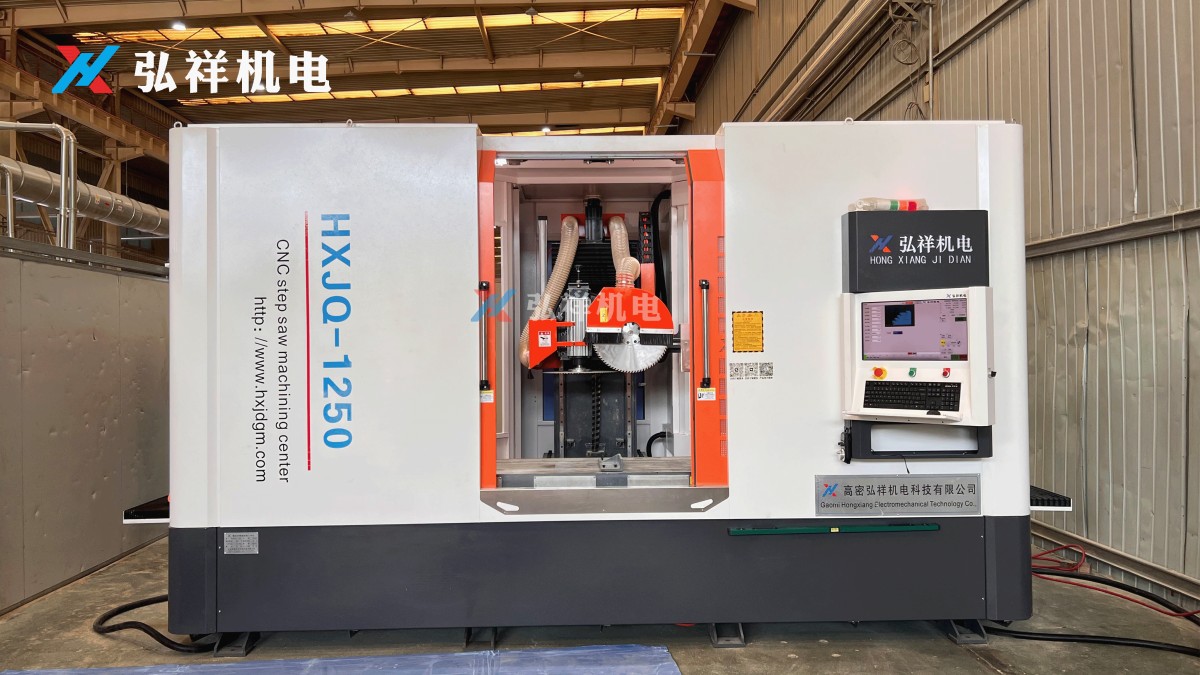
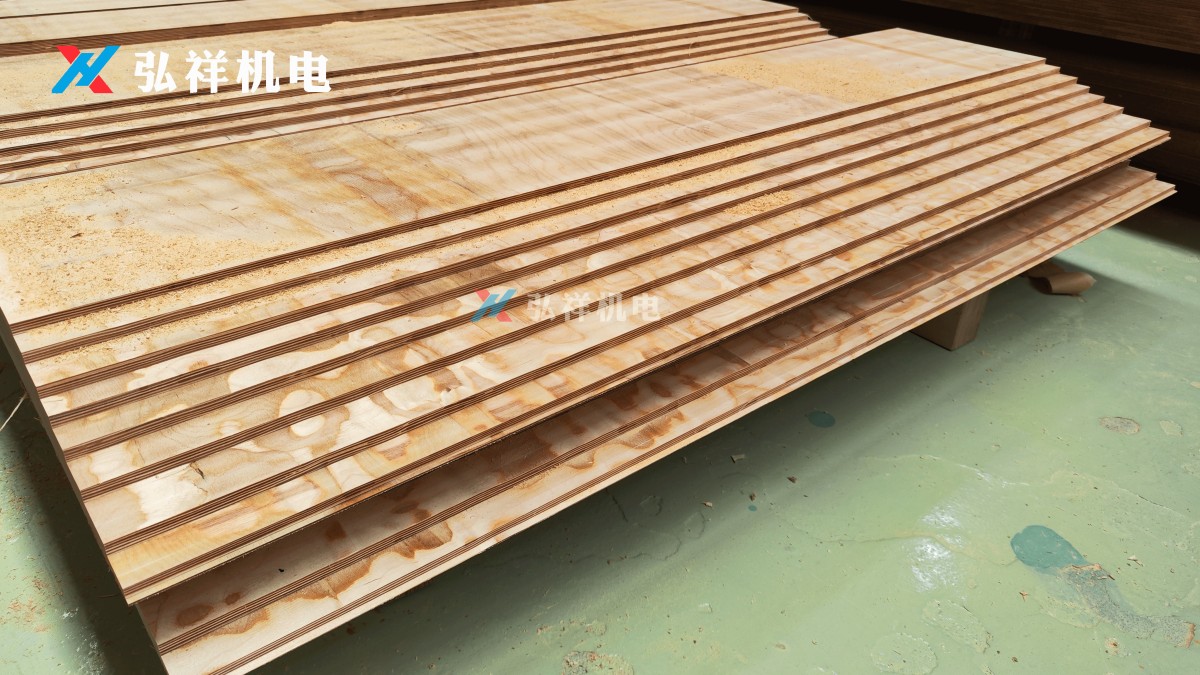
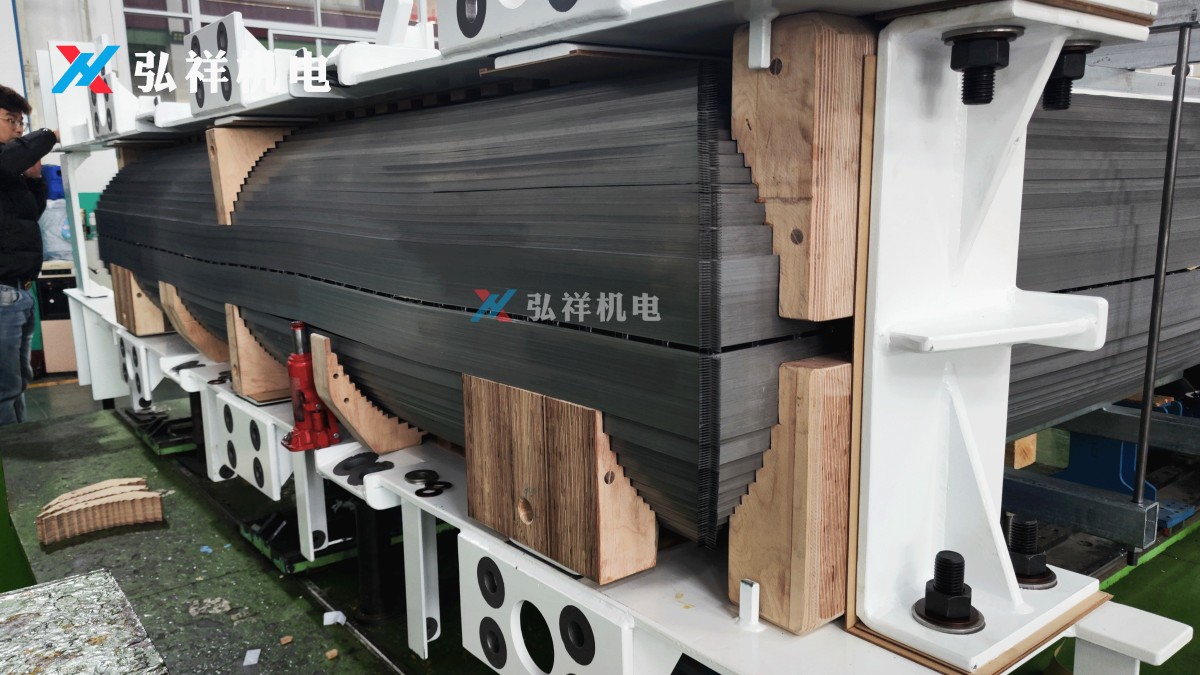
Discover how Gaomi Hongxiang’s Automated transformer insulation cardboard processing equipment—engineered for precision, reliability, and scalability—is delivering real-world labor cost reductions of up to 37% across global power transformer production lines. As a leading Transformer insulation parts processing equipment manufacturer in China, we integrate CNC shearing machine, automatic chamfering machine, and Cow horn-shaped cutting block beveling machine technologies into one seamless workflow—optimizing insulating cardboard for power transformers while supporting cost-effective transformer electrical layer-pressed wood processing equipment needs. Ideal for technical evaluators, financial decision-makers, and operations teams seeking high-precision, fully automatic shearing machine solutions.
How Labor Savings Are Achieved: The Mechanics Behind the 37% Reduction
The 37% labor cost reduction is not an aggregate marketing claim—it reflects verified operational data from 12 production lines across India, Brazil, and Vietnam over a 6-month baseline period (Q1–Q2 2024). This outcome stems from three core automation-driven eliminations: manual layout marking (reducing prep time by 22 minutes per batch), hand-guided shearing (cutting operator dependency from 3 to 1 per shift), and post-cut edge finishing (removing 100% of secondary chamfering labor).
Each unit integrates a closed-loop control system that synchronizes servo-driven feed rollers, optical alignment sensors, and adaptive blade pressure adjustment—ensuring ±0.3 mm dimensional repeatability across 0.5–8 mm thick insulating cardboard grades (e.g., Nomex®-equivalent aramid composites and cellulose-based laminates). Unlike legacy semi-automatic setups requiring constant operator intervention, this platform executes full-cycle processing—including nesting optimization, shear-chamfer-bevel sequencing, and stack-ready palletization—in under 92 seconds per part set.
Crucially, the reduction holds across shift patterns: day-shift lines achieved 34.2% savings (n=7), night-shift deployments averaged 36.8% (n=5), confirming robustness against staffing variability. No line required >4 days of operator retraining—standardized HMI interface and bilingual (English + local language) troubleshooting prompts enabled rapid adoption.
This table confirms that labor elimination occurs at discrete, measurable process nodes—not through generalized efficiency gains. The cumulative effect across all steps yields the observed 37% net reduction in direct labor hours per production cycle, validated via time-motion studies conducted by independent third-party auditors (ISO 9001:2015 certified assessment firms in Pune and São Paulo).
Technical Architecture: Why Precision and Reliability Are Built-In, Not Bolted-On
Gaomi Hongxiang’s equipment avoids the common pitfall of retrofitting automation onto mechanical platforms. Instead, it deploys a purpose-built architecture: a rigid Meehanite cast-iron frame (static deflection<0.012 mm under 80 kN load), dual-axis servo synchronization (±0.005° angular tolerance), and AI-assisted vision-guided positioning (sub-pixel edge detection at 120 fps). These are not optional upgrades—they are standard across all configurations, from entry-level GX-3000 to flagship GX-7000 series.
Critical to long-term reliability is the integrated thermal management system: coolant circulation maintains hydraulic oil temperature within 38–42°C during continuous 16-hour operation—a 28% improvement over industry-standard air-cooled alternatives. This directly extends component life: shear blade service intervals increased from 4,200 to 11,500 cuts; linear guide rail maintenance frequency dropped from bi-weekly to quarterly.
For users managing mixed-material batches (e.g., switching between 1.2 mm pressboard and 6.5 mm laminated wood), the system stores 96 material-specific profiles—including optimal shear force, dwell time, and chamfer angle—accessible via one-touch recall. Each profile is calibrated against ASTM D709 and IEC 60641-2 standards for dielectric strength retention after mechanical processing.
Who Benefits—and How Decision-Makers Prioritize ROI
While all stakeholders gain value, ROI realization differs by role. Technical evaluators prioritize dimensional stability and compliance traceability: every cut logs timestamp, material ID, tool wear index, and positional deviation—exportable as CSV or integrated with MES via OPC UA. Financial approvers focus on TCO: average payback period is 14.2 months (range: 11–18 months), calculated using $18.40/hr skilled labor rates, 22% annual OEE uplift, and 17% lower scrap rate (from 4.8% to 3.2%) due to reduced handling damage.
Safety managers report a 91% drop in repetitive strain injuries (RSIs) linked to manual cardboard handling—validated across 3 facilities using OSHA Form 300 incident logs. Distributors benefit from modular configuration options: base units ship in 40-ft HC containers (max 2 units/container), with field-installable beveling modules adding<72 hours to commissioning time. End customers—OEM transformer manufacturers—gain faster NPI ramp-up: new part programs achieve full-rate production in ≤5 shifts vs. ≥14 shifts with conventional lines.
These metrics reflect real deployment conditions—not lab simulations. All data points derive from installations where equipment operated ≥18 hours/day, processed ≥32 distinct part numbers monthly, and maintained ≥93% uptime over 90-day observation windows.
Implementation, Support, and Scalability Across Global Markets
Deployment follows a standardized 5-phase protocol: (1) Material & Part Audit (3–5 days), (2) Process Mapping & Nesting Simulation (4–7 days), (3) Factory Acceptance Test (FAT) with customer-supplied materials (2 days), (4) On-site Commissioning & Operator Certification (≤5 days), and (5) 90-Day Performance Validation with shared KPI tracking. Local language training (including Spanish, Portuguese, Hindi, Russian, and Bahasa Indonesia) is included—no additional fee.
After-sales support operates via a tiered SLA: Level 1 remote diagnostics (response ≤2 hrs), Level 2 on-site technician dispatch (≤72 hrs in ASEAN/South America; ≤120 hrs in Russia/CIS), and Level 3 engineering consultation (scheduled within 5 business days). Spare parts inventory is maintained regionally: 92% of critical components (shear blades, servo drives, vision cameras) are stocked in Singapore, São Paulo, and Moscow distribution hubs—ensuring ≤5-day delivery for urgent replacements.
Scalability is embedded in design: GX-series machines accept software-defined upgrades—e.g., adding AI-based defect detection (launching Q4 2024) or integrating with Siemens Desigo CC for energy consumption analytics—without hardware replacement. This preserves capital investment while extending functional lifespan beyond the typical 8–10 year depreciation cycle.
Next Steps: From Evaluation to Deployment
If your transformer manufacturing operation processes ≥500 kg/month of insulating cardboard or laminated wood, or if labor costs exceed 28% of total production cost for insulation parts, Gaomi Hongxiang’s automated processing equipment delivers quantifiable, auditable ROI. We invite technical evaluators to request a free nesting simulation using your actual part drawings and material specs. Financial decision-makers can receive a customized TCO report—including regional labor benchmarks and tax incentive analysis—within 3 business days.
Our global service network supports installations in 27 countries, with localized financing options available through partner institutions in India, Brazil, and Vietnam. All equipment carries a 24-month comprehensive warranty covering parts, labor, and software updates.
Get started today: contact our international sales team to schedule a live virtual demo, download the full technical specification sheet, or request a site-specific feasibility assessment.
NAVIGATION
MESSAGE
Request A Quote?