0000-00
Why Copper Edges Become a Rework Problem So Quickly
For operators working with busbars, connector parts, transformer conductors, or other copper components, edge condition is rarely a small detail. A rough edge may look minor at the machine, but it tends to show up again later: during fitting, insulation wrapping, assembly, handling, or final inspection. Burrs catch gloves, sharp corners damage adjacent materials, and inconsistent chamfers make part-to-part alignment less predictable. That is where a chamfering machine for copper starts to matter in a very practical way.
Copper is not difficult in the same way hardened steel is difficult. The issue is different. It is soft, ductile, and prone to smearing if cutting conditions are wrong. Operators often see the same pattern: a cut edge appears acceptable at first glance, but under touch or closer inspection there is rollover, tearing, or a feather burr that has to be removed by hand. Once manual touch-up enters the process, consistency drops and rework costs start to spread beyond the edging station.
In shops that process copper for electrical applications, this matters even more. Edge quality is tied not only to appearance, but to fit, insulation protection, and safe handling. Companies serving transformer and insulation-related manufacturing, such as Gaomi Hongxiang Electromechanical Technology Co., Ltd., usually see this from both the equipment side and the downstream production side. When copper parts move into a broader assembly environment, a poor chamfer does not stay local to one process.
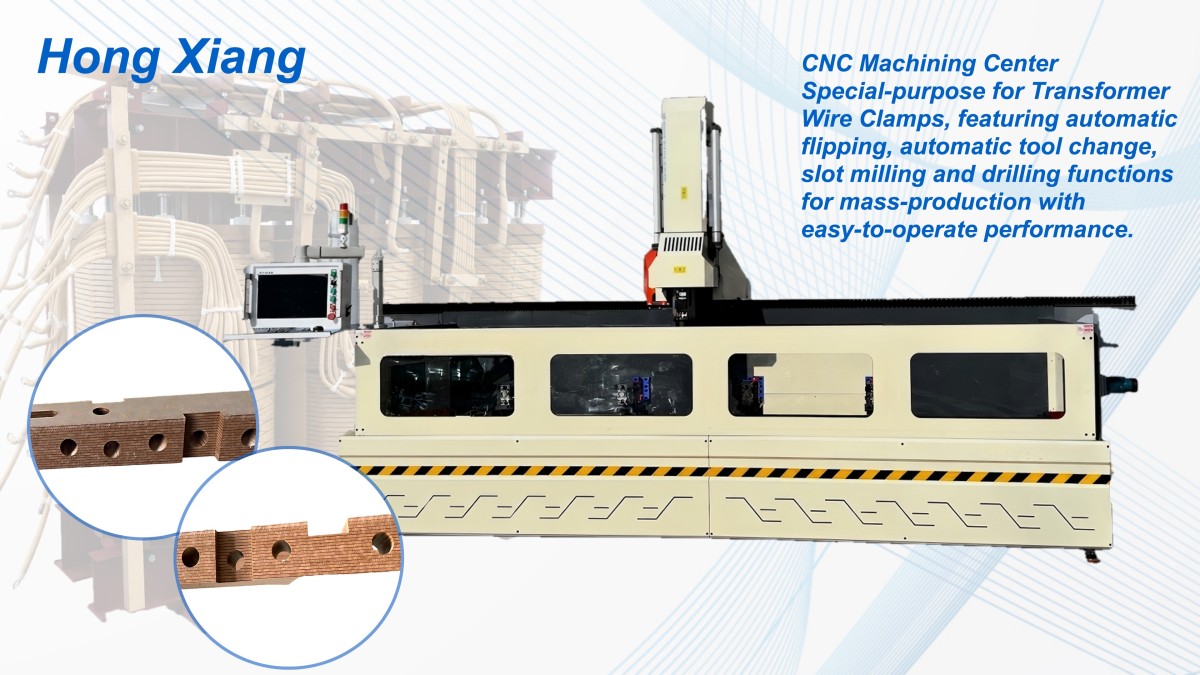
What a Good Chamfer Actually Solves on the Shop Floor
People sometimes reduce chamfering to “making the corner look neat,” but in real production the benefit is more specific than that. A stable chamfer removes the weak, sharp transition left by cutting, punching, or sawing and replaces it with a controlled edge geometry. That sounds basic, yet it affects several pain points at once.
One is deburring time. If the machine creates a clean and repeatable edge, operators spend less time with files, abrasive wheels, or hand scrapers. Another is handling safety. Copper parts, especially flat bars and larger conductive pieces, can be awkward to move. Removing sharp edges lowers the chance of cuts and makes stacking and repositioning easier. Then there is assembly quality. When chamfers are even, parts enter fixtures and adjoining assemblies with fewer small interferences.
In electrical equipment production, edge quality also protects surrounding materials. If a copper component sits near insulating cardboard, laminated wood, formed EVA parts, or other insulating components, a poorly finished edge can create avoidable damage during installation or service. This is one reason edge preparation often receives more attention in transformer-related manufacturing than outsiders expect.
Where Manual Edge Work Usually Falls Short
Many workshops begin with hand grinding or simple deburring tools because the investment is low and the process feels flexible. That works for prototypes, very low volume work, or oversized parts that come through only occasionally. The problem starts when the same edge quality has to be repeated across a batch.
Manual work depends too heavily on operator feel. One person breaks the edge lightly; another removes too much material; a third leaves a burr near the corner transition. With copper, overworking the edge can also leave a smeared or polished-looking surface that is visually clean but geometrically inconsistent. On parts that need reliable downstream assembly, that inconsistency shows up fast.
There is also a throughput issue. If upstream cutting is fast but edge finishing remains manual, the bottleneck simply moves. Operators end up waiting, sorting, touching up, and rechecking. The actual cost is not only labor; it is the interruption of flow. A purpose-built machine does not solve every production problem, but it does remove one of the most common causes of hidden delay.
How a Chamfering Machine for Copper Improves Edge Quality
The biggest advantage is control. A machine applies a repeatable cutting path, angle, and feed condition that is difficult to maintain by hand for long periods. On copper, that repeatability is what helps reduce burr formation and keeps the chamfer width more uniform from part to part.
A good result usually comes from the interaction of several factors rather than one feature alone: cutter geometry, machine rigidity, clamping stability, feed rate, and the condition of the incoming edge. If a sawed edge is badly deformed, the chamfering machine may still need parameter adjustment or a preparatory step. But when the upstream cut is reasonably stable, dedicated chamfering equipment can turn edge finishing into a controlled process instead of a correction process.
Operators tend to notice three visible improvements when the setup is right:
- Less burr rollover on soft copper edges
- Cleaner corner transitions at the end of the pass
- More consistent bevel size across a batch
That last point matters more than it seems. Even if an edge is technically “deburr-free,” variation in chamfer size can create fitting differences in later operations. When operators say a part is “almost the same but not quite,” edge geometry is often part of the reason.
The Real Link Between Better Chamfers and Less Rework
Rework is rarely caused by one dramatic failure. More often it comes from small defects repeated across many parts. A burr gets missed, a corner is too sharp, a chamfer is uneven, an insulator gets scratched during assembly, and then the part comes back for correction. Each individual issue looks manageable; together they drain time.
Using a chamfering machine for copper reduces rework because it moves edge preparation upstream and standardizes it before those defects multiply. Instead of discovering edge problems in assembly or quality control, operators address them at the source. That is a better place to control them, and usually a cheaper one too.
This is especially relevant when copper parts are part of a larger, mixed-material production chain. In transformer-related workshops, for example, conductive components may later interact with insulating boards, laminated wood structures, and shaped insulation parts. If the copper edge is inconsistent, the correction work does not stop at the copper station. It can affect fitting, wrapping, fastening, and final finishing. Shops with broad manufacturing responsibilities generally learn to treat edge quality as a process control issue, not just a cosmetic issue.
What Operators Should Check Before Blaming the Machine
Not every bad chamfer means the machine is wrong. In day-to-day use, several practical factors can degrade results.
- Tool wear: A dull edge tends to smear copper rather than cut it cleanly.
- Incoming part variation: Different thicknesses, warped bars, or inconsistent cut edges can produce uneven bevels.
- Clamping: If the part moves even slightly, the chamfer will vary, especially at entry and exit points.
- Feed settings: Too aggressive a feed may tear the edge; too slow can cause rubbing and heat buildup.
- Chip management: Built-up material around the cutting area can affect finish and stability.
One common mistake is trying to force one setup to handle every copper part. That rarely works for long. Thin strips, wide flat bars, and heavier conductive pieces do not behave the same way. Even when one machine platform can process multiple sizes, the tooling and operating window usually need adjustment.
Choosing Equipment for Actual Production Conditions
When selecting a machine, operators and production managers often focus first on chamfer angle or nominal capacity. Those points matter, but they are not enough. The better question is whether the machine can stay stable under your actual mix of parts, edge conditions, and work rhythm.
For copper processing, it is worth checking how the machine handles soft, conductive material over time, how easy tool changes are, and whether cleaning and maintenance are realistic for the production environment. If the machine is difficult to access or adjust, operators may delay maintenance and edge quality will drift before anyone formally reports a problem.
Support also matters more than many buyers admit at the start. A supplier that can provide installation, training, and after-sales service is often more useful than one offering a long feature list with limited process guidance. This is particularly true for companies that serve varied industrial customers across different regions. Gaomi Hongxiang Electromechanical Technology Co., Ltd., for instance, works across R&D, design, production, installation, training, and service while supplying domestic and export markets. That type of manufacturing background usually helps when a machine must be adapted to a real workshop rather than a catalog ideal.
A Few Misunderstandings That Cause Trouble Later
One misunderstanding is assuming that “bigger chamfer” means “better edge.” It does not. Removing excess material can change fit, reduce contact area where that matters, or simply create unnecessary variation. The target should be an appropriate, repeatable edge break or bevel, not the largest one the machine can produce.
Another is treating chamfering as separate from upstream cutting. If your cut quality is unstable, the chamfering process will spend its time compensating. You may still get acceptable parts, but with more adjustment and less predictability. In practice, edge quality is the result of the whole chain: cutting, handling, clamping, chamfering, inspection.
And one more: some shops judge the result only by appearance. A visually bright edge can still be dimensionally poor or leave a problem at the corner. Touch, fit, and consistency across the batch are usually better indicators than shine alone.
What Stable Results Usually Look Like
In a well-run process, operators are not constantly adjusting for edge defects. Parts move through with limited touch-up, corners are predictable, and downstream teams do not keep sending pieces back for “just a little deburring.” That is often the clearest sign that the machine, tooling, and setup match the job.
A chamfering machine for copper is most effective when it becomes part of process discipline rather than a rescue tool. If you are evaluating one, look beyond the immediate cut sample. Ask how it will behave after repeated shifts, with your actual copper profiles, under normal operator conditions, and alongside the rest of your production flow. That is where edge quality stops being a sample-room promise and starts reducing rework in real manufacturing.
NAVIGATION
MESSAGE
Request A Quote?