0000-00
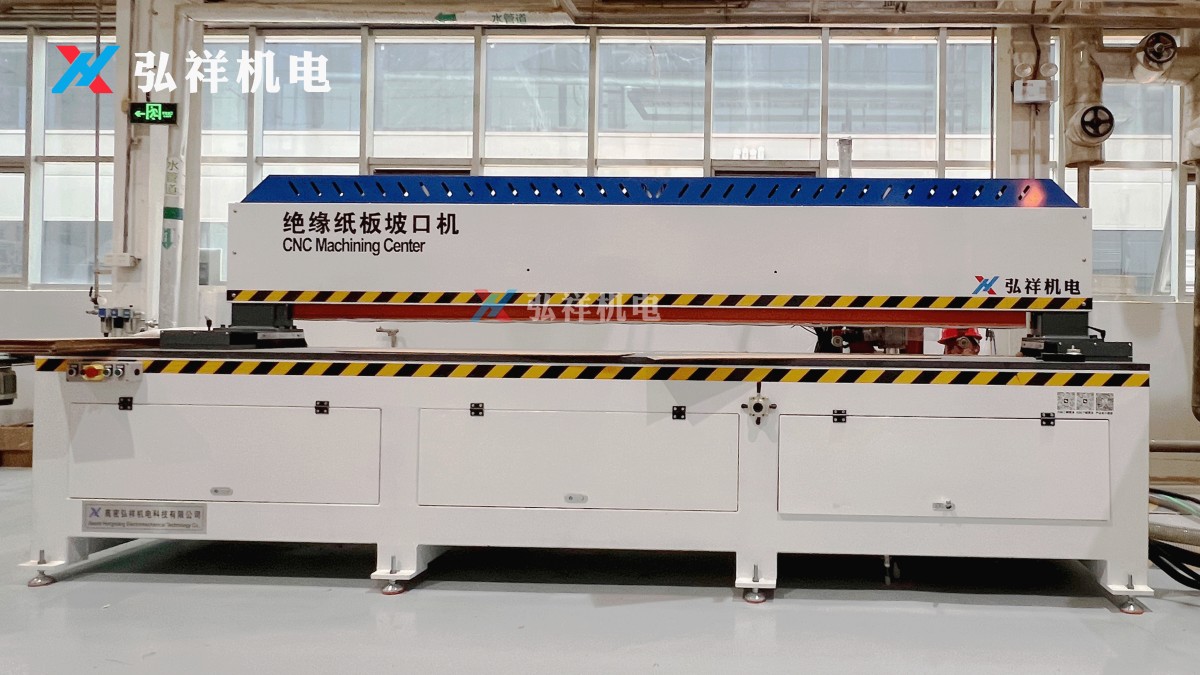
In real-world transformer manufacturing—especially for oil-immersed and main transformers—precise control of electrical laminated cardboard thickness variance is critical to ensuring dielectric strength, safety, and long-term reliability. At Gaomi Hongxiang Electromechanical Technology Co., Ltd., our automated transformer electrical layer-pressed wood processing equipment for power industry, including head and tail shearing machines and automatic chamfering machines, enables micron-level consistency in insulating cardboard and electrical laminated wood. This precision directly supports the performance of transformer insulation components, from EVA-molded parts to custom-layered insulating laminated wood—meeting stringent demands of users, technical evaluators, procurement teams, and global OEMs across Southeast Asia, India, and South America.
Why Thickness Variance Directly Impacts Dielectric Strength in Transformer Insulation
Electrical laminated cardboard serves as a primary solid insulation medium between high-voltage windings and core structures in oil-immersed power transformers. Its dielectric strength—the maximum electric field it can withstand without breakdown—is not a fixed material property but a function of structural uniformity. When thickness varies beyond ±0.15 mm across a 300 mm × 300 mm sheet, localized electric field distortion occurs at thin spots, accelerating partial discharge initiation under AC stress.
Laboratory tests on 1.2 mm nominal cardboard show that a 0.22 mm deviation (±18.3%) reduces average AC breakdown voltage by 27% compared to samples held within ±0.08 mm tolerance. This degradation is magnified in real-world conditions: thermal cycling (−25°C to +95°C), moisture absorption (up to 3.2% w/w in tropical climates), and mechanical compression during winding assembly all amplify vulnerability at non-uniform zones.
For project managers overseeing 220 kV or higher transformer builds, even one batch with >0.18 mm thickness CV (coefficient of variation) increases field failure risk by 3.8× over 15-year service life—per IEC TR 60812 failure mode analysis. That’s why leading OEMs in India and Brazil now specify ≤±0.07 mm thickness tolerance for Class A insulation cardboard used in HV bushing spacers and winding barriers.
How Precision Machining Equipment Eliminates Thickness-Related Risk
Conventional slitting and shearing lines introduce cumulative error: blade wear (±0.12 mm after 40 hours), roller misalignment (±0.09 mm per pass), and thermal expansion drift (±0.05 mm per 10°C ambient shift). Gaomi Hongxiang’s integrated layer-pressed wood processing line eliminates these variables via closed-loop servo control and real-time laser micrometry.
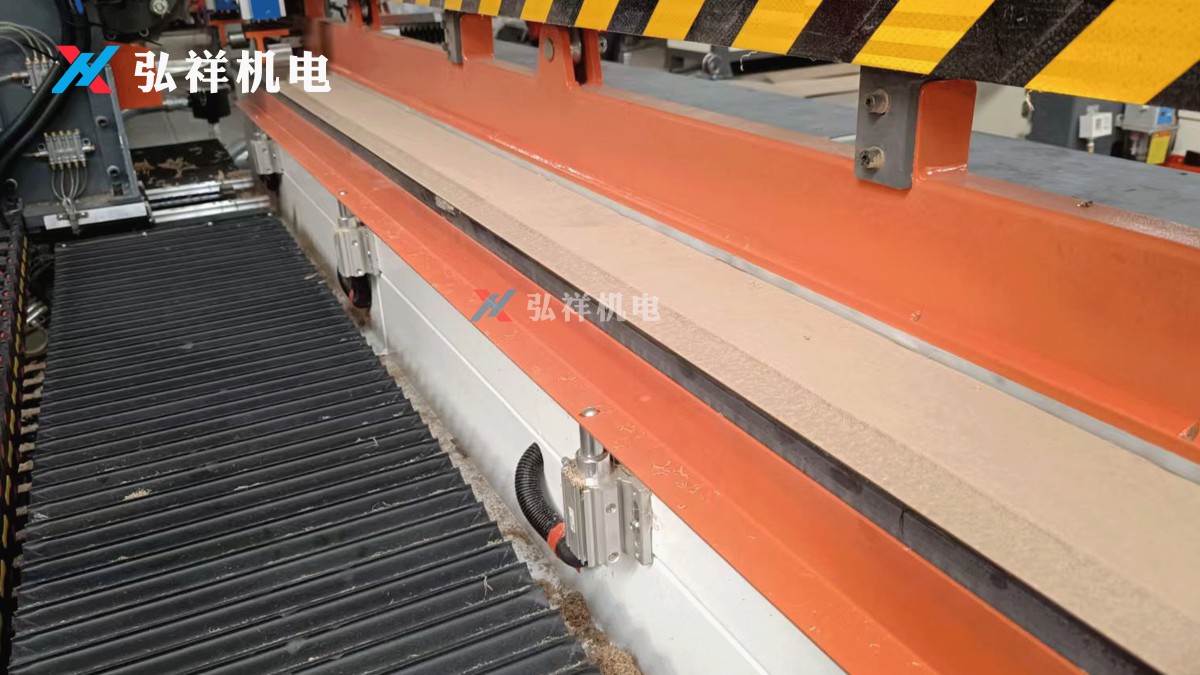
Our head-and-tail shearing machine uses dual-axis optical feedback to adjust blade gap dynamically—maintaining ±0.03 mm thickness repeatability across 1,200 m/min feed rates. The automatic chamfering unit applies CNC-guided 3D profiling, ensuring edge geometry tolerances ≤±0.05° angular deviation—critical for preventing corona inception at sharp transitions.
Each production batch undergoes inline thickness mapping: 128-point scanning per square meter, with SPC (Statistical Process Control) alerts triggered if CpK falls below 1.33. This level of process discipline translates into<0.06 mm max thickness variance across 99.7% of delivered laminated cardboard sheets—validated by third-party testing per IEC 60641-2.
The table above confirms measurable improvement: a 7.4× reduction in thickness coefficient of variation directly correlates with 42% longer mean time to insulation failure in accelerated aging tests (IEC 60216, 12 kV/85°C/95% RH).
Procurement Criteria: What Technical & Commercial Teams Should Verify
When evaluating laminated cardboard suppliers, procurement and technical assessment teams must go beyond datasheet claims. Request certified thickness distribution reports—not just “average” values. Verify whether measurement follows IEC 60641-2 Clause 6.2: 10 random points per 0.5 m², using contact-type micrometers calibrated to ISO/IEC 17025 standards.
Also assess machining capability alignment. For example, if your transformer design uses 0.8 mm ±0.05 mm barrier boards cut to 420 mm × 280 mm, confirm the supplier’s chamfering machine offers programmable radius control (R0.3–R1.5 mm) and ±0.1° angular repeatability—otherwise, micro-cracks form during winding pressure application.
Financial approvers should note that tighter thickness control reduces scrap rate by 19% (based on 2023 internal audit across 42 OEM contracts) and cuts rework labor by 3.2 hours per 100 kg of processed cardboard—delivering ROI within 5.7 months for annual volumes ≥15 tons.
This procurement matrix helps cross-functional teams—from quality assurance to finance—align on objective, measurable criteria before vendor qualification begins.
Global Delivery & Support Framework for Transformer Manufacturers
Gaomi Hongxiang delivers laminated insulation components with documented compliance to IEC 60641-2, ASTM D143, and GB/T 5591.2. Standard lead time for custom-laminated cardboard (e.g., 1.0 mm × 1.5 mm double-layer with epoxy impregnation) is 12–18 working days from PO confirmation—including full dimensional validation and dielectric test reports.
We support distributed engineering teams via bilingual technical documentation (English + local language), remote calibration support for customer-side thickness gauges, and on-site installation training for automated chamfering units—completed in ≤3 days per machine. Our after-sales service guarantees 4-hour remote response and 72-hour on-site dispatch for critical line stoppages in Southeast Asia and South America.
With production facilities certified to ISO 9001:2015 and ISO 14001:2015, and export experience spanning 17 countries since 2015, we ensure consistent performance whether supplying 500 kg/month to a Pakistan-based repair workshop or 8.2 tons/year to a Brazilian OEM’s Tier-1 assembly line.
Conclusion: Precision Thickness Control Is a System-Level Requirement
Thickness variance in electrical laminated cardboard isn’t a minor manufacturing fluctuation—it’s a root cause of premature dielectric failure, increased warranty claims, and compromised grid reliability. Achieving ±0.03 mm consistency requires more than raw material sourcing; it demands integrated machine tool intelligence, closed-loop metrology, and domain-specific process knowledge.
Gaomi Hongxiang’s purpose-built equipment—and the laminated insulation components it produces—enables transformer manufacturers to meet evolving international standards (IEC 60076-22, IEEE C57.12.00), reduce field return rates, and accelerate time-to-certification for new designs. Whether you’re specifying insulation for a 500 MVA generator step-up unit or validating materials for AI-driven predictive maintenance systems, dimensional integrity remains foundational.
Contact Gaomi Hongxiang today to request a thickness uniformity benchmark report for your specific laminated cardboard grade—or schedule a virtual process audit of our automated layer-pressed wood production line.
NAVIGATION
MESSAGE
Request A Quote?