0000-00
Transformer safety requirements are often won or lost in the insulation system, because thermal stress, electrical stress, and localized overheating tend to converge at barriers, spacers, and formed insulating parts long before an external fault becomes visible. In that setting, fireproof insulating cardboard is selected not for a single property, but for the way it balances flame resistance, dielectric behavior, dimensional stability, and process compatibility. A material that chars too easily, sheds fibers, absorbs excessive moisture, or distorts during drying can create compliance problems even when the transformer design itself is otherwise sound.
In practical manufacturing terms, the value of this material appears first in fault containment. When an internal hot spot develops near windings, leads, or clamping structures, the insulation around that area should resist rapid ignition and should not support flame spread through adjacent layers. Fire-resistant board can slow thermal degradation and reduce the chance that a small insulation failure becomes a wider fire event inside the tank or enclosure. That matters during design validation, during routine production inspection, and later when the equipment is exposed to overloads, switching surges, or abnormal cooling conditions.
Material behavior under combined thermal and electrical stress
Transformer insulation is rarely exposed to heat alone. The material is usually under compression, surrounded by oil or air depending on the design, and placed in a strong electric field with varying frequency effects and impulse conditions. A fireproof grade must therefore keep a stable internal structure after cutting, bending, slotting, pressing, or laminating. If the board becomes brittle after thermal aging, edge cracking may appear around bolt holes, lead passages, or corner folds. Those small defects can turn into discharge initiation points, especially where field concentration is already high.
For this reason, evaluating fire performance without looking at dielectric integrity is a common mistake. A board may show acceptable flame behavior in isolation yet still create risk if its density profile is uneven, if resin distribution is inconsistent, or if post-processing leaves conductive contamination on the surface. In transformer applications, safety is tied to the whole insulation path: surface cleanliness, oil compatibility where relevant, compression recovery, and the ability to maintain creepage and clearance geometry after repeated thermal cycles.
Thickness tolerance deserves more attention than it often receives. A slight variation can change clamping pressure and oil duct size, affecting cooling flow and the actual distance between energized components. If the board is intended for layered barriers or interphase partitions, dimensional drift may also alter assembly fit and create hidden gaps. Safety demands are therefore supported not merely by using a fire-resistant grade, but by controlling how that grade behaves once converted into production parts.
Where fire resistance supports certification-oriented design review
During technical review, insulation materials are typically assessed as part of a coordinated system rather than as stand-alone items. Fireproof properties support this review in several ways. They can reduce concern around flame propagation inside auxiliary compartments, improve the robustness of internal barriers in areas with concentrated thermal loading, and provide a stronger basis for repeated manufacturing approval when the same geometry is produced in batches.
However, certification-oriented work usually depends on traceability as much as on performance. A board that arrives without a stable lot identity, processing record, or storage history can complicate internal release even if the nominal specification appears suitable. Material substitution without revalidation is another frequent source of nonconformity. Two boards may look interchangeable by color and thickness, yet differ in fiber composition, binder system, ash behavior after heating, or machining response. In transformer work, those differences are not cosmetic. They affect cutting edges, slot wall quality, dust generation, and the way the part reacts during drying or impregnation.
When the board is used alongside insulating laminated wood, molded insulating parts, or formed support structures, interface behavior also matters. Contact surfaces should remain flat enough to avoid stress concentration. If one component shrinks or hardens faster than the adjacent piece, clamping force can become uneven. Over time, that may translate into vibration, movement under short-circuit forces, or partial discharge risk at edges that were originally seated correctly.
Processing details that influence safety outcomes
Many safety failures linked to insulation are introduced during conversion rather than raw material selection. Cutting tools that are too dull can tear the fiber body and leave feathered edges. Excessive local heat during machining may harden the surface or produce glazing, which affects bonding and can conceal subsurface damage. If punched holes are not properly supported, compression cracks may radiate outward even though the visible face appears acceptable.
Forming and pressing steps need similar control. Fireproof board that is bent beyond its practical forming radius may not fail immediately, but the internal structure can weaken enough to reduce dielectric margin after drying and service heating. When adhesives or auxiliary tapes are used, their thermal class and combustion behavior should be reviewed with the same discipline as the board itself. A high-performance insulation sheet paired with unsuitable bonding materials can undermine the intended fire performance of the assembly.
Dust control is another overlooked issue. Fiber dust from trimming, routing, or drilling should not be allowed to accumulate on parts awaiting assembly. Loose particulate can migrate into narrow electrical spaces or interfere with varnish, oil wetting, or surface contact. In a workshop environment that also handles metallic fabrication, cross-contamination from conductive particles is a serious concern. The board may meet specification, while the finished part still fails internal release because the production environment was not clean enough for insulation work.
- Edges that carry electric field stress benefit from smooth machining and consistent deburring rather than aggressive sanding that changes geometry.
- Stored sheets should remain flat and dry; warped material often forces fit-up correction during assembly, which introduces avoidable mechanical stress.
- If heat treatment is part of the process route, temperature uniformity matters more than speed, because uneven drying can lock distortion into the part.
Procurement, storage, and transport are part of the safety chain
Material control does not start at the machine table. It starts when the board is specified, packed, shipped, received, and stored. Fireproof insulating cardboard can lose practical value if it absorbs moisture in transit, suffers corner crushing, or is stored near volatile chemicals. A visually minor packaging failure may lead to edge damage that later becomes unusable area, particularly for parts requiring long continuous barriers or precision cut profiles.
Receiving inspection should therefore go beyond counting sheets and confirming nominal thickness. Flatness, edge integrity, visible contamination, odor changes that may suggest improper storage, and consistency between sheets in the same lot can all indicate whether the material has been handled correctly. If a board is intended for oil-immersed transformer components, moisture condition before processing is especially important because trapped moisture can contribute to bubbling, unstable drying results, or reduced insulation reliability after assembly.
Transport inside the plant also matters. Leaning large sheets against hard structures, dragging them across rough surfaces, or stacking mixed thicknesses without support can create damage that is not obvious until die-cutting or installation. Once defects are carried into production, traceability becomes harder because operators may classify failures as machining variation rather than handling damage.
Common misjudgments in release evaluation
One recurring misjudgment is to treat color, surface finish, or stiffness by hand feel as a reliable proxy for fire behavior. Those quick impressions may help detect gross inconsistency, but they are not enough to judge whether a board will remain stable under the operating temperature profile of a transformer. Another error is assuming that thicker material always improves safety. Greater thickness can increase distance and mechanical strength, yet it may also interfere with cooling passages, alter assembly tolerances, or concentrate stress where the design expected a more flexible part.
There is also a tendency to separate mechanical and electrical inspection into unrelated steps. In reality, a chipped corner at a support interface can become an electrical issue if it changes local spacing. Likewise, a slightly misaligned barrier may still pass dimensional inspection while narrowing an oil duct enough to raise local temperature. Safety review becomes more reliable when drawing requirements, incoming material records, machining quality, and final fit-up observations are considered together rather than passed between departments as isolated tasks.
Release documentation should reflect the actual conversion route. If the board was slit, laminated, molded, baked, or bonded into an insulating assembly, the record should identify those steps clearly. Without that link, later investigation of a field issue may focus on the wrong variable, such as transformer loading, when the real source was a process deviation in the insulation part itself.
Installation and service condition considerations
Once installed, insulating board is expected to maintain position and function under vibration, electromagnetic force, oil flow, temperature cycling, and occasional abnormal events. Fire resistance adds safety margin, but service reliability still depends on correct seating, sufficient compression where required, and compatible contact with adjacent insulation. Loose installation can produce rubbing, fretting debris, or movement during fault current events. Excessive compression can crush the fiber structure and reduce its capacity to recover dimensionally.
Environmental condition during maintenance shutdowns should not be ignored. If assemblies are exposed to humid air for extended periods before tank closure or drying, previously controlled material condition can deteriorate. Rework activities such as trimming in place or drilling after partial assembly also carry added risk because chips and dust are harder to remove completely once the component is inside a more complex structure.
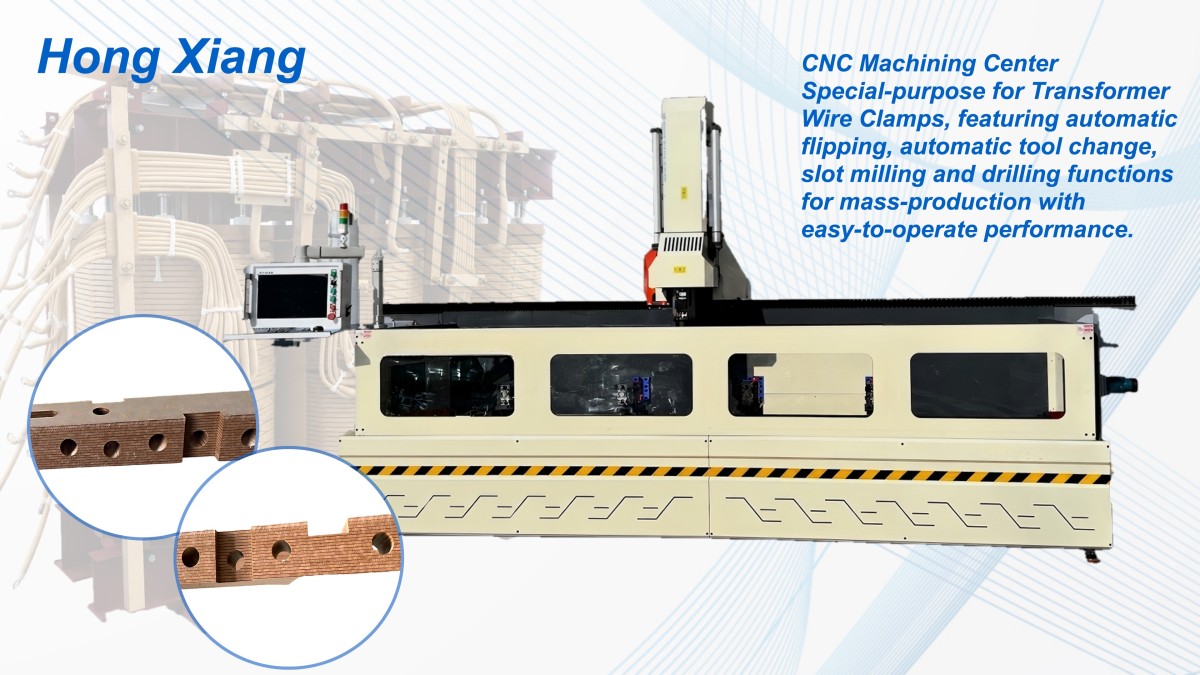
In some production lines, insulating board is also converted into formed parts used near specialized equipment or machine structures that support precise transformer assembly. In those cases, fire performance still has to be judged alongside machinability and dimensional repeatability, since a part that resists flame well but varies in shape can introduce assembly strain into the larger system.
Meeting safety demands in transformer applications depends on disciplined material selection, stable conversion, and traceable handling. Fireproof insulating cardboard supports that requirement when its behavior is verified in the actual insulation system, not assumed from a label or a single test attribute.
NAVIGATION
MESSAGE
Request A Quote?