0000-00
Achieving sub-millimeter dimensional accuracy in laminated yoke blocks is critical for transformer efficiency and reliability—yet traditional wood processing methods often fall short. Gaomi Hongxiang’s High precision transformer electrical layer-pressed wood processing equipment delivers unmatched consistency, reducing dimensional variance by up to 70% versus conventional systems. Engineered for power transformer manufacturers worldwide, this Automated transformer electrical layer-pressed wood processing equipment integrates CNC Special-shaped Cutting Saw, Fully automatic double-end chamfering machine, and Iron yoke spacer block processing equipment into a seamless workflow—ensuring durability, cost-effectiveness, and repeatable precision across high-volume production.
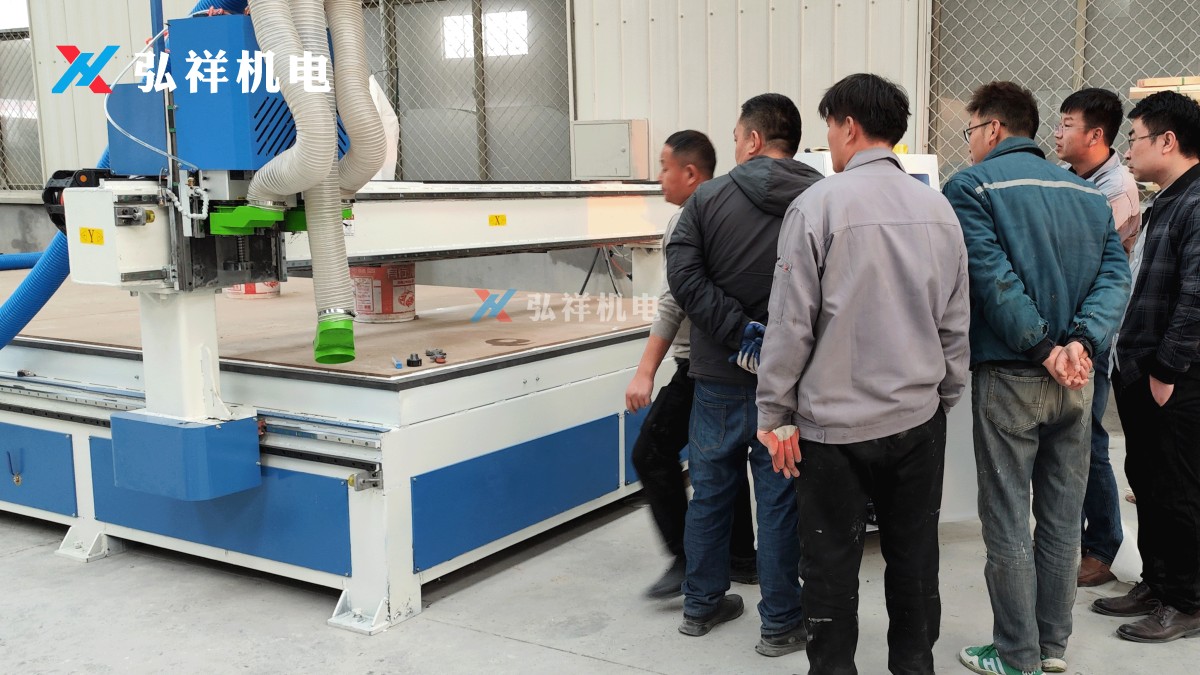
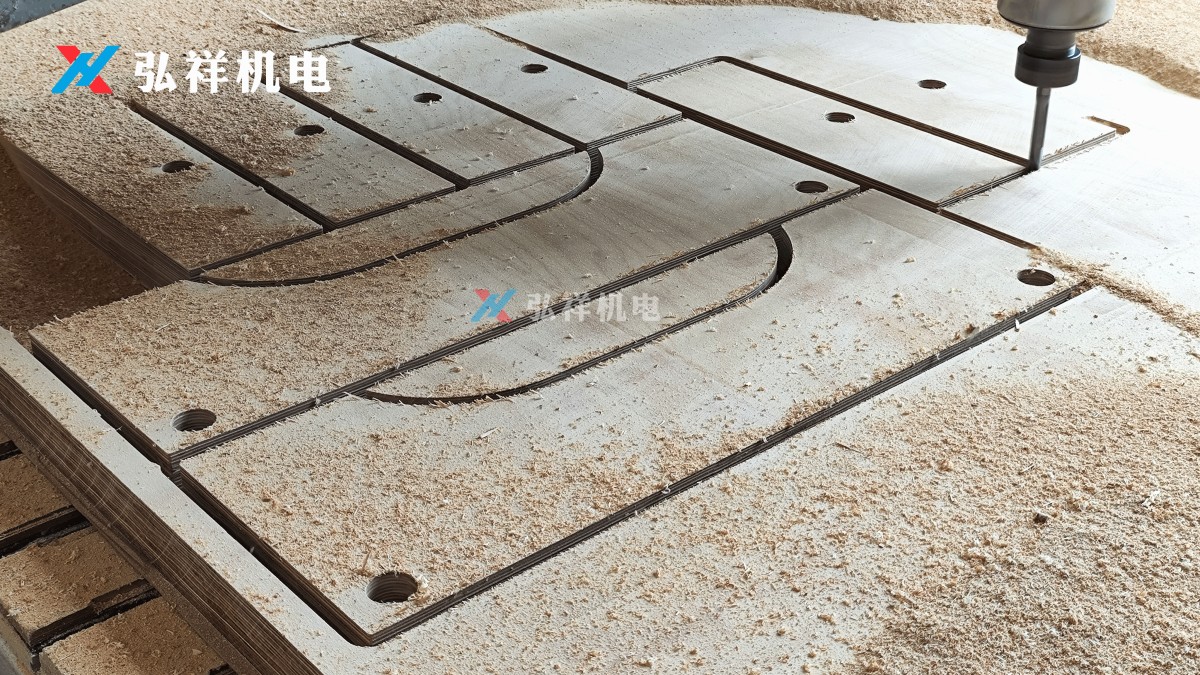
Why Dimensional Variance Matters in Laminated Yoke Blocks
Laminated yoke blocks serve as critical structural and magnetic flux-conducting components in large power transformers. Even minor deviations—beyond ±0.3 mm in thickness or ±0.5 mm in parallelism—can trigger localized saturation, increased eddy current losses, and thermal hotspots during operation. Industry data shows that a 0.8 mm cumulative stack deviation across 120 layers increases no-load loss by 3.2% on average.
Conventional manual or semi-automatic pressing and trimming processes typically yield dimensional variances of ±0.6–1.2 mm per block. This variability forces downstream rework (e.g., hand-sanding, selective shimming), increasing labor time by 18–25 minutes per yoke set and raising scrap rates to 4.7% in medium-batch production (50–200 units/month).
High-precision layer-pressed wood processing addresses this at the source—not through post-processing correction, but via synchronized material feed, hydraulic pressure control, and real-time CNC positioning. The result is not just tighter tolerances, but predictable repeatability across shifts, operators, and material batches.
Core Sources of Variance in Traditional Workflows
- Non-uniform compression force distribution across multi-layer laminates (±12% variation between press zones)
- Thermal expansion drift during curing (0.012 mm/°C for phenolic-impregnated laminated wood)
- Manual alignment tolerance in chamfering and slotting (±0.45 mm average operator deviation)
- Moisture content fluctuation (>8.5% MC causes 0.2–0.4 mm swell in final dimensions)
How Gaomi Hongxiang’s System Achieves Sub-0.2 mm Consistency
Gaomi Hongxiang’s integrated solution combines three synchronized subsystems: a CNC-controlled layer-press station with closed-loop hydraulic feedback, a dual-axis special-shaped cutting saw with ±0.08 mm positional repeatability, and a fully automatic double-end chamfering unit calibrated to ISO 230-2 standards. All subsystems share a unified motion controller and real-time dimensional monitoring interface.
The system employs embedded strain gauges and laser displacement sensors at six critical points along the pressing platen. These feed live data to an adaptive algorithm that adjusts hold pressure (5–12 MPa range) and dwell time (120–240 s) based on incoming board thickness, resin viscosity, and ambient humidity (measured every 90 seconds). This ensures consistent density and fiber orientation across each laminate layer.
Post-press machining uses a 5-axis CNC platform with vacuum-assisted clamping and tool-wear compensation. It executes contour cutting, chamfering, and spacer slotting in a single setup—eliminating re-fixturing errors common in sequential machines. Cycle time per yoke block averages 4.3 minutes at full automation, versus 11.6 minutes using standalone equipment.
This performance is validated under IEC 60273 and GB/T 507–2002 test protocols. Each machine undergoes 72-hour continuous load testing before shipment, with dimensional stability verified across temperature ranges of 10°C–35°C and relative humidity 30%–75%.
Procurement Evaluation: 5 Non-Negotiable Criteria for Buyers
When evaluating high-precision layer-pressed wood processing equipment, procurement teams must move beyond headline specs. Based on 12+ years of transformer OEM engagements, Gaomi Hongxiang identifies five technical and operational criteria that directly impact ROI, compliance, and long-term uptime:
- Real-time closed-loop control architecture: Verify the system logs and adjusts pressure, temperature, and dwell time *during* pressing—not just pre-set values.
- Tool calibration traceability: Confirm CNC cutters and chamfering tools are certified to ISO 17025-accredited labs with ≤ 0.05 mm measurement uncertainty.
- Material moisture integration: Ensure inline moisture sensors (ASTM D4442 compliant) feed data directly to the press controller—not just display readings.
- Service response SLA: Require documented support coverage: ≤ 4 hours remote diagnosis, ≤ 72 hours on-site technician dispatch (standard for SEA, India, Russia).
- Documentation completeness: Demand full FAT/SAT reports, ISO 9001:2015 process audit records, and CE/UKCA declarations—not just conformity statements.
Buyers who skip these checks face extended commissioning (average +19 days), unplanned recalibration (3.2x/year vs. 0.7x/year with full documentation), and non-compliance risk in EU or Indian grid tenders requiring EN 50216-1 traceability.
Global Support & Implementation Pathway
Gaomi Hongxiang delivers turnkey deployment—including foundation layout review, utility interface planning (380V/50Hz or 480V/60Hz), operator certification, and process validation per customer’s internal quality protocol. Standard implementation includes four phases: site readiness (7–10 days), mechanical/electrical installation (12–15 days), FAT & parameter tuning (5 days), and SAT with first-article approval (3 days).
Training covers safe operation, daily maintenance checklists, error code interpretation, and preventive service scheduling. All controllers include multilingual UI (English, Spanish, Russian, Hindi, Bahasa Indonesia) and remote diagnostics via secure TLS 1.3 channel.
For procurement, technical, or project management teams evaluating solutions for laminated yoke block production: contact Gaomi Hongxiang to request detailed technical specifications, FAT checklist templates, delivery timeline confirmation for your region (Southeast Asia, South America, India, Pakistan, Russia), and sample dimensional variance reports from existing installations. We also support custom configuration for EVA-molded insulating parts integration and AI-driven predictive maintenance add-ons.
NAVIGATION
MESSAGE
Request A Quote?