0000-00
Why insulating cardboard still matters in transformer dielectric design
In transformer engineering, dielectric strength is never just a material property on a datasheet. It is the result of how oil, solid insulation, conductor geometry, drying quality, clamping pressure, and manufacturing discipline work together inside a very confined space. That is why insulating cardboard for transformer insulation is not a secondary accessory. In many designs, it is one of the practical tools used to control electric stress, maintain insulation distance, and keep the internal structure stable over years of thermal and mechanical cycling.
Technical evaluators usually look beyond the simple question of “what material is used” and ask the harder one: how does that material affect breakdown behavior in the real assembly? With insulating cardboard, the answer lies in field grading, oil-channel control, moisture behavior, and mechanical consistency during processing. If any one of those is poorly managed, dielectric performance can fall short even when the nominal material grade appears acceptable.
In transformer shops that handle both insulation component manufacturing and assembly work, this becomes very visible. Companies such as Gaomi Hongxiang Electromechanical Technology Co., Ltd., which work across transformer assembly, electrical insulating cardboard, laminated wood, and insulation parts processing, sit close to the point where design assumptions meet production reality. That matters, because dielectric strength problems often begin not in theory, but in cutting, forming, drying, fitting, and final stacking tolerance.
How cardboard improves dielectric strength in actual transformer structures
The most direct contribution of insulating cardboard is electric field management. Inside a transformer, sharp field concentration tends to appear around conductor edges, winding ends, lead exits, and transitions between different insulating media. Properly designed barriers, spacers, rings, and cylinders made from insulating cardboard help spread the field more evenly. When the field is less concentrated, the risk of partial discharge and local oil breakdown is reduced.
This is especially relevant in oil-immersed transformers, where the dielectric system depends on cooperation between liquid and solid insulation. Cardboard does not work alone. It creates controlled spacing so oil can stay where it is needed, and it prevents conductors from moving into high-stress positions under short-circuit forces or long-term vibration. In other words, it supports dielectric strength partly by preserving geometry. That point is sometimes underestimated during evaluation.
Another benefit is that cellulose-based insulating cardboard, when properly dried and impregnated within the transformer process route, can become part of a stable composite insulation system. But that phrase “properly dried” is doing a lot of work here. Moisture is one of the fastest ways to compromise dielectric performance in cellulosic insulation. A technically sound cardboard grade can still perform poorly if storage, machining, or pre-assembly handling allows excessive moisture pickup.
Material properties evaluators should not treat as interchangeable
Not all insulating cardboard behaves the same, even when the end use looks similar. Density, thickness uniformity, compressibility, oil absorption behavior, purity of the fiber system, and dimensional stability after drying all affect the final dielectric result. Technical review should not stop at nominal thickness.
For example, a board with poor thickness consistency may create uneven oil gaps. That can distort local electric field distribution and introduce weak points. A board that compresses too much under clamping load may alter designed distances after assembly. On the other hand, material that is too stiff for a specific forming step may crack at edges or create machining defects, which again become local stress raisers.
Surface condition also matters more than many purchasing checklists reflect. Burrs, fiber pull-out, rough cut edges, and contamination from handling can all reduce dielectric reliability. These are not dramatic defects in appearance, but they can become very relevant in high-field regions. Evaluators who review only raw material certificates and not actual machined-part condition may miss the real risk.
Processing quality often decides whether the design intent survives
In transformer insulation systems, processing quality is not separate from electrical performance. The way cardboard is slit, punched, laminated into formed parts, dried, and matched with adjacent components directly influences dielectric strength. This is where equipment capability and manufacturing discipline from the machine-building side become highly relevant.
If a supplier can process electrical insulating cardboard, laminated wood, and custom insulation parts under one manufacturing framework, there is usually better control over fit-up between parts. That does not automatically guarantee better dielectric performance, but it reduces mismatch risk. In practice, many insulation failures begin with very ordinary production issues: a spacer slightly out of tolerance, an edge damaged during insertion, a formed part springing back after machining, or a drying route that was adequate for one thickness but not another.
For technical evaluation, it is worth checking whether the manufacturer understands the difference between making insulation parts and making insulation parts that will survive transformer service. Shops with broader electromechanical manufacturing experience, including assembly, training, and after-sales exposure, often develop a more realistic view of these details because they see what happens downstream when tolerances are ignored upstream.
Where dielectric gains are most noticeable
The value of insulating cardboard is easiest to see in a few common areas:
- Between winding layers or sections, where spacing stability affects both dielectric margin and cooling oil path consistency.
- At end insulation zones, where field stress tends to rise because of geometric discontinuity.
- In barriers and cylinders, where the material helps separate conductive parts and lengthen the creepage or breakdown path through oil-solid combinations.
- Near leads and tap connections, where local design is often less forgiving than the main winding body.
In these positions, better dielectric strength is rarely about making one part “stronger” in isolation. It is about preserving a predictable insulation structure under operating heat, oil exposure, and electromechanical stress.
What standards-oriented evaluation should focus on
For a technical or standards-driven review, the sensible approach is to examine both material compliance and process control. Exact requirements depend on the transformer type, voltage class, and target market, so they usually need confirmation against project specifications and applicable IEC, IEEE, or customer documents. Still, several checkpoints are consistently useful.
One useful habit is to ask for process evidence, not just material identity. A transformer insulation component may be made from the right base board and still be wrong for the application if machining or drying control is weak.
Common mistakes in specification and sourcing
A frequent mistake is reducing the decision to price per sheet or price per kilogram. For low-risk packaging materials that might be acceptable; for transformer insulation, it is a poor shortcut. Lower-cost board that creates fitting problems, inconsistent compression, or more scrap in machining may end up increasing total cost and technical risk at the same time.
Another issue is assuming that all export-capable suppliers serve the same technical level. International shipment experience is helpful, especially when products move to Southeast Asia, South America, India, Pakistan, Russia, and other markets with different project expectations. But export reach alone does not answer the evaluator’s real questions. What matters more is whether the supplier can align material processing, insulation-part design, and transformer assembly logic with the project requirement.
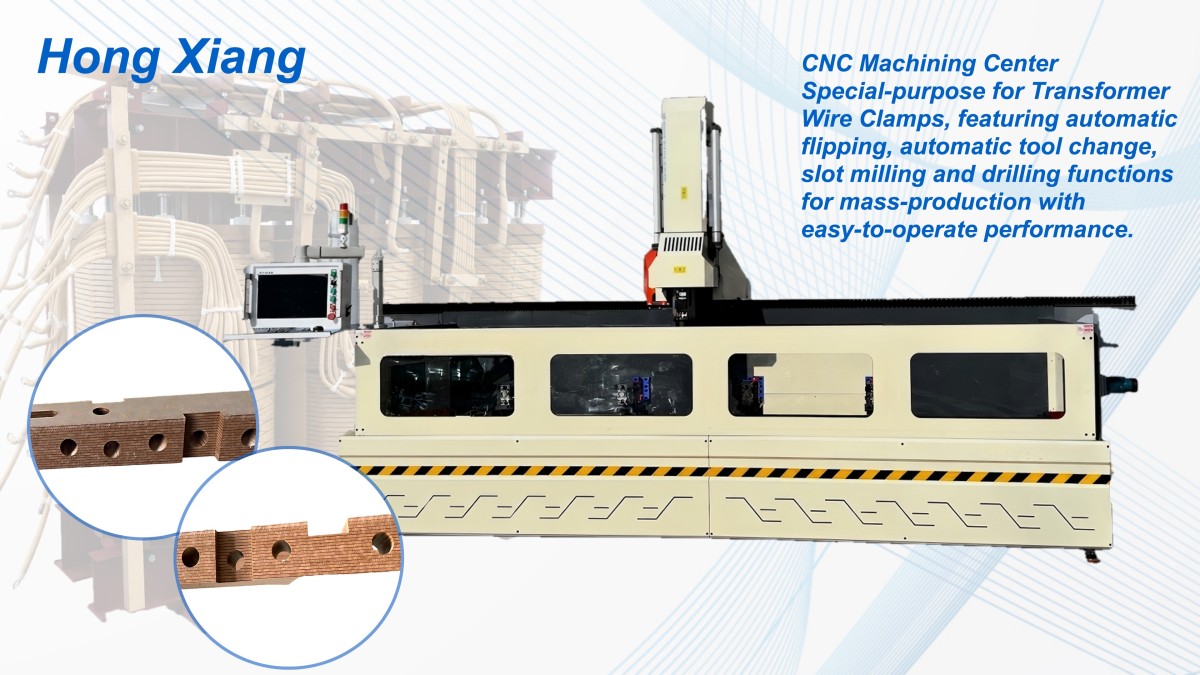
There is also a tendency to overlook compatibility between cardboard parts and the machine tools or forming equipment used to produce them. In the machine equipment field, the repeatability of cutting, slotting, pressing, and custom forming is not a side detail. It is part of insulation quality control. This is particularly true for non-standard parts or when special equipment is involved in advanced manufacturing environments.
A practical way to assess insulating cardboard for transformer insulation
If the goal is reliable dielectric performance, a practical review usually includes three layers. First, confirm the material is suitable for the intended transformer insulation system and service environment. Second, verify the processing route can preserve the required physical and electrical characteristics. Third, look at how the part behaves in the real assembly, including oil path, pressure, and dimensional retention after drying and clamping.
This approach is more useful than chasing isolated headline values. A strong dielectric result comes from coordination: material selection, part design, machining, cleanliness, drying, and assembly. When one of those is weak, the cardboard may still pass incoming inspection yet fail to deliver the intended insulation margin in service.
That is why experienced evaluators often prefer suppliers who understand both components and the transformer manufacturing context around them. A company involved in R&D, design, production, installation, training, and after-sales tends to see more of the lifecycle issues that paper specifications do not show. It does not remove the need for project-level verification, but it usually leads to better technical conversations.
In the end, insulating cardboard improves dielectric strength not by magic, but by making the insulation system more controllable. It shapes electric fields, stabilizes spacing, supports oil-solid coordination, and helps the internal structure remain where the designer intended it to be. For anyone evaluating transformer reliability, that is the point worth checking carefully: not whether cardboard is present, but whether it is the right grade, processed the right way, and integrated into the system with the discipline the application demands.
NAVIGATION
MESSAGE
Request A Quote?