0000-00
In transformer manufacturing and other high-voltage applications, layer-pressed wood equipment is used to machine, shape, laminate, and finish electrical insulation components that must remain dimensionally stable, mechanically strong, and electrically reliable under long-term operating stress. In practical terms, this equipment helps manufacturers produce insulating laminated wood parts with consistent thickness, precise dimensions, smooth surfaces, and repeatable quality. For buyers, engineers, and production teams, the real value lies in one question: can the equipment deliver insulation parts that meet transformer performance requirements while controlling waste, labor, and production risk? For many operations, the answer is yes—provided the machine configuration matches the material, process accuracy, and output demands.
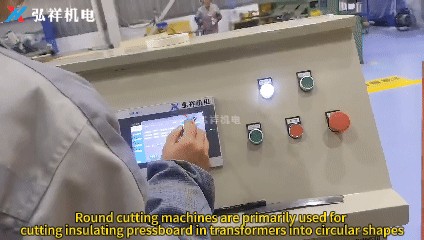
What Is Layer-Pressed Wood Equipment Used for in Electrical Insulation?
Layer-pressed wood equipment is mainly used to process laminated wood insulation materials into structural and insulating parts for power transformers and related electrical equipment. These materials are valued because they combine good dielectric behavior with mechanical strength, making them suitable for components that must both insulate and support internal transformer structures.
In electrical insulation production, the equipment is typically used for:
- Cutting laminated wood sheets into required dimensions
- Milling and drilling insulation parts with tight tolerances
- Slotting, chamfering, grooving, and edge finishing
- Shaping complex structural insulation components
- Supporting batch production with stable repeatability
These processes are essential in transformer manufacturing because even small dimensional deviations can affect assembly fit, insulation distances, oil flow channels, and long-term reliability. That is why transformer electrical layer-pressed wood processing equipment is not just general woodworking machinery. It is expected to perform with greater precision, consistency, and process control for insulation-grade materials.
Why Is Laminated Wood Important in Transformer Insulation?
Laminated wood is widely used in transformer insulation systems because it offers a practical combination of electrical insulation performance and structural support. In oil-immersed transformers especially, insulation materials are not only barriers against electrical breakdown; they are also part of the internal mechanical framework.
Common uses include:
- Clamping structures
- Spacer blocks
- Support rings
- Insulating beams and strips
- Winding support components
The reason manufacturers choose laminated wood is that it can maintain strength under pressure, resist deformation, and work well in transformer environments when properly processed. However, these benefits depend heavily on machining quality. Poor cutting, burrs, inaccurate holes, uneven thickness, or damaged surfaces may reduce assembly precision and affect insulation reliability. This is exactly where specialized processing equipment becomes critical.
How Does the Equipment Actually Work in Production?
In a typical production environment, layer-pressed wood equipment follows a controlled workflow from raw panel input to finished insulation part output. Depending on the machine design and level of automation, the process may include manual loading, semi-automatic positioning, CNC machining, dust extraction, part inspection, and batch sorting.
A common workflow looks like this:
- Material preparation: Laminated wood boards are selected according to thickness, density, and insulation specifications.
- Positioning and fixing: The board is secured to prevent vibration or dimensional movement during machining.
- Program or tooling setup: Operators input processing dimensions or load CNC machining instructions.
- Cutting and shaping: The machine performs sawing, milling, drilling, slotting, or contour shaping.
- Surface and edge finishing: Edges are refined to reduce defects that may interfere with assembly or insulation performance.
- Inspection: Operators or quality teams verify tolerances, hole positions, flatness, and surface quality.
- Batch transfer: Finished parts move to assembly, storage, or downstream transformer production.
For companies scaling output, automation can improve production rhythm and reduce dependence on operator experience alone. For companies producing many part types in smaller lots, flexible programming and fast changeover may matter more than pure speed.
Which Performance Factors Matter Most When Choosing This Equipment?
For technical evaluators, purchasers, and decision-makers, the best equipment is not simply the fastest machine. It is the one that can reliably process insulating laminated wood according to product requirements, factory conditions, and cost targets. Several performance factors deserve close attention.
Machining Accuracy
Precision is often the first concern because transformer insulation components must fit correctly into tightly controlled assemblies. Consistent hole spacing, slot width, edge straightness, and thickness-related processing accuracy directly affect final product quality.
Material Adaptability
Laminated wood used for electrical insulation is different from ordinary wood panels. Equipment should be designed to handle the material’s density, layered structure, and machining behavior without excessive tearing, cracking, or overheating.
Surface Quality
Smooth surfaces and clean edges help reduce rework and improve assembly quality. Better finish quality also supports more stable downstream processing.
Production Efficiency
Cycle time matters, but it should be evaluated together with setup time, tool change efficiency, labor needs, and defect rates. A machine that is slightly slower but produces more qualified parts can be the better investment.
Automation Level
Automated positioning, programmable control, and repeatable processing reduce manual variability. This is valuable for factories facing labor constraints or quality consistency challenges.
Dust Collection and Safety
Processing insulation materials can generate dust and debris. Good equipment design should include effective extraction, operator protection, and a layout that supports safer production management.
What Problems Can the Right Equipment Help Solve?
Companies usually consider upgrading or buying layer-pressed wood equipment because they face specific production pain points. The right machine can help solve several common issues:
- Inconsistent part dimensions: Improves repeatability and reduces assembly mismatch
- High labor dependence: Standardizes processing and lowers reliance on highly experienced manual operators
- Excessive scrap: Better cutting paths, stable clamping, and optimized tooling reduce waste
- Slow order response: Faster setup and machining improve delivery capability
- Quality complaints: More stable processing helps control defects in insulation parts
- Difficult complex-part production: CNC and custom machine solutions support varied geometries
For transformer manufacturers, this often translates into broader business value: stronger product consistency, better internal quality control, smoother assembly, and lower overall manufacturing risk.
Who Should Pay Attention to This Equipment—and Why?
Different stakeholders evaluate transformer electrical layer-pressed wood processing equipment from different angles. A useful purchasing or investment decision should consider all of them.
- Operators and production teams care about ease of use, setup simplicity, machine stability, and safety.
- Technical evaluators focus on machining precision, process capability, and material compatibility.
- Quality and safety managers look for consistency, defect control, and safer working conditions.
- Procurement teams compare equipment cost, supplier capability, lead time, and service responsiveness.
- Business and financial approvers care about return on investment, labor savings, reduced scrap, and long-term asset value.
- Project managers need confidence in installation, training, commissioning, and delivery schedules.
- After-sales and maintenance teams evaluate spare parts availability, maintenance complexity, and downtime risk.
- Dealers and agents assess market fit, product competitiveness, and supplier support.
This is why a strong supplier should not only sell machinery, but also support process understanding, application matching, installation, training, and long-term service.
How Can Buyers Judge Whether a Machine Is a Good Fit?
Before selecting a layer-pressed wood processing solution, buyers should move beyond basic product brochures and ask application-specific questions. A good fit depends on actual production needs.
Key questions include:
- What insulation parts will be produced most often?
- What are the required dimensional tolerances?
- What material sizes, thicknesses, and grades will be processed?
- Is the production model high-volume standardized output or multi-variety custom manufacturing?
- How much automation is needed based on labor availability?
- What level of programming and operator skill does the factory currently have?
- What is the acceptable payback period?
- What after-sales support is required for overseas or regional operations?
It is also wise to review sample parts, machine test results, customer cases, and supplier experience in transformer insulation manufacturing. A machine that performs well in ordinary panel processing may not be suitable for high-standard electrical insulating laminated wood applications.
What Value Does a Specialized Chinese Manufacturer Bring?
For international buyers, working with an experienced Transformer electrical layer-pressed wood processing equipment manufacturer in China can offer a useful balance of technical capability and cost control. The real advantage, however, comes from specialization rather than location alone.
Gaomi Hongxiang Electromechanical Technology Co., Ltd. focuses on assembly and manufacturing services for power transformers and on the processing and manufacturing of electrical insulating cardboard, insulating laminated wood, and insulating parts. This kind of industry alignment matters because it allows the equipment supplier to better understand actual insulation component requirements, process challenges, and production expectations.
For customers, practical value may include:
- Machine design oriented to transformer insulation applications
- Integration of R&D, design, production, sales, installation, training, and after-sales service
- Support for custom or special machine manufacturing
- Experience serving both domestic and international markets
- Potential for better cost-performance compared with generic alternatives
For companies in Southeast Asia, South America, India, Pakistan, Russia, and other overseas markets, supplier responsiveness and application understanding can be just as important as price.
What Are the Business Benefits of Upgrading Layer-Pressed Wood Processing Equipment?
For management and investment decision-makers, the business case usually comes down to measurable operational improvement. The right equipment can contribute to:
- Higher qualified product rates
- Reduced manual rework
- Lower raw material waste
- More stable delivery schedules
- Improved labor productivity
- Better consistency across batches
- Enhanced competitiveness in transformer component manufacturing
These benefits are especially important in industries where reliability, documentation, and repeatability influence customer trust and long-term contracts. Even if the initial investment is higher than basic equipment, total production economics may improve if the machine reduces scrap, downtime, and quality losses.
Conclusion: How Is Layer-Pressed Wood Equipment Used for Electrical Insulation?
Layer-pressed wood equipment is used in electrical insulation production to machine laminated wood into precise, durable, and reliable components for transformers and related electrical systems. Its purpose is not simply to cut boards, but to help manufacturers produce insulation parts that meet strict mechanical and electrical requirements with better consistency and efficiency.
For readers evaluating this equipment, the key takeaway is clear: the best solution is one that matches insulation material characteristics, part complexity, output goals, and quality expectations. When selected correctly, transformer electrical layer-pressed wood processing equipment can improve product reliability, reduce manufacturing risk, and create stronger long-term value across production, quality control, and business performance.
If your operation involves transformer insulation components, it is worth assessing not only machine specifications, but also the supplier’s real understanding of the application, customization capability, training support, and after-sales service. That is often what turns a machine purchase into a successful production upgrade.
NAVIGATION
MESSAGE
Request A Quote?