0000-00
Precision is a decisive factor in transformer layer-pressed wood machining quality, directly influencing dimensional accuracy, insulation reliability, and assembly efficiency. As a Transformer electrical layer-pressed wood processing equipment manufacturer in China, Gaomi Hongxiang delivers high precision transformer electrical layer-pressed wood processing equipment and automated solutions for the power industry, helping buyers, engineers, and operators achieve cost-effective performance, stable quality, and dependable electrical insulation processing.
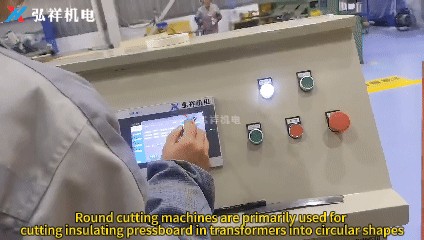
In transformer manufacturing, layer-pressed wood components are not ordinary structural parts. They function as insulating, supporting, and positioning elements inside equipment where dimensional deviation, burrs, moisture response, or poor surface integrity can affect fit-up quality and long-term electrical performance. For technical evaluators, purchasing teams, operators, and project managers, machining precision is therefore not just a workshop metric. It is a practical indicator of production stability, insulation consistency, rework rate, and total cost.
This article explains how precision affects transformer layer-pressed wood machining quality, what factors most influence machining outcomes, how to evaluate equipment capability, and which process controls matter most during procurement and production. The discussion is grounded in common machine tool practices for electrical insulation material processing and aligned with the solution-oriented needs of global transformer manufacturers and related industrial buyers.
Why Precision Matters in Transformer Layer-Pressed Wood Machining
Transformer layer-pressed wood is used in insulation assemblies that often require repeatable thickness, accurate slot geometry, stable hole positions, and reliable edge quality. In many production environments, a dimensional tolerance target of ±0.10 mm to ±0.30 mm is already meaningful because even small deviations can affect stacking, fastening, and clearances between adjacent parts. When a batch contains inconsistent dimensions, assembly time can increase by 10% to 25% due to manual correction and repeated fitting.
Precision also matters because layer-pressed wood is a material with directional behavior. Its machining response may change according to density, lamination direction, moisture condition, and tool sharpness. Compared with general wood processing, transformer insulation part machining requires tighter control of tear-out, edge collapse, and local overheating. A poor cut is not only a cosmetic issue. It can create fiber damage, unstable contact surfaces, or weak points during later assembly and insulation treatment.
For quality control and safety teams, precision is closely connected to process repeatability. If one machine delivers acceptable parts only when operated by a highly experienced technician, the process risk remains high. A stable machining system should maintain output quality over 8-hour, 12-hour, or multi-shift production cycles with predictable correction intervals, clear inspection points, and controlled machine drift.
For finance approvers and decision-makers, precision should be viewed as a cost driver in at least 4 areas: material waste, labor for rework, machine downtime, and downstream assembly loss. A machine with better motion control and fixturing may cost more initially, but if it reduces scrap by 3% to 8% and shortens adjustment time by 15 to 30 minutes per shift, the return can be much stronger over a 12- to 24-month operating period.
Main quality dimensions influenced by precision
- Dimensional accuracy, including thickness, width, slot depth, and hole spacing.
- Surface integrity, especially roughness, edge tearing, burr control, and corner finish.
- Assembly consistency, including alignment with transformer insulation structures and clamping interfaces.
- Electrical insulation reliability, because damaged fibers and unstable geometry can reduce processing consistency in later stages.
Typical quality risks when precision is insufficient
Low precision does not always appear as one dramatic fault. More often, it shows up as cumulative variation: slightly oversized slots, repeated tool marks, inconsistent hole depth, or fit-up deviations between matched parts. In batches of 50 to 200 pieces, this cumulative variation can create sorting work, manual trimming, and installation delays. For export-oriented suppliers, that means more inspection burden before shipment and a higher chance of dispute over acceptance criteria.
Key Machining Factors That Determine Precision and Final Part Quality
Precision in transformer layer-pressed wood machining is shaped by a combination of machine structure, spindle performance, tooling, fixturing, and process control. A strong machine frame helps resist vibration, while stable feed control helps maintain consistent geometry on straight cuts, grooves, and complex profiles. Even if the target tolerance is moderate, unstable machine movement can create periodic deviation that becomes visible over repeated cycles.
Spindle and cutting tool matching are equally important. If spindle speed is too low, fibers may tear instead of shear cleanly. If feed rate is too aggressive, slot edges can collapse or chip. In many practical applications, shops evaluate spindle speed and feed as a working window rather than one fixed point. For example, a specific cutter may perform best at 6,000 to 12,000 rpm with feed settings adjusted according to thickness, density, and edge quality requirements.
Fixturing quality is often underestimated during equipment selection. Layer-pressed wood parts can deform slightly if clamping pressure is uneven or support surfaces are not properly aligned. A precision machine cannot compensate for poor workholding. This is especially true for long strips, stepped parts, or multi-hole components where cumulative offset becomes a major issue. Reliable positioning systems reduce manual correction and help operators repeat the same result across batches.
Environmental and material conditions also matter. Moisture variation, dust accumulation, and temperature changes can influence machining stability over time. A workshop operating at 20°C to 28°C with controlled storage for raw insulation materials will usually get more predictable results than one machining material immediately after uncontrolled transport or storage.
Precision-related factors and their quality impact
The table below summarizes common machine tool and process variables that directly affect transformer layer-pressed wood machining quality.
The key takeaway is that precision is a system capability, not a single machine number. Buyers should evaluate the complete relationship between motion control, tooling, fixtures, material handling, and operator process discipline. In transformer insulation machining, one weak point can offset the benefit of a high-grade spindle or rigid frame.
Common process mistakes that reduce precision
- Using general wood tooling instead of cutters selected for laminated electrical insulation materials.
- Allowing excessive tool wear to continue through full shifts without interval checks.
- Ignoring fixture recalibration after product changeover or maintenance.
- Running unstable feed rates to chase output without confirming edge quality and dimensional stability.
How Different Precision Levels Influence Production Efficiency, Cost, and Procurement Value
For procurement teams, precision should not be discussed only in laboratory terms. It should be converted into operational outcomes such as first-pass yield, rework hours, inspection effort, and machine utilization. A production line processing 300 to 800 insulation components per week will feel the cost of inconsistency much faster than a workshop making occasional custom parts. That is why business evaluators often compare equipment not just on purchase price, but on its ability to maintain stable output over 6 months, 12 months, and beyond.
When precision is poor, operators spend more time adjusting offsets, checking dimensions, and performing local corrections. This affects throughput in two ways. First, machine cutting time may remain similar, but auxiliary time increases. Second, downstream assembly teams must handle variation manually. In practical terms, this can increase actual part cost more than the visible machine cycle suggests. A machine with stable repeatability can reduce setup frequency and keep process capability more predictable across product batches.
For enterprise decision-makers, the more useful question is not whether the machine can cut the material, but whether it can do so consistently enough to support business growth, export quality expectations, and lower internal waste. Gaomi Hongxiang serves global customers in transformer assembly and insulation material processing, so precision-oriented equipment selection is especially relevant for companies balancing product quality, training ease, and long-term service value.
Distributors and agents also benefit from understanding this relationship. Machines with better process repeatability are easier to promote because they reduce post-sale complaints related to uneven cutting, poor slot consistency, or frequent parameter drift. That leads to a more credible channel offering and stronger customer retention.
Comparison of lower and higher precision machining outcomes
The following comparison helps buyers connect precision capability with commercial results instead of treating it as an abstract specification.
This comparison does not suggest that every application needs the same tolerance level. Instead, it shows that precision must match the part’s functional role, batch size, and assembly risk. For critical transformer insulation structures, tighter and more repeatable machining usually brings a measurable advantage in process stability and lifecycle cost.
Four procurement questions worth asking suppliers
- What dimensional repeatability can the equipment maintain during continuous production rather than a single sample test?
- How are tool wear, fixture alignment, and calibration handled over each 8-hour shift?
- What training, installation, and after-sales support are available for operators and maintenance staff?
- Can the solution be adapted for different insulation board, laminated wood, or shaped part requirements?
Precision Control in Real Production: From Machine Selection to Daily Operation
Achieving high machining quality is not only about buying the right equipment. It requires a control chain that starts with machine selection and continues through installation, operator training, daily inspection, and preventive maintenance. Companies that process transformer layer-pressed wood efficiently usually build this chain in 5 steps: define part requirements, verify machine capability, standardize process settings, inspect critical dimensions, and review maintenance records. This approach helps both project managers and workshop supervisors keep production stable after commissioning.
During machine selection, buyers should confirm more than cutting capacity. They should evaluate whether the solution is suitable for insulation laminated wood and related materials, whether fixtures can support part families with minimal changeover time, and whether the supplier can support installation and training. Gaomi Hongxiang’s integrated capabilities in R&D, design, production, sales, installation, training, and after-sales service are relevant here because process success depends on full-cycle support, not only machine delivery.
During operation, a practical precision routine should include first-piece confirmation, interval inspection, tool condition review, and cleaning discipline. Dust and chip buildup can influence positioning surfaces and fixture stability. For many insulation material machining cells, checking key dimensions every 20 to 50 pieces is a realistic starting point, then adjusting frequency according to part complexity and batch criticality.
Maintenance teams should monitor spindle behavior, guide movement, clamp condition, and calibration records. A machine that appears mechanically healthy can still produce drifting dimensions if fixtures are worn or if operators compensate excessively without documented baselines. Clear records reduce dependence on individual experience and make quality more transferable across teams and shifts.
Suggested production control checkpoints
The table below outlines a practical checkpoint structure for transformer layer-pressed wood machining lines.
A structured checkpoint routine helps connect machine precision with actual part quality. It also makes after-sales support more effective because service teams can diagnose whether a problem comes from machine calibration, tooling, fixturing, material variation, or operator practice.
Implementation advice for different roles
For operators and maintenance staff
Focus on repeatable routines: first-piece checks, controlled tool replacement intervals, daily cleaning, and documented offset adjustments. This reduces unexpected quality swings and supports faster troubleshooting.
For technical and commercial evaluators
Assess the machine as a processing solution, not just a hardware asset. Review training scope, installation support, changeover convenience, and the supplier’s ability to support future insulation part variants.
FAQ and Final Selection Advice for Transformer Insulation Wood Processing Equipment
How precise should transformer layer-pressed wood machining be?
The right level depends on part function, mating structure, and assembly tolerance. In many practical applications, repeatability within ±0.10 mm to ±0.30 mm is a useful reference range for important dimensions, but not every feature needs the same control level. Buyers should define 3 categories in advance: critical dimensions, secondary dimensions, and visual finish criteria.
Which companies benefit most from higher precision equipment?
Higher precision equipment is especially valuable for transformer manufacturers handling medium to large batch production, export orders, multi-shift operations, or complex insulation assemblies. It is also suitable for companies seeking to reduce manual trimming, stabilize quality across operators, and improve first-pass yield over a 6- to 12-month planning cycle.
What are the most common buying mistakes?
Three common mistakes are focusing only on machine price, overlooking fixture and tooling suitability, and underestimating training and after-sales requirements. Another mistake is accepting sample quality without verifying continuous production stability. A reliable evaluation should include machine capability, process support, maintenance practicality, and supplier responsiveness.
How long does implementation usually take?
Implementation timelines vary by machine configuration and project scope. In many industrial cases, the sequence includes equipment confirmation, manufacturing, installation, trial production, and operator training over several stages. Buyers should ask for a clear delivery and commissioning plan with milestones, acceptance points, and service responsibilities rather than relying on a single promised date.
Precision affects transformer layer-pressed wood machining quality at every level, from dimensional consistency and surface integrity to assembly efficiency, insulation reliability, and long-term process cost. For buyers and technical teams, the best results come from evaluating precision as a complete production capability that includes machine rigidity, motion control, tooling, fixturing, inspection discipline, and service support.
Gaomi Hongxiang Electromechanical Technology Co., Ltd. supports global customers with transformer assembly and manufacturing services, electrical insulating cardboard processing, insulating laminated wood and insulating parts processing, EVA molding processing, and related equipment solutions. If you are planning to upgrade transformer electrical layer-pressed wood processing equipment, improve machining consistency, or assess automated solutions for the power industry, contact us to discuss your application, request a tailored solution, and learn more about suitable equipment and service support.
NAVIGATION
MESSAGE
Request A Quote?