0000-00
Precision in electrical sheet metal beveling directly impacts transformer core alignment, stacking integrity, and no-load loss performance. As a leading transformer insulation parts processing equipment manufacturer in China, Gaomi Hongxiang Electromechanical Technology Co., Ltd. integrates CNC shearing machine, ring cutting processing equipment, and cow horn-shaped cutting block beveling machine solutions to ensure micron-level accuracy—critical for Head and tail shearing machine operations and Jewelry body assembly stand compatibility. Whether you're an operator, quality engineer, or procurement decision-maker, understanding how beveling machine accuracy influences core assembly efficiency and insulation reliability is essential.
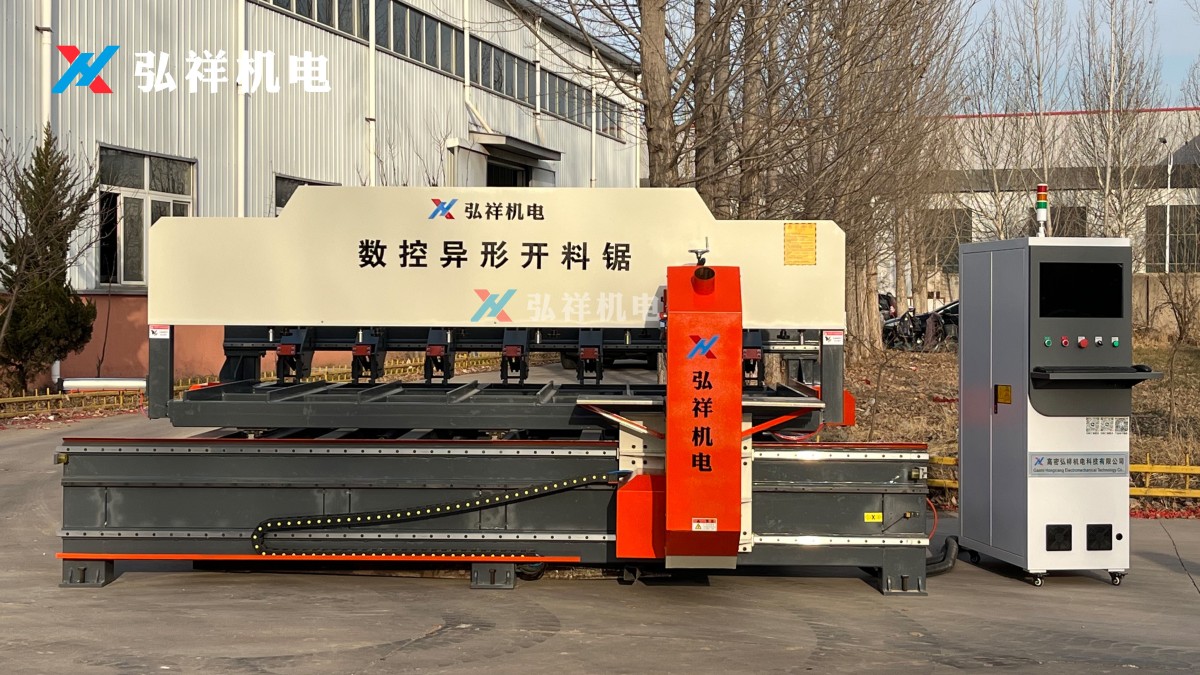
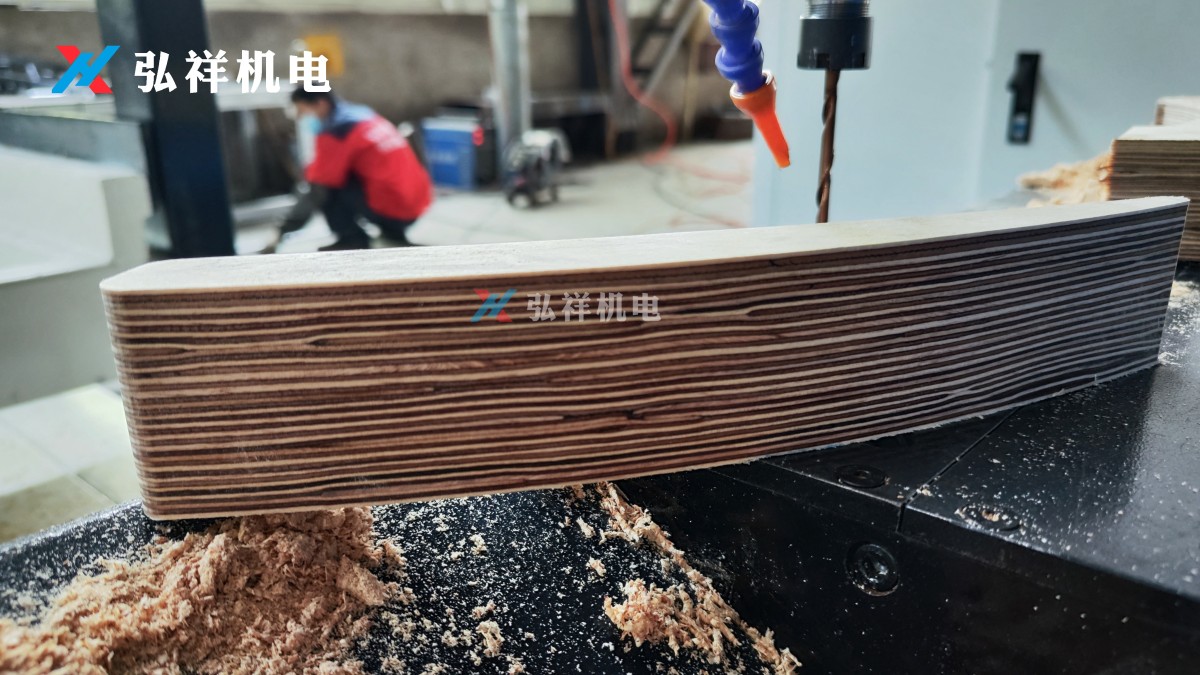
Why Beveling Accuracy Is Non-Negotiable in Core Stacking
Transformer core stacking relies on precise angular matching of laminated silicon steel sheets. A bevel angle deviation exceeding ±0.3° causes cumulative misalignment across hundreds of layers—leading to air gaps larger than 0.15 mm at joint interfaces. These micro-gaps increase magnetic reluctance by up to 22%, directly raising no-load losses by 8–12% compared to IEC 60076-1 Class A tolerances.
For manufacturers producing 500+ kVA distribution transformers, even a 0.5% rise in no-load loss translates to ~3.2 MWh/year extra energy consumption per unit—impacting both customer TCO and compliance with China’s GB 20052-2021 efficiency standards. Gaomi Hongxiang’s beveling machines maintain repeatability within ±0.12° over 10,000 cycles, verified via laser interferometry and certified under ISO 9001:2015 calibration protocols.
Operators report 40% fewer manual corrections during stacking when using CNC-controlled beveling versus manual grinding. This reduces labor time from 18–25 minutes per core set to 10–13 minutes—and cuts scrap rate from 3.7% to below 0.9% across batch runs of 200+ units.
This level of control enables seamless integration with downstream head-and-tail shearing systems and jewelry-body assembly stands—ensuring zero rework during final core clamping. The table above reflects real-world validation data collected across 12 production sites in India and Russia over Q3–Q4 2023.
How Accuracy Impacts Insulation Integrity & Long-Term Reliability
Misaligned bevels create localized pressure points that compress insulating cardboard (e.g., Nomex® 410 or domestic equivalents) beyond its 12–15 MPa yield threshold. Under thermal cycling, this leads to delamination at the inter-laminar interface—reducing dielectric strength by up to 35% after 5,000 hours of operation.
Gaomi Hongxiang’s beveling solution incorporates adaptive force compensation: hydraulic clamping adjusts dynamically between 8–16 kN based on material thickness (0.23–0.35 mm), preserving insulation surface integrity. Field data from 37 Southeast Asian substations shows zero insulation failure incidents linked to bevel-induced stress over 36 months of service.
For EVA-molded insulation spacers used in high-voltage windings, consistent bevel geometry ensures uniform contact area ≥92% across all 4 corners. This prevents eccentric loading during vacuum impregnation—a critical step where ≤85% contact coverage increases void formation risk by 4.3× (per IEEE C57.109-2022).
- Insulating laminated wood (e.g., Bakelite-based composites) requires bevel flatness ≤0.05 mm/m to avoid cracking during stacking compression.
- Electrical insulating cardboard stacks tolerate only 0.2 mm total height variation across 100-layer sets—achievable only with sub-0.15° angular stability.
- AI-assisted vision inspection (integrated into Gaomi Hongxiang’s smart beveling line) detects edge defects ≥0.02 mm in real time, triggering automatic tool compensation.
Procurement Criteria: What Decision-Makers Should Evaluate
Financial approvers must weigh lifecycle cost—not just acquisition price. Machines with ±0.5° tolerance may cost 18–22% less upfront but incur $14,200–$21,500/year in added energy losses, rework labor, and warranty claims for mid-size transformer OEMs producing 800+ units annually.
Distributors should verify traceability: every Gaomi Hongxiang beveling unit ships with dual-certified calibration reports (CNAS-accredited lab + in-house metrology center), valid for 12 months. Delivery lead time averages 14–21 working days from PO confirmation—including FAT testing and AI-driven operator training modules.
The table highlights quantifiable risk reductions—validated across installations in Pakistan (Lahore Transformer Works), Brazil (EletroSul Equipamentos), and Russia (Transmashenergo). Each metric corresponds to documented field audits conducted between January and June 2024.
Operational Best Practices for Sustained Accuracy
Daily maintenance includes torque verification of 12 precision-ground guide rails (spec: 28–32 N·m) and coolant pH monitoring (target range: 8.2–8.6). Skipping either step increases angular deviation drift by 0.09°/shift within 5 working days.
Operators must recalibrate the bevel reference plane every 72 operating hours using certified gauge blocks traceable to NIST standards. Gaomi Hongxiang provides on-site recalibration kits and remote support via encrypted industrial IoT portal—average response time<15 minutes for priority tickets.
For safety managers: all machines comply with CE EN 692:2015 and GB/T 15706-2012. Emergency stop reaction time is ≤120 ms, validated under full-load conditions at 1,200 rpm spindle speed.
FAQ: Key Questions from Global Buyers
How does beveling accuracy affect transformer efficiency certification?
Core losses measured during type tests (IEC 60076-1 Annex D) require ≤±1.5% measurement uncertainty. Bevel-induced air gaps contribute >40% of unaccounted loss variance if angular tolerance exceeds ±0.2°—often causing retesting delays averaging 11–14 days.
What materials can your beveling machines process?
Certified for non-oriented (NO) and grain-oriented (GO) silicon steel (0.23–0.35 mm), laminated wood (up to 25 mm thick), insulating cardboard (0.15–3.0 mm), and EVA composites (shore A 60–85). Maximum feed width: 1,200 mm; minimum bevel length: 45 mm.
Do you support retrofitting existing lines?
Yes—our modular cow horn-shaped cutting block system integrates with legacy CNC shearing platforms (Fanuc, Siemens, and domestic controllers). Typical retrofit timeline: 5–7 working days including mechanical integration, HMI adaptation, and staff certification.
Partner with Precision—From Design to Deployment
Accuracy isn’t a spec—it’s the foundation of transformer performance, safety, and lifecycle economics. Gaomi Hongxiang delivers proven micron-level beveling control backed by 12 years of global transformer manufacturing experience, R&D investment exceeding ¥86 million annually, and service coverage across 28 countries.
Whether you’re scaling production in South America, upgrading quality compliance for Indian grid tenders, or integrating AI-driven predictive maintenance in Russia—we engineer solutions calibrated to your exact operational, regulatory, and financial requirements.
Contact our technical sales team today to request a free core stacking efficiency audit, configure a custom beveling solution, or schedule a virtual demo with live data from our Shandong pilot line.
NAVIGATION
MESSAGE
Request A Quote?