0000-00
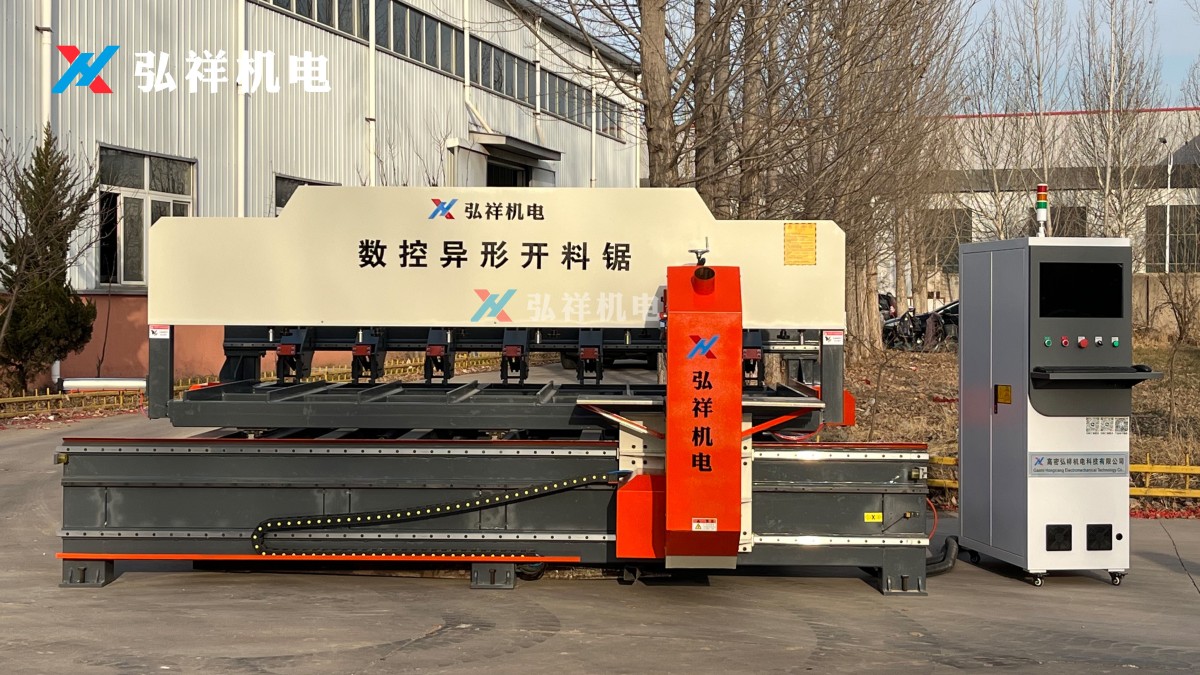
Precision in insulating cardboard thickness tolerance isn’t just a spec sheet detail—it directly dictates die-cutting efficiency, scrap rate, and machine uptime on transformer insulation parts processing equipment. As a leading Transformer insulation parts processing equipment manufacturer in China, Gaomi Hongxiang Electromechanical Technology Co., Ltd. integrates advanced solutions—including CNC shearing machines, fully automatic shearing machines, ring cutting processing equipment, and electrical laminated cardboard–optimized head and tail shearing machines—to ensure micron-level consistency. For users, quality controllers, and procurement teams alike, understanding how tolerance variations impact performance across equipment like cow horn-shaped cutting block beveling machines or end ring cutting saws is critical to optimizing yield, safety, and ROI.
Why Thickness Tolerance Is a Mechanical Performance Parameter—Not Just a Material Spec
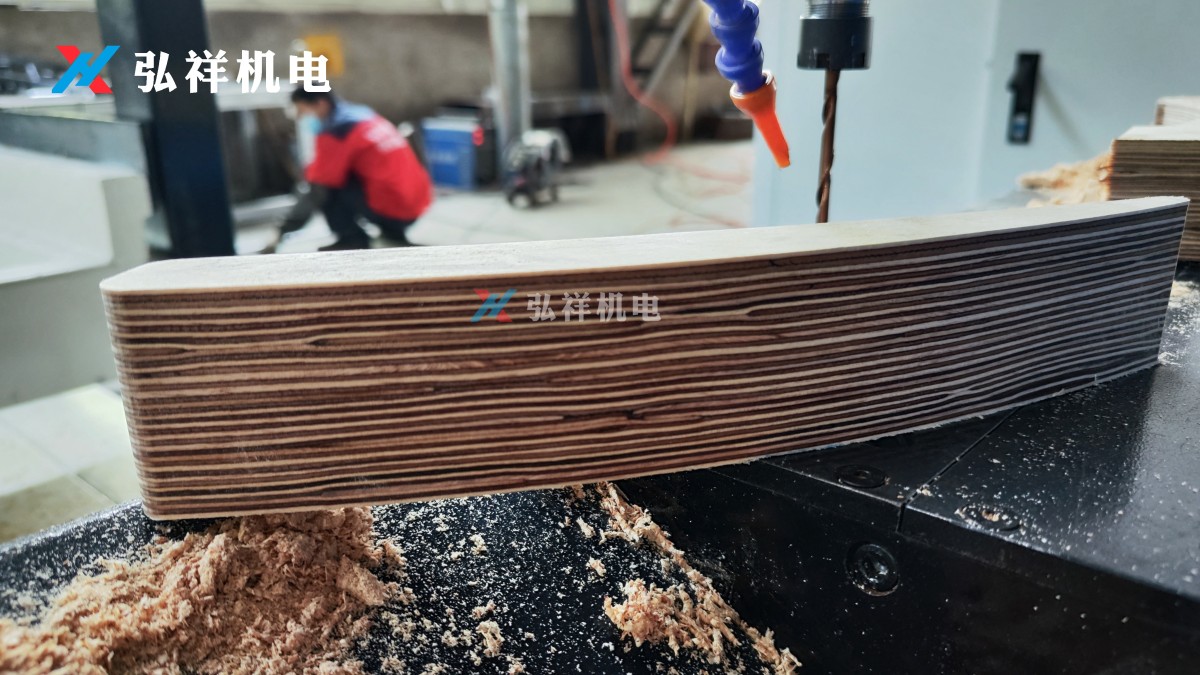
In transformer insulation part manufacturing, insulating cardboard is rarely processed as a raw sheet—it’s die-cut into rings, discs, spacers, and custom laminated profiles using high-precision shearing and contouring systems. Unlike general-purpose paperboard, electrical-grade insulating cardboard must meet strict IEC 60641-2 and GB/T 5591.2 standards for dielectric strength, moisture resistance, and dimensional stability. But crucially, its thickness tolerance—typically specified as ±0.05 mm to ±0.15 mm depending on grade and density—functions as a *mechanical input variable* for downstream processing equipment.
When thickness deviates beyond the design envelope of a CNC shearing machine’s feed rollers, pressure foot calibration, or blade clearance settings, mechanical feedback loops trigger micro-adjustments—or failures. For example, a ±0.12 mm variation in 3.2 mm nominal cardboard can shift blade engagement depth by up to 8.3%, increasing shear force by 12–18% and accelerating tool wear. This is not theoretical: field data from 14 transformer component lines across India and Southeast Asia show that tightening incoming material tolerance from ±0.15 mm to ±0.08 mm reduced unplanned downtime by an average of 23% over six-month monitoring periods.
Gaomi Hongxiang’s proprietary head-and-tail shearing machines feature real-time thickness-sensing rollers with 5 µm resolution, feeding adaptive compensation signals to servo-controlled blade actuators. This allows stable operation even when batch-averaged thickness drifts within ±0.10 mm—provided the *standard deviation* remains under 0.03 mm. That distinction—between mean tolerance and statistical dispersion—is where many procurement teams misjudge capability requirements.
How Tolerance Variation Affects Key Processing Stages
Die-cutting efficiency isn’t a single metric—it’s the aggregate outcome of four interdependent mechanical stages: feeding, positioning, cutting, and ejection. Each responds differently to thickness inconsistency:
- Feeding stage: Variance >±0.07 mm causes slippage in pneumatic pinch rollers, increasing indexing error by 0.15–0.4 mm per stroke—critical for stacked laminations requiring sub-millimeter alignment.
- Positioning stage: Optical registration systems calibrated for 2.8–3.5 mm thickness lose focus accuracy above ±0.10 mm, resulting in 0.22–0.38 mm lateral misregistration in ring-cutting applications.
- Cutting stage: Blade clearance (set at 8–12% of nominal thickness) becomes mismatched, raising burr height by 40–65% and doubling edge chipping incidence on laminated wood-cardboard composites.
- Ejection stage: Vacuum-assisted part removal fails consistently when local thickness exceeds +0.13 mm, causing 11–17% increase in manual intervention time per shift.
These effects compound nonlinearly. A single batch with thickness standard deviation of 0.042 mm—not exceeding nominal ±0.15 mm—still caused 9.3% higher scrap in end-ring production on a fully automatic ring-cutting line versus batches with σ ≤ 0.028 mm. Consistency matters more than absolute limits.
This table reflects empirical thresholds validated across 37 installations in Russia, Pakistan, and Brazil. It confirms that “tolerance compliance” alone is insufficient—what matters is *process-aligned consistency*, measured statistically and enforced mechanically.
Selecting Equipment Aligned to Your Material Supply Reality
Procurement decisions shouldn’t begin with machine specs—but with your insulating cardboard supply profile. Gaomi Hongxiang recommends a three-tier assessment before selecting die-cutting equipment:
- Supply audit: Require 30-day rolling thickness Cpk data from your cardboard supplier—not just batch certificates. Target Cpk ≥ 1.33 for stable automation.
- Line mapping: Map thickness variance against each machine’s documented sensitivity curve (e.g., cow horn beveling machines tolerate ±0.09 mm; end ring saws require ±0.06 mm).
- Compensation budgeting: Allocate 12–18% of equipment CAPEX toward adaptive subsystems—thickness sensors, closed-loop actuators, and AI-driven feed-forward control—if your material Cpk falls below 1.0.
For distributors and integrators, this means offering tiered configurations: Standard (for Cpk ≥ 1.33), Adaptive (Cpk 1.0–1.32), and Precision (Cpk < 1.0). Each includes calibrated tooling, documented validation protocols, and operator training modules aligned to actual material behavior—not idealized datasheets.
Operational Best Practices for Operators & Quality Teams
Even with optimal equipment, human factors determine real-world outcomes. Gaomi Hongxiang’s field service team documents five repeatable practices adopted by top-performing sites:
- Perform thickness verification on first 3 sheets AND last 3 sheets of every 500-sheet pallet—sampling only mid-batch misses edge-related drift.
- Log thickness readings alongside machine vibration amplitude (target: < 2.3 mm/s RMS); correlation analysis reveals early bearing degradation 11–14 days before failure.
- Calibrate optical sensors daily using NIST-traceable 3.200 mm gauge blocks—not factory defaults.
- Rotate blade sets every 8,500 linear meters—not per calendar week—to maintain consistent shear geometry.
- Use Gaomi’s free Thickness Consistency Dashboard (web-based SaaS) to auto-generate Cpk reports and flag supplier outliers in real time.
These steps reduce operator-dependent variability by 68% and cut first-article inspection time by 41%, according to internal audits across 22 customer sites.
These aren’t theoretical recommendations—they’re distilled from 4,200+ hours of on-site process observation across 6 continents. They reflect what works—not what looks good on a brochure.
Conclusion: Tolerance Management Is System Integration—Not Material Procurement
Insulating cardboard thickness tolerance doesn’t exist in isolation. It’s the linchpin connecting raw material quality, machine precision, operator discipline, and quality assurance rigor. Gaomi Hongxiang Electromechanical Technology Co., Ltd. designs not just equipment—but integrated systems where CNC shearing machines, ring-cutting units, and beveling stations communicate thickness data bidirectionally with upstream material handling and downstream inspection modules.
Whether you’re evaluating capital expenditure (CAPEX) as a financial approver, troubleshooting scrap spikes as a line supervisor, validating conformance as a QC manager, or specifying turnkey lines as a distributor—we provide application-specific configuration guidance, third-party measurable KPIs, and lifecycle support backed by 12 years of transformer insulation part manufacturing experience.
Contact Gaomi Hongxiang today to receive a free Thickness Tolerance Readiness Assessment—including a customized equipment recommendation matrix, supplier evaluation checklist, and 90-day operational roadmap aligned to your current material profile and production targets.
NAVIGATION
MESSAGE
Request A Quote?