0000-00
How to compare different brands of insulating cardboard? For transformer assembly and machine-building work, density and consistency are the first signals of electrical reliability, machining behavior, and service life. When insulating cardboard is used in winding support, slot insulation, spacing parts, or formed components, small material differences can create large process variations. A structured comparison method helps reduce trial cost, reject unstable lots, and improve confidence before bulk purchasing or production release.
Why Density and Consistency Matter in Industrial Insulation
In machine tool equipment and transformer-related manufacturing, insulating cardboard must hold shape under pressure, remain dimensionally stable during cutting, and preserve dielectric performance after drying, oil immersion, or thermal cycling.
That is why the question, How to compare different brands of insulating cardboard?, should begin with measurable material behavior instead of brochure claims. Density affects compactness, strength, porosity, and oil absorption rate. Consistency determines whether every sheet behaves the same on the shop floor.
A brand that looks acceptable in one sample may still create punching burrs, thickness drift, delamination, or unstable electrical clearance in actual production. Checklist-based evaluation prevents those hidden failures.
Core Checklist: How to Compare Different Brands of Insulating Cardboard
Use the following checklist to compare brands under the same test conditions. Record every result by batch number, sheet thickness, moisture state, and test date.
- Measure bulk density from multiple sheets and positions. Compare average value and spread, not only nominal specification, because uneven density often causes unstable forming, compression, and insulation gaps.
- Check thickness consistency across the full sheet area. Use a calibrated micrometer and map center, edge, and corner readings to detect process variation and poor calendaring control.
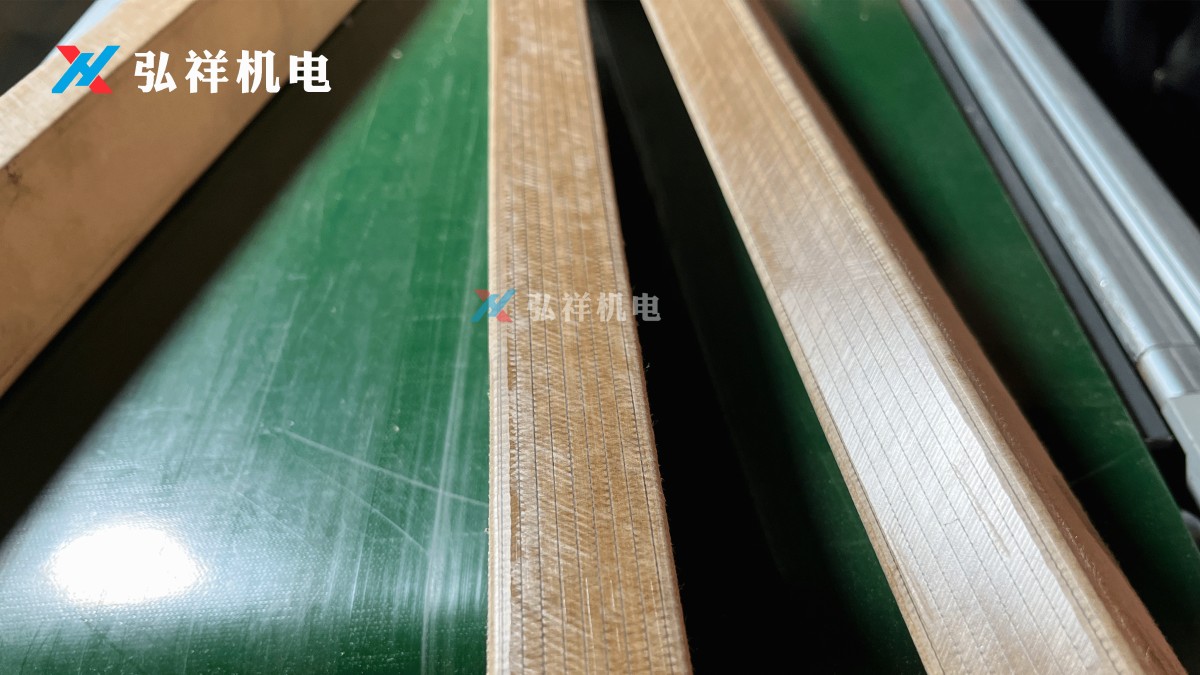
- Inspect surface uniformity under strong light. Look for fiber clumps, pinholes, waviness, dark specks, loose layers, and local softness that may affect machining accuracy or dielectric integrity.
- Verify compression response under defined load. Compare thickness reduction and recovery, because brands with similar density may behave very differently during clamping, stacking, or coil pressing operations.
- Test moisture absorption and drying stability. Weigh samples before conditioning, after humidity exposure, and after drying to judge process sensitivity and dimensional movement during production.
- Review dielectric properties with the actual service medium. Test breakdown strength, insulation resistance, and oil compatibility if the cardboard will operate inside oil-filled power transformer structures.
- Compare machining performance by slitting, punching, drilling, or forming. Stable brands produce cleaner edges, less dust, fewer cracks, and better repeatability on special machines or automated fixtures.
- Examine bonding and assembly compatibility. Check whether the material accepts adhesive, press fitting, lamination, or combined processing with insulating laminated wood and formed insulating parts.
- Confirm batch traceability and certificate completeness. Reliable brands provide stable lot coding, technical data sheets, inspection records, and clear control of raw fiber and process parameters.
- Run a pilot production lot instead of relying on laboratory data only. Real comparison reveals tool wear, scrap rate, cycle time, and assembly fit differences that specifications may not show.
Useful Comparison Table
Application Notes for Different Use Scenarios
Transformer Assembly and Oil-Immersed Structures
For oil-immersed transformer parts, density should be judged together with porosity and oil absorption behavior. Very dense material may resist compression well, but oil penetration can become slower or less uniform in some structures.
Consistency is even more important here. If one batch absorbs oil differently from another, dielectric distribution and thermal behavior may shift. When asking How to compare different brands of insulating cardboard?, include oil conditioning tests and post-immersion dimensional checks.
Precision Cutting, Punching, and Forming Equipment
In machine tool processes, sheet consistency strongly affects setup stability. Uneven density creates variable cutting resistance, which changes edge finish and may increase burrs, cracks, or local deformation in formed parts.
Brands that perform well in manual sampling may still fail under high-speed or automated processing. Compare tool wear, dust level, and feeding smoothness across at least one full shift of continuous operation.
Composite Insulation Systems and Mixed Material Assemblies
When insulating cardboard is assembled with laminated wood, EVA formed parts, or other insulating components, matching compression and dimensional behavior matters more than single-property optimization.
A slightly lower-density brand may perform better if it compresses uniformly and aligns with the rest of the insulation stack. Compare complete assembly behavior, not isolated sheet data only.
Commonly Overlooked Risks When Comparing Brands
Ignoring Moisture State Before Testing
Density and stiffness readings change when samples hold different moisture levels. If conditioning is uncontrolled, brand comparison becomes unreliable and may lead to wrong acceptance decisions.
Accepting Nominal Density Without Tolerance Review
Two brands may publish the same density value while showing very different internal variation. Always ask for tolerance range, test method, and actual lot data.
Evaluating Only One Sheet or One Batch
A single sample can hide production instability. Compare several lots over time, especially if the material will support export projects, long production runs, or critical transformer insulation assemblies.
Separating Material Tests from Processing Reality
Laboratory data alone cannot predict punch edge quality, forming cracks, or fixture fit. Real process validation is essential when deciding how to compare different brands of insulating cardboard.
Practical Execution Method
Build a simple comparison workflow and apply it to every candidate brand. Keep the method fixed so the differences come from material behavior, not from changing test conditions.
- Collect three or more batches from each brand and label all sheets clearly before testing.
- Condition samples at the same temperature and humidity for a defined period.
- Measure density, thickness, compression, moisture response, and electrical properties with one protocol.
- Process trial parts on the same machine, tooling, speed, and operator settings.
- Score results by weight, giving higher value to consistency and process stability.
- Approve only brands that pass both material and pilot production checks.
For integrated insulation manufacturing, it is also helpful to work with suppliers that understand cardboard processing, laminated wood matching, insulating parts fabrication, and special machine coordination. This shortens troubleshooting time when assembly performance changes.
Conclusion and Next Step
If the goal is to answer How to compare different brands of insulating cardboard?, start with density and consistency, then confirm performance through compression, moisture control, dielectric testing, and real machining trials. The best brand is not the one with the most attractive datasheet. It is the one that stays stable across batches, processes cleanly, and performs reliably inside the final insulation system.
Create a comparison sheet, test multiple lots, and validate under actual production conditions. That approach reduces quality risk, improves assembly repeatability, and supports more dependable transformer and machine-tool insulation manufacturing.
NAVIGATION
MESSAGE
Request A Quote?