0000-00
Choosing a chamfering machine for industrial use is rarely a simple matter of speed, price, or catalog specifications. In real production, the right match depends on material behavior, required edge consistency, output rhythm, and how well the machine fits upstream and downstream processes. That is why selection needs to be tied to use requirements rather than general claims.
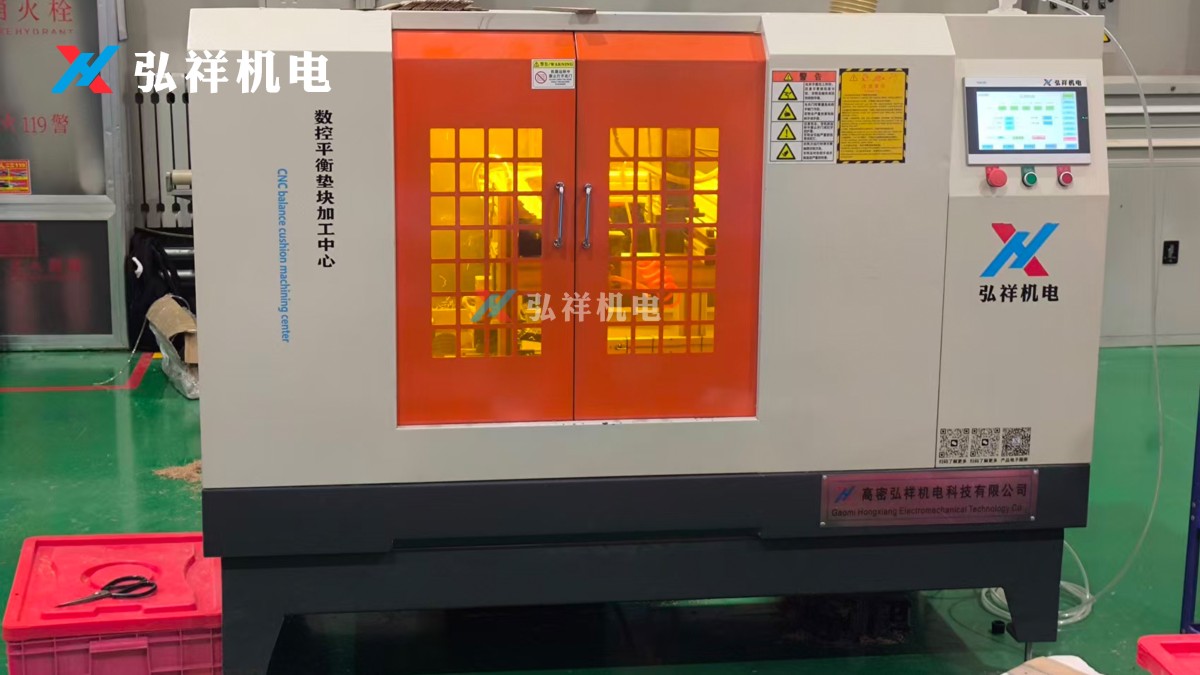
This matters even more in machine tool equipment environments where precision parts, insulation components, laminated materials, and custom assemblies must move through stable, repeatable workflows. For companies serving global industrial markets, such as Gaomi Hongxiang Electromechanical Technology Co., Ltd., equipment decisions are closely connected to product quality, process control, training efficiency, and long-term service reliability.
What an industrial chamfering machine really needs to do
A chamfering machine for industrial use is expected to do more than remove a sharp corner. It must create a predictable edge geometry that supports later operations, safer handling, and cleaner final assembly.
In some workshops, the chamfer is mainly functional. It helps parts enter fixtures, improves bonding or fitting, or reduces edge damage during movement. In others, it also affects appearance and dimensional acceptance.
The core question is not whether the machine can chamfer. The question is whether it can maintain the required edge on the actual material, at the planned production volume, with acceptable maintenance and operating cost.
Why matching by application is more important than matching by brochure
Industrial buyers often compare spindle power, feed rate, and machine footprint first. These points matter, but they do not explain whether the machine will stay stable under daily production conditions.
A mismatch usually appears in practical details. The machine may chatter on laminated material, leave fiber pullout on insulation board, overheat tooling, or create inconsistent bevel width between batches.
That is why a chamfering machine for industrial use should be judged through application evidence. Material tests, tolerance samples, operator access, and service response often reveal more than nominal output data.
This approach is especially relevant in operations that combine standard production with customized equipment. A supplier with integrated design, manufacturing, installation, training, and after-sales support can usually align the machine more closely with the process.
Materials determine machine structure and process stability
Material characteristics should be one of the first screening factors. Metal, insulating cardboard, laminated wood, EVA-based materials, and composite parts do not react the same way during edge processing.
Key material-related questions
- Does the material chip cleanly or tear at the edge?
- Is the part sensitive to heat, dust, or vibration?
- Will the edge be painted, bonded, stacked, or assembled later?
- Does the workpiece vary in thickness, hardness, or fiber direction?
For example, electrical insulating cardboard and laminated wood often demand smooth edge treatment without delamination. In such cases, cutter geometry, feed stability, clamping design, and dust extraction can be more critical than maximum speed.
A chamfering machine for industrial use in transformer-related processing may also need to support dimensional repeatability across many part types. That requirement affects fixture changeover, tool accessibility, and parameter adjustment.
Edge quality should be defined before equipment is compared
Selection becomes clearer when edge quality is translated into measurable targets. Without that step, machine comparison stays too abstract and usually leads to avoidable trade-offs later.
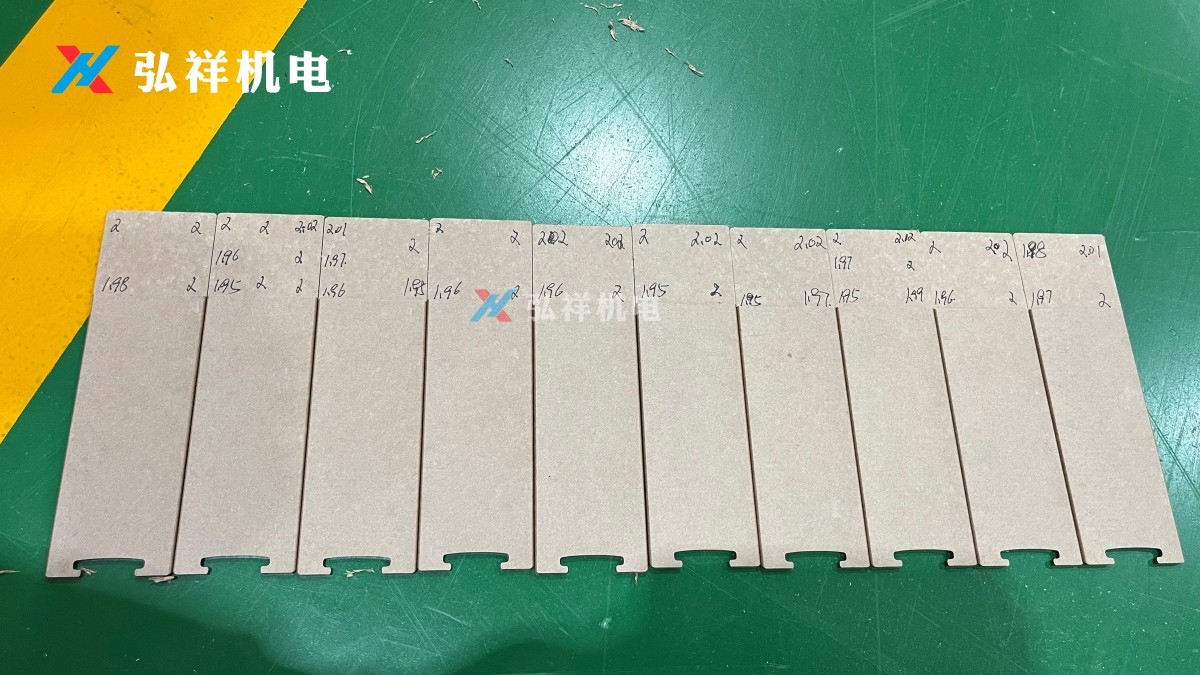
A useful test is to compare finished samples taken at the start, middle, and end of a production run. This shows whether the chamfering machine for industrial use remains stable when tooling wears and heat builds up.
Production rhythm and automation level change the best choice
A machine that performs well in trial cutting may still be unsuitable if it slows the line. Throughput must be evaluated together with loading, positioning, deburring needs, and operator intervention.
In low-mix, high-volume production, automatic feeding and repeatable positioning often deliver better value than a highly flexible manual setup. In mixed production, quick tool changes and easy parameter switching may matter more.
Points that influence line compatibility
- Cycle time compared with upstream cutting or forming processes
- Whether one machine can handle different edge profiles
- Integration with conveyors, fixtures, or robotic handling
- Control interface simplicity for stable shift-to-shift operation
This is one reason custom machine capability has growing value. When special equipment can be adapted to a specific industrial workflow, the chamfering machine for industrial use becomes part of a system rather than an isolated station.
Operating cost is shaped by tooling, maintenance, and training
Initial machine price rarely reflects the true cost of ownership. Tool wear, spare part access, setup losses, and maintenance downtime often have a larger impact over time.
A well-matched chamfering machine for industrial use should allow stable cutter life, straightforward maintenance access, and predictable service intervals. If routine adjustments are too sensitive, the process becomes dependent on individual operator skill.
Training support also matters. A supplier that combines R&D, production, installation, training, and after-sales service can usually shorten ramp-up time and reduce the gap between machine capability and actual shop-floor performance.
For exporters and globally oriented factories, service responsiveness is another practical issue. Multi-region delivery experience often indicates better preparation for documentation, parts coordination, and installation support.
Typical industrial scenarios require different selection logic
Not every application asks for the same machine architecture. Selection improves when requirements are grouped by process purpose rather than by machine category alone.
These scenarios show why the same chamfering machine for industrial use is not automatically suitable across all sectors. Process intent, material response, and downstream quality risks should guide the final decision.
A practical evaluation path before final selection
A structured review usually leads to better outcomes than broad specification comparison. It also makes discussions with equipment suppliers more precise and easier to verify.
- List actual materials, thickness ranges, and annual volume by part family.
- Define the acceptable chamfer profile with sample-based quality criteria.
- Map the machine’s position in the production flow, not as a standalone asset.
- Review tooling life, maintenance access, and spare part availability.
- Request trial processing under realistic batch conditions.
- Check whether training and after-sales support fit the operating environment.
When this path is followed, the chamfering machine for industrial use is evaluated as part of production capability. That usually leads to fewer hidden costs, stronger consistency, and a more defensible return on investment.
Where to focus next
The best next step is to turn broad demand into a process-based checklist. Material type, edge standard, output target, automation level, and service expectations should be documented before model comparison begins.
For operations involving insulation materials, laminated parts, EVA processing, or custom machine integration, it is worth comparing how different suppliers translate those requirements into machine structure and support capability.
A chamfering machine for industrial use delivers value when it matches the real job, not just the specification sheet. Clear criteria, tested samples, and process-aware evaluation are usually the most reliable basis for the final decision.
NAVIGATION
MESSAGE
Request A Quote?